
Timing Your Last Fall Fertilizer in North San Antonio
Short Answer: For most North San Antonio lawns, the final nitrogen application of the year should go down by roughly the middle of October, about four to six weeks ahead of our first typical frost in late November. Warm season grasses are winding down rather than gearing up, and nitrogen applied later pushes soft growth that cold damages and that large patch disease feeds on. The complication here is watering it in. Granular fertilizer does nothing until moisture dissolves it, so under aquifer based watering restrictions the application needs to be timed to your allowed watering day or to incoming rain.
If you are looking at a lawn that came through another hot dry summer and thinking it could use one more feeding before winter, the instinct makes sense. The trouble is that the last application of the year is the least forgiving one you make, and around here it comes with a second complication that most fall lawn advice never mentions, which is whether you are allowed to water it in.
Most homeowners we talk with across Stone Oak, Hollywood Park, and out toward Boerne have read fall lawn content written for cool season grass somewhere far north of here. Almost none of it applies. Here is how the timing actually works in our market.
Your Grass Is Shutting Down, Not Starting Up
St. Augustine, Bermuda, and zoysia cover nearly every lawn on this side of the city, with some buffalograss on larger unirrigated properties. All are warm season grasses. They grow hardest when soil is warm and slow as nights cool, which is the opposite of the bluegrass and fescue most national fall articles are written about.
Right now your lawn is beginning a transition. Growth slows, mowing frequency drops, and the plant starts moving carbohydrates out of leaf tissue into stolons, rhizomes, and roots for winter storage. That is deliberate and healthy. The plant is packing away food to survive dormancy and to green up in March.
Nitrogen interrupts it. Nitrogen tells a grass plant to make leaves, so a late application pulls the plant back toward top growth exactly when it should be storing reserves, and it produces soft tender tissue at the worst time of year.
Counting Back From First Frost
The working guideline is four to six weeks ahead of the first expected frost. Around North San Antonio that frost typically lands in late November, sometimes slipping into early December, which puts the nitrogen window closing somewhere in the middle of October for most properties.
There is meaningful variation inside our area and it is worth knowing where you sit. Properties north and west into the Hill Country, at higher elevation and away from the urban core, frost earlier and harder. Lawns closer in toward Loop 410 benefit from the heat island and frost later. Low areas and creek bottoms collect cold air and frost first regardless of elevation.
If you have not fed since late summer, there is probably still time right now. If your last application was in early October, you are finished with nitrogen for the year, and stopping there is the correct decision rather than a gap to fill.
What Late Nitrogen Actually Costs
Two things go wrong, and the second is the expensive one.
First, the plant spends stored energy building tissue that has no time to harden before the first cold night burns it. That is a poor trade heading into dormancy, and it leaves the lawn with fewer reserves than it would have had if you had left it alone.
Second, and more serious, is large patch. Also called brown patch here, it is a Rhizoctonia fungus that is common on St. Augustine and zoysia across our region. It becomes active in the conditions our fall delivers, with soil temperatures easing down through the seventies into the sixties, cooler nights, and dew sitting on the blades for hours. Excess nitrogen is one of the clearest triggers, because it produces the thin walled growth the fungus moves through easily and keeps the canopy humid longer.
The pattern repeats every year. A homeowner feeds in late October chasing one more green push and has expanding circular patches of collapsed tan grass by late November. Those patches do not fill in over winter, because the grass is not growing enough to repair them. They sit until spring green up.
The Watering In Problem
Here is the part specific to our market. Granular fertilizer does absolutely nothing sitting dry on the surface. It has to dissolve before roots can take up anything, which means every granular application needs water within a day or so.
In most of the country that is a non issue. Here, our water comes largely from the Edwards Aquifer and watering restrictions are a normal fact of life, often limiting landscape irrigation to specific days depending on the current drought stage. That turns fertilizer timing into a scheduling problem rather than a simple calendar decision.
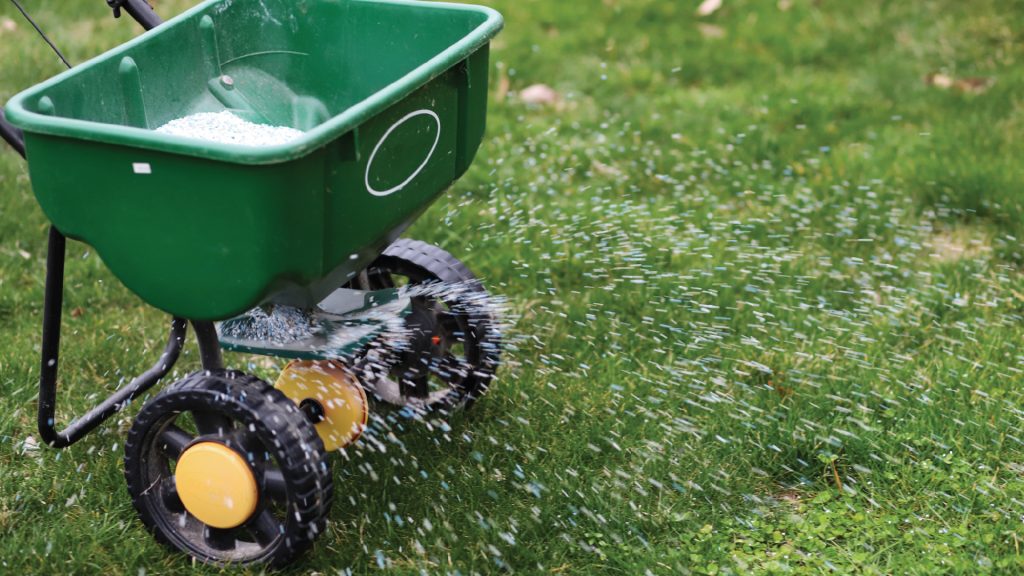
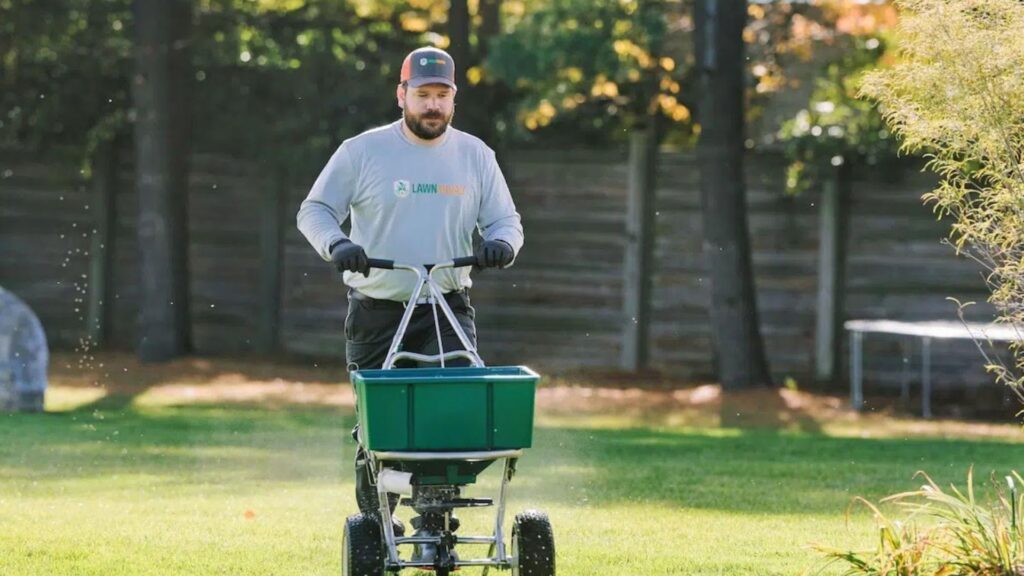
The practical approach is to apply the day before your allowed watering day, or immediately ahead of forecast rain, so the product dissolves promptly. Applying on a Saturday when your watering day is the following Thursday means five days of product sitting on the surface, where it can be blown, swept into the street by a leaf blower, or simply sit inert while losing nitrogen to the air.
It also means checking the current stage restrictions rather than assuming, since they change with aquifer levels. This is worth two minutes before you buy a bag.
What Is Still Worth Applying After Mid October
Stopping nitrogen does not mean stopping lawn care. Potassium is genuinely useful now and carries none of the same risk. It supports cell wall strength and root development, which translates into better cold tolerance through dormancy and a cleaner spring green up.
Iron is the other worthwhile input, and it is worth more here than in most markets. Our soils are heavily influenced by limestone and caliche and commonly run alkaline enough to lock iron away from roots, which is why so many lawns here look pale despite regular feeding. A foliar iron application improves color without pushing growth, which is exactly the right combination late in the season.
We want to be honest about scale. A potassium and iron application is a deposit into spring rather than a visible transformation. You will not look outside in November and see a different lawn. What you get is a lawn that comes through winter with less damage.
Watering Through the Rest of Fall
Reduce it as growth slows. A lawn growing slowly in November needs far less than one growing hard in July, and carrying a summer irrigation schedule into fall is a common and avoidable mistake here.
It matters for disease too. Large patch needs extended leaf wetness, so watering in the early morning rather than the evening shortens the hours a blade stays wet and meaningfully reduces pressure. Where restrictions dictate your day, they usually still leave the time of day to you, and early morning is the right choice.
Thin rocky soil over caliche holds very little moisture, so the temptation is to water more often. Through fall, deeper and less frequent serves the lawn better than light daily cycles, which encourage shallow roots and keep the canopy damp.
What to Do Next
Identify your grass, because the schedule depends on it. St. Augustine has broad flat blades and visible runners across the soil surface. Bermuda is fine bladed and dense. Zoysia is stiff and intermediate. Buffalograss is fine, blue green, and usually on unirrigated ground.
Check the current watering restriction stage before you buy anything, then plan the application around your allowed day or incoming rain. If you have not fed since August, get a moderate application down promptly using a slow release nitrogen source, and make it the last nitrogen of the year.
Here is what to expect. A fall feeding does not produce the dramatic color response a spring one does, and that is correct rather than disappointing. Watch through November for expanding circular tan patches and act early if you see them, since large patch is far easier to stop than to repair.
If you would rather have someone else handle the timing, the product selection, and working around watering restrictions for your North San Antonio lawn, we are here for that. Visit lawnsquad.com to find Lawn Squad of North San Antonio and request a free quote on your property. Our VitaminLawn program is built around the warm season grasses, caliche soils, and water limits we actually work with here.