
Why Does My South Jersey Lawn Thin Out Every August?
Short Answer: Most of our service area sits on coastal plain sandy loam, which drains beautifully and holds water poorly. A lawn in Cherry Hill or Marlton can be dry at the root zone two or three days after a soaking storm, so mid-summer heat reaches the crowns quickly. That same sandy profile lets nutrients wash below the roots, so turf enters August underfed as well as thirsty. The fix is not more water in July. It is fall aeration and overseeding, building organic matter into the top few inches, and feeding in smaller, more frequent amounts through the cool season.
There is a moment every August that South Jersey homeowners describe to us almost word for word. A real storm rolls through, the kind that fills the gutters on Kings Highway and turns the driveway into a stream for twenty minutes. Two mornings later you push a screwdriver into the front lawn and it stops at three inches like it hit a board. The grass along the sunny side of the walk in Haddonfield has that dull straw cast, and where you crossed it barefoot the night before, the footprints are still there.
What bothers people is not the brown. It is the sense that they did everything right, watered on schedule, mowed carefully, and the lawn thinned anyway. That is not a failure of effort. It is a soil profile doing exactly what it does.
What Coastal Plain Soil Does With Water
Camden and Burlington County lawns sit on the Atlantic coastal plain, and the soils here are ancient marine and river sediment: sandy loams and loamy sands, pale tan when dry, gritty between your fingers. Rub a pinch of it and you feel individual grains rather than the slick, sticky feel of the clay soils across the river.
Those large particles leave large pores between them, and large pores do not hold water against gravity. Rain moves through fast, which is why our yards rarely stay swampy and why puddles vanish quickly in Moorestown and Voorhees. The cost of that gift is a small reservoir. A clay soil can bank meaningfully more plant-available water per foot of depth than our sand does. When a week of upper eighties arrives, that reservoir empties in days, not weeks, and the turf crowns are the first thing to feel it.
The Half of the Problem Nobody Sees
Water is only part of it. Sandy soils have low cation exchange capacity, which is a technical way of saying they have very few electrically charged sites to hold nutrients in place. Clay and organic matter provide those sites. Sand does not.
The practical consequence is that a heavy spring feeding on a Pennsauken or Willingboro lawn does not stay put through July. Nitrogen and potassium move down with every rain and every irrigation cycle, and by mid-summer they are below the root zone. This is why a lawn here can look pale and hungry in August even though it was fed generously in April, and it is the single biggest reason we build programs around lighter, more frequent applications rather than a few large ones.
Telling Dormancy From Death
Before you plan anything, find out what is actually alive. Grab a handful of the discolored turf and pull straight up with moderate force. If it resists and the base of the plants is still firm and pale green or white at the crown, you have dormancy and it will return with cool nights and moisture. If the handful lifts free like old carpet and the crowns are brown, brittle, and crumble under a fingernail, those plants are gone and no amount of watering brings them back.
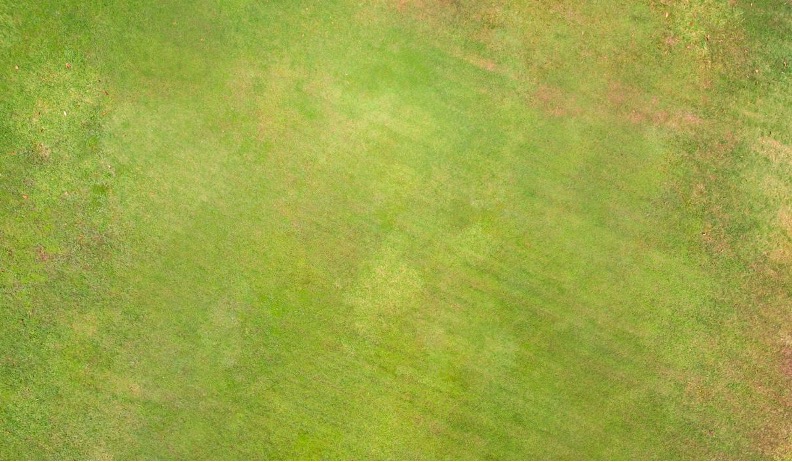
Do this in five or six spots. On most properties we walk this month, the answer is mixed: living turf across the shaded middle, dead patches along the hot southern exposure, the strip by the driveway, and anywhere the sprinkler head is blocked by a shrub. Knowing the ratio tells you whether you need a light overseeding or a genuine renovation.
The Damage That Only Looks Like Drought
Two other culprits mimic dry stress here, and it is worth ruling them out. Brown patch is common on tall fescue in our humidity, showing as roughly circular tan areas that expand overnight, often with a darker smoke-colored margin visible in early morning dew before the sun burns it off. Individual blades show tan lesions with a thin dark border.
Chinch bugs favor exactly the conditions our sunny sandy edges provide. Damage begins along driveways, sidewalks, and south-facing foundation strips and spreads outward as an irregular yellowing patch that does not green up after irrigation. Part the grass at the boundary between green and dead and look at the soil surface for small dark insects moving quickly. If watering an area for a week changes nothing, stop assuming it is thirst.
Organic Matter Is the Real Long-Term Fix
You cannot change the sand under your yard, but you can change what is mixed into the top few inches, and that is where the whole game is. Organic matter behaves like a sponge and like a magnet at the same time, holding water in the root zone and holding nutrients where roots can reach them.
Practically, that means returning clippings rather than bagging them, topdressing with quality compost after aeration, and using soil amendments as part of an ongoing program rather than a one-time rescue. This is slow, honest work. You do not raise organic matter in a season. But lawns in Collingswood and Haddon Heights that have been topdressed for several consecutive falls hold color noticeably longer into a dry August than identical lawns next door, and the difference compounds every year.
Why the Fix Happens in Fall, Not Now
Cool season grasses build roots when soil is warm and air is cooling, which is precisely what late August and September deliver here. Seed dropped into our sandy soil in that window germinates quickly, and the seedlings get two to three months of favorable growing weather to establish before winter. Seed dropped in May gets a few good weeks and then a summer it cannot survive.
Core aeration matters even on sandy ground, which surprises people. Sand compacts under mower wheels and foot traffic, and years of it produce a dense layer that roots avoid. Aeration opens that layer, and the holes are also the best seedbed you can create, giving seed direct contact with soil and a protected pocket to germinate in. Aeration and overseeding done together on the same afternoon is by a wide margin the highest value thing you can do to a South Jersey lawn.
Watering the Seedbed Is the Opposite of Summer Watering
Once seed is down, throw out your July rules. Established turf wants deep, infrequent soaking. Germinating seed wants the top half inch constantly moist, which on our fast-draining soil means short cycles, two or three times a day, for roughly the first two weeks. Once seedlings are up and mowed once, you begin backing off frequency and lengthening duration until you are back to deep watering by mid autumn. More seedings fail here from letting the surface dry out at midday than from any other cause.
What to Do Next
This week, do the pull test in several spots, note which areas failed and which held, and check that every sprinkler head is actually reaching what it should. Then get aeration and overseeding scheduled. Our window runs from roughly the last week of August into late September, and the earlier half of it consistently produces better establishment than the later half.
Here is what to expect. A first visit is a walk of the property with you, a look at the soil and the damage pattern, and a plan that names which areas get seed and which need soil work. Germination generally begins within one to two weeks. At thirty days you should see fine new seedlings filling in and a lawn that still looks patchy, which is normal and not a warning sign. At ninety days, heading toward the end of the season, you should see real density, deeper color, and a stand that will thicken further next spring as those young plants tiller.
From there, most of our customers move into VitaminLawn, our fertilization and weed control program built around your grass type, your soil, and South Jersey conditions rather than a national schedule, which matters more than usual on soil that lets nutrients leave this easily. We serve Cherry Hill, Haddonfield, Voorhees, Marlton, Moorestown, Mount Laurel, Collingswood, Haddon Heights, Audubon, Barrington, Bellmawr, Beverly, Camden, Gibbsboro, Gloucester City, Lawnside, Magnolia, Maple Shade, Merchantville, Mount Ephraim, Oaklyn, Palmyra, Pennsauken, Riverside, Riverton, West Berlin, and Willingboro. Call 856-301-2447 or visit lawnsquad.com. Quotes are free and our work is backed by a satisfaction guarantee.