Should I Repair Seed, Fully Renovate, or Sod My Thin Westchester Lawn?
Short Answer: Use the amount of living grass left as your guide. If half or more of the lawn is still decent turf, repair seeding into an aerated or sliced surface between late August and late September is the smart, affordable choice. If good grass covers less than about a third of the yard, or the stand is mostly coarse weedy grasses, a full renovation that kills the existing surface and rebuilds the seedbed gives a far better long term result. Sod earns its cost when you need instant coverage, are fighting erosion on a Hudson slope, or are selling the house this fall.
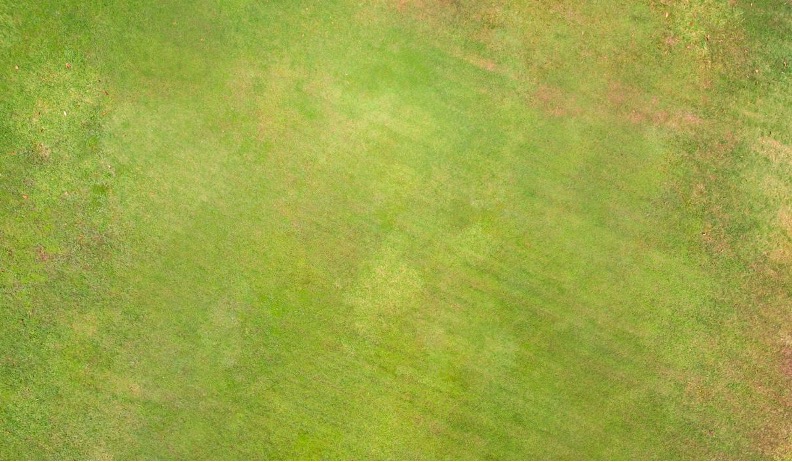
It is the third week of August, the cicadas are loud, and you are standing at the edge of the patio with a cup of coffee looking at a lawn that has quietly given up. The strip along the driveway is straw colored and crunchy. Under the big oak the grass has thinned to the point where you can see soil between the blades, and the green patch in the middle of the yard turns out, on closer inspection, to be mostly clover and crabgrass. The lawn looked passable in May. It does not look passable now.
Most homeowners we talk to in Scarsdale, Rye, and Larchmont are not confused about whether the lawn needs help. They are stuck on how much help, and how much they are about to spend. That hesitation is fair. Property care in this county is not cheap, and nobody wants to sink real money into a fix that looks the same again next August.
First, Measure How Much Living Grass You Actually Have
Before comparing methods, walk the yard and make an honest estimate of coverage. Not green coverage. Grass coverage. Kneel down in a few spots and part the canopy with your fingers. Are you looking at desirable Kentucky bluegrass, tall fescue, and perennial rye with visible soil between the plants, or a mat of broadleaf weeds and coarse invaders with a little turf mixed in? Those two situations look identical from the kitchen window and call for completely different work.
Across our service area we walk a lot of properties in August, and the pattern we see most often is a lawn that is roughly half good turf, with the losses concentrated in three predictable places: the hot southern exposure near the street, the compacted path where everyone cuts across to the side door, and the dry root zone under mature canopy. That distribution matters. A lawn thin everywhere has a soil or management problem. A lawn thin in specific places has a site problem, and site problems are usually cheaper to solve.
Repair Seeding: The Right Answer for Most Westchester Yards
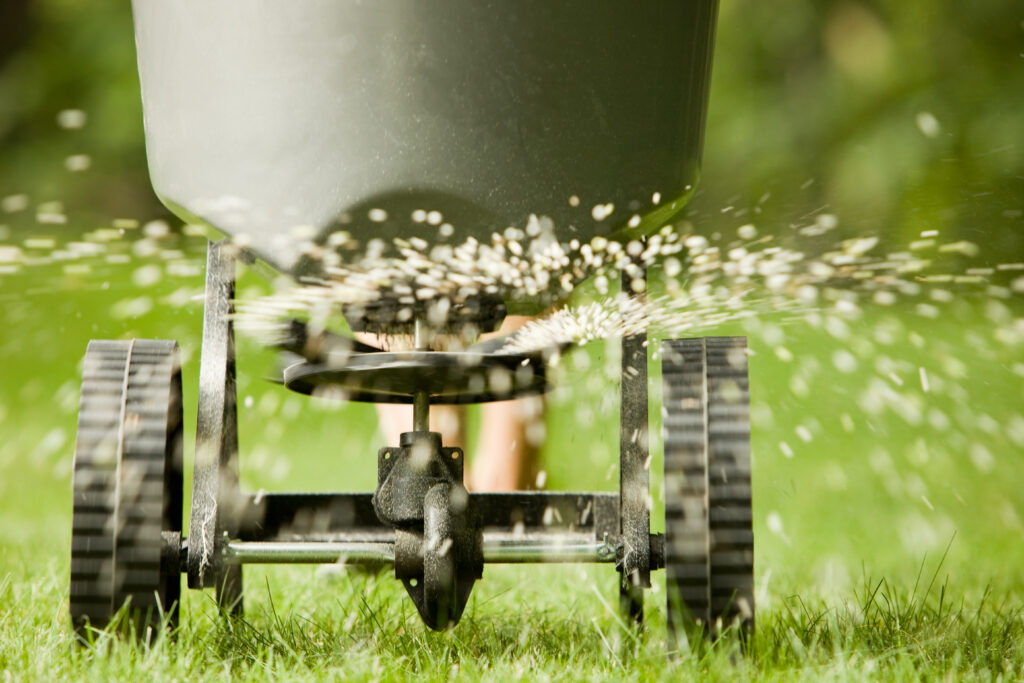
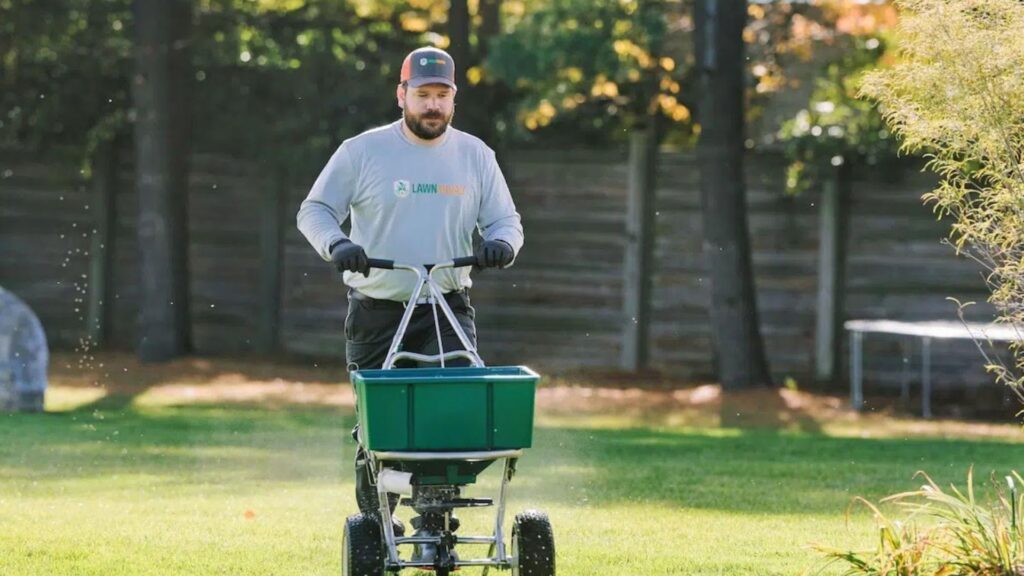
Repair seeding means introducing new seed into an existing stand rather than starting over. Done properly it is not a bag of seed thrown across the surface and hoped for. The seed has to reach soil, and in our county reaching soil takes machinery.
Two approaches work here. Core aeration followed by overseeding pulls thousands of soil plugs, opens the compacted surface, and gives seed protected pockets to germinate in. Slice seeding uses vertical blades that cut shallow furrows and drop seed directly into them, which gives better seed to soil contact on hard, tight ground. On the older lots in Bronxville and Tuckahoe where decades of foot traffic have packed the top few inches, we often do both.
Timing is the part people get wrong. Our fall seeding window opens as August soil temperatures start to slide and generally runs from the last week of August through late September, with the sweet spot in the first two weeks of September. Seed put down then germinates in warm soil, grows into cooling air, catches the autumn rain, and roots before the ground gets cold. Push it into mid October and you get germination without root development, which means a beautiful November lawn that thins out badly the following June.
Full Renovation: Starting Over Without Starting a Construction Project
A full renovation is what you do when the existing stand is not worth saving, usually because coarse weedy grasses dominate. Once a lawn is largely nimblewill, quackgrass, or old clumpy pasture type tall fescue, seeding into it just adds nice grass to a bad neighborhood, and the aggressive species take the territory back within two seasons.
Renovation means eliminating the existing vegetation, dethatching or scalping down to expose soil, correcting whatever is underneath, then seeding heavily into a real seedbed. The whole sequence takes three to four weeks from first step to seed down, which is exactly why August planning matters. Homeowners who call in mid September asking about renovation have usually missed the window and are better served waiting for next year than rushing a compressed version that fails.
The upside is real. A renovated lawn gives you a uniform stand of modern turf varieties selected for this climate, planted into corrected soil, with none of the old problem species carried forward.
Sod: Expensive, Instant, and Occasionally the Only Right Choice
We are not going to talk anyone out of sod. There are properties in Purchase and Harrison where it is clearly the correct call. Sod makes sense when you need finished lawn immediately, usually because the house is going on the market. It makes sense on the steep Hudson slopes in Hastings-on-Hudson, Dobbs Ferry, and Irvington where seed washes downhill in the first real storm and sod knits the surface in place. It makes sense on small, high visibility areas like a front entry strip where the cost of a few hundred square feet is manageable.
What sod does not do is fix soil. Laying it over compacted, root filled ground buys a green season and then the same decline, because the roots eventually have to grow into the native profile. Sod is also almost always Kentucky bluegrass, which is beautiful in full sun and struggles in the shade that covers so much of this county. And it demands daily watering for the first two to three weeks in late summer heat, which on a mid sized property is a serious water bill and a serious commitment.
How Westchester Soil and Trees Change the Math
Our ground is glacial till: a dense, stony mix left by the last ice sheet, often shallow over rock, frequently acidic, and prone to compacting into something close to pavement. Dig a test hole anywhere from Pleasantville to Eastchester and you will hit stones. That soil is why surface only fixes disappoint here, and why core aeration is not optional maintenance but a structural necessity.
Then there is the canopy. The mature oaks and maples that make these neighborhoods beautiful also drink enormous volumes of water, cast dense shade, and fill the top eight inches with feeder roots that outcompete young grass. Under heavy canopy, no method delivers a thick sun lawn. The honest plan there is fine fescue in the blend, higher mowing, expectations of a thinner but stable stand, and in the darkest spots mulch beds instead of grass. We would rather say that in August than sell you seed twice.
What the Three Paths Actually Cost You
We will keep this qualitative rather than quote figures we cannot stand behind for your specific property. Repair seeding is the least expensive of the three by a wide margin and is the annual habit that keeps a good lawn good. Renovation typically runs several times that, because you are paying for a multi week process rather than a single visit. Sod is the most expensive by a large multiple per square foot once installation and soil prep are included, and in our county that gap is amplified by labor costs.
The timelines differ just as sharply. Repair seeding shows germination in one to three weeks and looks genuinely filled in by mid to late October, with the real payoff visible the following spring. Renovation looks alarming for about three weeks, then improves fast, and delivers a striking lawn by May. Sod looks finished the afternoon it is installed and then needs the most intensive care of the three for a month.
What to Do Next
Start with the coverage check described above, this week, before the seeding window opens. If you want a second set of eyes, call us at 914-361-5501 or request a free quote at lawnsquad.com and we will walk the property with you. A first visit takes about half an hour. We look at the turf stand, check compaction with a probe, evaluate shade and root competition, identify the weedy grasses by name, and tell you plainly which path fits, including the times the answer is a season of fertility and weed control before any seed goes down.
If we seed, expect germination within one to three weeks depending on watering, meaningful fill by thirty days, and a lawn noticeably denser and darker by the ninety day mark heading into winter. Seeding is only half the equation. New seedlings need feeding, and our VitaminLawn program builds the fertilization and weed control schedule around the specific grass mix, the glacial soil, and the shade pattern on your property rather than a national calendar.
We serve homeowners throughout Westchester County, including Ardsley, Armonk, Bronxville, Dobbs Ferry, Eastchester, Elmsford, Harrison, Hartsdale, Hastings-on-Hudson, Hawthorne, Irvington, Larchmont, Mamaroneck, Mount Vernon, New Rochelle, Pelham, Pleasantville, Port Chester, Purchase, Rye, Scarsdale, Tarrytown, Thornwood, Tuckahoe, Valhalla, White Plains, and Yonkers. Every location is independently owned and operated, quotes are free, and our work is backed by a satisfaction guarantee.