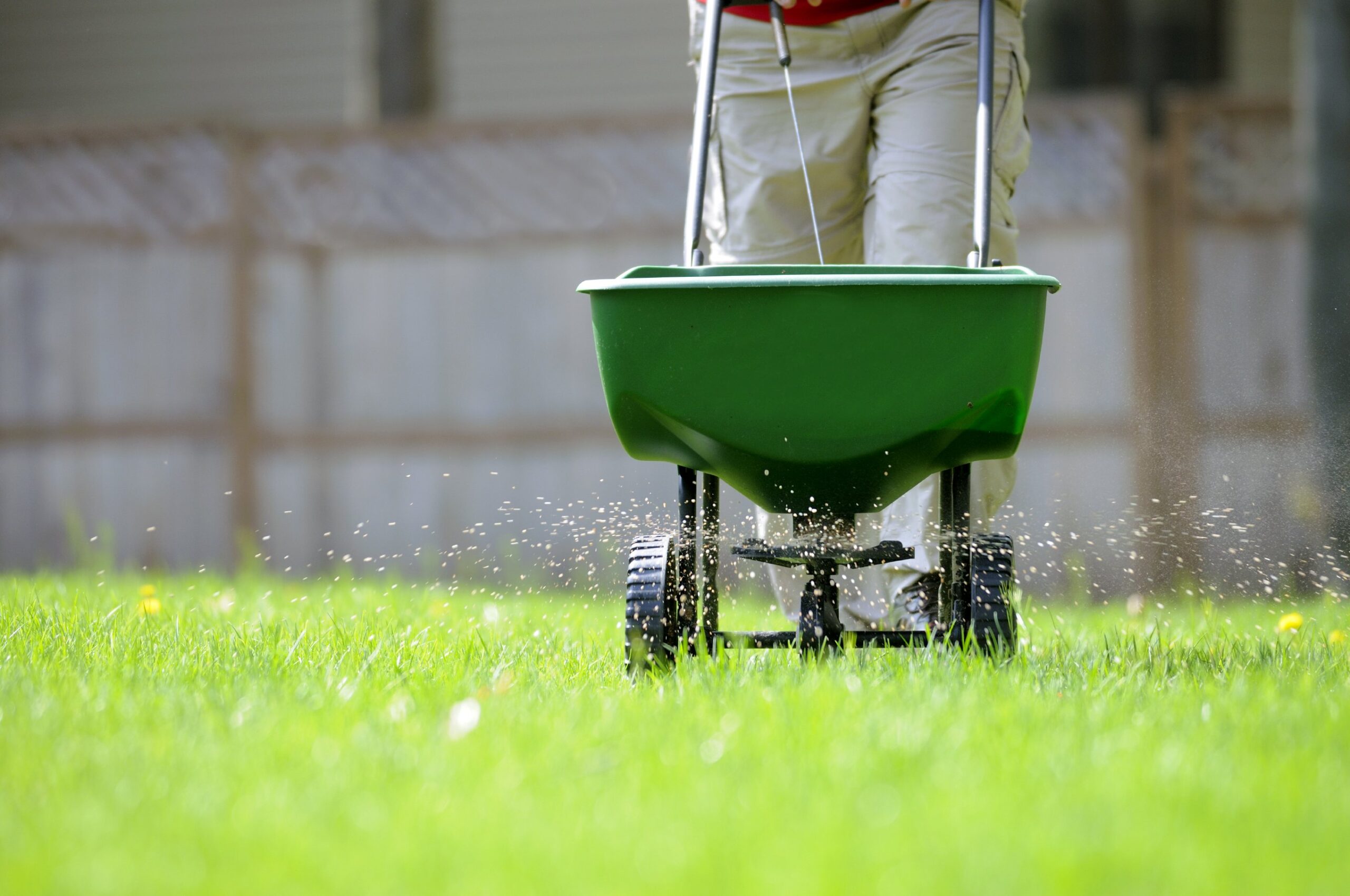
When Should You Put Down Your Last Fall Fertilizer in Jacksonville?
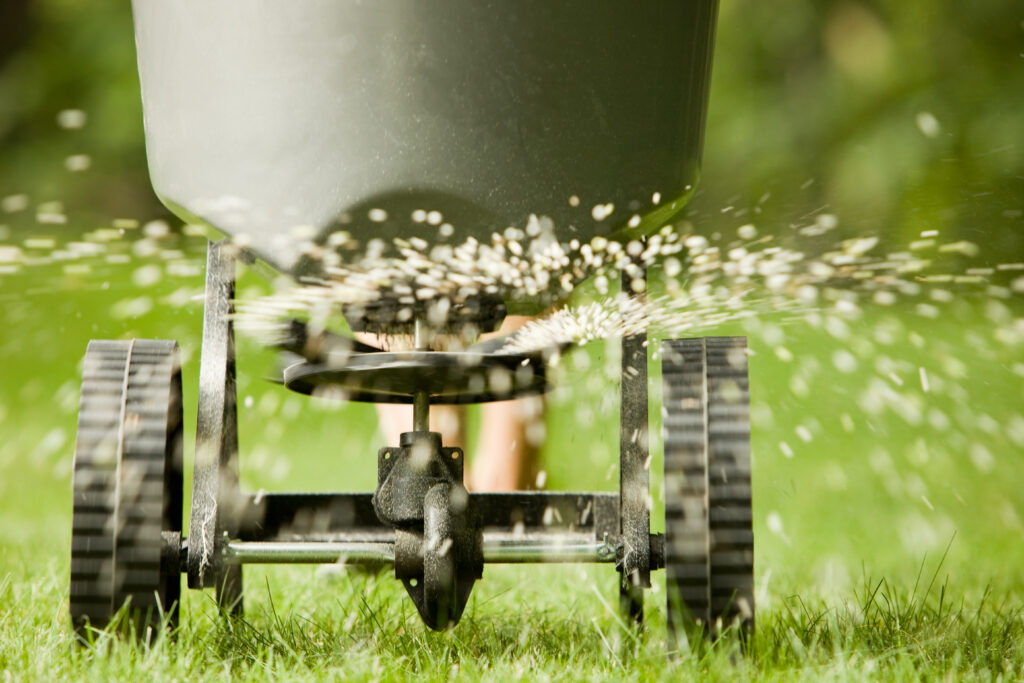
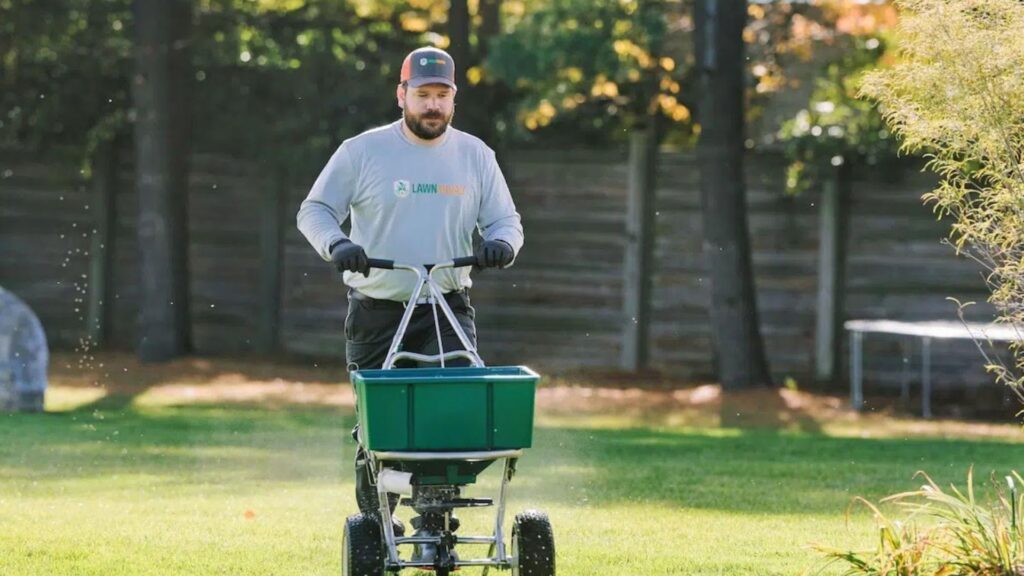
Short Answer: For most Jacksonville and St. Augustine lawns, the last nitrogen application of the year should go down by roughly the middle of October, about four to six weeks before our first typical frost. Unlike lawns further south, ours do slow down and often go partly dormant through winter, and nitrogen applied after that window pushes soft growth that cold damages and that large patch disease feeds on. After mid October, potassium and iron are still useful and carry no disease risk. Local fertilizer ordinances also apply here, so checking your county’s current rule before applying is worth the two minutes.
If you are looking at a lawn that has been through a long humid summer and thinking it could use one more good feeding before winter, we understand the impulse. The trouble is that timing on the last application of the year is less forgiving than any other application you make, and in our market the cost of getting it wrong shows up as disease rather than simply wasted money.
Most homeowners we talk with across Jacksonville and out toward St. Augustine have read fall lawn advice written for somewhere else. Northeast Florida sits in an awkward spot for that. We are warm season turf, but we are cool enough in winter that our grass genuinely slows down, which makes us different from South Florida too. Here is how the timing actually works here.
Our Grass Slows Down, Unlike Further South
St. Augustine, particularly Floratam, covers most lawns here, with Bahia common on larger and less irrigated properties and zoysia turning up in newer subdivisions. All of these are warm season grasses. They grow hardest when soil is warm and slow as nights cool.
What separates Northeast Florida from Miami or Fort Lauderdale is that we actually get cold. Our first frost typically arrives somewhere between late November and December, and we usually see several nights at or below freezing across a winter. That means our lawns go at least partly dormant, losing color and largely stopping growth from around December into February.
That dormancy is the reason timing matters here in a way it does not three hundred miles south. A lawn heading into a genuine cold period needs stored reserves and hardened tissue, and a late nitrogen application works directly against both.
Counting Backward From First Frost
The working rule is four to six weeks ahead of the first expected frost for the final nitrogen application. Around Jacksonville that puts the window closing somewhere in the middle of October for most properties.
There is real variation inside our service area, and it is worth knowing which side of it you are on. Properties closer to the coast and on the barrier islands hold warmth longer and frost later. Inland and west of the city, out toward the Westside and into the river valleys, frost arrives earlier and harder. Low spots collect cold air and frost first regardless of where they sit.
If you have not fed since late summer, there is likely still time right now. If your last application was in early October, you are finished with nitrogen for the year and that is the right place to stop rather than a gap to fill.
What Happens When You Feed Too Late
Nitrogen tells a grass plant to build leaves. Applied in November, it pulls the plant back into growth exactly when it should be moving carbohydrates into stolons and roots for winter storage. The plant spends stored energy producing soft new tissue that has no time to harden off before the first cold night burns it.
That is a bad trade on its own. The bigger problem is disease. Large patch, which many homeowners here call brown patch, is a Rhizoctonia fungus that is extremely common on St. Augustine in our region. It becomes active in precisely the conditions our fall delivers, with soil temperatures easing down through the seventies into the sixties, cooler nights, and heavy dew that keeps leaf blades wet for hours.
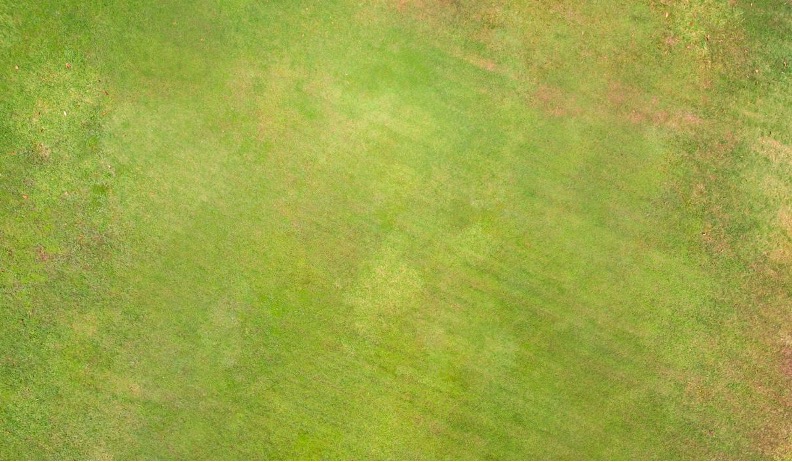
Excess nitrogen is among the clearest triggers, because it produces the lush, thin walled growth the fungus moves through easily and keeps the canopy humid longer. We see the same sequence every year. A homeowner feeds heavily in late October hoping for one more green push, and by late November has expanding circular patches of collapsed tan grass. Those patches do not fill back in over winter, because the grass is not growing enough to repair them. They sit until spring.
What Is Still Useful After Mid October
Stopping nitrogen does not mean stopping lawn care. Potassium is genuinely useful right now and carries none of the same risk. It supports cell wall strength and root development, which translates into better cold tolerance through dormancy and a cleaner green up in March.
Iron is the other worthwhile input, and it is worth more here than most people realize. It improves color without pushing growth, which is exactly the combination you want late in the season. Many soils across our area, particularly where limestone fill or shell was used in construction, run alkaline enough to lock iron away from roots, and a foliar iron application sprayed onto the leaf bypasses that problem entirely.
We want to be honest about the scale of it. A potassium and iron application is a deposit into spring rather than a visible transformation. You will not look outside in November and see a different lawn. What you get is a lawn that comes through winter with less damage and greens up earlier.
Sandy Soil Shortens the Clock
One local factor genuinely changes the calculation. Much of Northeast Florida sits on sand, and sand does not hold nutrients. Nitrogen applied to sandy soil leaches downward with rain and irrigation far faster than it would on clay, which means a share of any application moves past the root zone before the plant uses it.
The practical consequence is that heavy, infrequent feedings work poorly here. Lighter applications more often, using slow release nitrogen sources that dissolve gradually, keep more of what you buy available to the grass. A single large dose in sandy soil mostly ends up in the groundwater.
That is also the environmental dimension, and it is not abstract in this region. Nitrogen leaching through sand reaches the St. Johns River and our coastal waters, where it contributes to algae problems. Applying at the right rate and the right time is genuinely both the better agronomy and the better neighbor practice.
Local Rules Apply Here
Florida regulates lawn fertilizer more closely than most states, and rules vary by county and sometimes by city. Restrictions commonly cover application rates, whether phosphorus can be applied without a soil test showing a need, requirements for slow release nitrogen, buffer distances from water bodies, and in some jurisdictions seasonal restrictions tied to the rainy season.
We are deliberately not going to quote specific dates or rates here, because these ordinances change and they differ between Duval, St. Johns, and the municipalities within them. Checking your county’s current rule before you apply takes a couple of minutes and is worth doing.
If you hire the work out, ask whether the company applies under a certified applicator and how they handle local ordinance compliance. Any reputable operation in Florida will answer that immediately, and it is a fair question to use as a filter.
What to Do Next
Identify your grass first, since it drives everything else. St. Augustine has broad flat blades and visible runners crossing the soil surface. Bahia is coarser with a distinctive V shaped seed head and is common on unirrigated lots. Zoysia is stiff and fine textured. Most established lawns from Mandarin down through St. Augustine are St. Augustine grass.
If you have not fed since August, get an application down promptly while the window is open, using a slow release nitrogen source at a moderate rate rather than a heavy one. Make it the last nitrogen of the year. If you already fed in early October, stop there and shift to potassium and iron if you want to keep working on the lawn.
Through the rest of fall, water in the early morning rather than the evening so leaf blades dry faster, which meaningfully reduces large patch pressure. Keep mowing at your normal height while growth continues and resist scalping the lawn before winter. Watch for expanding circular tan patches and act early if you see them, since they are far easier to stop than to repair.
If you would rather have someone else handle the timing decisions, product selection, and ordinance compliance for your lawn, we are here for that. Visit lawnsquad.com to find Lawn Squad of Jacksonville-St. Augustine and request a free quote on your property. Our VitaminLawn program is built around the warm season grasses, sandy soils, and coastal conditions we actually work with here.