Granular or Liquid Fall Fertilizer for Murfreesboro Lawns?
Short Answer: Neither is better across the board, and companies insisting otherwise are usually describing the equipment they own. Granular carries more nutrient per application and can be formulated with slow release nitrogen that feeds over six to eight weeks, which suits the early fall feeding well. Liquid delivers faster and more evenly and works better for corrective applications and for the late fall feeding on fescue, when cold soil slows the microbes that slow release products depend on. Most strong programs here use both. Whether your lawn is fescue or Bermuda matters far more than which method is used.
If two companies have quoted your lawn and one told you granular is the only serious option while the other said liquid is more advanced, you have hit one of the more frustrating parts of shopping for lawn care. Both statements are marketing rather than agronomy, and both are usually describing whichever equipment is parked in the driveway.
The honest version is that these are two delivery methods with different strengths, and the right one depends on what a given application needs to accomplish. Here is how each behaves, and how our thin rocky Middle Tennessee soil affects the comparison.
What Each One Is
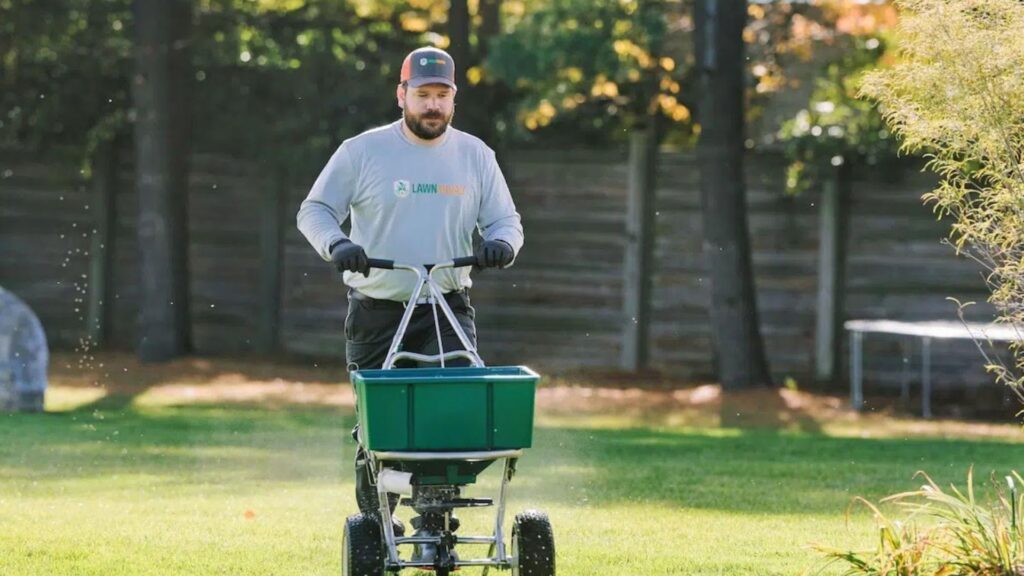
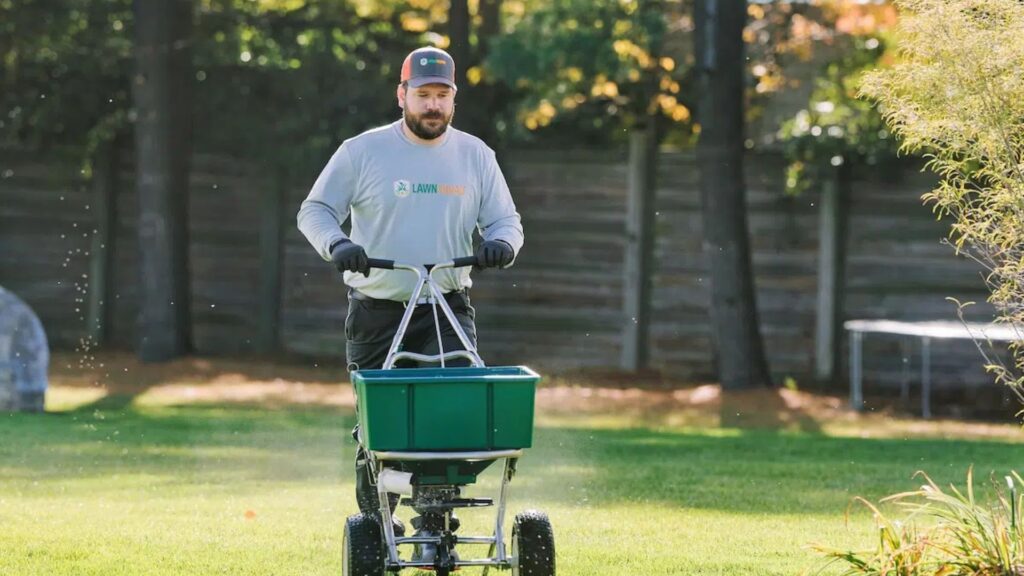
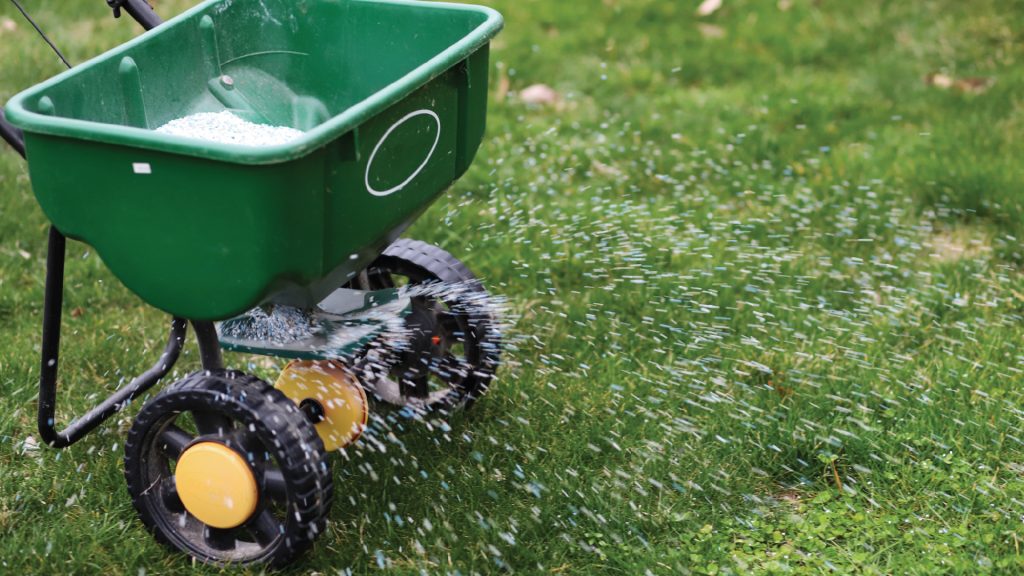
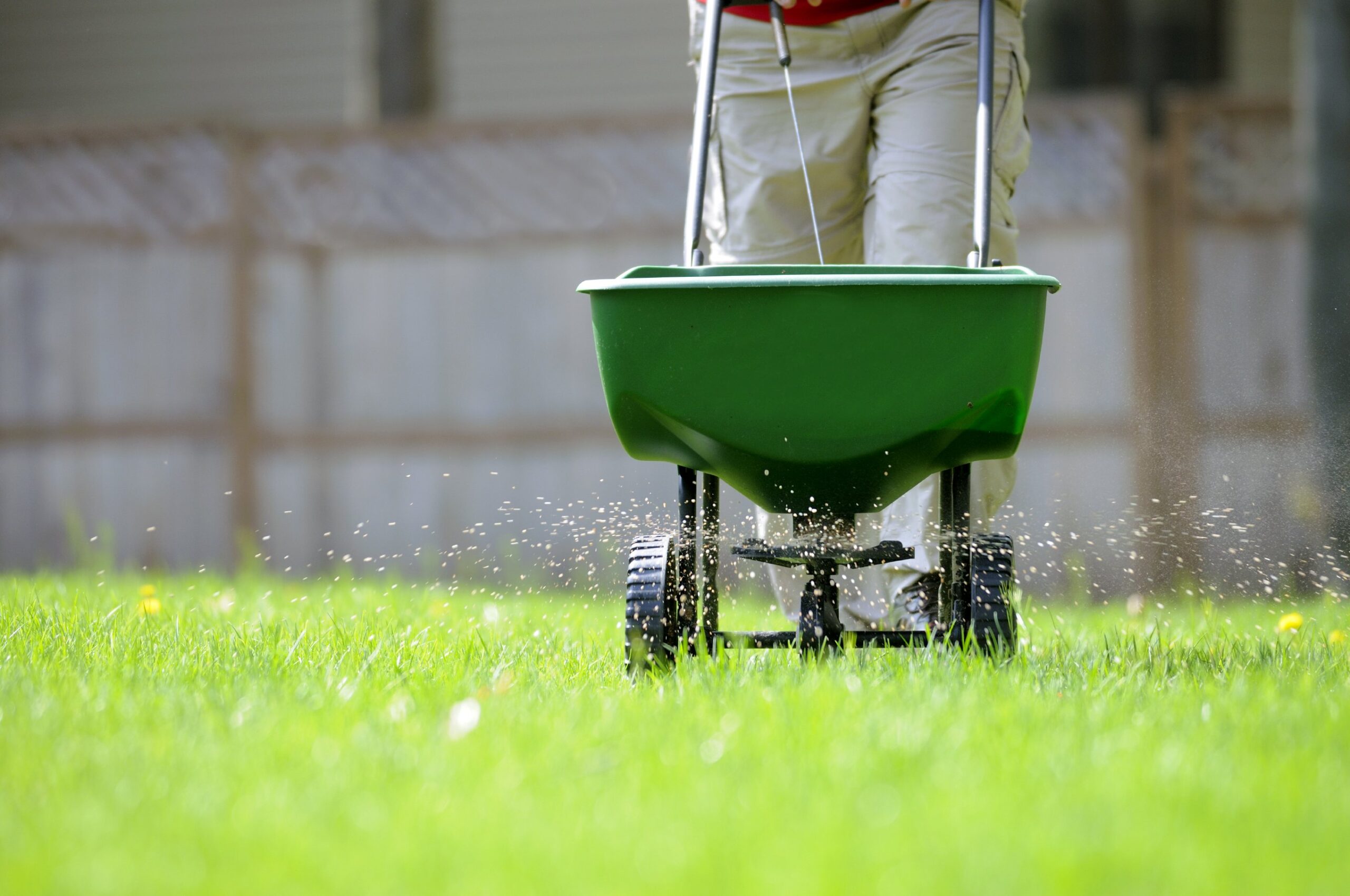
Granular fertilizer is dry prills spread with a broadcast spreader. They sit on the soil surface until water dissolves them, which is why granular applications need to be watered in or timed ahead of rain. The nutrients then move into the root zone with that water.
Liquid fertilizer is nutrients dissolved in water and sprayed across the turf. Part is absorbed directly through the leaf blade, called foliar uptake, and the rest reaches soil and is taken up by roots. That second pathway is the main practical difference between the two.
Both deliver the same nutrients. Nitrogen is nitrogen whether it arrives as a prill or a droplet. What differs is how much can be applied at once, how fast the plant receives it, and how long it keeps working.
Where Granular Has the Edge
Slow release nitrogen is the biggest advantage. Granular products can be coated or chemically formulated to break down gradually over six to eight weeks, feeding steadily rather than all at once. That is difficult to replicate in a liquid, where most nitrogen sources are immediately available.
For the September or early October feeding, that gradual release is exactly right. A fescue lawn recovering from a Tennessee summer benefits from a steady supply over weeks rather than a spike it cannot use. On Bermuda and zoysia, moderate release also avoids the flush of soft growth that invites problems heading toward frost.
Granular also carries more total nutrient per pass, which makes it efficient for base feedings. And our clay based soils hold nutrients reasonably well once they reach the root zone, so what goes down tends to stay available rather than leaching the way it would on coastal sand. That staying power is a genuine advantage of both our soil and the granular form.
Where Liquid Has the Edge
Coverage uniformity comes first. A spray pattern is more even than spread prills, which means no striping and no hot spots where a handful of granules landed together. On a lawn you are judging by appearance, that consistency shows.
The more important advantage here is cold weather performance, and it matters specifically for the late fall feeding on fescue lawns. That application goes down in late October or November, once top growth has stopped but roots are still active. At those soil temperatures, microbial activity has slowed considerably, and slow release products that depend on microbes to break them down will not release much of anything.
A liquid with readily available nitrogen, or a granular product with a meaningful quick release share, is what actually works in that window. This is one of the few times in the year when fast availability is the correct choice rather than the cheap one.
Liquid also works well for carrying several products in one pass and for spoon feeding lighter doses more frequently on a stressed lawn where a full granular rate would be too much at once.
How Thin Rocky Soil Affects It
Much of Rutherford County sits on shallow soil over limestone bedrock. In plenty of yards around Murfreesboro you hit rock within a foot, and cedar glade areas have even less. That shapes how both methods perform.
Shallow soil holds less water and fewer nutrients than a deep profile, and it forces shallower root systems. A lawn with roots in the top three or four inches simply cannot reach as much of any application, regardless of how it was delivered. That argues for moderate rates applied more regularly rather than heavy infrequent feedings, with either method.
It also means our lawns dry out faster than the clay depth would suggest. Granular product applied before a dry stretch can sit undissolved for days, doing nothing. If rain is not in the forecast and you cannot irrigate, that is a real argument for liquid on that particular application, since liquid is already in solution.
The rock itself matters for spreaders too. Uneven rocky ground makes a consistent spreader pace harder to hold, which is one small practical reason striping shows up more on some properties here than on others. Walking a steady line matters more on this terrain than on flat ground.
What Strong Programs Actually Do
Across the properties we manage, the best results come from using both rather than picking a side. Granular carries the base feedings with slow release nitrogen working over weeks. Liquid handles corrective applications, micronutrients, and the cold weather feeding where fast availability is required.
The fall sequence illustrates it. An early fall granular feeding with slow release nitrogen supports recovery and thickening on fescue. Then, if you have fescue, a late fall application in November weighted toward available nitrogen drives next spring’s green up, and that one benefits from either a liquid or a granular with a quick release share.
If a company offers only one method, ask why. That is not disqualifying, and plenty of good work is done with granular alone. It does mean the equipment may be steering the recommendation rather than your lawn.
The Comparison That Matters More
If we could redirect one question in this market, it would be away from method and toward grass type. Murfreesboro sits in the transition zone, where fescue and Bermuda lawns share the same streets and need opposite fall schedules.
A perfectly chosen liquid applied to a zoysia lawn in November will hurt it, because late nitrogen on warm season grass produces cold damaged tissue and feeds large patch. The same application on a fescue lawn next door is the best thing you could do for it. Delivery method is a detail inside a decision that has already been made correctly or incorrectly at a higher level.
Rate is the other factor that outweighs method. An uncalibrated spreader running twenty percent heavy causes more trouble than any granular versus liquid difference could offset. When homeowners tell us a product did not work, timing, grass type, and calibration explain it far more often than the product does.
What to Do Next
Identify your grass before anything else. Tall fescue grows in clumps with wide flat blades and stays green through winter. Bermuda and zoysia spread by runners and turn tan. What your lawn looked like last January is the most reliable clue you have.
If you apply granular yourself, time it ahead of rain or plan to water it in, and calibrate the spreader once a season by running a measured area with a known weight and comparing against the target rate. Fifteen minutes once a year closes most of the gap between DIY and professional results.
When comparing quotes, ask which method is used for which application and why, and whether the schedule differs by grass type. A company that can explain the reasoning rather than asserting one method is superior is generally the one paying attention to your particular lawn.
If you would rather have someone else match the method, product, and timing to your grass and soil, we are here for that. Visit lawnsquad.com to find Lawn Squad of Murfreesboro and request a free quote. Our VitaminLawn program is built around the transition zone grasses and shallow limestone soils we actually work with here.