When Should I Apply Large Patch Fungicide to My Chattanooga Zoysia or Bermuda Lawn?
Short Answer: Large patch is a soil borne fungus that attacks zoysia and bermuda while the grass is slowing down for the year, and it is driven by cool, wet conditions rather than summer heat. Infection begins in fall, but the damage frequently stays hidden until the lawn tries to green up the following spring. That is why the treatment is timed to soil temperature instead of to visible spots. We start tracking soil temperature at the two inch depth in late summer and apply the first preventive fungicide as readings settle near 70 degrees on their way down, typically late September into October here, with a follow up roughly a month later.
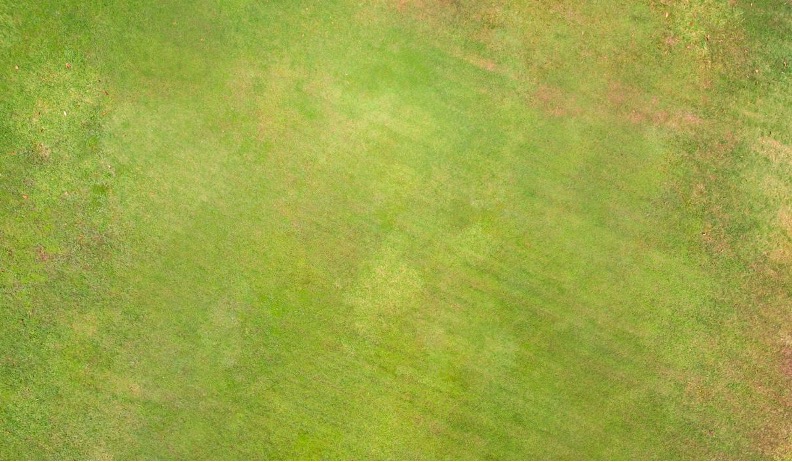
Think back to April. The zoysia in the front yard came out of dormancy the way it always does, slow and uneven, and you gave it time. By the first week of May the neighbors were mowing and your lawn still had two or three ragged circles in it, five or six feet across, matted flat and the color of wet straw. The edges looked slightly orange in the low morning light. You watered them. You fertilized them. They filled back in eventually, most of the way, sometime in June.
Those circles were not a spring problem. They were last October’s problem, and you were looking at a photograph of something that had already happened.
Homeowners find this genuinely maddening, and we understand why. You are being asked to spend money on a treatment for a disease you cannot see, months before you would have any evidence it exists. So here is the whole picture, including how to decide whether your property needs it.
The Disease, Plainly
Large patch is caused by a strain of Rhizoctonia solani that lives in the soil and the thatch layer of warm-season lawns. It is a specialist. Zoysia is its favorite host in our market by a wide margin, bermuda gets hit less often but still gets hit, and it will also work on centipede and St. Augustine where those show up in North Georgia yards.
The fungus attacks leaf sheaths right at the base of the plant, rotting the tissue where the blade joins the crown. Pull on an affected blade and it slides out easily, with a dark, water-soaked, slightly slimy section at the bottom. The roots are usually fine. That detail matters, because it is why the lawn eventually recovers and why so many people conclude they fixed it with fertilizer.
Cool and Wet, Not Hot and Humid
This is the part that trips people up, because our other big turf disease works the opposite way. Brown patch on tall fescue is a July and August problem, fueled by hot nights and heavy humidity. Large patch wants the reverse.
It becomes active when soil cools into the range between roughly 55 and 75 degrees and the canopy stays wet for long stretches. In the valley that is a description of October and November, when nights get cool, dew sits on the grass until nine in the morning, and rain systems roll through with nothing hot enough to dry things out afterward. Zoysia at that point in the year is shutting down for winter and has almost no capacity to outgrow damage. The fungus does not have to be aggressive. It just has to be persistent while the plant is defenseless.
Why the Damage Waits Until Spring
Sometimes you see large patch in the fall, usually as faint yellowing rings that are easy to mistake for the normal patchiness of a lawn heading into dormancy. Often you see nothing at all. The lawn browns out for winter on schedule and covers the evidence completely.
Then spring arrives. Healthy zoysia crowns push new growth as soil warms in April. The crowns sitting inside an infected area cannot, because the tissue they need to push from was destroyed in November. So the lawn greens up around them and leaves those circles behind, sharply defined and stubbornly tan. Every year we get calls in late April from Ooltewah, Collegedale, and East Brainerd describing exactly that, and the honest answer is that the decision point passed six months earlier.
Soil Temperature Is the Trigger, Not the Calendar
Air temperature is a poor guide here. Soil holds heat and lets it go slowly, and a warm week in October does not undo three cool nights underground.
We track soil temperature at the two inch depth starting in late summer and apply the first preventive fungicide when readings settle toward 70 degrees on a falling trend, then follow with a second application about four weeks later to carry protection through the full infection window. On the valley floor around Chattanooga, Hixson, and Harrison, that first application usually lands from the last week of September into the middle of October. Properties several hundred feet up on Signal Mountain and Lookout Mountain cool earlier and can hit the trigger a week or more ahead of the valley, which is one more reason we schedule by reading rather than by date.
The material has to reach the crown and thatch layer, not sit on leaf tips, so these applications go out at higher water volume and are watered in. That is a meaningful difference from a surface weed treatment and part of why a hose-end product from the shelf so often disappoints.
Which Lawns Actually Need This
Not every zoysia lawn in our service area needs preventive fungicide, and we will tell you when yours does not. Risk stacks up on properties with certain traits:
- A history of ragged, slow-greening circles at spring green-up, even from two or three years back
- Heavy or compacted clay, or low spots that hold water after a storm, which is common on the flatter cuts in Ringgold, Fort Oglethorpe, and Rossville
- Irrigation running in the evening, or morning shade that keeps the canopy wet past mid-morning
- A thatch layer over half an inch thick, which gives the fungus a permanent place to live
A well drained, full sun zoysia lawn with thin thatch and a clean history may reasonably skip it. A shaded, low lying lawn that has shown circles twice is going to show them again.
The Half of the Program That Is Not a Fungicide
Fungicide buys protection during the window. Cultural correction lowers the pressure permanently, and the two together do far better than either alone.
Nitrogen timing is the biggest lever. Feeding zoysia or bermuda late in the season pushes soft, succulent growth exactly when the fungus is waking up, and it reliably makes large patch worse. Nitrogen belongs in the growing season, and the last application of the year should be well behind you before soil starts cooling. Watering is the second lever. Shift irrigation to early morning so the canopy dries by mid-day, and cut frequency back as growth slows in fall rather than running the same clock you used in July. Core aeration relieves compaction and thins the thatch layer the fungus overwinters in. Where morning shade is the culprit, limbing up low branches to move air and light across the turf helps more than most homeowners expect.
What to Do Next
Late summer is the right moment to make this call, because it is the last stretch where you are ahead of the disease instead of behind it. Give us a ring at 423-287-4871 or reach us through lawnsquad.com for a free quote.
A first visit is a walk of the property. We probe soil, measure the thatch layer, check drainage and morning shade patterns, and ask what you saw at green-up this past spring, since that history predicts risk better than anything we can measure in August. If your lawn is low risk we say so. If it is high risk, we put you on the soil temperature watch list and schedule the first application when the reading arrives, with the follow up about a month behind it.
Expect no visible change at 30 days, and that is the point. Success with large patch looks like nothing happening. The real report card comes at spring green-up, when the lawn comes back evenly instead of leaving you circles to nurse through May and June. Our VitaminLawn program keeps fertilization timing, weed control, and disease prevention on one coordinated calendar built around your grass type and your soil, which is how the nitrogen mistake gets avoided in the first place. We serve Chattanooga, Hixson, Red Bank, Harrison, Soddy-Daisy, Lakesite, Ooltewah, Collegedale, Apison, East Brainerd, Signal Mountain, Lookout Mountain, Cleveland, McDonald, Graysville, Wildwood, Flintstone, Rossville, Fort Oglethorpe, Chickamauga, Ringgold, Cohutta, and Tunnel Hill. Independently owned and operated, with a satisfaction guarantee behind the work.