How Do New Jersey’s Fertilizer Rules Affect Fall Feeding on My Cherry Hill Lawn?
Short Answer: New Jersey regulates lawn fertilizer to protect its waterways, and the rules shape when and what can be applied. There is a blackout period running from late fall through winter when turf fertilizer generally cannot go down, restrictions on phosphorus unless a soil test or new seeding justifies it, and requirements around slow release nitrogen. Professional applicators must complete state-approved training and hold certification. Practically, that compresses fall feeding into the productive stretch between late summer and the close of the growing season, which is where cool season grasses use nutrients best anyway.
Somebody at a block party in Marlton mentions that New Jersey has a fertilizer law, and by Monday you are trying to figure out whether the bag in your garage is legal, whether your lawn is going to be starved all fall, and whether the company treating your neighbor’s yard in Mount Laurel is doing something you are not allowed to do yourself. It is a reasonable set of questions and the answers are less alarming than the rumor mill suggests.
The worry underneath is usually simple. People are not opposed to protecting the Cooper River or Rancocas Creek. They just do not want to find out in November that they missed the only window that mattered.
Why This State Wrote Rules in the First Place
New Jersey is densely populated and laced with water. Almost every lawn in our service area drains toward something: the Cooper River through Haddonfield and Collingswood, Pennsauken Creek, Big Timber Creek, the Rancocas through Burlington County, and ultimately the Delaware. Nitrogen and phosphorus that leave a lawn do not disappear. They feed algae, algae consume oxygen as they die back, and the water quality decline that follows is measurable.
Our soil makes the state’s concern especially reasonable here. The coastal plain sandy loam under most South Jersey yards drains fast and holds nutrients weakly, so anything applied in excess, or applied when grass is not actively growing, has a short and direct path past the root zone. That is agronomy, not politics. A nutrient that moves below the roots is a nutrient you paid for and your lawn will never see.
What the Rules Broadly Cover
Without turning this into a legal document, the framework addresses a handful of things. There is a seasonal blackout, running from late fall through the winter, during which fertilizer generally should not be applied to turf. There are restrictions on applying phosphorus to established lawns unless a soil test shows a need or you are establishing new grass from seed or sod. There are requirements concerning how much of the nitrogen must be in slow release form. There are setbacks from waterways and storm drains, and prohibitions on applying to frozen, saturated, or impervious surfaces.
The rules also draw a line between what homeowners may apply and what certified professionals may apply, with the professional standards being the stricter and more closely tracked of the two. If you want the current specifics, the state agriculture and environmental protection agencies publish them plainly, and we would rather point you there than paraphrase a statute from memory.
What Certification Actually Means
Anyone applying fertilizer commercially in New Jersey has to complete state-approved training and hold certification. That is not a formality that gets renewed with a check. The training covers turf nutrition, application timing, calibration, buffer zones, and the environmental reasoning behind each rule, and it has to be maintained over time.
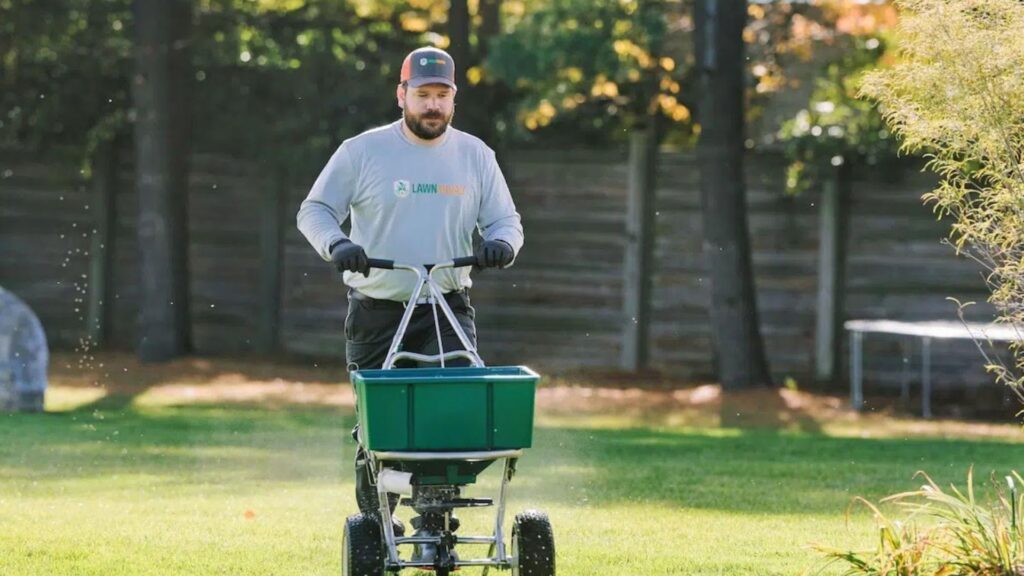
What it buys you as a homeowner in Voorhees or Riverton is a technician who knows why the spreader deflector matters on the pass nearest the storm drain, who calibrates equipment rather than guessing, and who can explain what is in the bag. Ask any company you are considering whether their applicators are certified and who holds the license. It is a fair question, the answer should come quickly and without hedging, and a company that gets uncomfortable is telling you something useful.
The Rules and Good Agronomy Point the Same Direction
Here is the part that surprises people: if we deleted the entire regulation tomorrow, our fall calendar would barely change. Cool season grasses like the tall fescue, bluegrass, and perennial rye growing across Cherry Hill and Moorestown do most of their root building when soil is warm and air is cooling. Late summer through the end of the growing season is their peak appetite. Once soil cools and top growth stops, the plant is not taking much up, so material applied then is sitting exposed on a lawn that cannot use it.
The blackout period, in other words, closes a window that was already unproductive. The state framework and a well built turf program are aiming at the same target from different directions.
Slow Release Nitrogen Matters More on Our Soil Than Most
Slow release nitrogen meters out over weeks rather than dumping availability in a few days. On heavy clay that is a nice efficiency. On the loamy sand under Palmyra, Beverly, and Riverside, it is close to essential. A quick release product on fast-draining soil produces a surge of growth, a flush of clippings, and then a hungry lawn again, with a meaningful share of what you applied moving past the roots on the next real rain.
Feeding in smaller, better-timed amounts with a substantial slow release component gives steadier color, less top growth at the expense of roots, and considerably less waste. Across the properties we manage in this area, that approach consistently outperforms the fewer-and-heavier method that works acceptably in other parts of the country.
Building the Fall Calendar Around the Window
Working backward from the close of the season, a well planned fall in South Jersey looks roughly like this. Late August into September is when aeration and overseeding happen, and where the establishment feeding goes down with the seed, since new seedlings are exactly the case where starter nutrition is appropriate. Through the middle of autumn, as the lawn recovers density and roots run hard, a follow-up feeding carries color and root development forward. The final application of the season lands while the grass is still green and still metabolizing, comfortably ahead of the blackout, not scrambling against it.
The mistake we see most often is treating fall as one event in October. Two or three well spaced applications inside the productive window do far more for a lawn than a single large one at the end of it, and they respect the rules without any strain.
If You Are Buying Your Own Bags
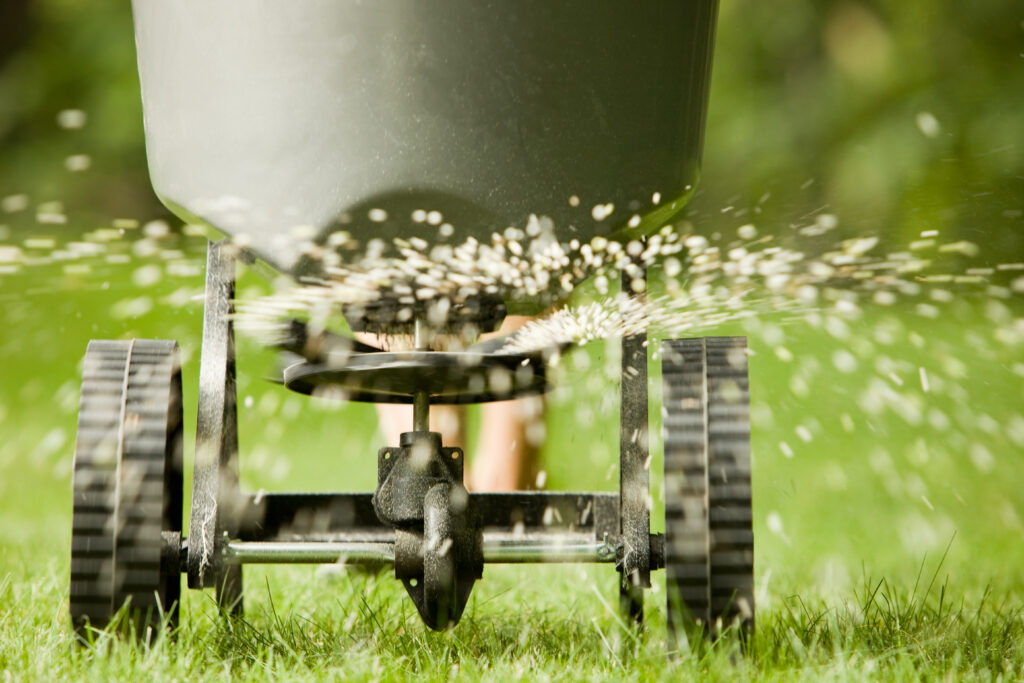
Homeowner products sold in New Jersey are formulated to comply with the state’s requirements, so a bag purchased locally is generally a legal bag. The rules you have to manage yourself are the ones about timing, placement, and rate. Sweep granules off the sidewalk and driveway back onto the lawn rather than leaving them to wash into a storm drain in West Berlin or Merchantville. Keep the spreader away from the edge of a creek or ditch. Do not apply before a heavy rain in the belief you are watering it in, because on our soil you are mostly funding the watershed. And read the label rate rather than estimating, since over-application is both the most common error and the most expensive one.
What to Do Next
If you plan to seed this fall, get it on the calendar now for the late August through September window, and plan the feeding schedule alongside it rather than after it. If you already have a lawn program, ask your provider to walk you through their fall sequence and confirm their certification. If you are starting from scratch, a soil test is a genuinely worthwhile first step, both because it tells us whether phosphorus is justified and because it removes guesswork about pH on our naturally acidic ground.
When we come out, the first visit is a property walk, a look at soil and turf condition, and a written plan with the timing laid out so you can see how the season fits together. Expect visible color response within a couple of weeks of the first fall application. At thirty days you should see thicker growth and a lawn recovering from summer. At ninety days, as the season closes, you should see a dense, deep green stand carrying strong root reserves into winter, which is what makes next June easier. Our VitaminLawn program is built around your specific grass type, your soil, and South Jersey conditions and regulations rather than a generic national calendar.
We serve Cherry Hill, Marlton, Mount Laurel, Moorestown, Voorhees, Haddonfield, Collingswood, Haddon Heights, Audubon, Barrington, Bellmawr, Beverly, Camden, Gibbsboro, Gloucester City, Lawnside, Magnolia, Maple Shade, Merchantville, Mount Ephraim, Oaklyn, Palmyra, Pennsauken, Riverside, Riverton, West Berlin, and Willingboro. Call 856-301-2447 or visit lawnsquad.com for a free quote.