
Short Answer: September is the single most productive month of the year for a North Shore lawn. If the lawn is thin, aerate and overseed in the first half of the month, because seedlings need six to eight weeks of growing weather before our first hard frost. Feed it, since fall nitrogen goes into roots and stored energy rather than top growth. Handle perennial weeds like dandelion and ground ivy late in the month when they are moving sugars downward. Reprogram the irrigation, because summer settings badly overwater a September lawn and feed disease. And skip the things that sound productive and are not: dethatching, scalping, and weed control on newly seeded areas.
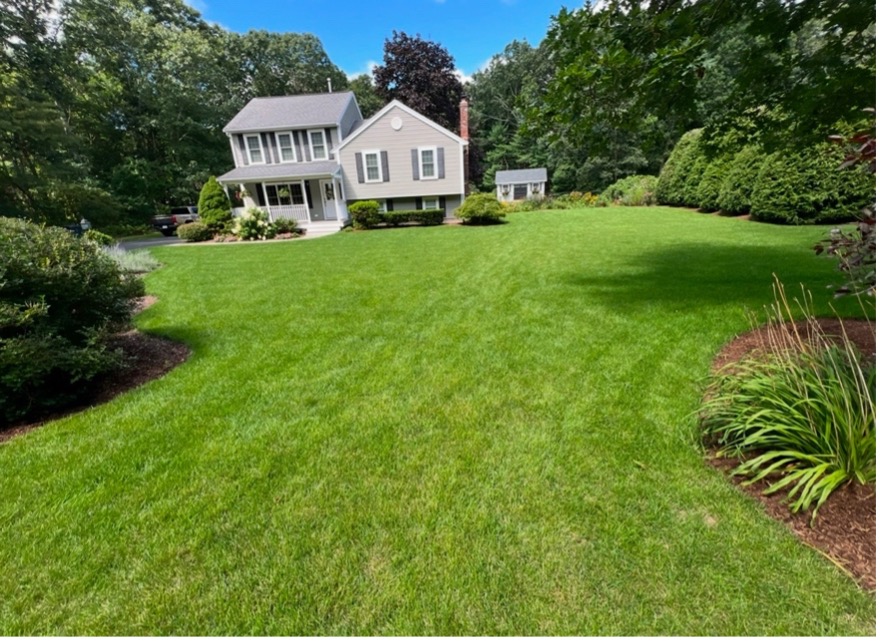
North Shore lawns spend July and August surviving. September is when they start building again, and what happens in these few weeks decides how the lawn looks next May far more than anything done in spring.
The difficulty is that nearly everything worth doing wants to happen at once, and some of it conflicts. Here is the order that works.
Why September Carries the Most Weight
Lawns here are cool-season grasses, mostly Kentucky bluegrass, perennial ryegrass, fine fescue, or a blend. They have two productive periods a year, and fall is the better one because root growth dominates.
Soil temperature falls into the range where roots grow fastest while air temperature drops out of the range that stresses the plant. Everything applied now gets used rather than merely endured.
Weed pressure also shifts. Summer annuals like crabgrass are finishing and dying on their own. Winter annuals have not germinated yet. For a few weeks you can act before a problem exists rather than after.
And day length shortens on a fixed schedule no amount of warm weather changes. A mild October does not extend the seeding window, because the limiting factor is light and falling soil temperature.
Decide About Seed First
This decision drives the rest of the sequence, so make it before buying anything.
Walk the lawn and look at density rather than color. Green but with visible soil between plants is thin, and thin lawns get weeds no matter what you spray. Dense but tired does not need seed and would be better served by feeding and weed control.
If it needs seed, it has to happen early. Work backward from frost: the first hard freeze on the North Shore typically arrives in early to mid October, and a seedling needs six to eight weeks of decent growing weather to establish. Seed down in the first half of September is comfortable. Late September is the edge.
Aerate, Then Seed Immediately
Much of this area sits on clay, and older properties have decades of accumulated compaction from traffic and equipment.
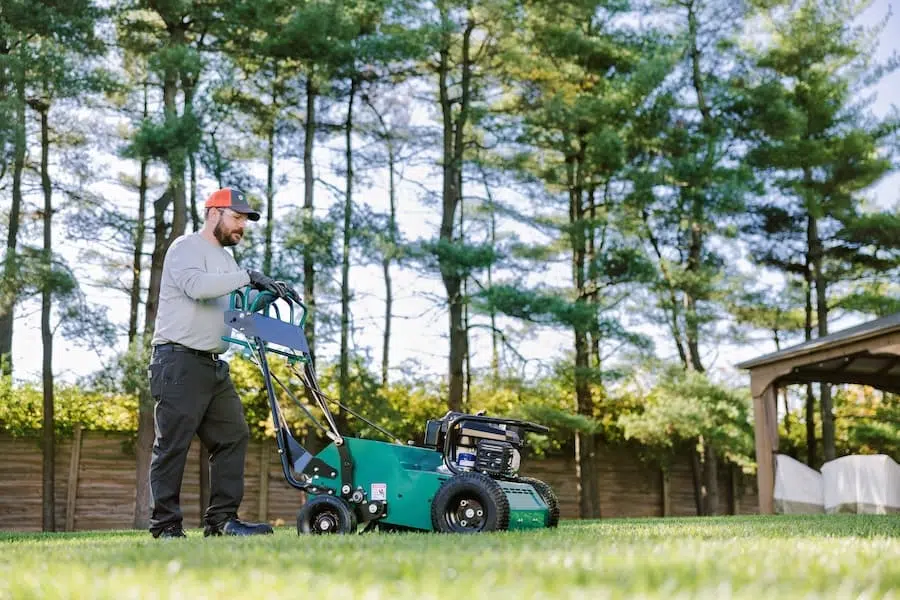
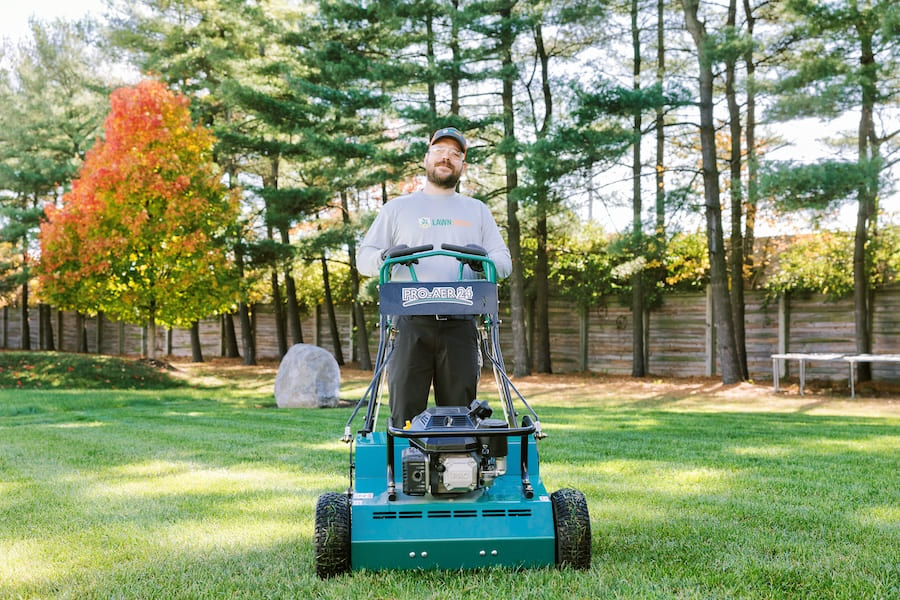
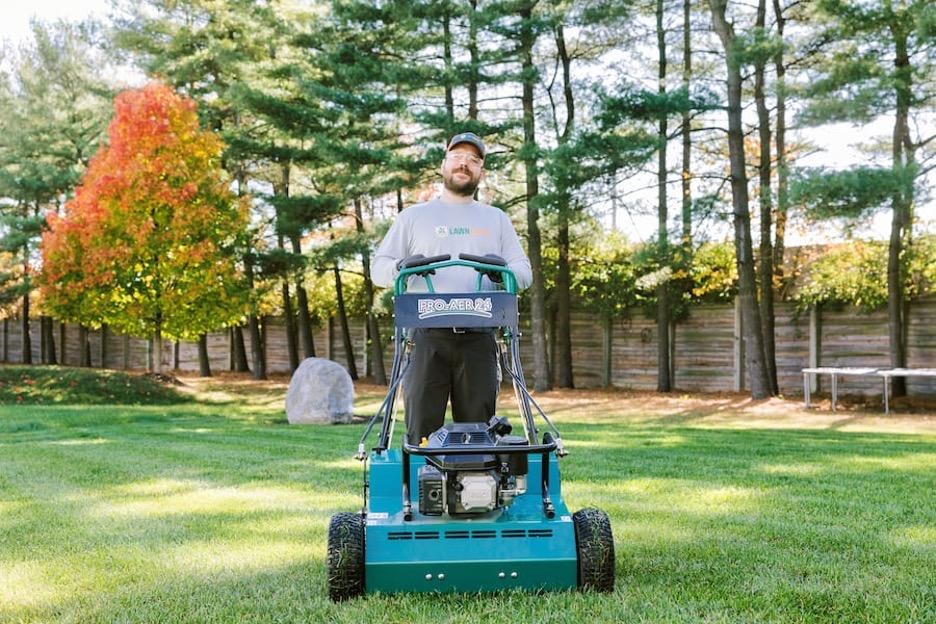
Core aeration relieves compaction and opens direct pathways for water, air, and fertilizer into the root zone instead of running off. For seeding it does something else just as valuable: every hole is a pocket of exposed soil that shelters seed and holds moisture.
Seed broadcast across an unaerated lawn mostly lands on thatch and existing blades, germinates on dew, and dies. Seed in an aeration hole establishes at a far higher rate.
Leave the plugs on the surface. They break down within a couple of weeks and work soil microbes into the thatch layer while doing so.
Test whether you need it: water the lawn, wait a day, push a long screwdriver in with hand pressure. Stopping at two inches means compaction is your limiting factor.
Shade Is the Defining Local Problem
North Shore properties have some of the best mature tree canopy anywhere, and it is the single biggest complicating factor for turf here.
Grass under heavy canopy competes for light, for water, and for nutrients with tree roots that are far better at getting all three. A lawn that is thin only under the trees does not have a fertility problem.
Fine fescues tolerate shade better than Kentucky bluegrass or ryegrass and belong in any seed blend going into those areas. Raising the mowing height in shade helps as well, since more leaf area partly offsets less light.
Selective pruning to lift the canopy and let morning light through does more than any product. And below roughly four hours of sun a day, no seed choice succeeds, and the honest answer is a shade tolerant ground cover or a bed rather than repeatedly reseeding turf that will not hold.
Water Completely Differently After Seeding
If you seed, the watering rule inverts, and this is where most overseedings fail.
Established lawn wants deep, infrequent soaking. New seed wants short, frequent cycles keeping the top inch continuously moist. The seedling has no roots, everything it can reach is in that top inch, and one hot dry afternoon kills the seeding.
That means light watering two or three times a day early on, tapering as the month cools, then stretching the interval over about four weeks back toward normal once seedlings are up.
Note that Kentucky bluegrass takes fourteen to thirty days to germinate. A blend containing it will look patchy for weeks while ryegrass comes up first, which is normal rather than a failure.
Feed the Lawn
Fall is when cool-season lawns get their most valuable feeding, usually in two applications.
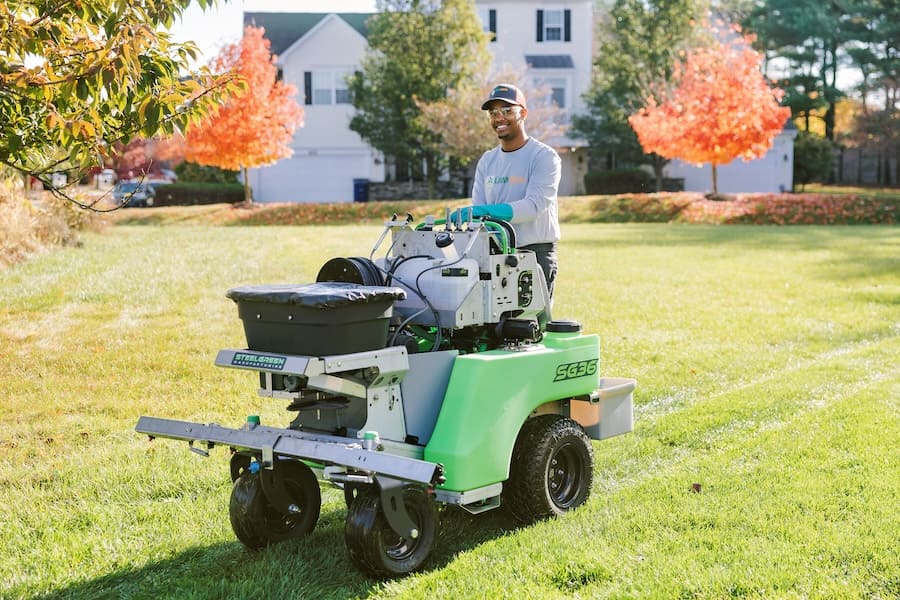
The early fall feeding supports recovery from summer and drives density. If you are seeding, a starter fertilizer covers this, since starters carry the phosphorus seedlings use for root development.
The late fall application in October, made while the grass is still green but growth has slowed, is the one that matters most and gets skipped most. Nitrogen then goes into roots and stored carbohydrates, which is what drives spring green up.
Treat Perennial Weeds Late in the Month
Autumn is the best time of year for dandelion, clover, plantain, and ground ivy, and it is not close.
In fall these plants move sugars downward into roots for winter storage, and a systemic herbicide travels the same pathway and reaches the root, which is what actually kills a perennial. The same product in spring often burns off the top and leaves the root to return.
Ground ivy, the creeping square stemmed vine that thrives in the shaded damp conditions so common here, is close to the definitive case for fall treatment.
Mind the seeding interval, roughly four weeks either side, and sequence rather than doing both at once.
Reprogram the Irrigation
The controller does not know the season changed, and summer settings badly overwater a September lawn.
Cooler air, shorter days, and higher humidity mean the lawn now needs roughly half what it needed in July. Overwatering in fall is not a harmless waste; extended leaf wetness is the primary driver of fungal disease, and our fall temperatures suit brown patch and dollar spot well.
Water early in the morning so the canopy dries in the sun rather than staying wet overnight.
What to Skip
- Dethatching as a reflex. Core aeration handles moderate thatch far more gently.
- Scalping to make the lawn look tidy. Keep height up through fall.
- Broadleaf weed control on anything seeded within the last month.
- Heavy nitrogen on new seedlings.
- Seeding a lawn you cannot water consistently for three weeks.
A Simple Order of Operations
If you take nothing else from this, follow the sequence rather than the calendar.
Aerate, then seed immediately into the open holes, then water short and often for three weeks. Feed at seeding, then again in October once growth slows. Treat perennial weeds only after new grass has been mowed several times, or on areas you did not seed at all. Keep mowing until growth genuinely stops, bringing the height down gradually over the last several cuts. Stay ahead of leaves so they never blanket the turf before snow.
Get that order right and September does most of the work for you. Get it out of order, most commonly by applying weed control just before seeding, and you spend the same money for a fraction of the result.
What to Do Next
Walk the lawn this week and write down the two or three things that actually bother you about it, then work backward from the window rather than forward from today. Almost every fall mistake we see in the North Shore comes from starting with the calendar instead of with the lawn.
If you would rather have someone look at it with you, Lawn Squad of the North Shore offers a free quote. Call 833-816-7508 or find us at lawnsquad.com. Every Lawn Squad location is independently owned and operated, and our VitaminLawn fertilization and weed control program is built around the grass, soil, and conditions here rather than a national average.
A first visit is a walk of the property, a look at the thin areas, a check of mowing height and irrigation, and a straight conversation about what is realistic in the weeks left this season. At 30 days you should see color and density improve. At 90 days the lawn should be visibly thicker, with the root growth that carries it through winter.