

Reading the Bag: What Aurora Homeowners Should Look for in a Late-Season Fertilizer
Reading the Bag: What Aurora Homeowners Should Look for in a Late-Season Fertilizer
Short Answer: When you shop for a late-season fertilizer in Aurora, look past the name on the front of the bag and read the three numbers and the label on the back. For the bluegrass lawns common in the Fox Valley, nitrogen is the nutrient that matters most in November, ideally with a good share in quick-release form so the grass can take it up before the soil cools. Phosphorus should usually be zero, as Illinois law restricts it on established lawns. Potassium is helpful only if a soil test shows a need. Skip products with crabgrass preventer this time of year.
If you have walked into a big-box store or garden center around Aurora this month, you have seen the display: bags marked winterizer, fall lawn food, winter guard, and fall weed and feed, all with autumn leaves or snowflakes on the front. Right next to them are the regular fertilizers from spring. It is hard to know which one your lawn actually needs.
Most homeowners we talk to are not looking for the fanciest bag. They just want to buy the right thing and use it at the right time. Once you know what to look for on the label, that gets much easier.
Start by Ignoring the Name
Words like winterizer, fall lawn food, and winter guard are marketing names chosen by the manufacturer. They are not regulated categories with required ingredients. Two products called winterizer from two different brands can be very different inside.
What is regulated is the guaranteed analysis, which includes the three large numbers printed on every bag. That is the real description of what you are buying.
The Three Numbers
The three numbers always appear in the same order: nitrogen, phosphorus, and potassium. They show the percentage of each nutrient by weight. A bag labeled 24-0-12 contains 24 percent nitrogen, no phosphorus, and 12 percent potassium.
Nitrogen drives color, growth, and, in late fall, energy storage. Phosphorus supports root development, especially in new seedlings. Potassium helps the plant handle stress, including drought and cold.
Nitrogen: The Main Event in November
For the Kentucky bluegrass, ryegrass, and fescue lawns common across Aurora and the Fox Valley, nitrogen is the nutrient that matters most in a late-season feeding. In November, cool-season grass takes up nitrogen and stores it in its crowns, roots, and rhizomes. That stored energy fuels an earlier, more even green-up in spring.
Look for a product where nitrogen is the largest of the three numbers.
Quick-Release Versus Slow-Release
The label on the back usually breaks nitrogen down by type. Quick-release nitrogen, often listed as urea or ammoniacal nitrogen, is available to the plant right away. Slow-release nitrogen, sometimes listed as water-insoluble nitrogen, polymer-coated urea, or methylene urea, breaks down over weeks.
Earlier in the fall, slow-release nitrogen is a good fit because it feeds the lawn steadily. In November, a larger share of quick-release nitrogen is often preferred, because the grass needs to take it up before the soil gets too cold. A product with mostly slow-release nitrogen applied in late November may not release much until spring.
Phosphorus: Usually Zero
Illinois law restricts lawn fertilizer containing phosphorus on established lawns, with exceptions for new lawns and for soil tests that show a need, so most maintenance products sold here are phosphorus-free. For an established lawn getting a late-season feeding, look for a zero as the middle number. If you seeded bare spots this fall, a starter fertilizer at seeding time was the right place for phosphorus.
Potassium: Helpful in Some Cases
Many products marketed as winterizers are high in potassium, on the idea that it improves winter hardiness. Potassium does support stress tolerance, but research on cool-season lawns points to nitrogen as the nutrient that drives most of the late-season benefit.
Many northern Illinois soils already have adequate potassium. Unless a soil test shows a shortage, paying extra for a high-potassium winterizer may not change much. A product with some potassium is fine. It just should not be the reason you choose the bag.
Skip Crabgrass Preventer This Time of Year
Some fall products include weed control or are leftover spring products with crabgrass preventer. Crabgrass preventer does nothing in November, since crabgrass germinates in spring. It can also interfere with new grass seed if you overseeded this fall. Check the label and avoid products with pre-emergent herbicides for a late-season feeding.
What About Weed and Feed?
Fall is a good time to control broadleaf weeds like dandelions and clover, because they are moving energy into their roots for winter. But by November in the Fox Valley, temperatures are often too cold for many weed control products to work well, and granular weed and feed products need specific conditions to stick to weed leaves. Weed control is usually more effective earlier in the fall as a separate step.
Read the Rate and the Coverage
The label tells you how much area a bag covers and which spreader setting to start with. Measure your lawn, or at least estimate it, so you buy the right amount. Spreader settings are a starting point. Setting the spreader at half the recommended rate and making two passes at right angles gives more even coverage than a single pass.
Granular or Liquid?
Most homeowners use granular fertilizer because it is easy to store and spread. Liquid applications are common in professional programs, since they allow very even coverage and precise rates. Both work well in November. What matters most is that the nitrogen reaches the soil while the grass is still active.
Organic Fertilizers
Some homeowners prefer organic or natural-based fertilizers. Many organic products release nitrogen slowly as soil microbes break them down, and soil microbes slow way down in cold weather. That means an organic product applied in late November may release little nitrogen until spring. If you prefer organic products, applying a bit earlier in the fall, in October, gives them more time to work while the soil is still warm.
Watch the Iron and Extras
Some fall products add iron, sulfur, or other micronutrients. Iron can deepen color quickly, but that color boost is cosmetic and short-lived in November. It is not a substitute for nitrogen. Extras are fine, but they should not drive the choice.
Store Leftovers Properly
If you have fertilizer left after the late-season feeding, seal the bag and store it somewhere dry, off the garage floor. Moisture causes clumping, which leads to uneven spreading next time. Never use leftover fertilizer as a de-icer on steps or driveways.
A Soil Test Answers the Hard Questions
If you are unsure whether your lawn needs potassium or has enough phosphorus, a soil test takes the guesswork out of it. It shows pH and nutrient levels. University of Illinois Extension can point homeowners to testing options.
What a Good Choice Looks Like in Spring
Imagine this. It is mid April. You did not buy the most expensive bag with the most snowflakes on it. You read the numbers, picked a phosphorus-free product with plenty of quick-release nitrogen, and applied it evenly in mid November. Now your lawn is greening up early and evenly, and you spent less than the neighbor who bought the fancy winterizer and applied it in October.
What to Do Next
When you shop this month, flip each bag over and compare the numbers instead of the names. Choose a nitrogen-focused, phosphorus-free product with a good share of quick-release nitrogen, skip anything with crabgrass preventer, and apply in November at half rate in two crossing passes while the grass is green and the ground is not frozen.
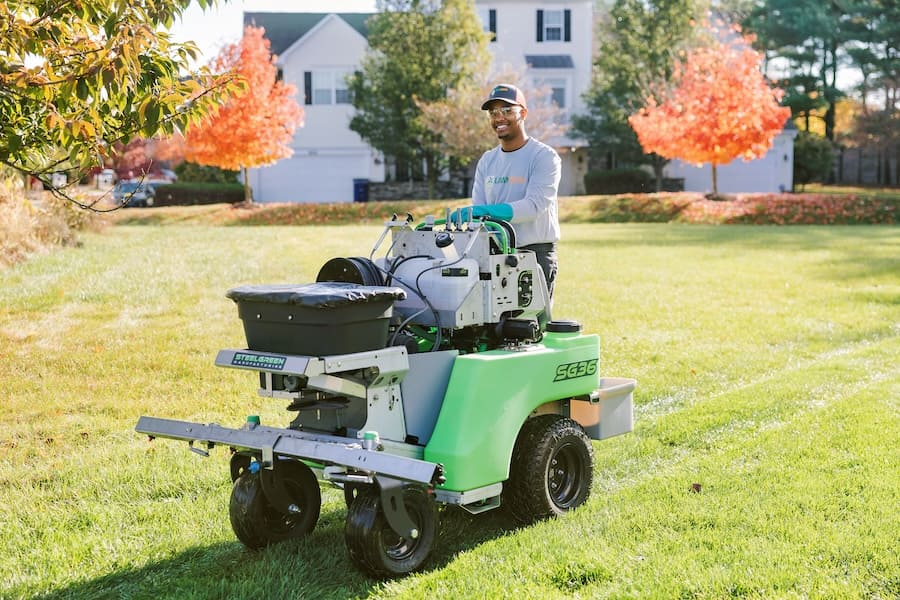
If you would rather have someone else handle the timing decisions, product selection, and application for your Aurora lawn, we are here for that. Lawn Squad of Aurora serves homeowners across Aurora and the Fox Valley. Visit lawnsquad.com to request a free quote. Our VitaminLawn program is built for the grass types, soils, and weather patterns we deal with here.
Here is what to expect. We will look at your grass, talk through how your lawn handled this year, and explain what we would apply before winter and why. If your lawn does not need a late-season application, we will tell you that honestly.


