Short Answer: September is the prime aeration and overseeding window for North Shore cool-season lawns, but the September outcome depends on July decisions. Keeping the lawn alive through summer heat, avoiding broadleaf herbicides that linger and block germination, finishing grub prevention by mid-July, scheduling a soil test to address heavy clay deficiencies, and walking the property to inventory exactly what needs renovation versus touch-up are all July moves. Skip them and September seeding underperforms. Get them right and you get a thick, dense stand of new bluegrass, rye, and fescue going into winter. Below is the July planning playbook we walk Winnetka, Glencoe, Wilmette, Highland Park, and Lake Forest customers through every summer.
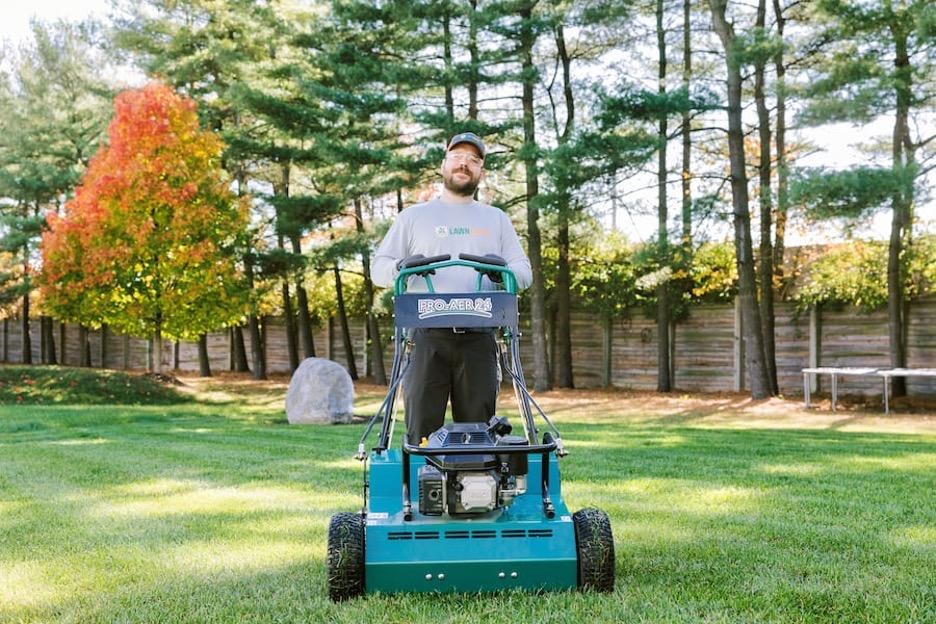
If you ask any turf professional on the North Shore which month decides what your lawn looks like next May, the answer is September. The early fall aeration and overseeding window is when the real renovation happens. Cores get pulled out of heavy Lake County clay so air, water, and nutrients reach the root zone. New genetics get seeded into the existing stand of Kentucky bluegrass, perennial ryegrass, and turf-type tall fescue. The fall fertilization sequence drives root storage of carbohydrates that fuel next spring’s recovery and next summer’s resilience.
But the September outcome is set up in July. The decisions you make right now, while the lawn looks tired and you would rather think about anything else, are the decisions that determine whether your September aeration and seeding produce a thicker, denser lawn or whether they fail to germinate, fail to thrive, or get out-competed by weeds. We have walked dozens of properties in Winnetka, Glencoe, Wilmette, Highland Park, Lake Forest, Northbrook, Deerfield, and the rest of our service area where the homeowner did the September renovation correctly and got disappointing results because something they did or did not do in July sabotaged the project before it started.
Here is the July planning playbook.
Why September Is the Window on the North Shore
Cool-season grass seed in Lake County germinates best when soil temperatures are between 50 and 65 degrees and air temperatures are running in the 60s and low 70s. Across most of our service area, that window opens in the last week of August, peaks through the middle two weeks of September, and starts closing in early October. After mid-October, soil temperatures drop fast enough that germination slows, and the seedlings that do come up cannot put down enough root before the November freeze to survive winter.
That gives you about a five-week window. The more days inside that window a seedling has of optimal soil temperature, the more vigorous the resulting plant. A seed that germinates on September 5 in Highland Park is significantly stronger going into winter than the same seed that germinates on October 5. The early September strategy beats the late September version on the North Shore every year. The single biggest leverage point in cool-season turf management on heavy clay is hitting that early window.
The other reason September is uniquely powerful here: it is the fertilization window with the longest payoff in our climate. Nitrogen applied in early fall is taken up and stored as root carbohydrate reserves, which fuels next spring’s green-up and next summer’s heat tolerance. A September feeding is doing work for the lawn ten months later. Almost no other application has that leverage.
Decision One: Are You Keeping the Lawn Alive Through July and August
The most fundamental July question is preservation. If the lawn does not arrive at September with crown tissue alive across most of the property, there is no foundation for the new seedlings to fill in around. Overseeding into a dead lawn is not renovation. It is starting from scratch on bare dirt, which works but produces an inconsistent, weed-prone stand.
What it takes to keep cool-season turf alive through a Chicago July and August: one inch of irrigation per week split into two early-morning cycles, mowing at 4 inches with a sharp blade, no aggressive nitrogen pushes, the brown patch and dollar spot management we covered in the preservation article, and the grub prevention covered below. If you have not been doing those things, the time to start is this week. The longer you wait, the more crown tissue dies on heavy clay where root recovery is already harder than on lighter soils, and the more your September renovation looks like a from-scratch project.
The honest self-assessment: walking the property today, can you identify the crowns of grass plants at the soil line across most of the lawn? If yes, you have living tissue to work with in September. If most of the lawn pulls up like a thin carpet, you are looking at sod-equivalent renovation rather than overseeding, and the cost and scope of the September project change significantly.
Decision Two: The Broadleaf Weed Trap
This is one of the most expensive mistakes we see on North Shore lawns every July. The lawn looks weedy in July. The homeowner reaches for a broadleaf herbicide, blanket-treats the whole property, the weeds die back, and six weeks later they aerate and overseed in mid-September. The seed germinates poorly or unevenly and they cannot figure out why.
The why is residual herbicide activity. Most common broadleaf weed killers (2,4-D, dicamba, MCPP, triclopyr, quinclorac) carry a labeled wait period of 4 to 8 weeks before seeding, and in practice the residual effect on seed germination can stretch longer in hot, dry soils. A late-July blanket herbicide application can absolutely shut down a mid-September overseed.
The right move in July: spot-treat individual weeds with a small handheld sprayer where needed, but do not blanket-treat the lawn. If you have a heavy weed problem, the September aeration plus overseeding plus dense new turf is the long-term answer to weed pressure, not a July herbicide blanket. Save broad weed work for the cooler weather after the seedlings establish in late October or early November.
If you have already blanket-treated, push the seeding window to early October and accept the tighter timeline, or shift the renovation strategy to focus on aeration with a light seeding rate and plan a heavier overseed in the following spring.
Decision Three: Grub Prevention by Mid-July
If grub larvae are feeding on grass roots in late August and early September, your September aeration and seeding work is operating against an underlying root failure that no amount of seed can fix. The new seedlings germinate fine but die three to four weeks later as the grub damage compounds and skunks and raccoons start digging the lawn looking for grubs.
For Lake and Cook Counties, the realistic preventive grub window is mid-June through mid-July. After that, you shift to curative products applied after damage appears, with more variable results. Specifically for renovation planning: if you have any history of grub damage on the property, treat preventively now. It is far cheaper than discovering in October that the new seedlings are not establishing because grubs are still working below the surface.
Walk the lawn with the tug test. Grab a handful of grass in any thinning spot and pull gently. If it lifts easily, grubs are already feeding and you need a curative product this week. If the grass resists, you have time for preventive treatment or to confirm the preventive applied earlier is in the soil.
Decision Four: Schedule a Soil Test Now
July is the right time to send a soil sample to the University of Illinois Extension lab or to your service provider. Turnaround is typically two to three weeks. The results tell you what your specific North Shore clay needs heading into September renovation, and applying lime, sulfur, or specific nutrient amendments at aeration time is significantly more effective than applying them later.
What soil tests typically reveal on North Shore properties: an interesting pH spread. Many older established lawns in Winnetka, Kenilworth, and Wilmette test slightly alkaline due to limestone aggregate in the soil profile and decades of municipal water with lime in it. Newer developments and properties further inland in Buffalo Grove, Vernon Hills, and Lake Zurich often test on the more neutral side. The bluegrass and rye blends we treat prefer a soil pH of 6.2 to 6.8. Anything significantly outside that range reduces nutrient availability and undermines seeding success.
Other common findings on North Shore soils: high clay content that limits root depth (the renovation strategy should include heavy core aeration to improve infiltration), variable organic matter levels that benefit from compost topdressing at overseeding, and sometimes elevated phosphorus on lawns with a long starter fertilizer history. The test costs around $20 to $35 through the Extension lab and saves multiples of that in either over-application or wasted product.
Decision Five: Walk the Property and Make the Renovation Inventory
Take 30 minutes this month to walk your property with a notebook or your phone camera. The goal is an honest inventory of what kind of renovation each area of the lawn needs in September. This planning step is what separates a coordinated September project from a chaotic one.
The four categories we use across the North Shore:
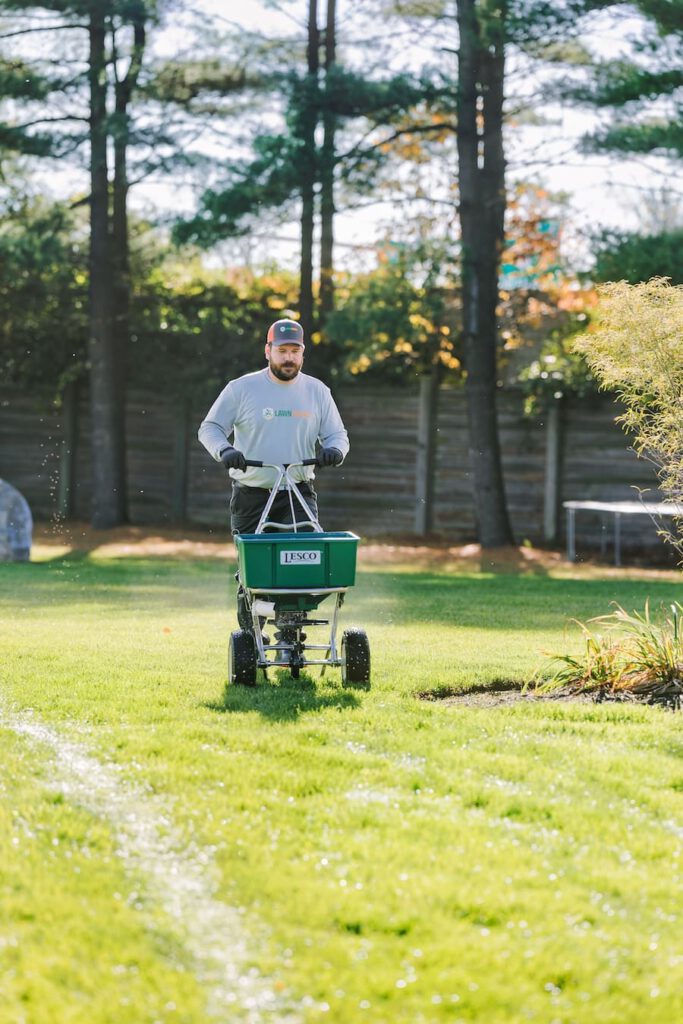
- Touch-up overseed. Areas where the existing turf is healthy but slightly thin. Standard core aeration and a moderate seeding rate (4 to 5 pounds per thousand square feet of a quality bluegrass-rye-fescue blend) restores density.
- Heavy overseed. Areas where significant thinning has occurred but crown tissue is still alive across most of the zone. Heavier core aeration pattern, higher seeding rate (6 to 8 pounds per thousand square feet), and starter fertilizer at seeding.
- Renovation from bare. Areas where the turf is essentially gone. Soil preparation beyond core aeration is required, often slit seeding or light grading, with much higher seeding rates and more attentive irrigation through germination.
- Specialty problem. Areas with persistent shade under mature North Shore oaks and maples, drainage problems on heavy clay, or root competition. These zones need different seed blends (more fescue, less bluegrass) and sometimes a conversation about whether turfgrass is the right choice at all for that area.
Make the inventory now. The materials list, the equipment time, and the scheduling all flow off the inventory. A homeowner who walks into mid-September without a plan inevitably either under-renovates the lawn or wastes effort on zones that did not need the heavy work.
Decision Six: Choose the Seed Now, Not in September
The big retailers across the North Shore sell through their higher-quality bluegrass varieties in late August and the first two weeks of September. If you are doing the renovation yourself, ordering seed in late July or early August is the only reliable way to get the genetics you actually want rather than whatever is left on the shelf at the local hardware store.
For North Shore soil and climate, the blends that work consistently are a mix of Kentucky bluegrass (40 to 60 percent for the cold tolerance and self-repair the area needs), perennial ryegrass (20 to 30 percent for fast establishment), and turf-type tall fescue (20 to 30 percent for drought tolerance and deep roots in heavy clay). The proportions shift based on shade, traffic, and irrigation. Heavy shade areas tip toward fine fescue rather than bluegrass.
Avoid the cheap contractor mixes loaded with annual ryegrass, which establishes in three weeks and dies the following summer leaving you back where you started, often worse. Look for blends with named varieties on the label, weed-seed content below 0.5 percent, and a Pure Live Seed percentage above 80 percent.
What to Do Next
If you would rather have the July planning, the September execution, and the entire year-round program built and run by people who do this work every week across the North Shore, we are here for that. We schedule core aeration and overseeding work starting in early August for the September window and the calendar fills fast. Booking the consultation now is the difference between getting the early September date on your property and pushing into less favorable timing.
Lawn Squad of Chicago’s North Shore serves Buffalo Grove, Deerfield, Fort Sheridan, Glencoe, Glenview, Highland Park, Highwood, Kenilworth, Lake Bluff, Lake Forest, Lake Zurich, Libertyville, Lincolnshire, Northbrook, Techny, Vernon Hills, Wilmette, and Winnetka.
Call us at 847-305-2765 or request a free quote at lawnsquad.com. Our VitaminLawn program coordinates the July preservation work with the September aeration and overseeding, the fall fertilization sequence, and the soil amendments that decide what your North Shore lawn looks like next May. The September window is the lever, and July is when you set it up correctly.