Short Answer: Moss thrives in New Hampshire lawns because our acidic granitic soils, mature shade canopy, consistent rainfall, and cool climate produce ideal conditions for it. Moss does not actively kill grass; it colonizes areas where grass struggles. Killing visible moss with iron sulfate or commercial moss products is the easy part. Preventing it from returning requires addressing the underlying conditions: low soil pH, poor drainage, heavy shade, and compacted soil. Properties that only kill moss without addressing causes face the same problem within months. Multi-year improvement combines lime applications, drainage corrections, selective tree pruning, and rebuilding lawn density. Here is the practical guide for properties across Manchester, Nashua, Bedford, Salem, and the surrounding New Hampshire area.
If your New Hampshire lawn shows green velvety patches that look more like a forest floor than a yard, you have moss. Most NH properties have at least some moss; many have substantial moss in shaded or chronically wet zones. The visible problem is moss; the real problem is the conditions that let moss thrive while grass struggles.
Across Manchester, Nashua, Bedford, Salem, Derry, Hudson, Londonderry, Hampton, Exeter, and our broader service area, here is the practical guide.
Why NH Lawns Get Moss
Several factors combine to make New Hampshire one of the easier places for moss to colonize:
Acidic soils. NH’s granitic parent material produces naturally acidic soils, often in the 5.0 to 5.8 pH range. Cool-season grass prefers 6.5 to 7.0. Moss tolerates and even prefers acidic conditions.
Mature shade canopy. Many NH neighborhoods have significant mature trees that produce dense shade. Grass needs sun; moss does not.
Consistent rainfall. NH averages 40 to 45 inches of rain annually, distributed fairly evenly through the growing season. The consistent moisture favors moss.
Cool summer temperatures relative to most of the country. Moss prefers cool conditions.
Heavy clay or compacted soils common in newer construction. Compacted soil drains slowly and produces the persistent moisture moss prefers.
Each factor independently supports moss. NH properties typically have several factors operating together.
Moss Is a Symptom, Not the Problem
The most important thing to understand about moss is that it does not actively kill grass. Moss has no roots that compete with grass roots, no leaves that block grass leaves, no chemistry that harms grass tissue. Moss colonizes conditions where grass has already failed or is failing.
The practical implication: killing moss without changing conditions just produces bare soil where moss returns within months. Grass cannot establish in those same conditions; if it could, grass would already be there instead of moss.
Effective moss management addresses the conditions, not just the symptom. Killing existing moss is the short-term step. Changing conditions is the long-term work.
The Four Underlying Conditions
Most NH moss situations trace to some combination of four conditions:
Low soil pH. Soil testing typically reveals acidic conditions where moss thrives. Cool-season grass struggles below 6.0 pH.
Excessive shade. Areas under significant tree canopy receive insufficient light for grass density. Grass needs at least 4 hours of direct or strong filtered sun for most blends.
Poor drainage. Compacted soils, low spots, or heavy clay zones stay moist longer than well-drained areas. Persistent moisture favors moss over grass.
Low fertility. Underfertilized grass thins out and produces space for moss to colonize.
Soil testing reveals two of these directly (pH and fertility). Visual observation reveals the other two (shade and drainage). The combination tells you what to address.
Killing Existing Moss
Several products kill visible moss:
Iron sulfate (ferrous sulfate) is the standard. Applied as a granular or liquid product, it kills moss within 1 to 2 weeks. The dead moss turns black, then brown, and can be raked out.
Iron sulfate also slightly acidifies soil (the opposite of what you want long-term), so it is best used as a one-time cleanup tool rather than ongoing maintenance.
Commercial moss-killing products typically contain iron-based active ingredients with adjusted formulations. They work but cost more than straight iron sulfate.
Dish soap mixed with water (4 ounces per gallon) provides home-remedy moss kill on smaller patches. Less effective than iron-based products but usable for spot treatment.
Cost: roughly $30 to $60 for enough iron sulfate to treat a typical NH lawn.
Why Killing Alone Fails
The conversation about moss usually goes like this: kill the moss, congratulate yourself on the bare patches, watch grass fail to fill in, watch moss return within months.
Without addressing underlying conditions, the same moss colony or a fresh one takes over the bare area. The soil chemistry, shade, drainage, or fertility that produced moss in the first place still produces moss in the second.
Effective moss management treats existing moss kill as the first step of a multi-step program, not the complete project.
Long-Term Fix: Lime Applications
The most common underlying issue on NH lawns is acidic soil. Lime applications gradually raise soil pH back into the range where grass outcompetes moss.
Standard NH lime application: 25 to 50 pounds of pelletized lime per 1,000 square feet annually until pH stabilizes in the 6.5 to 7.0 range. Heavily acidic soils may need this for 2 to 3 years before reaching target pH.
Soil testing through UNH Cooperative Extension provides specific pH readings and recommendations. Cost is roughly $20 to $30 and the information lasts 3 years.
Lime works slowly. Single applications produce gradual change over 6 to 12 months. Multiple applications across multiple years correct significantly acidic soil.
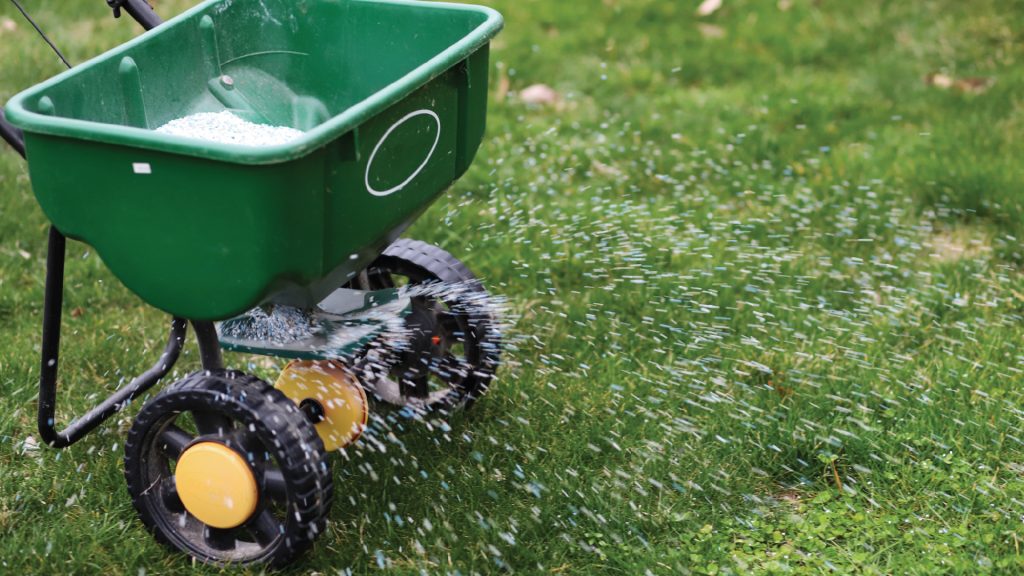
Apply lime separately from fertilizer (separate by at least 2 weeks). Pelletized lime spreads through a fertilizer spreader and is the practical homeowner choice.
Long-Term Fix: Shade Reduction
Shade is harder to address than soil chemistry, but options exist:
Selective tree limbing. Removing lower branches lets more light reach the lawn surface without removing trees. Often produces meaningful improvement.
Crown thinning. Reducing density of tree canopies allows more dappled light through. Professional arborist work, but produces lasting effect.
Tree removal in extreme cases. Sometimes the right answer when a specific tree is producing too much shade for the lawn function the property needs. Often emotionally difficult but practically effective.
Accepting that some shaded areas will not support quality lawn. Switching shaded zones to moss-friendly ground cover, mulched beds, or pathways may be more practical than fighting the conditions.
Properties with mature canopy face a real trade-off between trees and lawn. The honest assessment is that you typically cannot have both at premium quality in the same space.
Long-Term Fix: Drainage Improvement
For areas with poor drainage:
Core aeration on a consistent multi-year schedule gradually relieves compaction. Annual fall aeration on chronically problem areas produces cumulative improvement.
Topdressing with compost adds organic matter that improves soil structure over multiple seasons.
Surface grading on low spots that collect water. Sometimes a few inches of topsoil regrading addresses a chronic wet area.
French drains or other engineered drainage for severe cases. Professional installation runs $1,500 to $10,000 depending on scope.
Improved drainage produces lasting improvement that lime and grass alone cannot match.
Rebuilding Lawn Density
Once moss is killed and conditions are improving, the bare areas need grass to fill them or moss will return:
Fall overseeding into prepared bare areas is the standard approach. Septembers in NH provide ideal conditions for cool-season seed germination.
Seed selection matters. Tall fescue blends with shade-tolerant fine fescue components produce better results in partial shade than pure Kentucky bluegrass. For heavy shade, fine fescue blends are the practical choice.
Establish new grass with consistent moisture, light fertility, and protection from mowing for the first 4 to 6 weeks.
Ongoing maintenance practices that build density include proper mowing height (3.5 to 4 inches for cool-season grass), balanced fertility, and aeration.
When to Accept Moss
Some areas of the property simply will not support quality lawn regardless of management. Heavy shade under mature trees, chronic wet spots, or hard-to-amend areas may be more practical as designated non-lawn zones.
Moss can actually serve as an attractive low-maintenance ground cover in shaded areas. Some homeowners deliberately encourage moss in zones where lawn fails. Maintained moss requires no mowing, no fertilization, minimal management, and produces a distinctive Japanese-garden aesthetic.
For shaded zones where moss is the natural winner, embracing rather than fighting it produces better-looking results with less work.
What Does Not Work
Several common approaches fail:
Iron sulfate as ongoing maintenance. Effective for one-time kills but acidifies soil over repeated applications, making the underlying problem worse.
Reseeding into the same conditions that produced moss. The new grass fails just like the previous grass.
Heavy fertilization to push grass through difficult conditions. The grass cannot use the fertilizer in shaded wet acidic soil.
Ignoring the problem and hoping it stays contained. Moss spreads gradually as conditions favor it.
Vinegar or salt-based home remedies. Damage surrounding healthy grass without lasting moss control.
Realistic Timeline
Moss management is a multi-year project:
Year 1: kill existing moss, apply first lime, address any obvious drainage issues, soil test for baseline data. Visible improvement is modest.
Year 2: continued lime applications, fall overseeding into bare areas, consistent care practices. Notable improvement.
Year 3: soil chemistry approaches target range. Lawn density builds. Moss returns to specific zones where it always wins (heavy shade), reduces dramatically elsewhere.
Year 4 and beyond: maintenance program rather than recovery program. Periodic moss spot-treatment in chronic zones, ongoing lime maintenance, density work.
NH-Specific Considerations
Several factors specific to our area:
Granitic soils. NH’s underlying geology produces consistently acidic soils across much of the state. Lime is almost universally beneficial; the question is dose, not whether.
Mature housing stock. Older NH neighborhoods have decades of mature canopy that produces dense shade. Many properties face structural shade limitations that affect what is possible.
Long cold winters. The growing season for lawn recovery is shorter than warmer climates. Multi-year programs take longer to show results.
Heavy spring snow melt followed by spring rain produces persistent moist conditions. Drainage matters more here than in drier climates.
Significant property variation. NH lots range from rocky New England to fertile river valley. Soil test results vary substantially across the state.
Cost-Benefit Math
For a typical NH property with significant moss:
Year 1: $100 to $200 in soil testing, iron sulfate, and lime materials. Plus 4 to 8 hours of homeowner work for spreading and overseeding.
Years 2 to 3: $75 to $150 annually in continued lime and overseeding materials.
Beyond year 3: maintenance level investment.
The cumulative cost is moderate. The benefit is a lawn that supports the property function rather than progressive moss takeover.
What to Do Next
If you would rather have someone else handle the timing decisions, product selection, and application for your New Hampshire lawn, we are here for that.
Lawn Squad of New Hampshire serves Manchester, Nashua, Bedford, Salem, Derry, Hudson, Londonderry, Hampton, Exeter, Merrimack, Milford, Windham, and surrounding areas.
Call us at 603-716-9498 or request a free quote at lawnsquad.com. Our VitaminLawn program is built specifically for the grass types, soils, and weather patterns in our service area. Most homeowners see noticeable improvement within the first two applications.