Short Answer: June is when Huntsville Bermuda and Zoysia lawns enter peak growth, and the routine that sets them up for the best summer months looks different from the spring playbook. Mow Bermuda at 1 to 1.5 inches and Zoysia at 1.5 to 2.5 inches with a sharp blade, keep the lawn on a deep-and-infrequent watering pattern of one inch per week in one or two soakings, apply a balanced summer fertilizer (about half a pound of nitrogen per thousand square feet), and watch for early signs of dollar spot, large patch on Zoysia, and chinch bug activity. The work this month decides how well the lawn handles July and August heat.
If you stepped onto your Huntsville lawn this past weekend, you probably noticed the Bermuda or Zoysia has gone from waking up to taking off. Warm-season grass loves what the Tennessee Valley does in June: sustained 85 to 92 degree highs, soil that stays warm overnight, longer days, and afternoon thunderstorms rolling off Monte Sano. Cool-season fescue lawns in this part of Alabama struggle this time of year. Bermuda and Zoysia, on the other hand, are exactly where they want to be.
That said, June is also the month most homeowners make the mistakes that show up as thin patches in July and disease pressure in August. The lawn is forgiving right now because it is growing fast, so mistakes get masked for two or three weeks. By the time the heat really hits, those mistakes catch up. Here is the playbook we use across Huntsville, Madison, Owens Cross Roads, Meridianville, and Harvest to keep warm-season lawns in their best stretch of the year.
Mowing Height: Lower Than Most Homeowners Realize
The single biggest mowing mistake on Huntsville Bermuda lawns is cutting too tall. Common Bermuda wants to be at 1 to 2 inches. Hybrid Bermuda varieties like Tifway 419 (common on newer subdivisions and athletic fields around Madison) want 0.75 to 1.5 inches. Mowing Bermuda at 3 inches creates a leggy, weak canopy with shaded lower stems that thin out and let weeds in.
Zoysia is a different story. Emerald Zoysia and Zeon want 1 inch to 2 inches. Meyer Zoysia (the most common Zoysia in older Huntsville lawns) wants 1.5 to 2.5 inches. Zoysia mowed too short scalps quickly and recovers slowly because of its slower growth habit, which is the inverse of Bermuda’s challenge.
The other half of the mowing equation is blade sharpness. Bermuda and Zoysia both have tough, fibrous leaf tissue that dulls blades faster than a fescue lawn does. A dull blade tears the leaf tip, leaves a silvery gray cast across the lawn 24 hours after mowing, and creates open wounds that disease enters. Sharpen at least twice a year on warm-season lawns. June is a good time to do it if you have not already.
One frequency note. As temperatures climb through June, your Bermuda will be ready for the mower every four to five days, sometimes every three days on irrigated, fertilized lawns. The one-third rule applies: never remove more than one-third of the blade height in a cut. If you cannot keep up with that rhythm, raise the deck temporarily and resume the lower height once you catch up.
Watering Math for Tennessee Valley Soils
Huntsville soils are a mix. The Tennessee River bottoms have alluvial silt loams that drain moderately and hold water well. The cove and ridge areas around Monte Sano and Green Mountain are shallower over limestone bedrock with rocky pockets. The newer subdivisions in Madison and out toward Athens are often on heavier clay where topsoil was scraped during construction. Each of these waters slightly differently.
The base rule for warm-season lawns in June: one inch of water per week, including rainfall, delivered in one or two deep soakings between 4 and 8 a.m. On the silt loam, that is often a single one-inch cycle. On the clay, you split it into two half-inch cycles three to four days apart so the water soaks in instead of running off. On the rocky shallow soils, three short cycles work better than one or two long ones.
The screwdriver test settles every debate. Push a long screwdriver into the lawn the morning after watering. If it slides in four to six inches with light pressure, the root zone is adequately moist. If it stops at two inches, the water did not penetrate. Adjust cycle length or split into pulses until the test passes.
Avoid evening watering. Wet warm-season grass at night, combined with humid Tennessee Valley air, is exactly what Pythium and dollar spot need to take off on Bermuda. On Zoysia, evening watering feeds large patch, which is a serious fall disease but can show summer activity in our humidity.
Fertility: Now Is When Nitrogen Pays Off
Warm-season grasses are nitrogen-hungry in June. This is the opposite of the cool-season playbook, where summer nitrogen is a mistake. Bermuda and Zoysia want to be fed actively when soil temperatures are above 70 degrees, exactly the conditions in Huntsville right now.
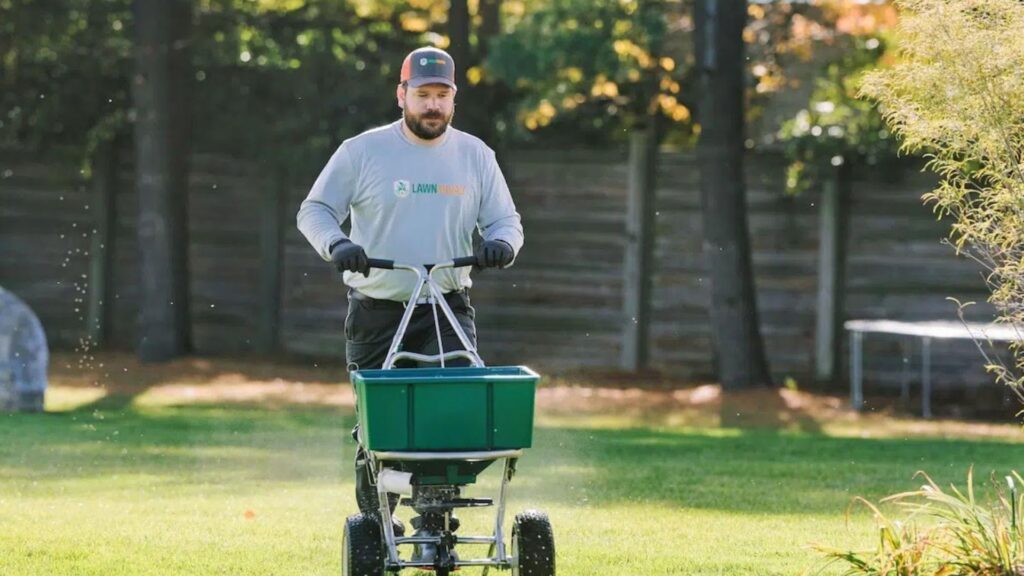
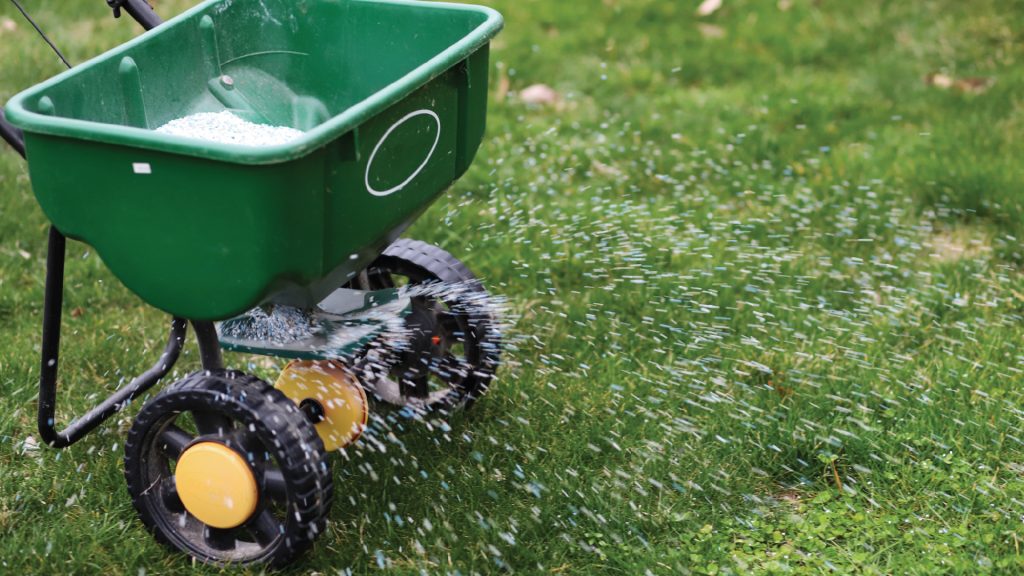
A reasonable June application is half a pound of nitrogen per thousand square feet, ideally from a slow-release or coated product so the lawn gets a steady feed for four to six weeks. Quick-release nitrogen also works, but it produces a flush of soft growth that mowers struggle to keep up with and that is more disease-susceptible. Slow-release is the smarter choice for most Huntsville homeowners.
If you have a soil test result from the past two or three years, follow what it says about potassium and phosphorus. Most Tennessee Valley soils run adequate in phosphorus and short on potassium. Potassium drives drought tolerance and disease resistance, so a balanced fertilizer with a potassium component is often the right call. If you are not sure, the Alabama Cooperative Extension System runs affordable soil tests through county offices.
Iron is the other consideration. The limestone-influenced soils in parts of Huntsville run alkaline enough to lock up iron, which shows up as a slight yellowing of the lawn even when nitrogen is adequate. A light iron application in June greens the lawn quickly without forcing more top growth. Liquid chelated iron is the cleanest option.
Disease Watch: Three Things to Look For
By the third week of June, the disease pressure starts to build. The three diseases we see most commonly on Huntsville-area warm-season lawns:
Dollar spot on Bermuda. Small silver-dollar-sized bleached patches, often coalescing into larger irregular areas. Most common on lawns short on nitrogen and water-stressed. The fix is a light nitrogen application plus a watering adjustment to morning only. Severe cases need a fungicide.
Large patch on Zoysia. Circular patches several feet across with an orange-yellow edge where the disease is actively spreading. Usually shows up in fall as the lawn goes dormant, but can show summer activity in wet, humid stretches. Treatment is a propiconazole or azoxystrobin fungicide and a watering correction.
Spring dead spot on Bermuda. This one is technically a fall-applied disease that shows itself in spring as circular dead patches that did not green up with the rest of the lawn. If you noticed these in March and April this year, plan the preventive application for late summer (mid-September) and improve drainage in the affected areas now.
Insect Watch: Chinch Bugs and Armyworms
Two insects are worth scanning for in June on Huntsville warm-season lawns.
Chinch bugs hit Bermuda hard in sunny, drought-stressed areas. The damage looks like irregular brown patches in the sunniest, driest part of the lawn, often along the south side of the house or along sidewalks. The chinch bug check is the float test. Cut both ends off a coffee can, push it two inches into the lawn at the edge of a brown patch, fill it with water, and watch for ten minutes. Chinch bug nymphs (small, dark, with white bands) will float to the surface if they are there. Five or more per can-area is treatment threshold.
Fall armyworms are not in Huntsville yet this season, but late June into July is when we start watching. Armyworm damage looks like a band of brown moving across the lawn over a few days. The check is to walk the lawn at dusk with a flashlight; armyworm caterpillars feed actively at dusk and dawn. If you see them, treatment is fast and effective, but missing it costs you half a lawn in a week.
What to Skip in June
- Do not aerate or dethatch Bermuda or Zoysia in June. Aeration is a spring or early summer task for warm-season grasses; if you missed it, wait until April next year. Dethatching is a late spring task that should be done before the lawn is actively growing this fast.
- Do not apply pre-emergent now. Spring pre-emergent should already be down. A summer application is more about preventing fall weeds (poa annua mostly), and the right window for that is late August into September.
- Do not apply post-emergent broadleaf herbicide in temperatures above 85 degrees on Bermuda or above 90 degrees on Zoysia. Damage to the turf can be significant.
- Do not water at night.
- Do not scalp the lawn for a tidier appearance. Short does not mean tidy on warm-season grass; it means thinner and more weed-prone.
What to Do Next
If you would rather have someone else handle the mowing-height decisions, fertilizer timing, and disease scouting, that is exactly what we do. A regular service visit costs less than a single wrong treatment, and a steady June through September program is the cleanest way to keep a Huntsville Bermuda or Zoysia lawn at its best.
Lawn Squad of Huntsville serves homeowners across the Huntsville metro and the surrounding Tennessee Valley.
Call us at 983-233-6002 or request a free quote at lawnsquad.com. Our VitaminLawn program is built specifically for Tennessee Valley warm-season grasses, the mix of silt-loam river bottoms and ridge-and-cove soils we work with, and the humid summer pattern that defines lawn care here. Most Huntsville homeowners see a real difference within the first two applications, with the full payoff showing up in August when the rest of the neighborhood is fading and theirs is holding strong.