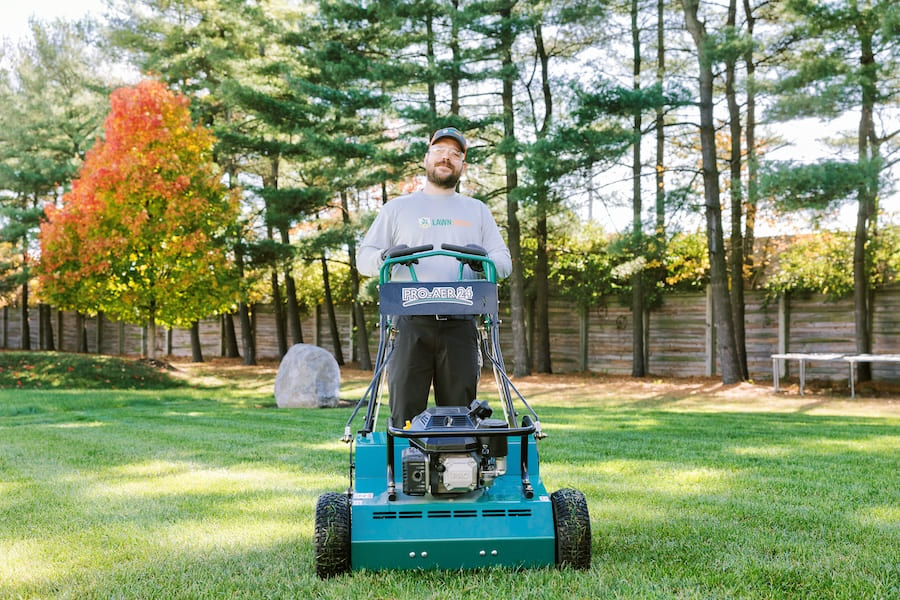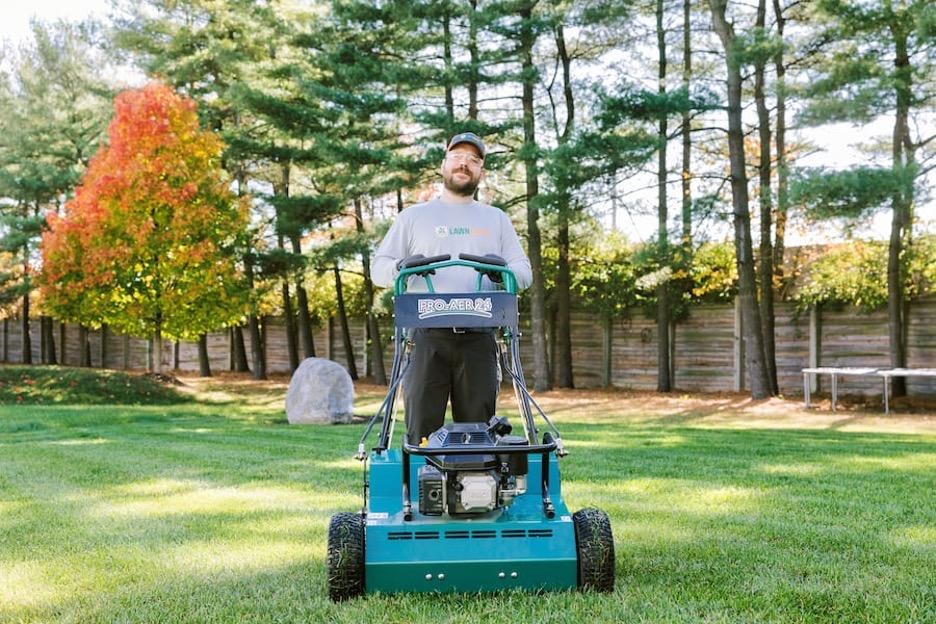

Short Answer: You cannot turn sand into loam, but you can change how it behaves. Cherry Hill sits on coastal plain soils that drain quickly, hold very little water, and leach nutrients past the root zone before the grass can use them. The fix is organic matter, added in small amounts repeatedly. Core aerate, topdress with about a quarter inch of quality compost, and overseed with deep rooted turf type tall fescue. Fall is the right season for all three. Then feed in smaller, more frequent amounts rather than a few heavy applications.
What Sandy Soil Actually Means for Your Lawn
Cherry Hill and the surrounding Camden County communities sit on the New Jersey coastal plain, and the soils here are dominated by sandy loams and loamy sands. Compared with the clay soils an hour north or west, they behave almost in reverse. They drain fast, warm up early in spring, resist compaction reasonably well, and are easy to dig.
The tradeoff is that they hold almost nothing. Water passes through the root zone quickly, and dissolved nutrients go with it. A lawn on this soil can look excellent in June and be straw colored by the third week of July, not because anything is diseased but because the soil ran out of water in five days instead of fifteen. Understanding that is the whole basis of managing turf here.
Low Cation Exchange Capacity Is the Core Issue
The technical term for what is missing is cation exchange capacity, and it is worth knowing because it explains nearly everything else. Clay particles and organic matter carry negative electrical charges on their surfaces, and those charges hold onto positively charged nutrients such as calcium, magnesium, potassium, and ammonium, keeping them available to roots between rain events.
Sand particles are much larger and carry almost no charge. A sandy soil low in organic matter has very little capacity to hold nutrients at all. Fertilizer applied to it is available for a short time and then gone, either taken up or leached below the roots. This is why heavier applications do not work better here. They mostly increase what gets flushed through, which is bad for the lawn and bad for the waterways this region drains into.
Why Fall Is the Right Time for Soil Work
September and the first part of October give you the best conditions of the year in South Jersey for anything involving soil and seed. Soil temperature is still high enough to drive fast germination, air temperature has dropped into the range where cool season grass produces more energy than it burns, humidity and disease pressure fall off, and rainfall usually becomes more reliable.
Just as importantly, weeds are not competing the way they do in spring. Crabgrass is finishing its life cycle rather than starting it. A lawn seeded in mid September gets six to eight weeks of establishment, then a full spring to mature before it has to face a Cherry Hill July. Nothing about spring seeding compares.
Organic Matter Is the Only Real Fix
There is no amendment that converts sand to loam, and products marketed as soil conditioners that promise to do it in one application are not worth the money. What genuinely changes the behavior of sandy soil is organic matter, because it adds exactly the two things sand lacks: water holding capacity and nutrient holding capacity.
Organic matter can hold several times its own weight in water and provides the charged surfaces that retain nutrients. It also feeds the soil biology that builds structure over time. The catch is that it has to be added repeatedly. A single compost application will not transform anything, but a quarter inch topdressing applied each fall for four or five years produces a measurably different lawn. This is a multi year project by nature, and the properties here with genuinely good turf are the ones where somebody has been at it for a while.
Topdressing With Compost, Step by Step
Done properly, topdressing is straightforward. Done carelessly it smothers grass, so the sequence matters.
- Mow shorter than normal, around two and a half inches, and bag the clippings.
- Core aerate, ideally in two directions, and leave the plugs on the surface.
- Spread finished compost or a compost and sand blend at about a quarter inch deep. That is roughly three quarters of a cubic yard per thousand square feet. Do not exceed a half inch.
- Drag it in with the back of a rake or a leveling tool so it works into the aeration holes and settles down among the grass blades rather than sitting on top of them.
- Overseed, then apply starter fertilizer, then water.
- Check that grass blades are still visible above the compost. If the turf is buried, you used too much.
Use finished, screened compost from a reliable source. Fresh manure or unfinished material can burn turf and can carry weed seed.
Core Aeration on Sandy Soil Is Different
Sandy soils resist compaction better than clay, so aeration here is not primarily about relieving compaction. It is about getting amendments and seed below the surface. The holes are the delivery route for compost, lime, and seed, which is why aerating immediately before topdressing and overseeding gives you far more value than aerating on its own.
That said, compaction does occur on these soils, particularly along walkways, in play areas, and on lawns growing over construction fill rather than native soil. Many newer developments in this area sit on graded subsoil with a thin layer of topsoil over it, and that subsoil layer can be quite dense. Pull a plug and look at it. If the bottom two inches are noticeably harder and lighter in color than the top, that layer is limiting your roots, and annual aeration is worth the cost.
Fertilizing Sandy Soil Without Wasting It
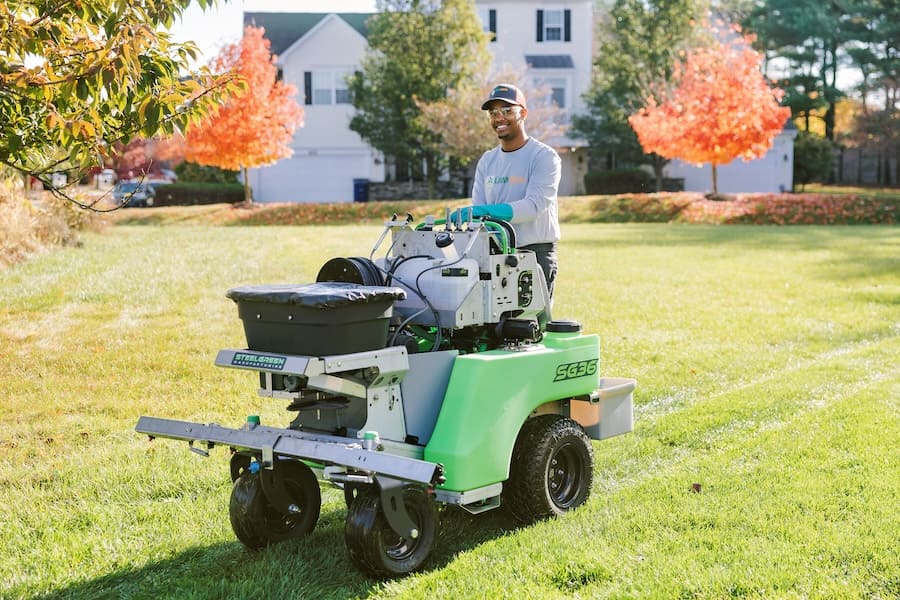
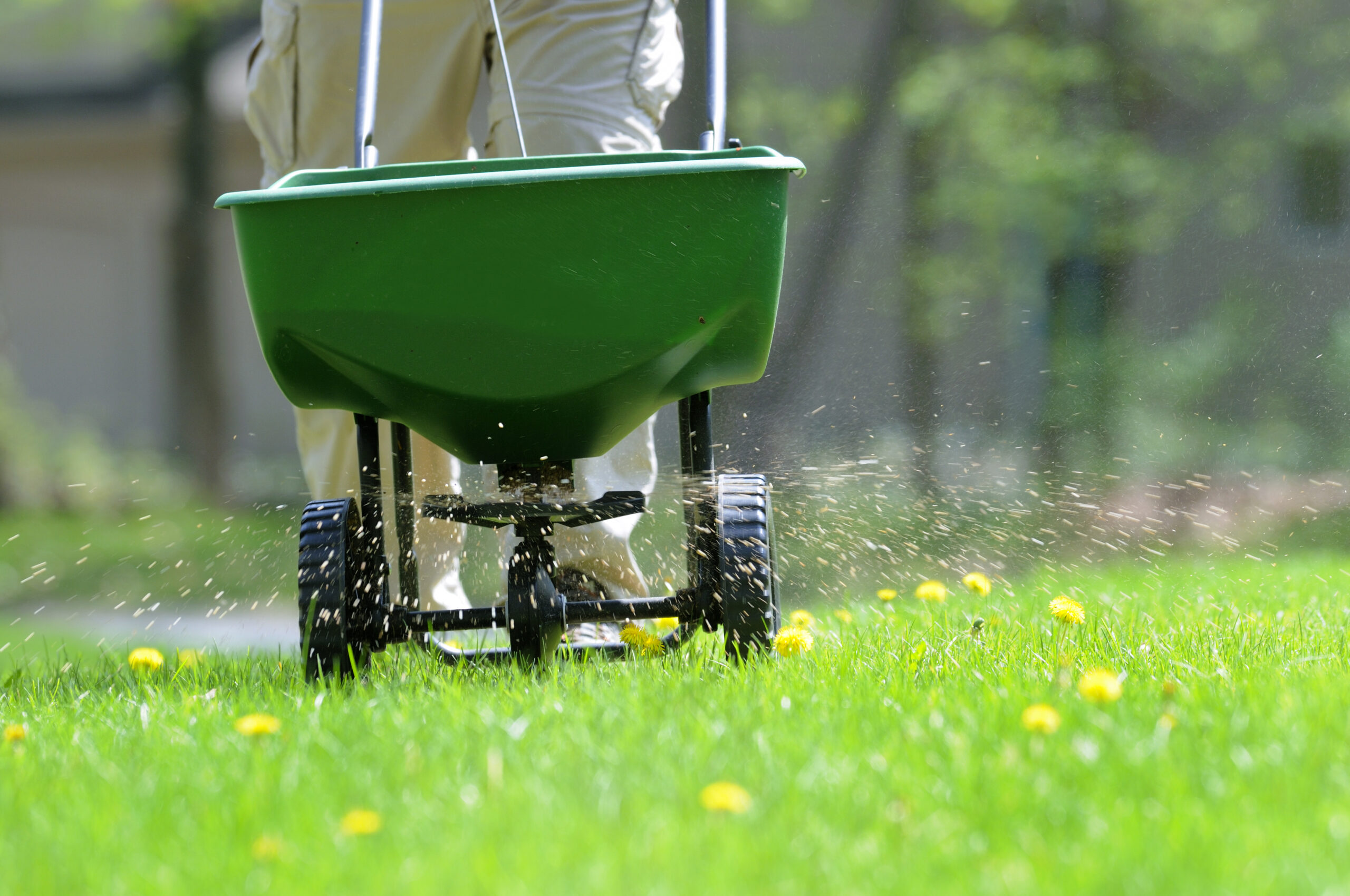
On low capacity soil, the correct strategy is spoon feeding. Smaller amounts applied more often keep nutrients available in the root zone instead of pushing a large slug of soluble nitrogen through a soil that cannot hold it.
Slow release and controlled release nitrogen sources matter more here than almost anywhere. They meter nitrogen out over weeks rather than days, which matches what a sandy soil can actually retain. Potassium deserves attention too, because it leaches readily on sand and it contributes directly to stress and disease tolerance, which this region tests hard every summer. A soil test will tell you where you stand rather than leaving you guessing.
New Jersey’s Fertilizer Law Sets the Rules
New Jersey has among the strictest lawn fertilizer regulations in the country, and they exist specifically because of soils like the ones under Cherry Hill and the watersheds they drain into. The rules are not optional, and they shape the schedule.
In broad terms, there is a seasonal blackout period during which fertilizer may not be applied, which for homeowners begins in mid November and runs until the ground thaws in early spring. There are limits on nitrogen per application and per year, a requirement that a portion of the nitrogen be in slow release form, restrictions on phosphorus unless a soil test documents a need or you are establishing new turf, buffer distances from water bodies, and a requirement to sweep granules off driveways and sidewalks rather than leaving them to wash into storm drains. Get your fall applications done in the fall, keep your soil test on file, and check the current requirements before you buy, since the details are specific and enforceable.
Soil pH on the Coastal Plain
These soils are naturally acidic, and untreated lawn soil in this area commonly tests between 4.5 and 5.5. Turfgrass wants 6.0 to 6.8. Below 6.0, nutrient availability drops off and root function suffers even when fertility is adequate.
Lime corrects it, and because sandy soils have low buffering capacity, they need less lime than clay soils to move the same amount of pH. That cuts both ways. The change happens faster, but it also drifts back down faster, so retesting every two or three years is worth doing rather than liming once and forgetting it. Apply lime into fresh aeration holes for the fastest response, and follow the rate from an actual soil test rather than estimating.
Grass Selection Does Half the Work
The single biggest improvement most Cherry Hill lawns can make is planting grass suited to the site. Turf type tall fescue is the right choice for most of this area. It roots deeper than any other cool season turfgrass, commonly two to three times deeper than Kentucky bluegrass, and on a droughty sandy soil that depth is worth more than any amendment you can buy.
Kentucky bluegrass is a poor fit for full sun areas here. It roots shallow, needs consistent water and fertility, and struggles in a South Jersey summer. It is worth including a small percentage in a blend for its ability to spread and fill damage, but it should not be the backbone. In shaded areas, fine fescues outperform everything else. Choose modern improved tall fescue cultivars rather than the cheapest bag available, and pay attention to brown patch resistance ratings, since brown patch is the dominant summer disease in this region.
Watering a Sandy Lawn Correctly
Sandy soil changes the watering math. The standard advice to water deeply and infrequently assumes a soil that can store a deep watering. Sand cannot. Water applied beyond the soil’s holding capacity simply drains past the roots.
So on sand you water somewhat more often and somewhat less at a time. Rather than one inch once a week, try roughly half an inch two or three times a week, adjusted for rainfall and for what the lawn is telling you. Water early in the morning, between about 4 a.m. and 9 a.m., so the leaf surface dries quickly once the sun is up. That single habit reduces brown patch pressure more than anything else you can do without a fungicide. Put a straight sided can in the lawn and run the zone to find out what your system actually delivers, because most people are surprised in one direction or the other.
What to Do Next
Walk the lawn this week and write down the two or three things that actually bother you about it, then work backward from the window rather than forward from today. Almost every fall mistake we see in Cherry Hill comes from starting with the calendar instead of with the lawn.
If you would rather have someone look at it with you, Lawn Squad of Cherry Hill offers a free quote. Call 833-816-7508 or find us at lawnsquad.com. Every Lawn Squad location is independently owned and operated, and our VitaminLawn fertilization and weed control program is built around the grass, soil, and conditions here rather than a national average.
A first visit is a walk of the property, a look at the thin areas, a check of mowing height and irrigation, and a straight conversation about what is realistic in the weeks left this season. At 30 days you should see color and density improve. At 90 days the lawn should be visibly thicker, with the root growth that carries it through winter.