Short Answer: Three pests do the most damage to Central Georgia lawns in June. Imported fire ants build new mounds aggressively during warm wet stretches and require a two-step program (broadcast bait plus individual mound treatment) for lasting control. Mole crickets tunnel just below the surface, lifting and drying the turf in irregular streaks, and need targeted treatment during the late June through July nymph stage. Fall armyworms (Spodoptera frugiperda) march through Bermuda and Zoysia in late summer but the early hatches in late June are when treatment is easiest and damage is minimal. Each pest has a specific identification signature, a specific treatment window, and a specific product that actually works. Getting the diagnosis right matters.
Walk a Bermuda lawn anywhere from Macon down to Hawkinsville or out to Dublin and Milledgeville on a June Saturday morning. The odds are good that within ten minutes you can find at least one fire ant mound, one suspicious patch of slightly off-color turf that might be mole cricket activity, and a small chewed area you might assume is just dry weather. June is when all three of these pests are setting up shop for the summer.
The good news is that all three are controllable when you catch them early and use the right product. The bad news is that homeowners who reach for the same general lawn insecticide for all three problems often spend money and time without solving any of them. Each pest has a different lifecycle, different biology, and different treatment window. Here is the breakdown.
Fire Ants: The Year-Round Resident
Red imported fire ants (Solenopsis invicta) have been a fixture in Central Georgia lawns since the species spread across the South in the 1950s. Every Bermuda lawn we walk has fire ant pressure to some degree. The question is not whether you have them. It is whether your management strategy is keeping them in check.
Identification is easy. The classic dome-shaped mound of loose red dirt, typically 4 to 18 inches across, with no visible entry hole at the top (the ants enter from underground tunnels). Disturb the mound and ants pour out aggressively within seconds. Bites burn, leave a small white pustule a day later, and can cause serious reactions in sensitive people.
The two-step program is the right approach for any Central Georgia lawn with multiple mounds.
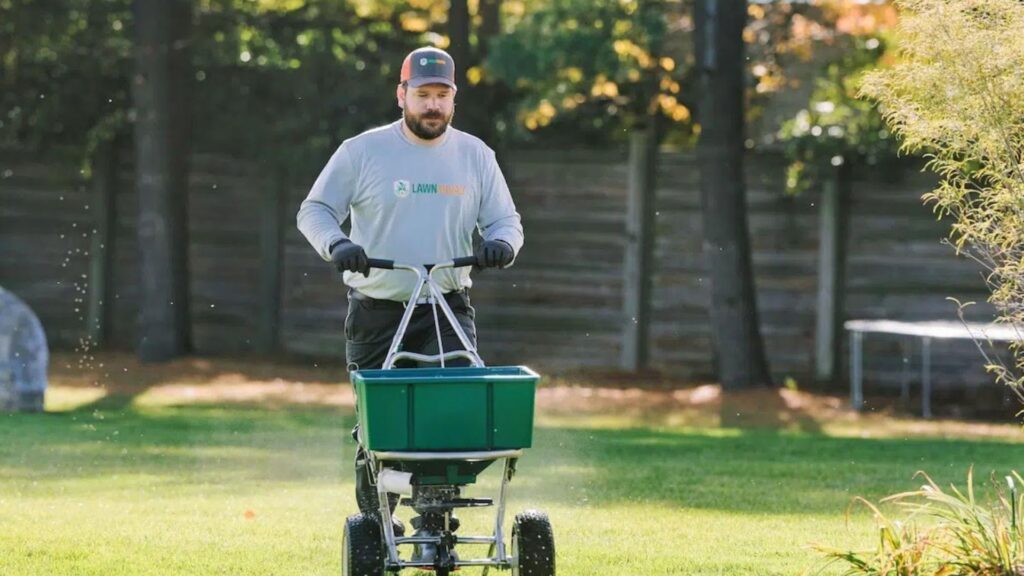
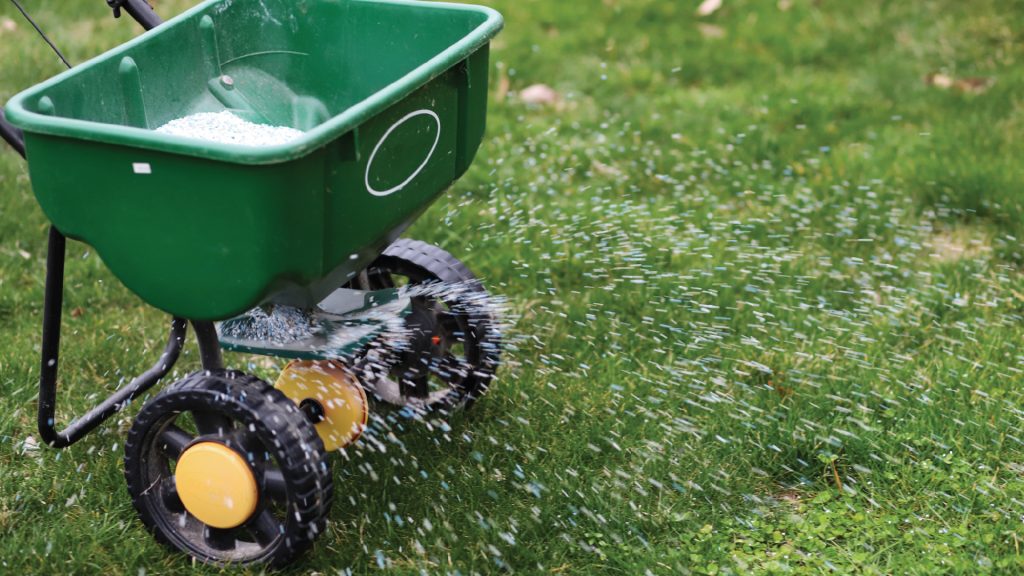
Step one: broadcast a bait product across the whole lawn. The most common active ingredients are hydramethylnon, indoxacarb, or fipronil bait. The bait is corn grit soaked with oil and the toxicant. Foraging ants find the bait, carry it back to the colony, and feed it to the queen. The queen and the brood die over the following two to four weeks, which collapses the colony.
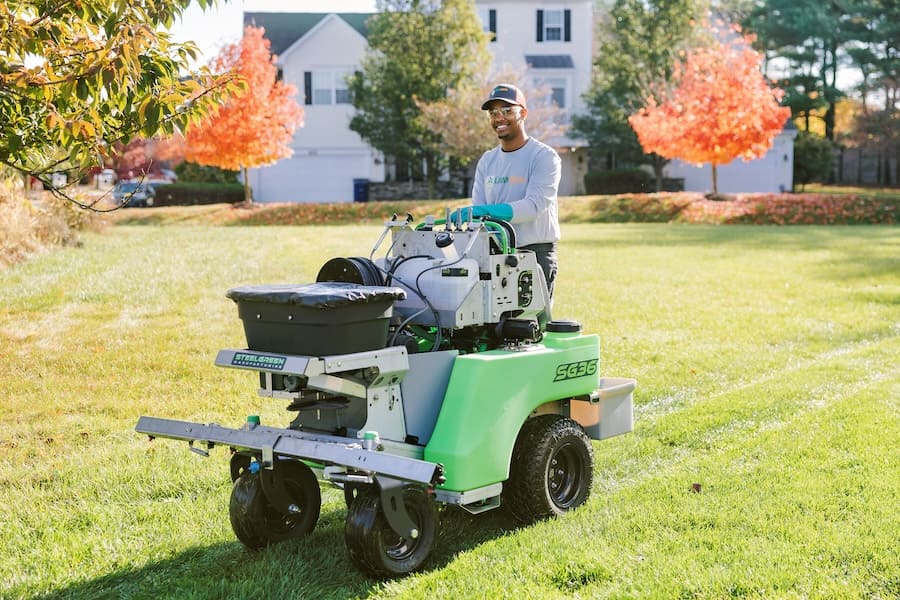
Step two: treat any visible mounds individually with a fast-acting drench (acephate-based or pyrethroid-based mound treatments) for immediate knockdown of the worker ants. This is the same-day relief piece while the bait is doing the slower colony-collapse work.
Timing for bait application matters. Apply when ants are actively foraging, which means soil surface temperatures between 70 and 95 degrees and not within hours of rain. Early morning or late afternoon during a dry stretch is ideal. Bait applied during the wrong window simply gets ignored or washed away.
A well-executed two-step program in late spring or early summer typically reduces mound counts by 80 to 90 percent for six to eight months. Annual reapplication is required because new colonies blow in or fly in from neighboring properties continuously.
Mole Crickets: The Pest Most Homeowners Miss
Mole crickets are easier to miss than fire ants because the damage looks ambiguous at first. Tawny mole crickets (Neoscapteriscus vicinus) and southern mole crickets (Neoscapteriscus borellii) are both present in Central Georgia. The tawny is the more damaging species in our region.
The adult is about an inch and a half long, brown, with shovel-like front legs adapted for digging. They tunnel just below the soil surface, severing grass roots and drying out small patches of turf as they go. Damage shows up as irregular streaks of thin, off-color turf that feels spongy underfoot when you step on it. Mole crickets are most active at night, so unless you go outside at dusk with a flashlight, you may never see one.
The soap flush test confirms mole cricket presence. Mix two tablespoons of liquid dish soap into two gallons of water, pour it over a one-square-yard area of suspected damage, and wait a few minutes. Mole crickets and other soil-dwelling insects float up to the surface within five minutes. Two or more mole crickets per square yard is a treatment-worthy infestation.
Treatment timing is critical. Mole crickets are easiest to control when they are small nymphs in late June and July, before they reach adult size and have spread across the lawn. By August they are larger, harder to control, and have done substantial damage. By spring of the following year they are the next generation of adults and the cycle restarts.
Effective treatments include bifenthrin or imidacloprid broadcast applications watered in to move the active ingredient into the upper soil profile where the nymphs are tunneling. Bait products labeled for mole crickets (carbaryl-based or indoxacarb-based) are also effective when applied in late afternoon during dry conditions.
Fall Armyworms: The Surprise Outbreak
Fall armyworms (Spodoptera frugiperda) do not overwinter in Central Georgia in significant numbers. They migrate up from south Florida and the Gulf Coast each summer, with the first arrivals typically appearing in our area in late June or July. Some years they arrive in modest numbers and stay quiet. Other years (2017 and 2021 are recent examples) they arrive in waves and decimate Bermuda lawns across the South within days.
Identification: the larvae are caterpillars, usually green to dark brown, with an inverted Y-shape on the head. They feed on grass blades, often in dense groups, and can completely defoliate a Bermuda lawn in 48 to 72 hours during heavy outbreaks. The damage starts as a small chewed area that expands fast. Affected lawns can look almost like they have been mowed extremely short, except the blade tips are ragged rather than cleanly cut.
The simple early warning: birds. When you see flocks of grackles, robins, or starlings working over a section of lawn, they are eating something. Often that something is armyworms.
Treatment is straightforward when caught early. Bifenthrin, lambda-cyhalothrin, or chlorantraniliprole applications stop active feeding within a day. For organic-minded properties, Bt (Bacillus thuringiensis) products targeting caterpillars work but require precise timing because they only kill larvae that ingest the product within a few days of application.
The keys to armyworm management are scouting and speed. Walk your lawn every few days during late June through September. Watch for chewed blades, frass (small green-brown pellets at the base of plants), and bird activity. When you see any of these signs, treat immediately. Damage done in two days can take six weeks to grow out.
What Not to Do
The biggest mistakes we see across Central Georgia in June pest management:
- Pouring gasoline or hot water on fire ant mounds. Gasoline contaminates soil and kills surrounding grass. Hot water has to penetrate deep enough to reach the queen, which is rare. Use labeled bait and mound treatments.
- Spot-spraying fire ant mounds with general lawn insecticide. This may kill visible workers but leaves the queen and brood alive. The colony rebuilds within days.
- Treating mole cricket damage with fungicide. The damage looks like disease at a glance, but a soap flush will confirm whether you have insects. Save the fungicide for actual disease.
- Waiting to see whether armyworm damage will “grow out” on its own. It will not. Treat at first sign.
- Applying preventive grub products in June expecting them to control fire ants or mole crickets. Grub products target white grubs specifically and do little to nothing for these other pests.
How to Reduce Pest Pressure Long-Term
Healthy turf is the best pest defense. The lawns we see with the worst fire ant, mole cricket, and armyworm pressure tend to share traits: thin turf with bare spots, poor watering practices, and inconsistent fertility. Those conditions create habitat fire ants prefer (open soil for new mounds), allow mole cricket damage to be more visible, and reduce the recovery rate after any insect damage.
A consistent fertility program, proper mowing height, deep watering, and core aeration in late summer all contribute to a denser, healthier lawn that resists pest pressure better than a thin stressed lawn does. Pest management is not separate from lawn health. It is the same conversation.
What to Do Next
If you would rather have a local team identify which pests you actually have, time the treatments correctly, and integrate pest management into your overall lawn program, we are ready to help.
Lawn Squad of Central Georgia serves Allentown, Bolingbroke, Bonaire, Byron, Cadwell, Centerville, Chauncey, Chester, Clinchfield, Cochran, Danville, Dexter, Dry Branch, Dublin, Dudley, East Dublin, Eastman, Fort Valley, Gordon, Gray, Haddock, Hardwick, Harrison, Hawkinsville, Hillsboro, Irwinton, Jeffersonville, Kathleen, Macon, McIntyre, Milledgeville, Montrose, Oconee, Perry, Rentz, Sandersville, Smarr, Tennille, Toomsboro, Warner Robins, Warthen, and Wrightsville.
Call us at 478-901-2620 or request a free quote at lawnsquad.com. Our VitaminLawn program builds the dense healthy Bermuda or Zoysia turf that gives fire ants fewer places to mound, mole crickets less open soil to tunnel through, and armyworms a healthier lawn that recovers faster when the migration waves hit.