Short Answer: Armyworms move fast. A heavy outbreak on a Grand Strand Bermuda or Centipede lawn can chew the canopy to bare stubble in 48 to 72 hours. Catch them by scouting at dawn and dusk for groups of brown moths flying low over the turf, watching for a flock of birds suddenly working one zone, and running a soap-flush test on any suspicious patch. Mix two tablespoons of lemon-scented dish soap into two gallons of water, pour over one square yard, wait three to five minutes, and count the caterpillars. More than two or three per square foot means treat now. A pyrethroid or chlorantraniliprole stops the damage within 24 hours.
Most lawn issues give you a week or two to react. Armyworms do not. They are the fastest-moving turf pest on the Grand Strand in late summer. A heavy outbreak that goes unnoticed for a long weekend can chew a Bermuda fairway-cut front yard, a Centipede side lot, or a St. Augustine back yard down to bare stems in less time than it takes to schedule a callback.
We get the same call every August. A homeowner mows on Saturday, drives down to Charleston for a long weekend, and walks back into a lawn that looks like livestock walked across it. By that point, we are not talking about treatment. We are talking about how much sod and seed it will take to make it look like a yard again.
The goal here is to give you the knowledge to spot armyworms in week one of activity, when treatment is straightforward and recovery is fast.
What Armyworms Actually Are
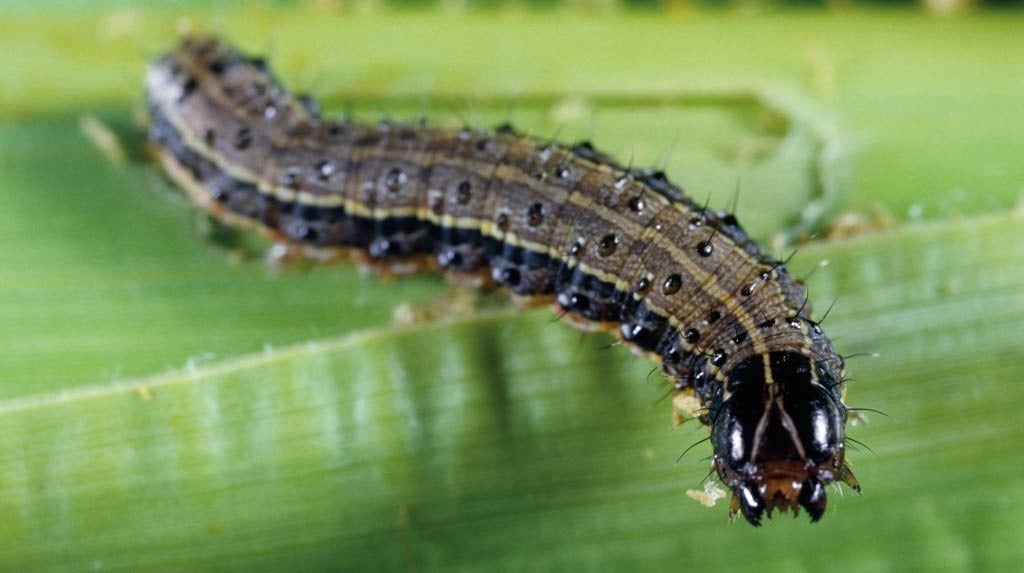
Fall armyworms (Spodoptera frugiperda) are the caterpillar stage of a brown moth that migrates up the Atlantic coast each summer. By mid-July on the Grand Strand, populations have built through several generations and reach damaging density. Mature caterpillars are about an inch and a half long, light green to brown, with a distinct inverted Y on the head and four dark spots in a square on the second-to-last body segment.
They feed at night and on cloudy days, hiding deep in the thatch during direct sunlight. A single generation runs about 30 days from egg to moth. Each female lays 100 to 200 eggs at a time, often on flat surfaces near the lawn (fence boards, light poles, eaves, even patio furniture and grills). That is why a clean lawn one weekend can have an active outbreak the next.
Damage on Bermuda is the most visually dramatic in our area. The fine canopy gets shaved down to brown stubble fast. Centipede holds together a little longer because the slower growth gives you more reaction time, but heavy populations will still chew it to the soil. St. Augustine and Zoysia get visibly stripped runners and notched blades. The damage advances along a definable edge as the caterpillars move.
The Early Warning Signs
Scout the lawn every two or three days during July and August. Look for:
- Brown to gray moths flying low over the turf at dawn or dusk, especially in groups
- A sudden gathering of birds (egrets, ibises, mockingbirds, grackles) working one zone with focus
- Small ragged patches that look chewed rather than yellowed
- Frass (caterpillar droppings) that look like tiny dark pellets in the thatch
- Tiny pinholes or window-paning on individual grass blades
- An advancing edge where green turf meets a chewed-down zone
The bird signal is one of the most reliable indicators we know. Birds are far better at detecting caterpillar activity than humans are. If you see a sudden cluster of birds focused on one section of your yard, walk over and look at the turf closely. Half the armyworm calls we get start with “I saw a bunch of birds out there yesterday.”
The Soap-Flush Test
The fastest way to confirm armyworms is the soap-flush test. It also reveals sod webworms, cutworms, and mole crickets, all common Grand Strand pests with similar early-damage symptoms. Total time under ten minutes.
Mix two tablespoons of lemon-scented dish soap into two gallons of water. Pour evenly across a one-square-yard test area at the edge of suspected damage. Wait three to five minutes. The soap irritates the caterpillars and drives them up out of the thatch where you can count them.
The treatment threshold for armyworms on Grand Strand warm-season lawns is roughly two to three caterpillars per square foot. Above that, you are looking at active damage and treatment is needed within 24 to 48 hours. Below that, keep scouting and re-test in three or four days.
If you find no caterpillars but damage is still expanding, you are dealing with something else. The most common look-alikes on Myrtle Beach lawns are chinch bug damage on St. Augustine or Centipede (use the float test instead) and mole cricket activity (the soap flush will bring those up too, but they look distinctly different from caterpillars).
What Stops Them
Armyworms respond quickly to several insecticide options. The most common homeowner products are pyrethroids like bifenthrin or lambda-cyhalothrin, available as granular and liquid formulations at most garden centers along Highway 17 and at home centers in Conway. Apply as a spray or granule, water in lightly per the label, and avoid mowing for 24 hours so the product stays on the canopy where the caterpillars are feeding.
For longer residual control with less impact on beneficial insects, chlorantraniliprole (sold under several retail brand names) is an excellent option. This insect growth regulator gives weeks of protection from a single application and is friendlier to pollinators.
Bt-based products (Bacillus thuringiensis var. kurstaki) are an option in low-spray landscapes, though they work best on small caterpillars and require direct contact with feeding larvae. Larger caterpillars (over an inch) often need a pyrethroid for fast knockdown.
Apply in the evening when armyworms come out to feed. A morning application loses much of its effectiveness because the caterpillars stay deep in the thatch during the day.
Why Late July Through September Is the Critical Window
Armyworm pressure on the Grand Strand climbs steadily from mid-July through September. The combination of warm humid nights, frequent afternoon thunderstorms, and the long migration runway up the East Coast means our area sees waves of moth flights through this period. The heaviest damage in our service area typically hits late July through early September.
The other reason this window matters: your lawn is already stressed. Summer heat, salt pressure on coastal properties, fungal activity, and any chinch bug or mole cricket damage have all been pulling at the same root system. A heavy armyworm hit on top of those stresses can push a marginal lawn into needing full replacement, while a healthier lawn might shrug off the same caterpillar load with supportive recovery.
Properties that have recently been fertilized or that have lush, fast-growing turf attract armyworm moths preferentially. If you have just put down a heavy nitrogen application, scout extra carefully for the next three weeks.
What to Do During Recovery
If you treated early and the runners and crowns are still alive, recovery is straightforward. Resume normal irrigation. Skip aggressive mowing for one to two weeks so the canopy can rebuild. Hold off on additional fertilizer for two weeks, then resume a moderate program. Bermuda typically rebounds the fastest because of its rapid stolon growth. St. Augustine and Centipede recover more slowly but still come back within four to six weeks if root systems survived.
If damage reached bare soil with no surviving runners, you are looking at re-establishment. Bermuda can be sprigged or seeded with improved varieties. St. Augustine needs to be sodded into the dead zones because it does not seed reliably. Centipede can be seeded but takes longer to fill in. Either way, the sooner you start rehab work, the better the result before cool weather hits in October.
Continue scouting through August and September. Armyworms come in waves. One treatment knocks down the current generation, but fresh moth flights can drop new eggs on your lawn within two to three weeks.
Common Questions
Are armyworms the same as sod webworms? No. Both are turf caterpillars but they look and behave differently. Sod webworms are smaller, build silken tubes in the thatch, and feed only at night. Armyworms are larger, more destructive per caterpillar, and march across the lawn in groups. The soap-flush test brings both to the surface for identification.
Will my fertilization-and-weed program prevent armyworms? Not by itself. A standard VitaminLawn schedule keeps the lawn healthy and stress-tolerant, but armyworm pressure is its own scouting and treatment piece of the program.
Should I treat preventively or scout-and-treat? For most Grand Strand lawns, scout-and-treat works because armyworms respond quickly to curative applications. Properties with a history of repeated damage often benefit from a preventive chlorantraniliprole application in early July.
What to Do Next
Set a recurring reminder to walk your lawn at dawn or dusk twice a week from now through September. Watch for moths, birds, and chewed-edged damage. If you spot any of those, run the soap-flush test the same day. If counts exceed threshold, treat within 48 hours.
Lawn Squad of Myrtle Beach serves homeowners across the Grand Strand, from Little River and North Myrtle Beach through Myrtle Beach, Surfside, Garden City, Murrells Inlet, Pawleys Island, and inland through Conway.
Call us at 843-702-6210 or request a free quote at lawnsquad.com. Our VitaminLawn program is built specifically for coastal Carolina warm-season turf, with armyworm and sod webworm scouting layered into the summer schedule alongside chinch bug, mole cricket, and disease protection. The Grand Strand lawns that come through September unscathed are the ones where someone is actually watching the turf twice a week, not just running the sprinklers and hoping for the best.