
New York’s December 1 Fertilizer Cutoff: Timing Your Westchester Lawn’s Last Feeding of the Year
New York’s December 1 Fertilizer Cutoff: Timing Your Westchester Lawn’s Last Feeding of the Year
Short Answer: In Westchester, the last day to fertilize a lawn is November 30. Both New York State law and Westchester County law prohibit lawn fertilizer from December 1 to April 1. That makes November the final window for a late-season feeding, which is one of the most valuable applications of the year for the bluegrass, ryegrass, and fescue lawns common here. Apply in early to mid November while the grass is still green, use a phosphorus-free product unless a soil test or new lawn calls for it, keep 20 feet from water, and keep granules off pavement.
If you are reading this, you may have heard that New York has a fertilizer deadline and wondered whether you have already missed it. You probably have not. The cutoff is December 1, and for most Westchester lawns, the next few weeks are exactly when a late-season feeding does the most good.
That said, the deadline is firm, and it sneaks up on people. Between Thanksgiving, the first cold snaps, and the last of the leaves, it is easy to look up and find that December has arrived. Here is what the rules say, why they exist, and how to plan around them.
What the Law Says
New York State’s Dishwasher Detergent and Nutrient Runoff Law prohibits applying any fertilizer containing nitrogen, phosphorus, or potassium to lawns or non-agricultural turf between December 1 and April 1. The law applies to homeowners applying fertilizer themselves as well as to landscapers and lawn care professionals.
Westchester County has its own lawn fertilizer law with the same seasonal window. County law requires that no lawn fertilizers be applied between December 1 and April 1, and that no fertilizer be applied to impervious surfaces like driveways, roads, and sidewalks, or within 20 feet of surface water.
In practical terms, November 30 is the last day of the season.
Why the Rules Exist
Westchester drains in several directions, and nearly all of them matter. Rain that runs off lawns in the river towns heads to the Hudson. Runoff from the Sound Shore communities reaches Long Island Sound. And much of the northern and central county sits in the watersheds of the reservoirs that supply drinking water to New York City.
Nitrogen and phosphorus that wash off lawns feed algae in those waters. Fertilizer applied to frozen or dormant ground in winter is far more likely to wash away than to be used by the grass, which is why both the state and the county close the window in winter.
Why November Is Still Prime Time
Here is the good news. For the cool-season lawns that cover most of Westchester, November is one of the best months of the year to feed.
Kentucky bluegrass, perennial ryegrass, tall fescue, and the fine fescues that grow under so many of the county’s mature trees all slow their top growth in November. But their roots keep working as long as the soil stays above freezing. A late-season feeding now gets stored in the roots and crowns instead of turning into leaf growth. That stored energy fuels an earlier, more even green-up next spring.
How to Plan Around December 1
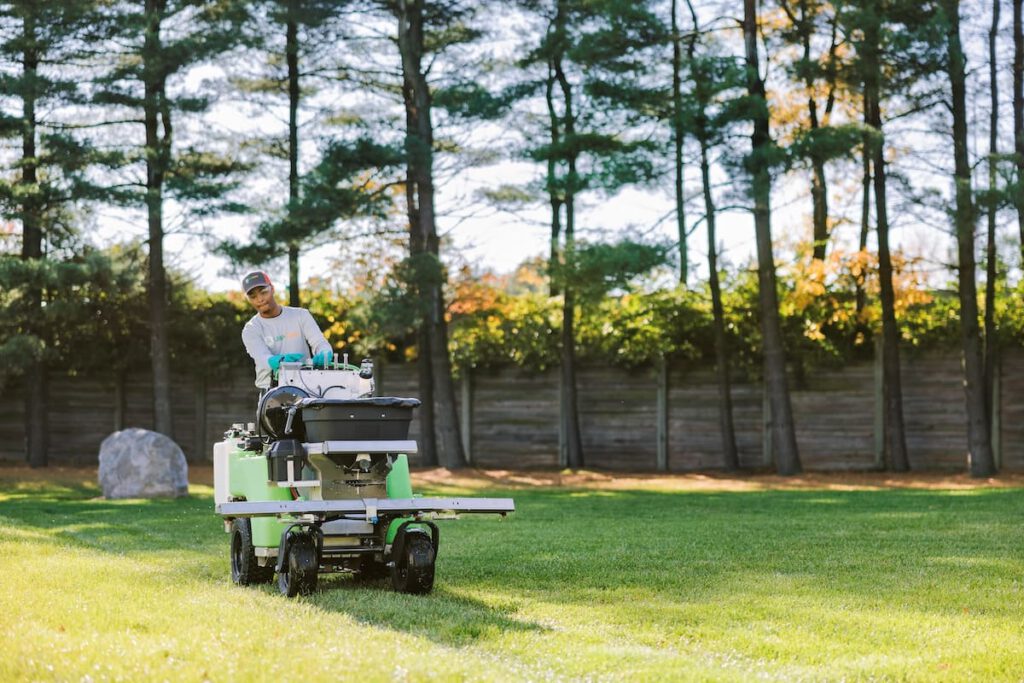
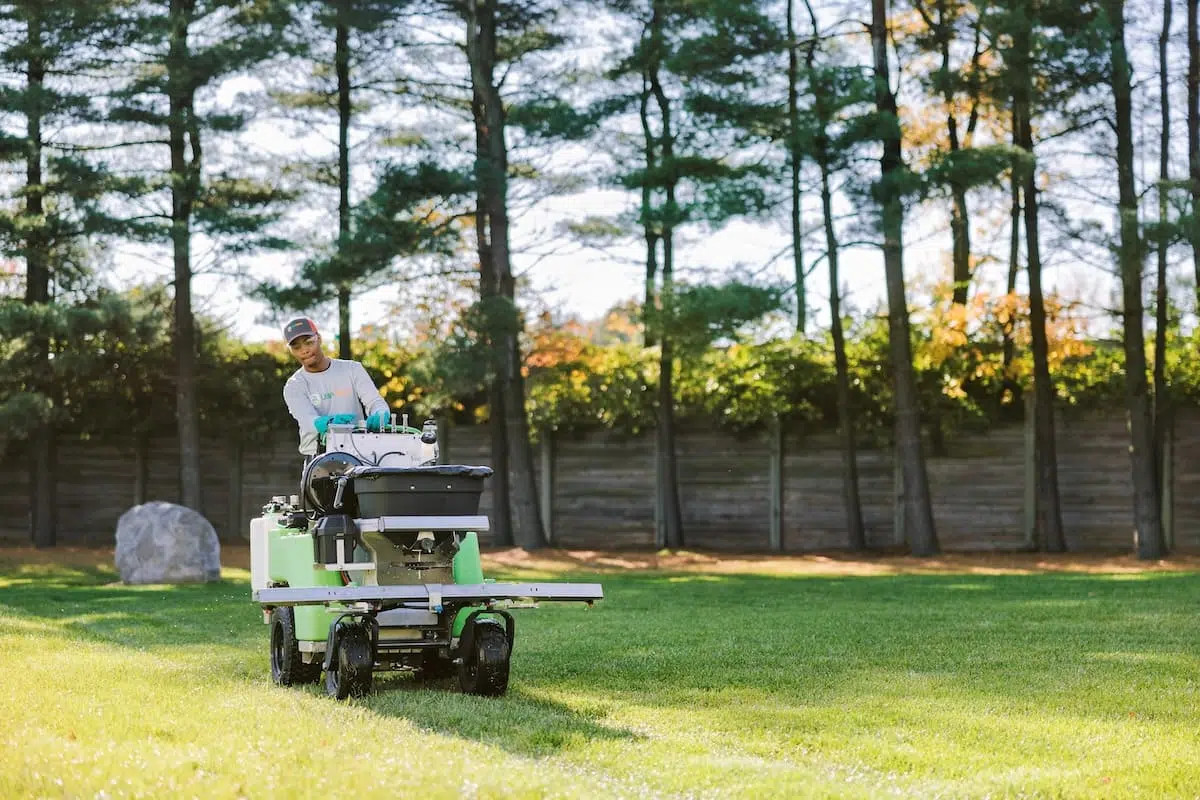
Here is what we have found works best for Westchester homeowners. Treat December 1 as a hard stop, not a target. Aim to have the late-season feeding down in early to mid November, once mowing has slowed but the grass is still green.
That gives you room for weather. A rainy week, an early cold snap, or a weekend spent on leaves can easily push plans back. Starting early means a missed weekend does not cost you the whole season.
Phosphorus: Not Unless You Need It
Under New York law, lawn fertilizer containing phosphorus may only be used if you are establishing a new lawn or a soil test shows that your lawn does not have enough phosphorus. Westchester County also restricts phosphorus fertilizer, and retailers in the county do not display phosphorus lawn fertilizer for sale.
For an established lawn, that simply means choosing a product with a zero in the middle of the three numbers on the bag. Most maintenance lawn fertilizers already fit. If you seeded this fall, a starter fertilizer at seeding time was the right place for phosphorus.
The 20-Foot Rule
Many Westchester properties border a stream, pond, wetland, or one of the county’s many small lakes. New York law restricts applying lawn fertilizer within 20 feet of any water body. The state allows applications as close as three feet when using a spreader guard, deflector shield, or drop spreader, and the county’s rule includes an exception where a vegetated buffer separates the lawn from the water.
The simplest approach is to mark a 20-foot buffer before you start and stay outside it. Many homeowners let that strip grow a little taller or plant it with native shrubs and grasses, which slows runoff and needs no fertilizer at all.
Keep It Off the Pavement
Both the state and the county prohibit applying fertilizer to paved surfaces. In practice, that means sweeping or blowing any granules that land on the driveway, sidewalk, or street back onto the lawn before you finish. Westchester’s hilly streets send runoff downhill quickly, and anything left on the pavement heads straight for the storm drain with the next rain.
Watch the Weather Inside the Window
Even before December 1, the day you choose matters. Avoid applying on frozen ground or right before a heavy storm. A light rain or gentle watering after application helps move fertilizer into the soil. A downpour on a sloped lawn, which describes a lot of Westchester yards, can wash it into the street.
Frost on the grass in the morning is not the same as frozen ground. If a screwdriver pushes easily into the soil mid-morning, the ground is workable.
Leaves Come First
By November, many Westchester lawns are buried under oak, maple, and beech leaves, and the big oaks often hold on until late in the month. Fertilizer spread over a thick leaf layer never reaches the soil and ends up bagged with the leaves. Mulch light leaf cover with the mower or clear heavier layers before applying. With a firm deadline, it helps to plan leaf cleanup a little earlier than usual.
What If You Miss the Deadline?
If December 1 arrives before the late-season feeding goes down, the right move is to wait until April. The lawn will still green up in spring, it may just be a little slower and less even. Applying after the cutoff is not allowed, and the product would mostly sit on cold or frozen soil anyway.
Ask Your Lawn Care Company How They Handle It
If you hire someone to fertilize your lawn, it is fair to ask how they time late-season applications around December 1 and how they handle phosphorus, water setbacks, and pavement cleanup. Any professional working in Westchester should be able to answer clearly.
What a Well-Timed November Looks Like in Spring
Imagine this. It is mid April. The fertilizer window just reopened, and your neighbors are starting to think about their first spring application. Your lawn is already greening up, evenly and early, because it went into winter well fed. You beat the deadline, and the lawn is showing it.
What to Do Next
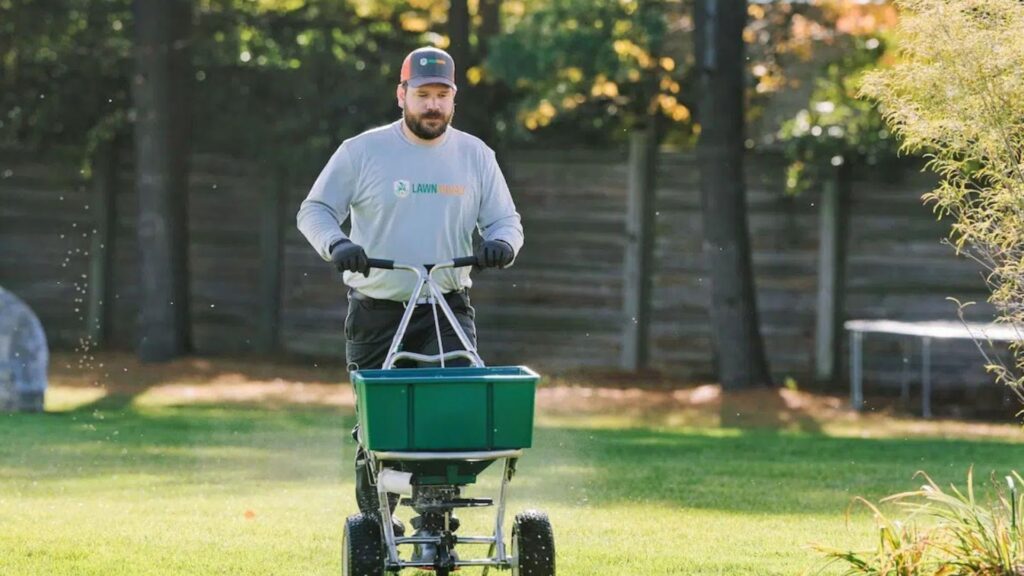
If you are feeding your own lawn, plan to finish in early to mid November so the December 1 cutoff does not catch you. Clear leaves first, choose a phosphorus-free product unless you are seeding or a soil test calls for it, stay 20 feet from any water, avoid frozen ground and heavy rain, and sweep every granule off the pavement. If December arrives first, wait until April.
If you would rather have someone else handle the timing decisions, product selection, and application for your Westchester lawn, we are here for that. Lawn Squad of Westchester serves homeowners across Westchester County. Visit lawnsquad.com to request a free quote. Our VitaminLawn program is built for the grass types, soils, and weather patterns we deal with here, and for the rules New York and Westchester County set on when and how lawns can be fed.
Here is what to expect. We will look at your grass, talk through how your lawn handled this year, and explain what we would apply before winter and why. If your lawn does not need a late-season application, we will tell you that honestly.