

Lake-Effect Snow and Your Lawn: Why Cleveland Lawns Need a Late-Season Feeding Before the Snow Arrives
Lake-Effect Snow and Your Lawn: Why Cleveland Lawns Need a Late-Season Feeding Before the Snow Arrives
Short Answer: Lake Erie gives Greater Cleveland some of the most unpredictable early winters in Ohio, and lake-effect snow can cover lawns on the east side for weeks at a time. That makes a late-season feeding both more valuable and more time-sensitive. Bluegrass, ryegrass, and fescue lawns that go under the snow well fed come out of it stronger and green up faster. Here is what we have found works best: aim for the first half of November, once mowing slows but before snow cover sets in, and never spread fertilizer on top of snow or frozen ground.
If you live anywhere east of downtown Cleveland, you already know how fast November can turn. One week the lawn still needs mowing. The next, the wind shifts off Lake Erie and the yard is under six inches of snow. On the west side, it may just be cold rain. Either way, the window for late fall lawn work can close with very little warning.
That unpredictability is why so many Cleveland-area homeowners ask us whether a late-season feeding is worth the effort. The honest answer is yes, and the lake is a big part of the reason.
How Lake Erie Shapes November
Lake Erie stays relatively warm into late fall. When cold air moves across the open water, it picks up moisture and dumps it as snow on the downwind shore. That is lake-effect snow, and in Northeast Ohio it falls heaviest in the snow belt that runs through the eastern suburbs and into Lake and Geauga counties.
For lawns, that means the season can end abruptly on the east side, with snow cover arriving in mid to late November in some years. West of the Cuyahoga, the lake brings more clouds and rain than snow early in the season, and the lawn often stays workable a little longer.
Why a Snow-Covered Lawn Needs Stored Energy
Under snow, grass is not doing much. It is not making new food from sunlight, and it is living almost entirely on the carbohydrates it stored in its crowns and roots in the fall.
A lawn that goes under the snow well fed has a deeper reserve to draw on. It comes out of winter in better shape, recovers faster from snow mold and other winter injury, and greens up more evenly when spring arrives. A lawn that goes under hungry often emerges thin and slow, with patches that take weeks to catch up.
That is the heart of why late-season feeding matters so much here. The longer and less predictable the snow cover, the more the lawn depends on what it stored in November.
What Is Growing in Cleveland Lawns
Most lawns in Greater Cleveland are Kentucky bluegrass, perennial ryegrass, fine fescue, or tall fescue, often in a blend. These cool-season grasses slow their top growth in November but keep building roots and storing energy until the ground freezes. Ohio State University turfgrass researchers have long recommended late fall fertilization for cool-season lawns in Ohio for exactly this reason.
Timing the Feeding Before the Snow
Here is what we have found works best across the Cleveland area. Aim for the first half of November, once mowing has slowed but the grass is still green. On the east side and in the snow belt, lean toward the earlier end of that window, since snow cover can arrive sooner. On the west side, the window often stays open a little longer.
Watch the forecast. If a lake-effect event is coming, getting the feeding down a few days ahead is better than waiting and hoping the snow melts quickly.
Never Spread on Snow or Frozen Ground
It can be tempting, if the snow arrives before you get to it, to spread fertilizer on top and let it melt in. Please do not. Fertilizer on snow or frozen soil does not reach the roots. When the snow melts, much of it runs off into the street and storm drains that lead to the Cuyahoga, Rocky, and Chagrin rivers and eventually Lake Erie.
If snow comes before you get the feeding down, wait for a thaw that clears the snow and leaves the ground workable. If that does not happen, save the feeding for spring.
Leaves Before the Feeding
Northeast Ohio’s mature maples, oaks, and sycamores drop a lot of leaves, and many come down in early November. Fertilizer spread over a leaf layer never reaches the soil. Worse, leaves left on the lawn when the snow arrives create the cool, wet, matted conditions that snow mold loves.
Clear or mulch the leaves first, then feed. On the east side, where snow can come early, it helps to plan leaf cleanup a little sooner than you might in other parts of the state.
Final Mow Before the Snow
Keep mowing at about three inches until growth slows, then make a final cut slightly lower, around two and a half inches. Long, floppy grass mats down under heavy lake-effect snow and holds moisture against the crowns. A modest final cut helps. Scalping the lawn, on the other hand, removes leaf tissue the grass still needs and exposes the crowns to cold.
What to Put Down
For a late-season feeding, nitrogen is the main nutrient. A quicker-release source is often preferred this late, since the grass needs to take it up before the soil cools further. Moderate rates are plenty.
Phosphorus is rarely needed on established lawns, and nutrient runoff into Lake Erie has been a serious concern in recent years. Unless a soil test shows a need, choose a product with little or no phosphorus.
Salt and the Snow Belt
Heavy snow means heavy use of rock salt on driveways, sidewalks, and streets. Salt builds up in the soil along the edges of the lawn and can leave brown, thin strips in spring. Shovel before you salt, use ice melt only where it is truly needed, and avoid piling salty snow onto the lawn. A well-fed lawn recovers from salt damage faster once the salt is flushed out by spring rain.
The Curb Strip Takes the Worst of It
On many Cleveland-area streets, the narrow strip between the sidewalk and the road catches plow spray, salt, and snow piles all winter. It is usually the slowest part of the lawn to recover. A late-season feeding helps, and a few deep waterings in spring help flush out salt.
Stay Off the Lawn Under Snow
When the yard is covered, it is easy to forget it is there. Avoid parking on the lawn, running the snowblower across turf, or piling all the snow from the driveway in one spot. Compacted snow and long-lasting piles are where snow mold shows up first.
What It Looks Like When the Snow Finally Melts
Imagine this. It is late March. The last of the snow belt piles finally disappear. On the lawns that went under hungry, there are matted gray patches and a lot of tan grass. Yours is greening up evenly within a couple of weeks. The snow sat on both lawns the same amount of time. The difference was what each one stored in November.
What to Do Next
If you are handling the late-season feeding yourself, aim for the first half of November, leaning earlier if you live in the snow belt. Clear leaves first, make a slightly lower final mow, choose a nitrogen-focused product with little or no phosphorus, and never spread on snow or frozen ground. If the snow arrives first, wait for a thaw or save it for spring.
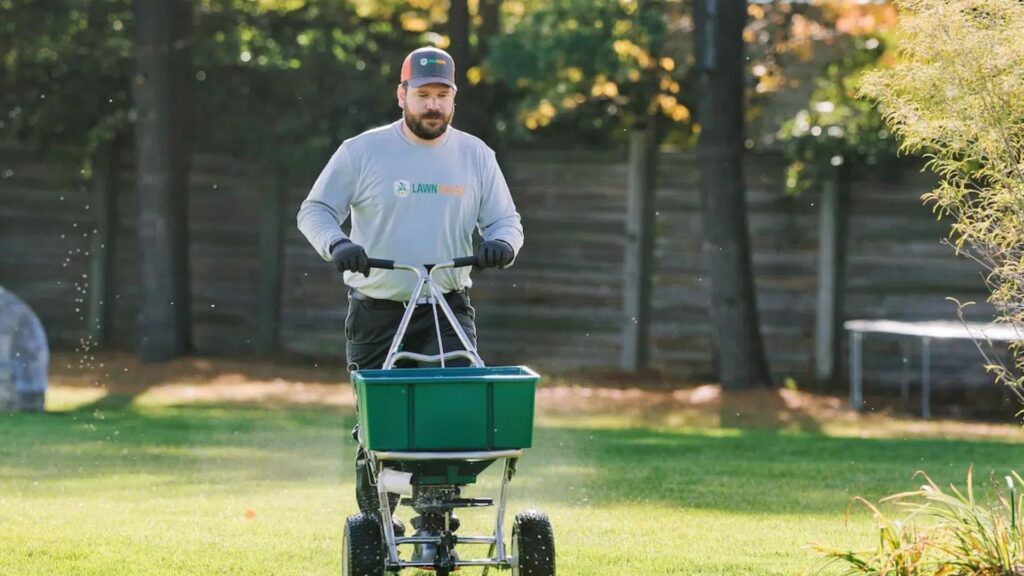
If you would rather have someone else handle the timing decisions, product selection, and application for your Cleveland-area lawn, we are here for that. Lawn Squad of Cleveland serves homeowners across Greater Cleveland. Visit lawnsquad.com to request a free quote. Our VitaminLawn program is built for the grass types, soils, and weather patterns we deal with here.
Here is what to expect. We will look at your grass, talk through how your lawn handled this year, and explain what we would apply before winter and why. If your lawn does not need a late-season application, we will tell you that honestly.
