What Does Fall Lawn Fertilization Cost in The Palm Beaches?
Short Answer: A single fertilization visit for a typical Palm Beaches lawn generally runs between $65 and $140, priced from measured turf square footage rather than lot size. Because our lawns grow year round and our sandy soils hold very little, full season programs here commonly involve eight or more visits and land somewhere between $500 and $950 annually for an average property. Handling it yourself costs roughly $35 to $60 per application in product. The bigger variable is not the headline price but what a program includes, since weed control, pest treatment, and micronutrients are bundled by some companies and billed separately by others.
Pricing is what most homeowners actually want to know first, and it is the thing most lawn care sites will not put on the page. We would rather give you the numbers. If they do not fit your budget, you have lost a few minutes, and if they do, you will come to a conversation already knowing whether we are in the right range.
So here is how fertilization is priced across The Palm Beaches, what pushes one quote above another, and where we see money spent that does not produce a result.
It Is Priced Per Thousand Square Feet of Grass
Fertilization is quoted from measured turf area, not lot size and not by the hour. That distinction carries real weight here, because our properties differ enormously in how much of the lot is actually lawn. A property in Palm Beach Gardens with a pool deck, screened enclosure, mature canopy, and deep planting beds may carry a third of the turf of a comparable lot in Wellington that is mostly open grass.
This is the first thing we would question in any quote. A company naming a price without measuring is either padding to protect itself or planning to apply light, and neither of those serves you. Most homeowners we walk through the exercise are surprised by the result, generally because driveways, structures, and beds subtract more than expected.
Once you have that number, every quote you receive becomes comparable on the same terms. Without it you are weighing one company’s guess against another’s.
The Ranges We See Across Our Area
For a typical Palm Beaches lawn, a single application commonly falls between $65 and $140. Smaller lots closer in toward West Palm Beach and Lake Worth sit at the low end. Larger properties out toward Wellington and the western communities, and homes on half acre or more, climb from there and are usually priced per thousand square feet rather than as a flat figure.
Full season programs here commonly run eight or more visits and generally land between $500 and $950 annually for an average property. That visit count is higher than most of the country and it is not padding. Our lawns grow twelve months a year, and our sandy soils hold very little, so the same annual nutrition has to be split into more and lighter applications to stay available to the grass.
The honest caveat is that bundling varies enormously. Some programs include weed control, some include chinch bug and sod webworm management, some include a full micronutrient package and some treat that as an extra. A $500 program and a $950 program are frequently not the same service at two prices, and comparing headline numbers alone will lead you wrong.
Why Our Season Raises the Visit Count
This is the piece that explains the gap between a Palm Beaches quote and anything you read written for elsewhere. In a northern market, a lawn is dormant and needs nothing for four or five months. Ours never stops growing.
A lawn growing continuously has continuous nutrient demand. It also keeps producing tissue that is mowed off and, if bagged, removed from the property entirely, which is a steady small export of nutrients. There is no season in which the lawn coasts on reserves.
Our soil compounds it. Sand has very little ability to hold nutrients, so a heavy application largely leaches past the root zone with rain and irrigation before the grass uses it. Lighter and more frequent is simply the efficient approach here. It costs more in visits and less in wasted product, and it produces a steadier lawn rather than the surge and fade cycle heavy feeding creates.
What You Are Paying For Besides Fertilizer
Product is a modest share of the cost. The rest is calibrated equipment, labor, routing, licensing, and the judgment to apply the right material at the right moment inside the rules that apply here.
That last part is not trivial in Palm Beach County. Local ordinances restrict nitrogen and phosphorus application during the summer rainy season, require a minimum share of slow release nitrogen, limit phosphorus without a soil test showing need, and set buffer distances near canals, lakes, and waterways. Commercial applicators work under certification. Handling that correctly across multiple municipalities is part of what a program buys.
A good visit also means eyes on the lawn. Chinch bugs stay active here through our mild winters and can take out a section of Floratam in a matter of weeks. Sod webworms chew through lawns in the late rainy season. Catching either early is often worth more than the application itself, so ask what happens when a problem is found and whether correction is included or billed separately.
The Do It Yourself Numbers
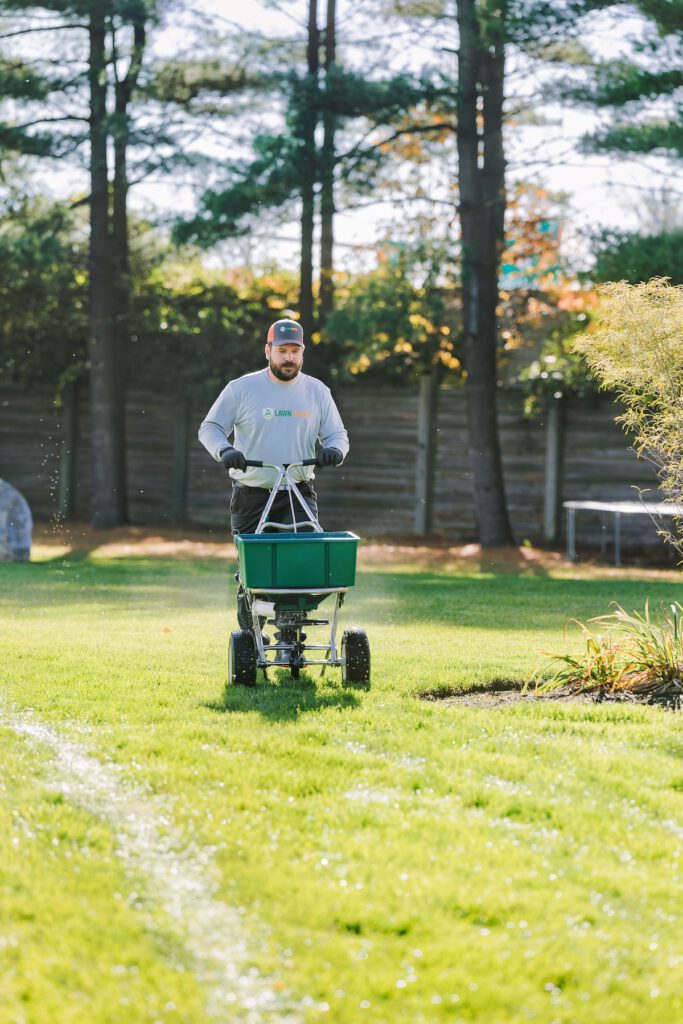
Fertilization is among the more approachable parts of lawn care to take on yourself, and the comparison is worth seeing plainly. A quality bag covers roughly five thousand square feet and runs about $30 to $55, with the slow release formulations our rules favor at the upper end. For an average lawn here that is one to two bags per application, so roughly $35 to $60 in product.
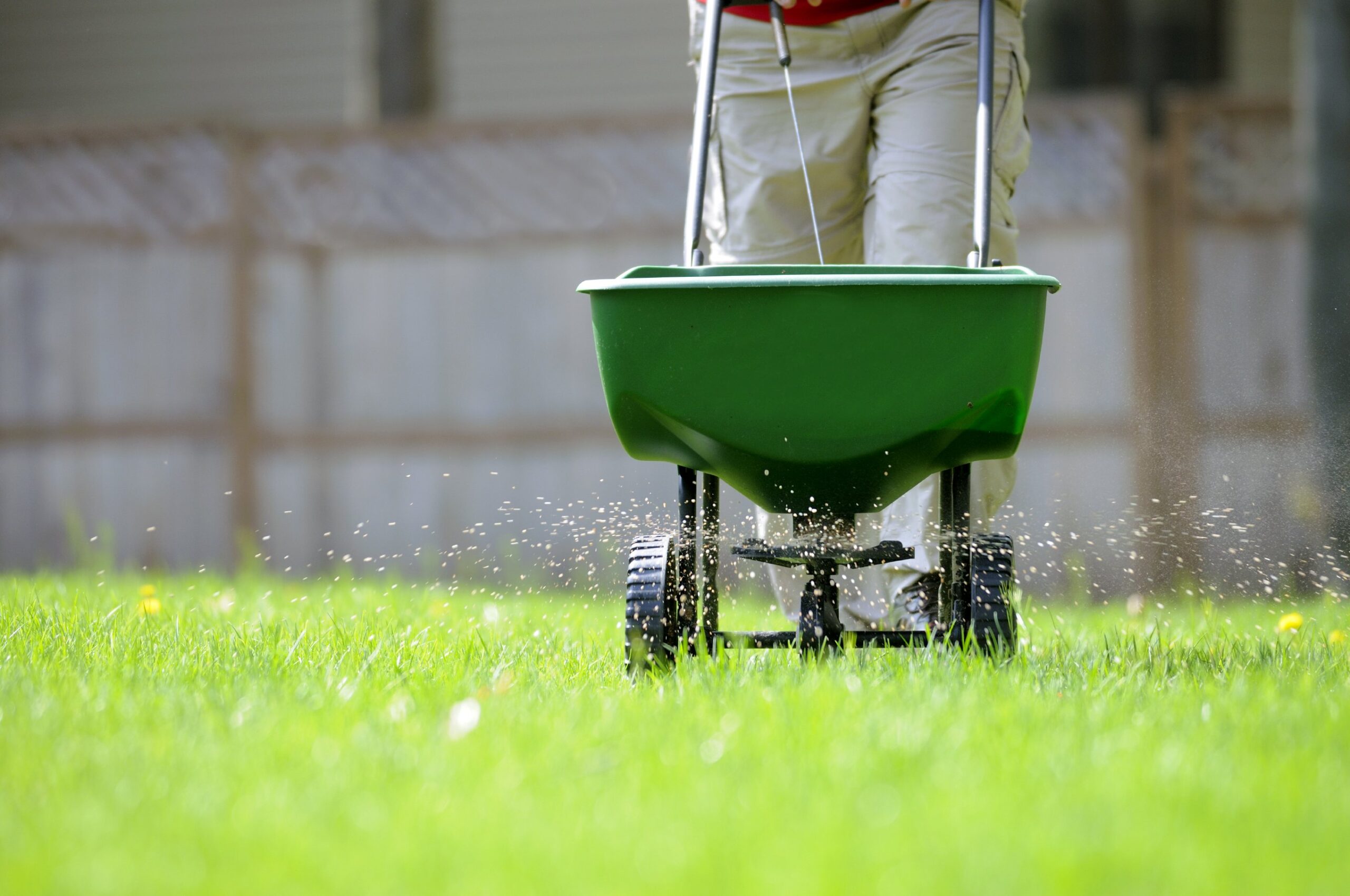
Add a broadcast spreader as a one time purchase, $60 for a basic model or $150 and up for one that holds calibration well, plus a deflector shield if your property borders water. Add roughly forty five minutes per application and a trip to buy product, multiplied across the eight or more applications our season calls for.
The dollar gap is real but narrower than most people assume. Where the DIY route usually slips is calibration and compliance. Every spreader setting number means something different on every bag, because granule size and density vary, and applying twenty percent heavy wastes product and can burn turf. The ordinance side also becomes your responsibility, including knowing the current restricted window in your municipality.
What Separates a Cheap Program From a Complete One
When two quotes differ by several hundred dollars a year, the difference is almost never the fertilizer. It is what else is in the program and how many visits it contains.
The questions that reveal it are specific. How many applications per year. Is weed control included or a separate service. Are micronutrients part of the program and at what frequency, which matters here because sandy soil and shell or limestone fill in many yards can push pH high enough to limit iron availability. Is insect management included, and does that cover chinch bugs specifically.
We would rather you ask those questions of everyone you call, including us. A program that looks expensive next to a bare fertilization plan is frequently the cheaper option once you add the treatments you would have bought separately anyway.
Where Money Gets Wasted Here
The most common waste in our market is applying fertilizer to a lawn whose real problem is water. Now that the rainy season is ending and the dry season is starting, an irrigation system with a blocked or misaimed head stops being covered by afternoon storms. A dry stripe looks exactly like a nutrient deficiency, and no amount of fertilizer fixes it.
Second is feeding a lawn under chinch bug pressure. Damaged Floratam looks starved, and nitrogen will not stop the insects. It can make things worse, since soft new growth is what they prefer.
Third is applying just ahead of a heavy rain during the wet months, which is restricted in most jurisdictions here and also sends product straight into the canal system. That is money spread on the ground and a water quality problem in one action.
What to Do Next
Measure your turf before calling anyone. Pace the perimeter of each grass area, multiply length by width, and subtract beds, paving, and structures. That single figure makes every quote comparable and protects you from both over and under application.
Run each irrigation zone and watch it before you spend anything on fertilizer. With the dry season beginning, coverage problems that were invisible in August are about to become the limiting factor on your lawn.
When you request pricing, ask four things. Is the price based on measured square footage. How many applications are included per year. Are micronutrients and pest control part of the program or billed separately. Does the company apply under a certified applicator and how does it handle local ordinance requirements. Those answers sort companies quickly.
If you would rather have someone handle the timing, product selection, and compliance for your lawn, we are here for that. Visit lawnsquad.com to find Lawn Squad of The Palm Beaches and request a free quote on your property. Our VitaminLawn program is built around the sandy soils, year round growth, and St. Augustine lawns we actually work with here.