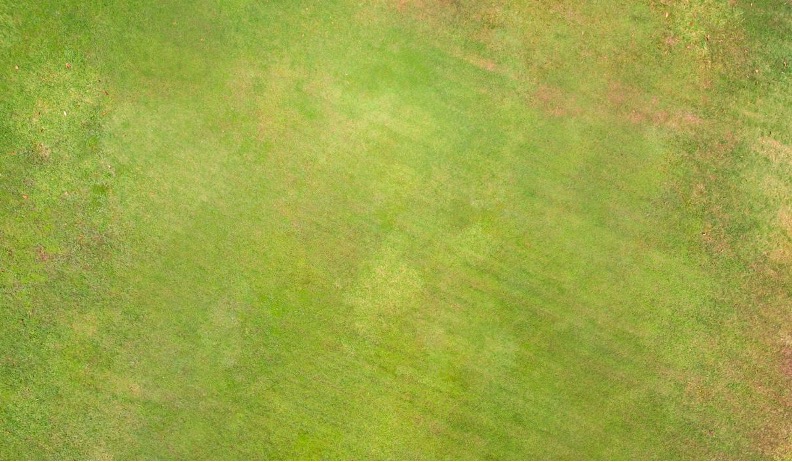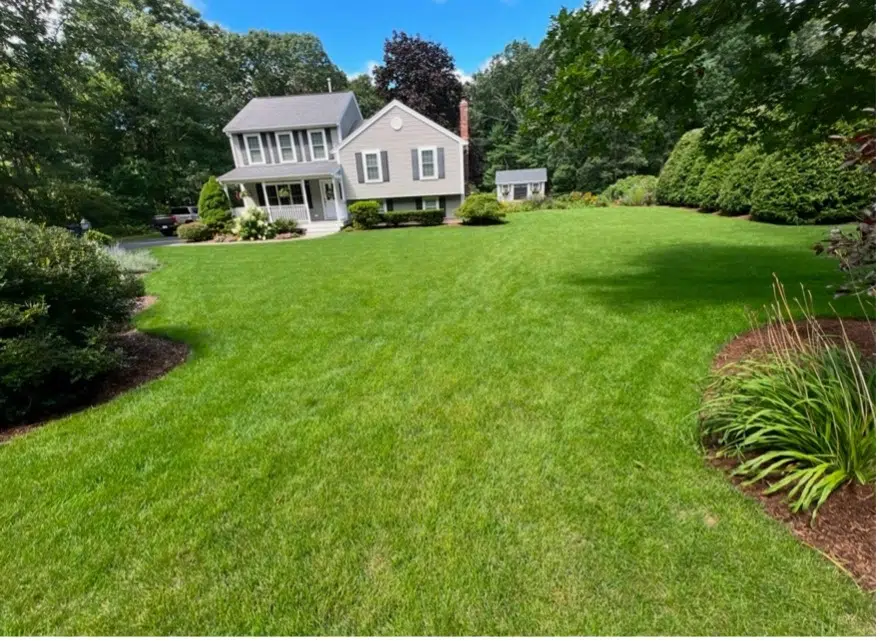
Short Answer: It depends entirely on which grass you have. Tall fescue lawns, common through North Raleigh, genuinely need fall aeration and overseeding, and September into early October is the window. Bermuda, zoysia, and centipede lawns, common in Greenville and in sunnier Raleigh yards, should not be aerated or overseeded in fall. Those grasses are heading into dormancy and cannot heal the wounds or use the seed. Identify the grass first, because the same September service helps one lawn and sets the other back.
The Question Behind the Question
Every September, national lawn content tells homeowners to aerate and overseed. Half the people who read it live where that is excellent advice and half live where it is a waste of money. Our service area sits right on that line.
North Raleigh and Greenville straddle the transition zone, which is the band across the middle of the country where both cool season and warm season grasses can be grown and neither is fully comfortable. Within a single neighborhood you can find tall fescue lawns next to bermuda lawns next to centipede lawns. Those three grasses want almost opposite treatment in the fall.
So the useful answer is not yes or no. It is: identify your grass, then decide.
How to Tell What You Have
This takes about two minutes on your hands and knees and it is the most valuable thing in this article.
- Tall fescue grows in clumps, not runners. Blades are wide and coarse with prominent veins. It stays green through most of the winter and looks worst in July and August. If your lawn struggles in late summer heat and looks best in November, it is fescue.
- Bermuda spreads aggressively by above ground stolons and underground rhizomes, has fine blades, demands full sun, and goes completely tan in winter. If it creeps into your flower beds and browns out in December, it is bermuda.
- Zoysia also goes dormant tan but feels dense and springy underfoot, almost like carpet, with stiff blades. It tolerates light shade better than bermuda and spreads slowly.
- Centipede is very common in Greenville and the surrounding coastal plain. It is a lighter apple green than the others, grows low and slow, spreads by stolons only, and has a distinctive folded new leaf. It goes dormant tan in winter and is notoriously sensitive to being overfed.
- St. Augustine has the widest, thickest blades of the group with thick ropey runners, and it handles shade well.
Pull a small plug and look at how the plant grows. Clumps mean cool season. Runners mean warm season. That single distinction drives everything else.
Tall Fescue: Yes, and the Window Is Now
If you have tall fescue, fall aeration and overseeding is not optional maintenance. It is the core of the program.
Tall fescue does not spread. Each plant occupies its spot and that is all. When a fescue plant dies during a hot humid Carolina summer, nothing grows in to replace it. The stand thins a little more every year unless you add seed. That is why fescue lawns need overseeding annually or nearly so, while bermuda lawns never do.
Fall is the right season because fescue does its real growing when soil temperatures are falling. Seedlings get warm soil for germination, cool air for growth, and then a full spring to establish before facing summer. Spring seeding gives them a few weeks before heat arrives, which is why it usually fails here.
The window in our area generally runs from early September into the first half of October. Seed going down in November often germinates but does not root deeply enough to survive.
Doing It Right on Fescue
The difference between a good overseeding and a wasted weekend is mostly in the details.
- Core aerate, do not spike. Pulling plugs relieves compaction and creates the soil contact seed needs. Spike aerators mostly just poke holes and can add compaction around them.
- Mow lower than normal and bag clippings before seeding so seed reaches soil rather than sitting on thatch.
- Choose turf type tall fescue blends with good brown patch tolerance, which is the disease that thins fescue here every summer.
- Keep the surface consistently moist for two to three weeks. This is the step people skip. Light watering once or twice daily until germination, then taper to deeper less frequent cycles.
- No pre-emergent. A pre-emergent stops your fescue seed exactly as effectively as it stops weed seed. You cannot do both in the same area in the same fall.
- Feed it. Fescue benefits from fall nitrogen, including a late feeding in November when top growth has slowed but roots are still working.
Bermuda, Zoysia, and Centipede: No
For warm season lawns, fall aeration and overseeding is the wrong service at the wrong time.
Start with overseeding. Bermuda, zoysia, centipede, and St. Augustine all spread on their own by runners. They fill gaps without help. Zoysia and St. Augustine are not practically established from seed at all, and centipede seed is slow and unreliable. There is no thickening benefit to buy.
Aeration is a genuinely useful practice on these grasses, but the correct timing is late spring through midsummer, when the grass is growing hard and can knit the holes closed within weeks. Aerating in October opens hundreds of small wounds in a plant that is shutting down for the year and has almost no capacity to heal them. It also breaks up any pre-emergent barrier you have applied, opening channels for winter annual weeds.
Put simply, warm season grass repairs in summer and stores energy in fall. Ask it to repair in fall and it does neither well.
Centipede Needs Less, Not More
Centipede deserves its own warning because it is so common through Greenville and the coastal plain, and because almost everything people do to help it hurts it.
Centipede evolved on poor, acidic, sandy soil and it wants to be left largely alone. It has low nitrogen requirements, and overfertilizing is the leading cause of what is called centipede decline, where the lawn looks great for a season and then collapses in patches the following spring. It also prefers a lower soil pH than the other lawn grasses and can develop iron deficiency when lime pushes pH up.
So if you have centipede, the fall program is minimal on purpose. No aeration, no overseeding, no late nitrogen, no lime unless a soil test specifically calls for it. Keep it mowed at the low end, around one to two inches, control winter weeds with a properly timed pre-emergent, and resist the urge to feed it into shape.
Raleigh Clay Versus Greenville Sand
Soil differs meaningfully across our service area and it changes what aeration accomplishes.
North Raleigh and the Piedmont generally sit on red clay, often compacted, especially on lots where construction traffic packed the subsoil. Clay compacts readily and aeration genuinely relieves it. On a fescue lawn over Piedmont clay, core aeration is one of the highest value things you can do.
Greenville and the coastal plain run sandier. Sandy soil compacts less, drains fast, and holds fewer nutrients and less water. Aeration matters less there, while organic matter and water holding capacity matter more. A sandy lawn that dries out in four days is not going to be fixed by pulling plugs.
Either way, a soil test is cheap and takes the guesswork out. North Carolina makes testing readily available through the state agriculture department, and fall is a sensible time to do it since any pH correction takes months to work.
What Warm Season Lawns Should Get Instead This Fall
Skipping aeration and overseeding does not mean doing nothing. It means doing the right things.
- Fall pre-emergent, timed to soil temperature. When soil at two inches falls through about 70 degrees, winter annual weeds germinate: annual bluegrass, henbit, chickweed, hairy bittercress, and lawn burweed. Burweed in particular is worth preventing, since it produces the spiny burs that make a lawn painful to walk on barefoot in April. Prevention in fall is the only clean way to handle it.
- Stop nitrogen in time. The last real feeding on warm season turf should land roughly six weeks before average first frost, which in our area means late August into early September. Nitrogen after that pushes soft growth into cold events and causes winter injury.
- Potassium rather than nitrogen in early fall, which supports stress and cold tolerance without forcing top growth.
- Step irrigation down as nights cool and evaporation drops.
- Keep leaves off the turf so dormant grass is not smothered under a wet mat.
Mixed Lawns Are Two Lawns
Plenty of properties here have both. Fescue under the shade of mature trees, bermuda in the sunny front yard, or a fescue lawn slowly being invaded by bermuda from a neighbor.
The mistake is treating the property on one schedule. Aerate and seed the fescue areas in September while leaving the bermuda areas alone. Apply pre-emergent to the bermuda areas while keeping it well away from anything you just seeded. Feed the fescue in November and do not feed the bermuda at all.
Where the two grasses meet, accept that the boundary will never look crisp. Bermuda wins that fight in full sun over time and fescue wins in shade. Fighting the site conditions is expensive and rarely works.
Large Patch and Brown Patch Are Not the Same Thing
One more transition zone distinction worth knowing, since both show up as circular brown areas.
Brown patch hits tall fescue in hot humid weather, which here means June through August. It is the main reason fescue thins every summer and the main reason you are overseeding in the first place.
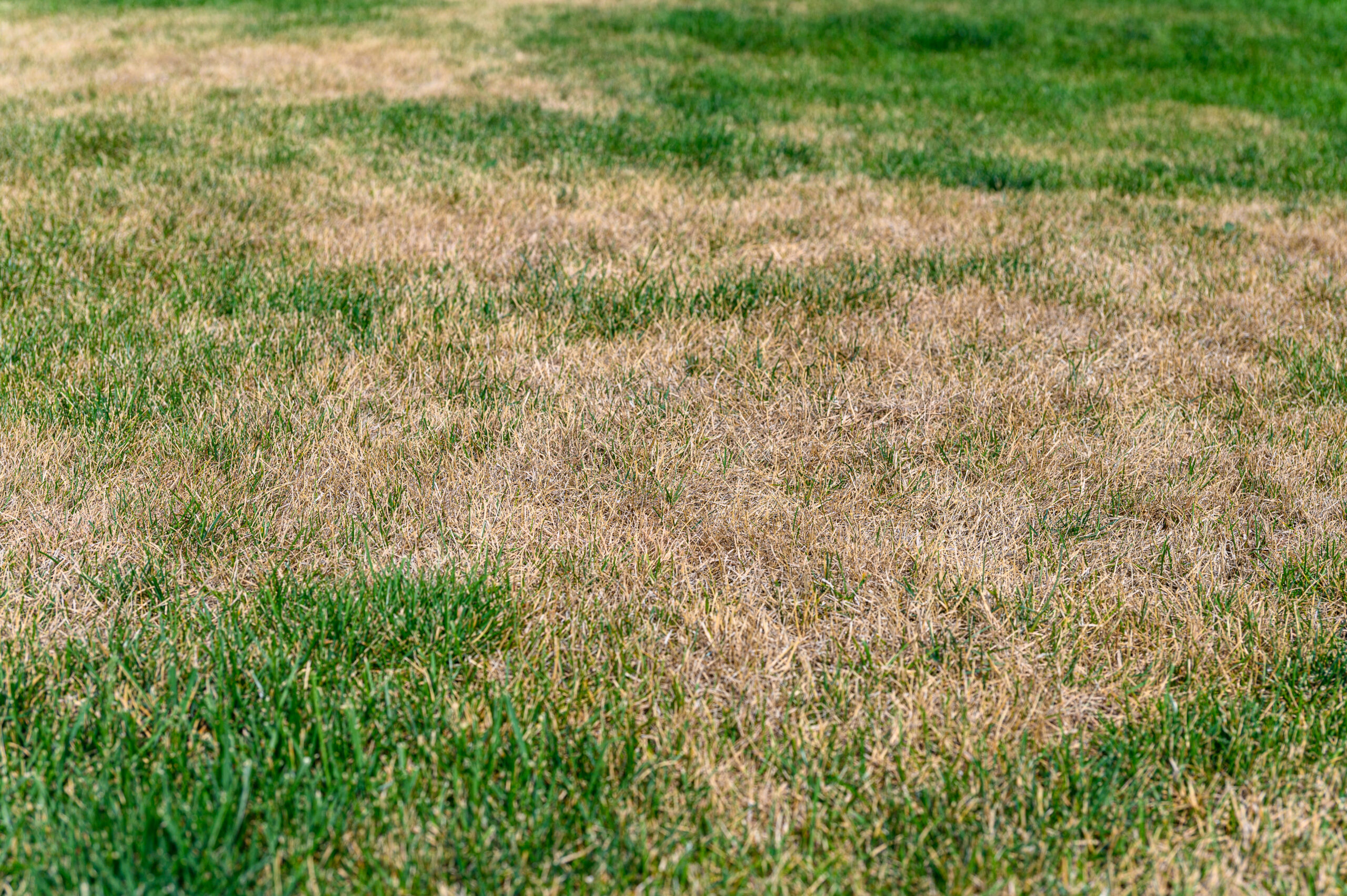
Large patch hits warm season grasses, especially zoysia and centipede, as soil temperatures fall through the 70s in the fall. Same family of fungus, opposite season, different grass. If circles are appearing right now on a zoysia or centipede lawn, that is large patch, and the response is to correct drainage, water early in the morning, and stop nitrogen rather than to seed into it.
What to Do Next
Walk the lawn this week and write down the two or three things that actually bother you about it, then work backward from the window rather than forward from today. Almost every fall mistake we see in North Raleigh and Greenville comes from starting with the calendar instead of with the lawn.
If you would rather have someone look at it with you, Lawn Squad of North Raleigh and Greenville offers a free quote. Call 833-816-7508 or find us at lawnsquad.com. Every Lawn Squad location is independently owned and operated, and our VitaminLawn fertilization and weed control program is built around the grass, soil, and conditions here rather than a national average.
A first visit is a walk of the property, a look at the thin areas, a check of mowing height and irrigation, and a straight conversation about what is realistic in the weeks left this season. At 30 days you should see color and density improve. At 90 days the lawn should be visibly thicker, with the root growth that carries it through winter.