Short Answer: Mulch what you can and remove what you cannot. Shredding a light to moderate leaf layer back into the lawn with a mower returns organic matter and nutrients and costs you nothing. The working rule is that if you can still see grass through the shredded material after a pass, you are fine. On the North Shore the complication is oak. Oak leaves are leathery, drop late, and break down slowly, so heavy oak yards need genuine removal. Anything still matted on the turf when the first snow arrives will cause damage.
Why Leaves on Turf Are Genuinely Harmful
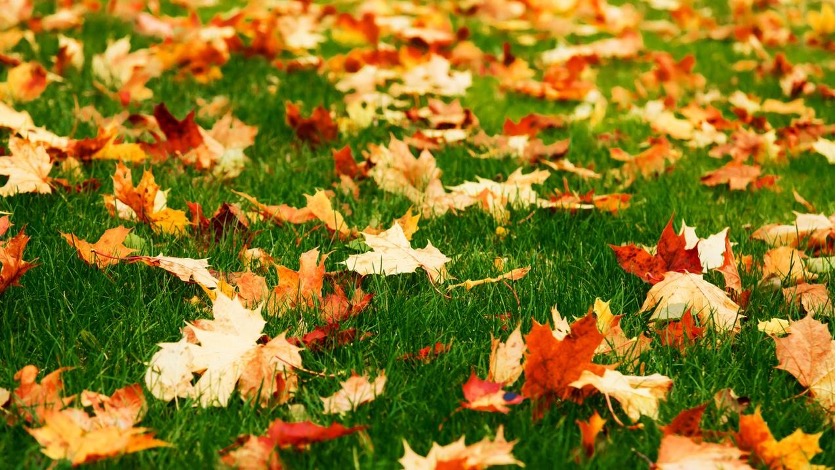
Leaf cleanup gets treated as a tidiness issue. It is not. A leaf layer sitting on grass does three specific things, and all of them matter more in October and November than at any other time.

It blocks light during the exact weeks cool season grass is doing its heaviest root growth of the year, which is when the lawn is building the reserves it will spend next spring. It traps moisture against the crowns and keeps the surface damp and dark, which is the environment snow mold needs. And once it packs down and freezes into a mat, it physically smothers the plants underneath. A heavy wet layer that sits from November through March will leave a dead outline of itself on the lawn in April.
Mulch-Mowing: When It Works
Running the mower over leaves and shredding them back into the lawn is not laziness. It is a well-supported practice. Shredded leaf material breaks down over the winter, feeds soil biology, adds organic matter to the top few inches, and returns a modest amount of nutrients. On sandy or thin North Shore soils, the organic matter is worth more than the nutrients.
The limit is volume. The test is simple: after a pass, look down. If you can clearly see grass blades through the shredded pieces, that load is fine. If you are looking at a bed of chopped leaves with grass hidden underneath, you have exceeded what mulching can handle and the rest needs to come off. Multiple passes help, and a mulching blade with a plugged discharge chute cuts the material much finer than a standard deck.
The North Shore Oak Problem
Oak is what makes leaf management harder here than in a lot of places. Oak leaves are thick and leathery, they are high in lignin, and they simply do not break down on the timescale that maple leaves do. A layer of whole oak leaves can still be recognizably intact in April.
They also curl rather than lie flat, which sounds like it would improve airflow and mostly does not, because they interlock and form a surprisingly dense mat once they are rained on. If your property is under mature oaks, plan on real removal for the bulk of the drop and mulch only the light early material. Shredding oak leaves finely does make them usable, but it takes more passes and a sharper blade than most people expect.
Maple, Beech, and the Ones That Mat
Maple is the opposite failure mode. Maple leaves are thin and break down quickly, which is good, but they are also broad and flat, and when they get wet they seal together into an airtight sheet. A single heavy maple drop followed by three days of rain can plaster the lawn in a way that does damage in under two weeks.
Beech holds its leaves late and drops them in a slow trickle through winter, which is a nuisance rather than a threat. Norway maple, which is common in older North Shore neighborhoods, combines heavy shade all summer with a dense late drop, so the grass underneath is usually already weak before the leaves land on it.
The Timing Problem Nobody Plans For
Here is the sequence that catches people every year. You do a big cleanup in late October, put the mower and rake away, and feel finished. Then the oaks let go through November, and in some years a good amount of that material is still coming down in early December. The first snow lands on top of it and it stays there until March.
The fix is to plan the last pass around the oaks, not around the calendar or the maples. On the North Shore that generally means one more cleanup in late November or the first week of December, after the oaks have mostly finished. It does not need to be perfect. It needs to get the mat off the turf before it gets buried.
Coastal Wind Cuts Both Ways
Being close to the water means wind does a meaningful amount of your work. Open, exposed yards in places like Marblehead, Nahant, and along Cape Ann often self-clear, and leaves keep moving rather than settling.
The flip side is that all of that material accumulates somewhere, and it is always the sheltered spots: against fences and stone walls, in the lee of the house, in low corners, and behind shrub beds. Those accumulation zones can get several inches deep, and they are frequently the areas that come out of winter dead. If you have a fence line or a wall that collects, check it specifically after every windy stretch rather than assuming the last cleanup handled it.
Little and Often Beats One Big Day
The most effective approach is also the least dramatic. Doing a light pass every week or ten days through the drop season is far less work in total than one exhausting weekend, and it is much better for the lawn because the turf is never covered for long.
Weekly mulch-mowing through October handles most of the early and middle drop without any hauling at all. It also keeps you from ever facing the situation where the load is too heavy to mulch and too wet to move. Wet leaves are dramatically heavier and harder to handle than dry ones, which is its own argument for not waiting.
Where the Leaves Should Actually Go
Leaves you remove are a resource. Shredded leaves make excellent mulch on perennial and shrub beds, where they insulate roots and suppress weeds. A simple pile in a back corner turns into usable leaf mold in a year or two with no effort beyond leaving it alone.
Most North Shore towns run curbside yard waste collection or a seasonal drop-off, but dates, bag requirements, and whether paper bags are mandatory vary town to town, so check your own town schedule rather than assuming it matches last year. One thing to avoid: do not dump leaves into a marsh edge, a wetland buffer, or conservation land. A lot of property here abuts protected wetland resource areas, dumping in them is regulated, and a large pile of decomposing leaves is a genuine nutrient load on a salt marsh.
The Last Pass Before Snow
Combine the final leaf cleanup with the other end-of-season tasks so you are only out there once. Take the mowing height down to about two and a half inches for the last cut, which reduces matting under snowpack. Get the final leaf layer off. Clean gutters, because clogged gutters overflow onto the lawn below and create a saturated, ice-damaged strip along the foundation all winter.
Then look at the areas that were under the heaviest leaf load this year and make a note. Those spots are almost always the thinnest turf on the property, and they belong at the top of next September’s overseeding list.
Equipment That Earns Its Place
You do not need much, but a few things make a large difference. A dedicated mulching blade with the side discharge closed shreds far finer than a standard setup. A high-lift blade with a bag is better when you are collecting rather than mulching.
A large tarp is the single most useful low-tech tool for a leafy property. Rake or blow onto the tarp and drag rather than filling and carrying bags one at a time. A backpack or handheld blower is worth it if you have oaks, mostly for pulling material out of bed edges and fence lines where a rake does not reach well. And keep the mower blade sharp, because shredding leaves dulls a blade considerably faster than cutting grass does.
What to Do Next
Walk the lawn this week and write down the two or three things that actually bother you about it, then work backward from the window rather than forward from today. Almost every fall mistake we see on the North Shore comes from starting with the calendar instead of with the lawn.
If you would rather have someone look at it with you, Lawn Squad of the North Shore offers a free quote. Call 833-816-7508 or find us at lawnsquad.com. Every Lawn Squad location is independently owned and operated, and our VitaminLawn fertilization and weed control program is built around the grass, soil, and conditions here rather than a national average.
A first visit is a walk of the property, a look at the thin areas, a check of mowing height and irrigation, and a straight conversation about what is realistic in the weeks left this season. At 30 days you should see color and density improve. At 90 days the lawn should be visibly thicker, with the root growth that carries it through winter.