Short Answer: Shade is only half the reason. Grass under a mature Westchester oak or maple is competing with the tree for water and nutrients as much as for light, and the tree wins because its root system is larger and established. Fixing it means addressing both: thin the canopy where an arborist says it is safe, switch to fine fescue rather than bluegrass, mow that area an inch higher, water it separately and more deeply, and cut nitrogen roughly in half. Below about four hours of filtered light, no grass will hold.
Westchester Is a Wooded County, and That Is the Starting Point
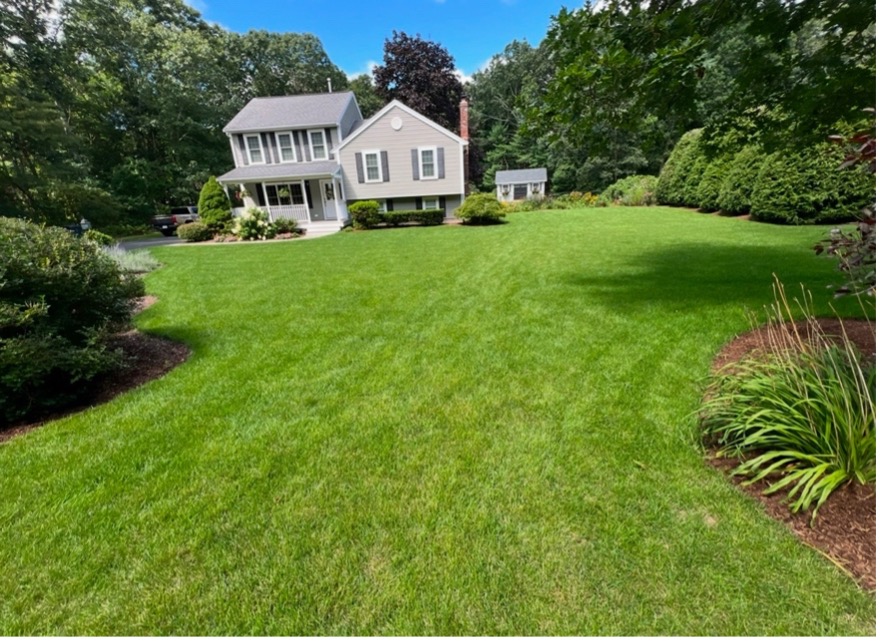
Much of Westchester was second-growth forest before it was subdivided, and a great many properties in Scarsdale, Chappaqua, Bedford, Rye, and Yorktown kept their mature oaks, maples, beeches, and tulip trees. Those trees are the reason people want to live on these lots. They are also the reason the lawn under them looks nothing like the lawn out front. A homeowner fighting to grow bluegrass beneath a ninety-foot oak is fighting the defining feature of the property. The productive question is not how to force it but how much lawn that spot can honestly support.
Root Competition Matters More Than Most People Think
Everyone blames the shade. Shade is real, but the larger factor under a mature tree is usually competition for water and nutrients. A big oak’s feeder roots occupy the top twelve inches of soil out well past the drip line, which is exactly the zone grass roots need. That tree can move hundreds of gallons of water on a hot day, and it draws first. This is why a shaded lawn on the north side of a house, with no tree nearby, often does fine, while a lawn in comparable light under a canopy fails. Light alone does not explain it.
How Much Light Grass Actually Requires
Be specific rather than impressionistic. Fine fescues, the most shade-tolerant cool-season grasses, need roughly four hours of direct sun or the equivalent in bright filtered light through the day. Kentucky bluegrass wants six or more and thins quickly below that. Spend one clear day noting when sun actually reaches the area, in the morning and again mid-afternoon, and write the hours down. Morning sun is more valuable than late afternoon sun because it dries dew early and reduces disease. If the honest total is two hours, no seed choice changes the outcome.
Not All Shade Trees Are Equally Difficult
Norway maple is the worst common offender in this county. It casts unusually dense shade, leafs out early, holds its leaves late, and runs a mat of shallow aggressive roots right at the surface. Beech is nearly as difficult. Oaks, by contrast, are often workable, because they root somewhat deeper and their canopies pass more filtered light. Honey locust and birch are among the easiest to grow grass beneath. If you are choosing a replacement tree for a spot where you also want lawn, this distinction is worth more than any product you can buy.
Choose Fine Fescue and Read the Label
The shade-tolerant grasses that matter here are the fine fescues: creeping red, chewings, hard, and sheep fescue. They tolerate low light, low fertility, dry soil, and root competition better than anything else available. Many bags sold as shade mix are mostly perennial ryegrass with a modest fescue fraction, because ryegrass is cheap and germinates fast. It also has poor shade tolerance and will be gone in two seasons. Turn the bag over and confirm fine fescue makes up the majority. Supina bluegrass exists for deep wet shade but is expensive and specialized.
Raise the Mower in Shaded Areas
Grass in shade has less light to work with, so it needs more leaf surface to capture what reaches it. Mow shaded sections an inch higher than the sunny lawn, generally around four inches. This runs against the instinct to cut everything at one height for a uniform look, but a shaded area cut at two and a half inches will thin out no matter what else you do. If your mower has a single deck setting, raise the whole lawn. The sunny areas benefit from the height too, particularly during a hot Westchester July.
Cut the Nitrogen, Do Not Increase It
The reflex when grass looks weak is to feed it more. In shade this backfires. Grass in low light cannot photosynthesize enough to support the lush top growth nitrogen produces, so you get soft, thin, disease-prone tissue and a weaker root system. Shaded turf generally needs about half the annual nitrogen of full sun turf. Potassium is more useful in these areas because it supports stress tolerance. Feeding a shade lawn like a sun lawn is one of the most common and most counterproductive things homeowners here do.
Water Shaded Areas Separately and Deeply
Irrigation zones rarely account for tree competition, so shaded areas under canopy usually receive the same schedule as open lawn while facing much higher demand. They need deeper, less frequent watering than the rest of the property, both to reach past tree roots and because shade holds surface moisture longer and encourages disease when overwatered. If your system cannot address that zone independently, supplement with a hose and a sprinkler during dry stretches. Grass under a mature oak in August is drought-stressed long before the open lawn is.
Canopy Work Is the One Big Lever
Selective pruning changes the equation more than any product. Raising the crown, meaning removing the lowest limbs, lets morning and evening sun angle in underneath. Thinning the interior canopy increases dappled light reaching the ground without changing the tree’s silhouette from the street. Both require a certified arborist. Over-thinning stresses a mature tree, invites sunscald on exposed bark, and can be far more expensive than the lawn is worth. Done correctly, adding two hours of usable light per day is often the difference between a shade lawn that holds and one that never will.
Disease and Moss Follow Shade
Shaded turf stays wet longer because dew does not burn off, and Westchester summers are humid enough that this matters. Powdery mildew is common on bluegrass in shade and shows as a white dusting on the blades. Moss is not a disease and it is not the cause of thin grass, it is a symptom of the conditions: low light, compaction, moisture, and often acidic soil. Killing the moss without changing the conditions gets you bare dirt followed by moss again. Improving airflow through canopy work does more for both problems than any spray.
Do Not Till Under a Mature Tree
When a shaded area finally fails, the instinct is to till and start over. Do not. Tilling under a mature tree severs feeder roots across a wide area and can seriously injure or kill a tree worth many times more than the lawn. If you are renovating a shaded area, work on the surface: core aerate lightly or scratch the surface with a rake, topdress with a half inch of compost, and overseed with fine fescue. Never add a thick layer of soil over tree roots either, since burying them restricts oxygen and is a slow way to kill a mature specimen.
Know When to Stop Growing Grass There
Sometimes the right answer is to stop. If an area gets two hours of light, sits under a Norway maple, and has been reseeded four falls running, it is not a lawn problem, it is a site that does not support turf. A mulched bed extending to the drip line, a shade-tolerant groundcover, ferns, or a simple ring of woodchips all look better than perpetually thin grass and cost less over time. Given Westchester’s deer pressure, choose plantings deer tend to leave alone, and check with a local nursery about what is actually holding up in your area.
What to Do Next
Walk the lawn this week and write down the two or three things that actually bother you about it, then work backward from the window rather than forward from today. Almost every fall mistake we see in Westchester comes from starting with the calendar instead of with the lawn.
If you would rather have someone look at it with you, Lawn Squad of Westchester offers a free quote. Call 833-816-7508 or find us at lawnsquad.com. Every Lawn Squad location is independently owned and operated, and our VitaminLawn fertilization and weed control program is built around the grass, soil, and conditions here rather than a national average.
A first visit is a walk of the property, a look at the thin areas, a check of mowing height and irrigation, and a straight conversation about what is realistic in the weeks left this season. At 30 days you should see color and density improve. At 90 days the lawn should be visibly thicker, with the root growth that carries it through winter.