Short Answer: In Northern Kentucky the window for core aeration and overseeding runs from late August through early October, with the middle of September close to ideal. Soil is still warm enough for tall fescue to germinate in seven to fourteen days, but the air has cooled enough that seedlings are not fighting heat and drought. Seed put down after mid October usually germinates but does not root deeply enough to survive the first hard freeze. Aerate and seed in the same visit so seed drops into the open holes.
Why Fall Is the Only Real Window Here
Northern Kentucky sits in the transition zone, which means the cool-season grasses that make up most local lawns are only truly comfortable for about eight weeks a year. Spring looks like a good time to seed because everything is green, but a spring seedling has to reach July with a root system it has not had time to build. Fall reverses that math. Soil holds summer warmth into late September, so seed germinates fast, while the air cools and rain becomes more reliable. The seedling then gets a full autumn, a dormant winter, and an entire spring to root before it faces real heat.
The Weeks That Actually Work
Late August through the first week of October is the honest window in Boone, Kenton, and Campbell county lawns. The middle of September sits at the center of it. Seed down by then has six to eight weeks of active growing weather ahead of it. Push into the third week of October and germination still happens, but the plants go into winter as thin single blades with almost no root mass, and the freeze and thaw cycles of February lift them right out of the ground. If you have missed the window, it is better to hold the seed for next year than to pay for grass that will not be there in April.
Read Soil Temperature, Not the Weather App
Tall fescue germinates well when soil at two inches deep sits between 60 and 75 degrees. Air temperature swings far faster than soil temperature, which is why one cool week in early September does not mean the window is closing. An inexpensive probe thermometer pushed into the lawn in the morning tells you more than any forecast. When morning soil readings drop below roughly 55 degrees and stay there, germination slows enough that late seeding stops being worth the money.
Why Core Aeration Matters on This Soil
Much of Northern Kentucky sits on heavy clay over limestone, and clay compacts. Compacted soil means water runs off instead of soaking in, roots stay stuck in the top two inches, and seed dropped on the surface never makes contact with anything it can root into. Core aeration pulls plugs of soil out rather than simply poking holes, so it relieves pressure instead of adding to it. Those holes also give seed a protected pocket with moisture and soil contact on every side. That is why aeration and seeding belong in the same visit rather than two weeks apart.
Choosing Seed That Survives Next July
Turf-type tall fescue is the workhorse here because it roots deeply enough to handle a Kentucky August. Blends of three or more improved cultivars hold up better than a single variety, since a disease or stress that hurts one will usually spare the others. Kentucky bluegrass is often added at a small percentage because it spreads by rhizomes and closes small gaps that fescue cannot. Perennial ryegrass germinates fastest and is useful in modest amounts, but a bag that is mostly ryegrass looks excellent in October and thins badly by the following summer. Read the label on the back, not the photograph on the front.
How Much Seed to Put Down
Overseeding an existing stand of tall fescue generally takes about four to six pounds of seed per thousand square feet. A bare or fully renovated area takes closer to eight. More is not better. Seed piled on too heavily competes with itself, and dense seedlings shade each other into weak, spindly plants that thin out quickly. Measure the lawn before you buy rather than guessing from the coverage claim on the bag, because most homeowners overestimate the front yard and underestimate the back.
What to Do the Week Before
Mow lower than usual, around two and a half inches, and bag the clippings for that one cut so seed can actually reach soil. Water deeply a day or two ahead if it has been dry, because an aerator will not pull a full plug out of bone-dry clay. Mark irrigation heads, invisible fence lines, and shallow cable runs before anyone starts. Leave the soil plugs where they fall. They look untidy for about a week and then break down, returning soil and microbes to the surface exactly where new seedlings need them.
Watering New Seed Without Drowning It
New seed wants frequent light water, not the deep soaking an established lawn prefers. Keep the top half inch damp with short cycles two or three times a day for the first two weeks. Once most of the seed has germinated, cut back to once a day, then to deep watering two or three times a week by week four. That taper is what drives roots downward. Lawns left on the germination schedule all autumn finish the season with shallow roots and struggle the following summer.
The Fertilizer and Weed Control Conflict
Fall is the best fertilization window of the year for cool-season grass, and a starter feeding at seeding gives seedlings phosphorus and nitrogen right when they need it. The conflict is with pre-emergent herbicide. A product that stops crabgrass seed from germinating stops grass seed just as effectively, so the two cannot go down together. Post-emergent broadleaf control also has to wait, usually until the new grass has been mowed two or three times. This sequencing mistake is the single most common reason a fall seeding fails around here, and it is completely avoidable.
Mowing and Traffic on New Grass
Do not skip mowing while seed fills in. Once new grass reaches about four inches, cut it back to three with a sharp blade. Mowing signals the plant to tiller, meaning it pushes out side shoots, and tillering is what turns scattered seedlings into actual turf. Keep the mower light and avoid sharp turns on soft ground. Keep foot traffic and dog runs off the newest areas for a few weeks if you can, because seedling crowns tear out of soft soil far more easily than mature plants do.
What Aeration and Seed Will Not Fix
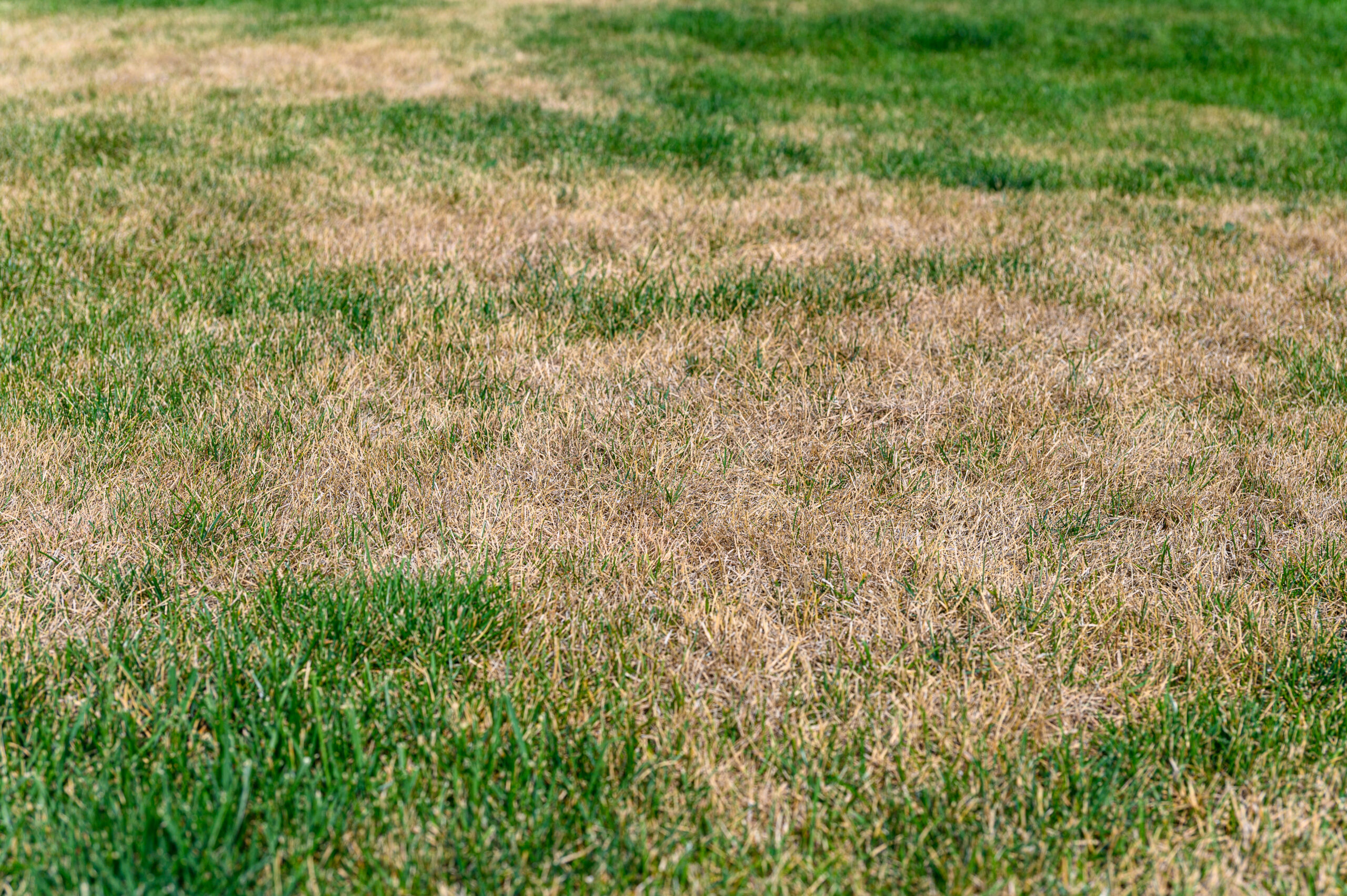
If a section of lawn is thin because it gets three hours of sun, no amount of seed changes that. The same is true for the strip that is thin because it is the path everyone walks, or the area that stays soggy because a downspout empties there. Aeration and overseeding fix density problems caused by compaction, summer stress, and age. They do not fix drainage, shade, or grade. Knowing which of those you actually have is the difference between a lawn that improves every year and one that gets reseeded every fall forever.
Test the Soil Before You Buy Anything
Northern Kentucky soils sit over limestone, and that bedrock influence pushes pH upward in a lot of yards, sometimes past the range tall fescue prefers. Other lots, especially newer subdivisions where topsoil was stripped and replaced, run the other direction. You cannot tell by looking, and a fertilizer program built on a guess wastes money in both directions. A soil test through the county extension office is inexpensive and tells you pH, phosphorus, potassium, and organic matter. If pH is off, nutrients you apply stay locked in the soil where roots cannot reach them, and the lawn stays pale no matter how much nitrogen goes down. Correcting pH takes months, which is another argument for testing in late summer rather than discovering the problem next June. Bring the results to whoever fertilizes the lawn so the program matches the soil rather than the calendar.
What to Do Next
Walk the lawn this week and write down the two or three things that actually bother you about it, then work backward from the window rather than forward from today. Almost every fall mistake we see in Northern Kentucky comes from starting with the calendar instead of with the lawn.
If you would rather have someone look at it with you, Lawn Squad of Northern Kentucky offers a free quote. Call 833-816-7508 or find us at lawnsquad.com. Every Lawn Squad location is independently owned and operated, and our VitaminLawn fertilization and weed control program is built around the grass, soil, and conditions here rather than a national average.
A first visit is a walk of the property, a look at the thin areas, a check of mowing height and irrigation, and a straight conversation about what is realistic in the weeks left this season. At 30 days you should see color and density improve. At 90 days the lawn should be visibly thicker, with the root growth that carries it through winter.