Short Answer: In Big Sky, the aeration and overseeding window is earlier than most fall lawn advice suggests. Plan on late July through about the twentieth of August, while soil temperatures are still in the 55 to 70 degree range and six to eight weeks of growth remain before hard frost. Kentucky bluegrass needs two to three weeks just to germinate at this elevation. If you are reading this in September, aerate and fertilize now, then either wait for next summer or put down a dormant seeding after the ground cools in late October.
The Short Version of the Big Sky Calendar
Most lawn care articles you find online are written for places where fall lasts ten weeks. Big Sky does not get that. Between the Meadow, the Canyon, and Mountain Village, most lawns sit somewhere between about 6,000 and 7,500 feet, and the reliable frost free stretch runs from roughly mid June to the first week of September. Some years it is shorter than that. That single fact reorders everything, because seed does not care what the calendar says. It cares how warm the soil is and how many growing days are left before the ground freezes.
So the working window for aeration and overseeding here is late July through about the twentieth of August. Late August still works in a warm year. September is a gamble, and mid September is usually a loss.
Why Elevation Moves the Window Earlier, Not Later
At lower elevation, a cool season lawn keeps growing well into October and new seedlings have time to tiller, root, and harden off before winter. At 7,000 feet the season closes from both ends. Nights cool off quickly in late August, and hard frost can arrive in the first half of September. A seedling that germinates on September 15 has perhaps three weeks of usable growth before it shuts down. It goes into winter as a single thin blade with almost no root system, and it does not come back in spring.
The rule we work from is simple. New seed needs six to eight weeks of active growth after germination to survive its first Big Sky winter. Count backward from the first hard frost and you land squarely in July and August.
What Soil Temperature Actually Tells You
Air temperature is a poor guide up here because of how far it swings between afternoon and dawn. Soil temperature at two inches deep is the number that matters. Kentucky bluegrass germinates best when that reading sits between 55 and 70 degrees, and even under good conditions it takes 14 to 21 days. Perennial ryegrass moves much faster, often five to ten days, which is why it appears in nearly every mountain seed blend as a nurse grass.
An inexpensive probe thermometer answers the question in ten seconds. Check it midmorning, in an open area, not in the shade on the north side of the house. If you are already reading below 50 degrees, germination will be slow and unreliable no matter how good the seed is.
Which Grasses Are Worth Seeding at This Elevation
Kentucky bluegrass is the backbone of most established Big Sky lawns. It handles cold, it spreads by rhizomes so it repairs its own thin spots, and it tolerates the short season better than anything else that looks like a traditional lawn. The tradeoff is that it is slow to establish and it wants consistent water.
Fine fescues, meaning hard fescue, sheep fescue, and creeping red fescue, deserve more attention than they usually get here. They need noticeably less water, they handle the thin gravelly soil found on a lot of these lots, and they do well in the filtered shade under lodgepole pine and Douglas fir. Perennial ryegrass belongs in a blend as a fast starter, not as the whole lawn, because it is the first thing to fail in a hard winter at this elevation. Tall fescue, which is the standard national recommendation, is a poor bet in Big Sky. It is simply not reliably winter hardy at zone 4 temperatures, especially in a year with thin snow cover.
Why Core Aeration Matters More on Thin Mountain Soil
A lot of Big Sky lawns were installed on graded construction fill sitting over glacial and alluvial material. Under the sod there is often a compacted layer of subsoil, gravel, and rock with very little organic matter in it. Roots hit that layer and stop. The lawn then lives in the top two or three inches, which is exactly why it browns out so fast during a dry stretch in August.
Core aeration pulls plugs of that soil out and gives roots somewhere to go. It also opens the surface so seed can reach actual dirt instead of sitting on thatch. On thin mountain soil, aeration is not optional maintenance. It is the main tool you have for building rooting depth, and it works far better repeated every year than done once every few years.
How to Run the Aeration and Seeding Pass
Mow shorter than usual before you start, around two inches, and bag the clippings so seed can reach soil. Water the lawn a day ahead so the tines pull a full plug rather than bouncing off dry ground. Run the aerator in two directions and leave the plugs on the surface to break down on their own. Then spread seed, then apply a starter fertilizer.
The order matters. Seed that drops into open holes gets contact with moist soil and a little shade from the sun, which is exactly what it needs. Seed thrown across a lawn that has not been aerated mostly feeds birds. If you have larger bare areas, rake in a thin layer of quality topsoil or compost before seeding rather than asking grass to establish in gravel.
Watering New Seed When the Air Is This Dry
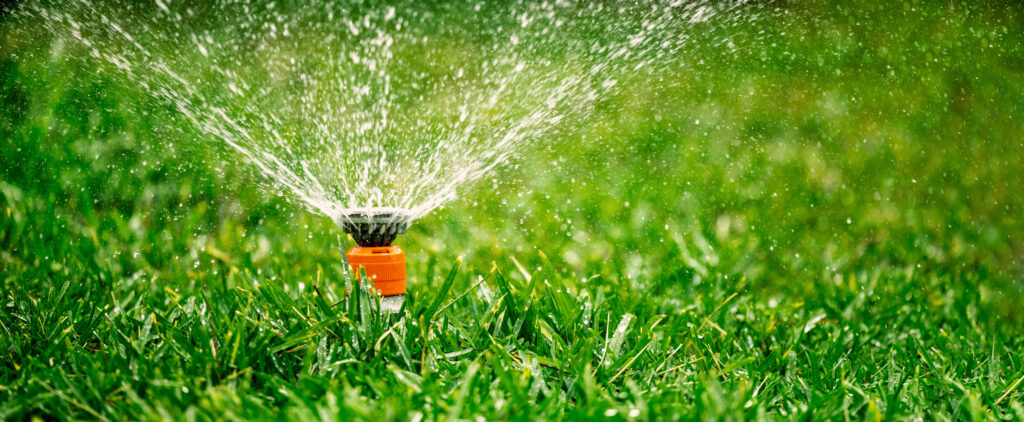
Big Sky humidity in August often sits in the teens and twenties, and sunlight at this elevation is intense. A seedbed that looks perfect at 8 a.m. can be bone dry by noon. New seed needs the top half inch of soil to stay damp continuously until it germinates, which means short cycles several times a day rather than one long soak.
Three or four cycles of five to eight minutes each is a reasonable starting point, then adjust based on what you actually see on the ground. Once the seedlings are up and have been mowed twice, cut back to fewer and deeper waterings to push roots down before winter. The most common way people lose a mountain overseeding is not bad seed. It is letting the surface dry out on day nine.
If You Missed the Window, Consider Dormant Seeding
There is a legitimate second option, and Big Sky is actually a good place for it. Dormant seeding means putting seed down after soil temperatures have dropped below roughly 40 degrees, usually late October into November, when it is too cold for anything to germinate. The seed overwinters in place, gets worked into the soil by repeated freezing and thawing and by snow load, and germinates on its own in late May or early June as the ground warms.
It is less predictable than a properly timed August seeding, and you should plan on using extra seed to account for losses to wind, runoff, and birds. But it beats seeding in mid September and watching it die, and it gets grass growing weeks before you could physically get equipment onto a soft spring lawn.
Fertilizer and Mowing Through the Rest of the Season
Even if you skip seed this year, September is still worth using. A fall fertilizer application made while the grass is actively growing goes into root and crown reserves rather than into top growth, and those reserves are what carry a lawn through six months under snow. Feed while the lawn is still green and growing, not after it has already gone off color.
Keep mowing at about three inches through the season. Taller grass shades the soil, holds moisture, and grows deeper roots. On the final cut of the year, usually late September or early October here, drop the height to about two and a half inches. Long grass matted flat under heavy snow is the single biggest invitation to snow mold, and snow mold is a real and recurring problem in this valley.
Mistakes We See Most Often in Big Sky
- Following a national fall lawn calendar and seeding in late September, a full month after the effective window closed.
- Buying a general purpose sun and shade blend built around tall fescue, which does not reliably survive a zone 4 winter here.
- Overseeding without aerating first, so most of the seed never touches soil.
- Shutting irrigation off the week the seed goes down because the nights suddenly got cool.
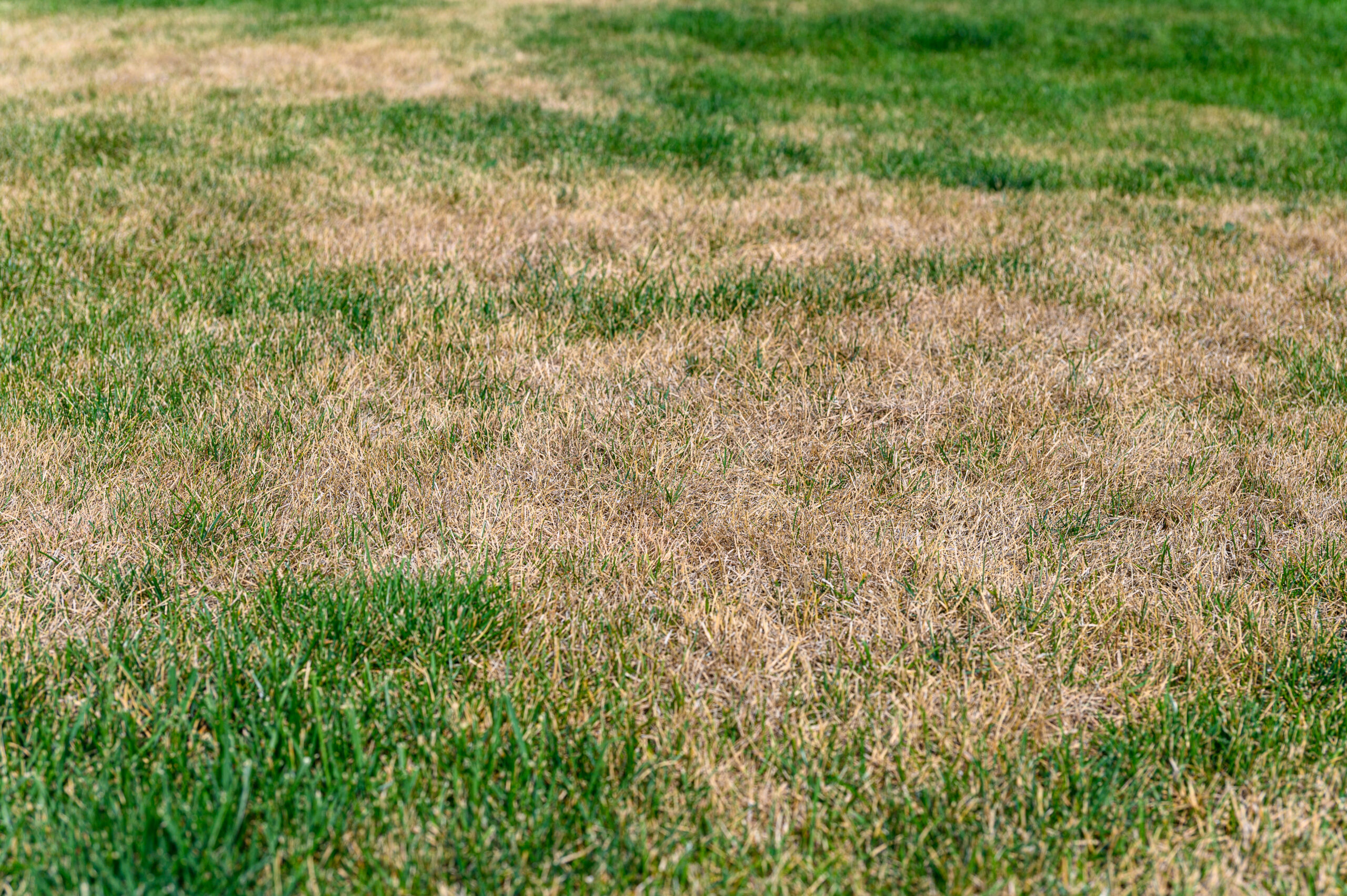
- Leaving the grass tall going into winter, then finding matted gray and pink patches when the snow finally melts in May.
- Ignoring vole runs, which appear as winding surface trails at snowmelt and are much easier to prevent by keeping grass short and clearing debris away from the lawn edge in fall.
What to Do Next
Walk the lawn this week and write down the two or three things that actually bother you about it, then work backward from the window rather than forward from today. Almost every fall mistake we see in Big Sky comes from starting with the calendar instead of with the lawn.
If you would rather have someone look at it with you, Lawn Squad of Big Sky offers a free quote. Call 833-816-7508 or find us at lawnsquad.com. Every Lawn Squad location is independently owned and operated, and our VitaminLawn fertilization and weed control program is built around the grass, soil, and conditions here rather than a national average.
A first visit is a walk of the property, a look at the thin areas, a check of mowing height and irrigation, and a straight conversation about what is realistic in the weeks left this season. At 30 days you should see color and density improve. At 90 days the lawn should be visibly thicker, with the root growth that carries it through winter.