How Does Late-Summer Prep Decide My North Atlanta Fescue Overseeding?
Short Answer: Seed goes down once nights cool reliably, which around Roswell, Alpharetta, and Woodstock generally means the middle of September into the first half of October. August is prep month, and prep is what decides the outcome. Core aerate to break through compacted red clay, pull a soil test, correct pH, clean up summer weeds well before seeding, and check that your irrigation actually reaches the thin areas. Buy a quality turf type tall fescue blend rather than a bargain bag. Then water lightly and often for the first three weeks instead of deeply and rarely, which is the opposite of your summer routine.
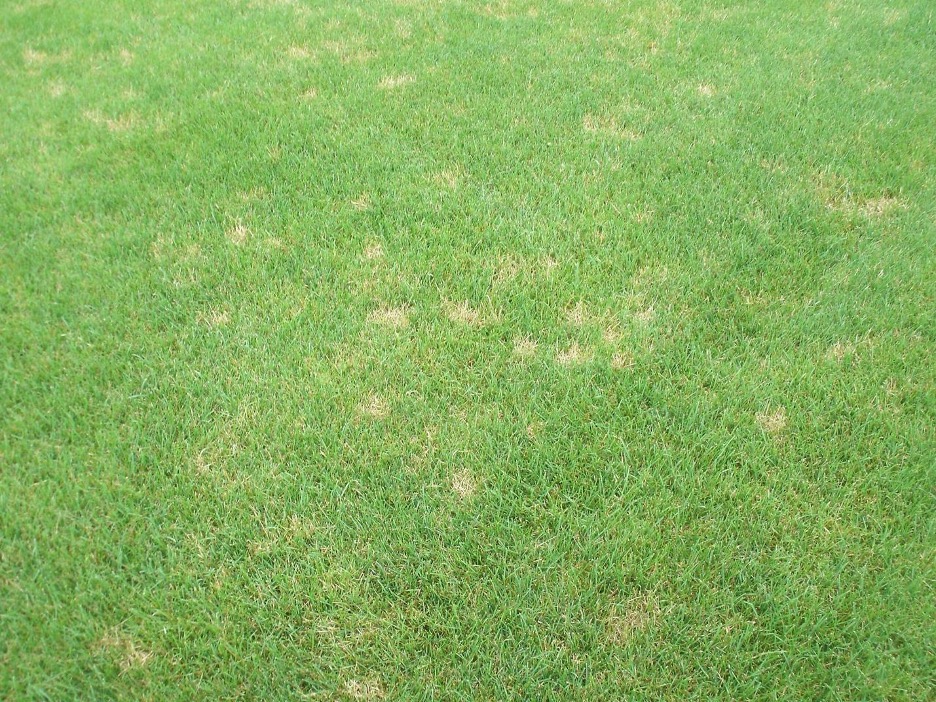
Walk your back yard at dusk in the last week of August and you can read the whole summer in about ninety seconds. Under the oaks and tulip poplars along the property line, the fescue is thin and stemmy, more brown thatch showing than blade. Out in the open where the afternoon sun cooks, there are irregular tan patches with ragged edges that showed up after that humid stretch in July. Near the driveway apron the soil has gone hard enough that a screwdriver stops after two inches, and the red clay underneath has the color of a brick that has been left in the rain.
Nobody enjoys looking at that. It is especially deflating on a lot you have overseeded before, because you already know the ritual and you are not sure why last year’s seed did not stick around.
Fescue Overseeding Is an Annual Commitment Here, Not a One Time Fix
Tall fescue is a cool season grass living about as far south as it comfortably can. North Fulton and Cherokee County sit high enough and cool off enough at night to make it work, which is why the fescue lawn is the default look through so much of Roswell and Alpharetta. But it does not spread. Fescue grows in bunches, so every crown lost to a July heat wave or an August disease flare is a hole that no neighboring plant will fill in.
That is the honest framing we give people the first time we walk a property with them: overseeding is not a repair for a lawn that failed, it is annual maintenance for a grass that loses a percentage of its stand every summer. Homeowners who seed every fall keep a thick lawn. Homeowners who seed only in the bad years spend a decade fighting a slow decline. Once you accept that rhythm, the whole thing gets easier and cheaper.
The Timing: Why We Prep Now and Seed in September
Fescue seed germinates best when soil is warm and nights are moderating. Seed too early and you drop tender seedlings into September afternoons that are still touching ninety degrees, with disease pressure still high in the canopy. Seed too late and the young plants never build enough root before cold weather to survive their first summer.
In our area the sweet spot generally opens in mid September and runs into the first half of October. Elevation matters more than people expect. Higher, more open ground north of Woodstock can cool a touch ahead of lower lying lots closer to the Chattahoochee corridor in Roswell, and a heavily shaded yard behaves differently from the sunny lot next door. We use the calendar as a rough guide and the actual conditions on your property as the decision.
Which leaves August with a clear job. Every problem you fix now is one the seedlings do not inherit.
Red Clay Is the Real Obstacle, and Cores Are the Answer
Piedmont clay is fine textured and dense, and on most homes in this area the topsoil was scraped during construction and only a thin layer was replaced. What is left compacts under foot traffic, mower wheels, and the pounding of summer thunderstorms. Water sheets off it. Roots stall in it.
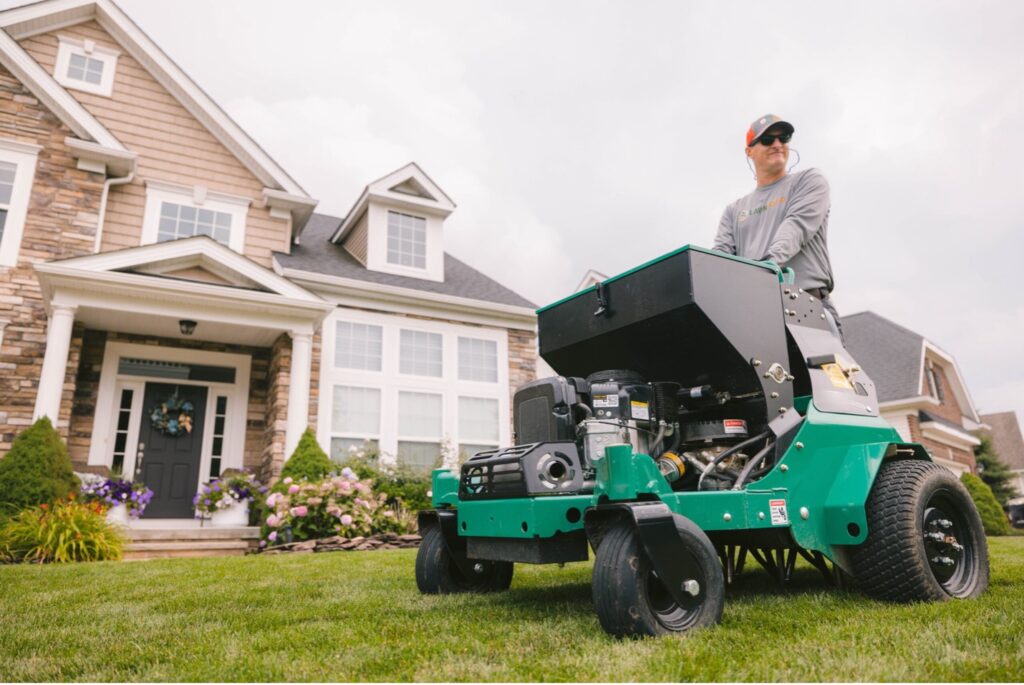
Core aeration is the correction, and it matters that it is core aeration and not spike aeration. A hollow tine pulls a plug of soil and leaves an open channel; a solid spike just presses the walls of a hole tighter. Those plugs left on the surface break down over a couple of weeks and top dress the lawn with their own soil. More to the point, each open hole is a protected pocket where seed sits at the right depth, holds moisture longer, and makes direct contact with soil rather than resting on top of thatch. Seed to soil contact is the entire game, and on clay it is nearly impossible to get without aerating.
The Rest of the August Checklist
Pull a soil test. Piedmont clay tends to run acidic, and fescue prefers something closer to neutral. Lime works slowly, so applying it now means it is actually doing something by the time roots need it. Guessing at lime is how lawns end up over corrected.
Handle summer weeds well before seeding day. Crabgrass, nutsedge, and the broadleaf mess that colonized thin areas all need time between treatment and seed, and the interval varies by product. Rushing this is a common and expensive mistake. The same caution applies to any pre emergent barrier: it does not distinguish your fescue seed from a weed seed, so seeding plans and pre emergent plans have to be sequenced deliberately, not stacked in the same month.
Then take an honest look at shade. Under a mature hardwood canopy you are fighting low light and aggressive surface roots at the same time. Selective limbing to let morning sun reach the ground helps meaningfully. Seeding heavy shade year after year without changing the light is throwing money at a condition the seed cannot overcome.
Buying Seed Worth Planting
Turn the bag over and read the tag. You want a blend of several named turf type tall fescue varieties rather than a single one, because different varieties carry different strengths and a blend hedges your bets against whatever next summer brings. You want a recent test date, near zero weed seed, and no other crop seed you did not ask for. Steer away from bags with a large percentage of annual ryegrass, which sprouts fast, looks impressive in October, and dies in June, teaching you nothing except that cheap seed germinates.
For shaded areas, a blend with genuine shade tolerance is worth the extra cost. Nothing on the market makes deep shade into a sunny lawn, but the difference between a good shade blend and a generic contractor mix under a stand of oaks is visible by spring.
Watering: Unlearn Everything July Taught You
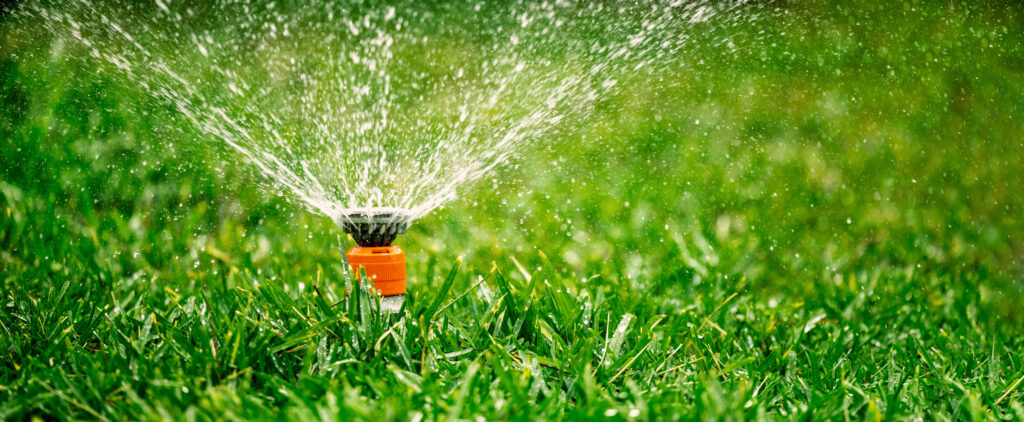
All season we tell people to water deeply and infrequently to drive roots down. For the three weeks after seeding, do the opposite. New seed sits in the top half inch of soil, and that half inch dries out in an hour on a warm afternoon. Short, light cycles two or three times a day keep it damp without saturating anything. Once seedlings are up and mowed a couple of times, you taper back toward deep and infrequent.
Stay off it while it establishes, and keep the mower blade sharp when you resume. A dull blade will yank young plants out of loose clay by the roots. If you have an irrigation system, run each zone and watch where the water actually lands before seeding day rather than after. Across the properties we service, a surprising share of the thin areas people blame on shade or disease turn out to sit in the dry gap between two heads that have drifted out of alignment or gotten blocked by a shrub that grew since installation.
What to Do Next
August is the month to get on the schedule, because the aeration and overseeding window across Roswell, Alpharetta, and Woodstock is only a few weeks wide and everyone wants the same Saturdays. Call us at 678-250-6490 or request a free quote at lawnsquad.com.
Here is what the process looks like. We walk the property, measure it, check compaction and thatch, evaluate shade, and pull soil for testing. On service day the aerator makes multiple passes in different directions, seed goes down at a rate matched to how thin the lawn actually is, and we talk through your watering schedule before we leave. Expect the first grass to show in roughly one to three weeks depending on temperature. At thirty days you will see fine, upright seedlings filling the aeration holes, and the lawn will look uneven, which is normal. At ninety days those seedlings have thickened and blended, and the lawn reads as one uniform stand rather than a patch job.
Seeding works best inside a full year program, which is how our VitaminLawn service is set up: fertilization and weed control timed to fescue in a North Georgia climate rather than a generic national calendar. Each Lawn Squad location is independently owned and operated, and free quotes and our satisfaction guarantee are standard. If your lawn is thick enough that it does not need seed this year, we will tell you so and save you the money.