
What Is the Best Grass Seed for Bucks and Montgomery County Lawns?
Short Answer: For lawns across Bucks and Montgomery Counties, the most dependable choice is a blend built mostly on turf-type tall fescue, supported by Kentucky bluegrass and a modest share of perennial ryegrass. Tall fescue roots deeply enough to handle our humid Augusts and the shallow, shale-influenced soils common from Chalfont out to Buckingham. Bluegrass spreads sideways and knits damage closed. Ryegrass sprouts fast and holds the seedbed while the slower species establish. Read the tag before you buy: look for named varieties, a weed seed figure near zero, and no annual ryegrass. Our seeding window opens in late August.
It is the third week of August, the air over Doylestown has that heavy, stalled quality it gets before an evening thunderstorm, and you are standing in front of a wall of seed bags trying to decide. Six of them say sun and shade. Four say contractor mix. Two cost three times what the others cost and the bag does not obviously explain why. Meanwhile the strip of lawn along your driveway in Warrington went the color of a paper bag back in July and has not moved since.
Most homeowners we talk to this month are not confused about whether they need seed. They can see the thin spots. What stalls them is the suspicion that the bag they pick is basically a coin flip, and that they will spend a Saturday spreading something that produces a beautiful lawn for six weeks and then quits. That suspicion is fair. Seed quality varies enormously, and almost none of that variation is visible through the plastic.
What Our Soil and Summers Actually Ask of a Grass Plant
Bucks and Montgomery Counties sit on the Piedmont, and the ground changes character faster here than most people expect. Newer developments around Warrington and Chalfont often sit on reddish, shale-derived soil that dries hard and shallow in July. Older properties near Ambler and Plymouth Meeting can have surprisingly sweet, limestone-influenced ground. Out toward Buckingham and New Hope you find stony silt loam with a dense, compacted layer a foot or so down that roots struggle to punch through. What almost all of it shares is a modest topsoil depth, especially where a builder graded the lot and returned four inches of screened fill.
Then there is our August: high dew points, warm nights that never really let the turf rest, and thunderstorms that leave the canopy wet for hours. That combination is what makes disease pressure real here in a way it is not two hundred miles north. Seed selection is the cheapest defense you have against both problems at once.
Turf-Type Tall Fescue: The Backbone
If we had to build one lawn for this region with a single species, it would be turf-type tall fescue, and it would not be a close call. Tall fescue sends roots deeper than bluegrass or rye, which is exactly what a shallow shale lot needs when we go two weeks without meaningful rain. The modern turf types are nothing like the coarse pasture fescue people remember from the 1980s. Blade width is fine, color is dark, and density is good.
The honest limitation is that tall fescue is a bunch grass. It does not run. When a patch dies, the surrounding plants cannot creep in and close the gap the way bluegrass can, which is why fescue lawns in Newtown and Horsham need a small amount of seed most falls rather than one heroic renovation every decade. We would rather tell you that now than have you discover it in year three.
Kentucky Bluegrass: The Repair Mechanism
Kentucky bluegrass earns its place in the bag because of rhizomes, the underground stems that let it spread laterally and heal itself. A lawn with bluegrass in the mix closes over a shovel scar, a dog spot, or a plow gouge without your help. It also gives that deep blue-green color in October that makes a lawn in Blue Bell look expensive.
Its weaknesses are equally clear. Bluegrass is slow out of the ground, often taking two to three weeks to show, and it is thirstier and shallower rooted than fescue. It also demands sun. On a heavily canopied lot, bluegrass thins and sulks. In a good regional blend it works as a supporting player at a modest percentage rather than the headline act.
Perennial Ryegrass: Fast, Useful, Easy to Overdo
Perennial ryegrass germinates faster than anything else in the bag, often within a week under warm late-August soil. That speed is genuinely valuable. It stabilizes a slope in Norristown, gives you something green to look at while the fescue is still deciding, and reduces the odds that a hard storm carries your seed into the street.
The trap is that speed also makes rye a bully. At high percentages it outcompetes the slower seedlings you actually wanted, and you end up with a lawn that is mostly rye, which means a lawn with less drought tolerance and more gray leaf spot risk in a humid summer. A small proportion helps. A third of the bag does not.
How to Read the Tag Before You Buy
Every legitimate bag carries an analysis tag, usually on the back, and it tells you more in ten seconds than the front panel does in a paragraph. Look for named varieties rather than generic species names. A tag that reads simply “tall fescue” with no variety is telling you the contents were bought on price. Check the weed seed percentage and the other crop percentage, and understand that a small decimal on a fifty pound bag still represents an enormous number of individual weed seeds going into your soil.
Check the germination percentages and the test date, because seed loses vigor in storage and a bag tested eighteen months ago is not the same product. Most importantly, look for the words annual ryegrass or ryegrass with no qualifier. Annual rye is a one season plant. It looks wonderful in October and it is gone by the following July, and it is the single most common reason a homeowner in Hatboro tells us their seeding failed.
Sun Blends, Shade Blends, and the Lots That Need Both
Older neighborhoods in Glenside, Wayne, and Fort Washington often have eighty year old oaks and beeches, and a single bag will not serve the whole property. Under dense canopy, fine fescues (creeping red, chewings, hard fescue) tolerate low light far better than bluegrass and use less water, which matters when tree roots are drinking first. In full sun on an open lot in King of Prussia, that same fine fescue blend will struggle by mid summer.
We routinely seed two different mixes on one property. If your lawn has both a bright front and a shaded back, treat them as two lawns with two different plant communities, because that is what they are.
Where Bargain Seed Actually Costs You
A cheap bag is rarely cheap because of a discount. It is cheap because it contains older, unnamed varieties, a higher share of coated filler, and more weed and crop seed. You pay for it twice: once at the register, and again the following spring when you are trying to control the crabgrass and annual weeds that arrived free with the seed. Across the properties we walk each fall, the difference between a good blend and a bargain bag is visible without kneeling down by the second season.
What to Do Next
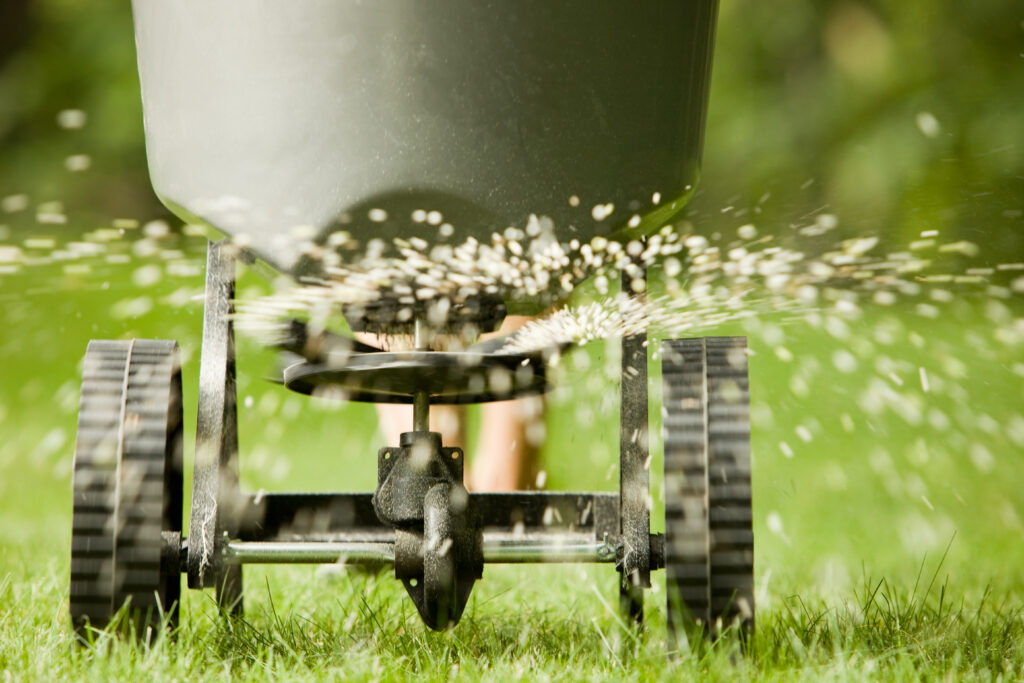
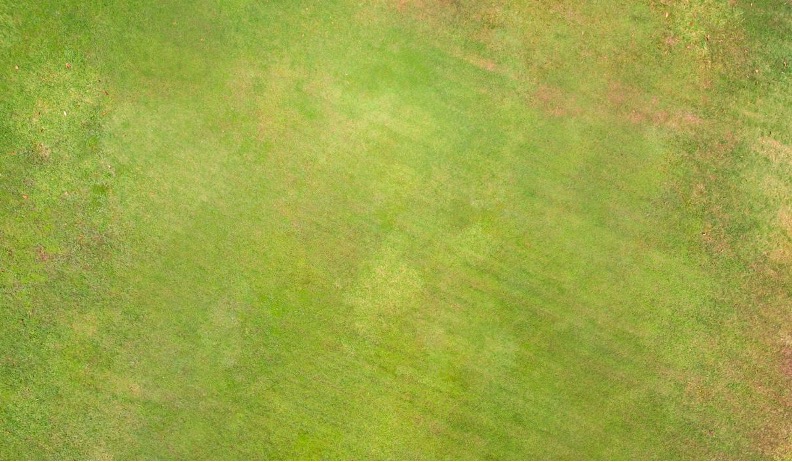
Start by walking the property this week and marking what is genuinely thin rather than merely dormant. Pull gently on a handful of brown turf: if it lifts with no resistance, those crowns are gone and that area needs seed. Plan to have core aeration and overseeding done from roughly the last week of August into the middle of September, while soil is still warm enough for fast germination but the air has begun to cool. Water lightly and often for the first two weeks rather than deeply and rarely, which is the opposite of your summer habit.
Here is the realistic timeline. Ryegrass typically shows within seven to ten days, tall fescue follows, and bluegrass is last. At thirty days you should see a visible green haze filling the thin areas and a lawn that looks uneven, which is normal. At ninety days, going into late fall, you should see genuine density and color, with full maturity arriving the following spring as those first-year plants tiller out.
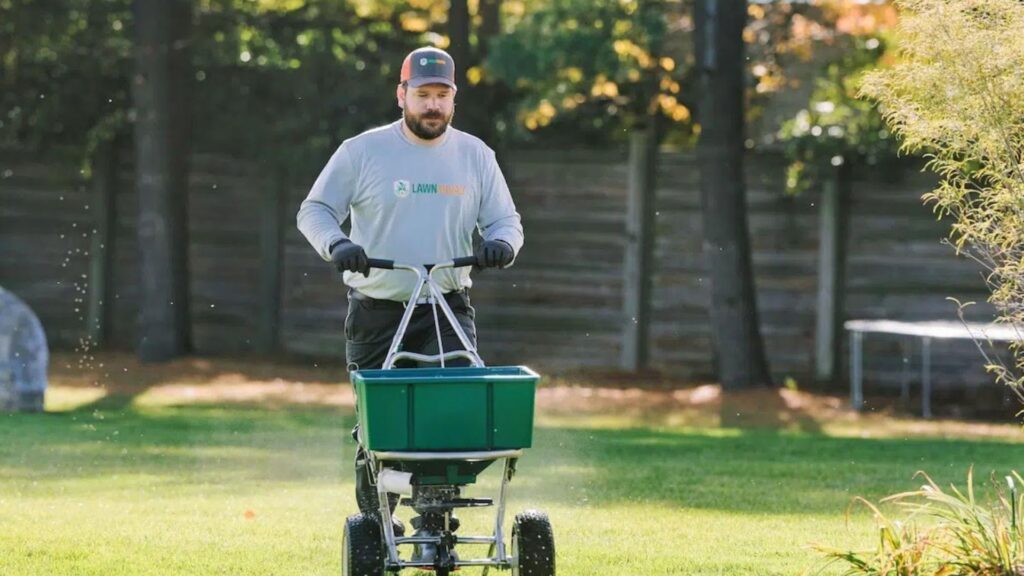
When we come out for a free quote, we walk the whole property with you, look at sun exposure and soil, check thatch and compaction, and recommend seed by area rather than by bag. From there, most homeowners move into our VitaminLawn program, which builds fertilization and weed control around your specific grass type, soil conditions, and this region’s weather instead of a national calendar. We serve Doylestown, Lansdale, Newtown, Warrington, Warminster, Horsham, Ambler, Blue Bell, Chalfont, Buckingham, New Hope, Norristown, Conshohocken, Hatboro, Glenside, Willow Grove, Fort Washington, Plymouth Meeting, King of Prussia, and Wayne. Call us at 610-750-9768 or visit lawnsquad.com. Every quote is free, and our work is backed by a satisfaction guarantee.