What Does Late-Summer Grub Damage Look Like in a Worcester County Lawn, and What Should I Do Now?
Short Answer: Late-summer grub damage in Worcester County shows up as irregular, expanding patches of wilted, straw-brown turf in the sunniest parts of the yard, grass that feels spongy underfoot and lifts like a loose rug when you tug it, and overnight digging from skunks, raccoons, and crows. If watering does not green it back up, that is a strong sign the roots are already gone. The move right now is to confirm it with a quick cut-and-count, water the surviving turf, decide on a curative treatment based on how many grubs you find, and line up fall seeding, which happens to be right around the corner here.
By late August in Worcester County, a grub-damaged lawn tells on itself if you know what to look for. The lawn was fine in July, and now there is a patch out by the sunny front walk that has gone off-color and keeps getting bigger no matter how much you water it. Maybe something tore up a strip of it overnight. The instinct is to reach for the hose or a bag of fertilizer, but neither one addresses what is actually happening a couple of inches down, where beetle larvae are quietly eating the roots.
The good news is that grubs leave a distinctive fingerprint, and once you can read it you can act with confidence instead of guessing. Here is exactly what late-summer grub damage looks like on a Central Massachusetts lawn, how to separate it from the things it gets confused with, and what to do about it this week.
What the Damage Actually Looks Like
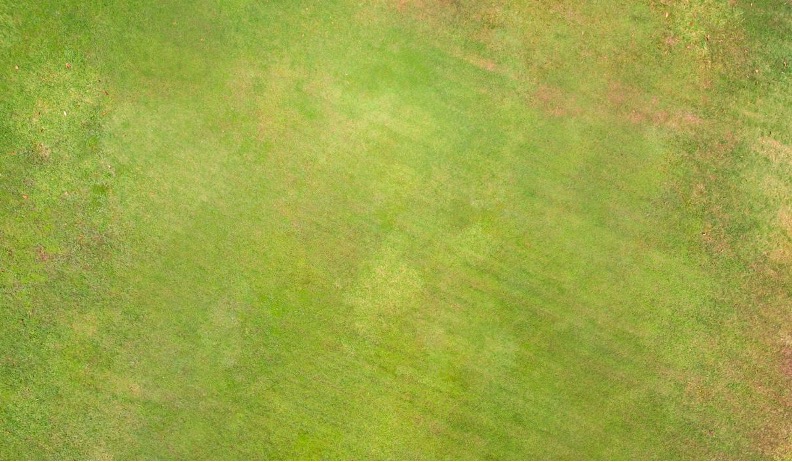
Grub damage has a look that is different from ordinary summer stress once you have seen it a few times. It starts as irregular patches of wilting, off-color grass, not neat circles and not an even overall fade, but blotchy, expanding areas with soft, ragged edges. Those patches almost always appear first in the sunniest, most exposed parts of the yard, along the front walk, the south-facing slope, the strip by the driveway, because that is where the beetles preferred to lay eggs back in early summer.
As the feeding continues, the grass shifts from wilted to straw-brown and the patches widen week to week. The tell that separates it from drought is simple: the turf does not respond to water. You can run the sprinkler faithfully and the area keeps declining, because the roots that would take up that water have been chewed away. Walk across a badly affected patch and it often feels spongy or loose underfoot, almost like walking on a thin mat laid over the soil, because that is essentially what is left.
The Overnight Digging Is a Clue, Not the Cause
Many Worcester County homeowners first notice a grub problem not from the grass but from the mess. Skunks, raccoons, and crows hunt grubs, and when the population under a lawn gets dense enough to be worth the effort, they will peel back turf and dig through the night to get at them. You wake up to shredded divots and rolled-back flaps of sod.
It is worth being clear about what that means. The animals did not cause the lawn problem, they are a symptom of it, drawn in by a food source under the surface. It is also not automatic proof on its own, because skunks will occasionally work a healthy lawn for earthworms after a rain. But paired with the browning patches described above, overnight digging is a strong indicator that grubs are present and abundant.
How to Tell It Apart From the Look-Alikes
Several late-summer problems can look like grub damage from the back porch, and telling them apart saves you from treating the wrong thing. Drought and heat stress tends to appear evenly across the lawn or first in the predictable dry zones, over buried irrigation lines, along hot curbs, on the high crown of the yard, and critically, it greens back up after a deep watering. Grub-damaged turf does not. Fungal disease often shows as more defined patches or rings and does not leave the turf peeling loose from the soil the way grubs do. Dog urine damage shows up as small, distinct spots, frequently with a ring of darker green around a dead center, in the areas a pet actually uses. None of those lift off the ground when you tug them. Grub damage does.
Confirm It in Ten Minutes
You do not have to diagnose from the porch. Two quick checks settle it. First, the tug test: grab a handful of grass at the edge of a browning patch and pull. Healthy turf resists because roots anchor it. Turf over active grubs separates from the soil with almost no effort and often peels back in a sheet.
Second, cut and count. Use a spade to cut a one-foot-square flap at the edge of the damage, where dying grass meets healthy grass, roll it back, and look at the top couple of inches of soil. Grubs are white, fat, and curled into a C shape, roughly the size of a paper clip bent in half. Two or three in that square is a normal population a healthy lawn shrugs off. Eight, ten, fifteen is a lawn being actively eaten, and that number is what tells you whether treatment is worth it.
What to Do Right Now
Once you have looked, a few things are worth doing this week. Keep the damaged areas watered even though they look rough. Some of what appears dead is grass that will recover once the feeding stops, and the surviving plants pull through better when they are not also fighting drought stress. If your count came back low, put your energy and money into a good fall seeding rather than a treatment you do not need. If the count came back high, a curative grub treatment now, watered in so it reaches the root zone, stops the feeding before it takes more turf and before it eats the roots of any new seed you are about to plant. And in either case, mark the damaged areas mentally or with a flag, because those are the spots that will need attention when the seeding window opens.
The one thing not to do is nothing. Grubs keep feeding and growing through the rest of the season, so a high population left alone takes more turf every week you wait, and more bare ground now simply means more seed, more labor, and a longer wait for recovery this fall.
Why the Timing Works in Your Favor Here
There is a real advantage to grub damage surfacing in late summer on a New England lawn. Our lawns are cool-season grasses, Kentucky bluegrass, tall fescue, and perennial ryegrass, and they are repaired by seeding. The prime seeding window in Central and Eastern Massachusetts runs from roughly late August into September, the exact stretch when grub damage becomes obvious. So the problem and its best repair show up at the same time. Stop the feeding if the count warrants it, then aerate and overseed the thin and bare areas while the soil is still warm enough for fast germination and the nights have cooled. A lawn hit by grubs in August can be well on its way to recovered by the time it goes dormant for winter, which is not something you can say for a problem that surfaces at the wrong time of year.
What to Do Next
If a patch of your Worcester County lawn is browning, pulling up loose, or getting dug up at night, do the tug test and the cut-and-count today so you know what you are dealing with. Then call us at PHONE_PLACEHOLDER or request a free quote at lawnsquad.com and tell us the number you found. We serve SERVICE_AREA_PLACEHOLDER and the surrounding Central and Eastern Massachusetts communities.
On a first visit we check several spots rather than one, because grub populations are patchy, and we look at thatch, compaction, and irrigation coverage at the same time so we are treating the real problem rather than a look-alike. Expect feeding to stop within days of a curative application, expect bare areas to stay bare until they are seeded, and expect the real recovery to come through the fall seeding and into next spring.
Longer term, this is exactly what our VitaminLawn program is built to prevent. Fertilization, weed control, and grub protection timed to New England conditions means the preventive material goes down in early summer when it costs the least and works the best, so next August is not a repeat of this one. We are independently owned and operated, every quote is free, and our work is backed by a satisfaction guarantee.