Why Are Nutsedge and Weeds Breaking Through My Southeastern PA Lawn in Late Summer?
Short Answer: Late summer is when weeds win in Southeastern Pennsylvania, and it is rarely a sign your treatment failed. The spring pre-emergent barrier has a finite life and has largely worn off by August, while heat and humidity thin the turf and open bare ground for opportunists like crabgrass, spurge, and oxalis. Nutsedge is the standout because it is not a grass at all, it is a sedge, so ordinary weed control ignores it and pulling it spreads it. The durable fix is not chasing individual weeds now, it is thickening the lawn this fall and getting the program timing right, with sedge-specific treatment where nutsedge is established.
By the third week of August, the lawn that looked clean in June has changed character across Bucks and Montgomery Counties. In a Doylestown backyard there is a spray of light green spikes standing an inch above everything else two days after mowing. Along a Warrington driveway, low mats of something with tiny yellow flowers have colonized the strip that went thin in July. And in a Lansdale front lawn, coarse clumps of crabgrass are sprawling across the exact spots that never quite recovered from the heat. It can feel like the weeds broke through all at once, and like whatever you did earlier in the year quit working.
The reality is more reassuring and more useful. Late summer is simply when the deck is stacked in the weeds’ favor, for reasons that have nothing to do with a failed treatment, and understanding why changes what you should actually do about it.
Why Late Summer Is Weed Season Here
Two things happen at once in a Southeastern Pennsylvania August, and together they open the door. First, the spring pre-emergent barrier has a finite lifespan. It is not a permanent force field. It sets up in the soil in spring, holds strong through early summer, and then gradually breaks down over the following months. By August that barrier has thinned, and the late-germinating summer weeds that were blocked in May can finally push through. That is expected behavior, not a defect.
Second, the turf itself is at its most vulnerable. Our cool-season lawns, the tall fescue, bluegrass, and rye that dominate here, are built for the mild weather of spring and fall and merely endure the humid heat of midsummer. Stressed, slower-growing turf thins out, especially along hot driveway edges and in compacted, high-traffic paths, and every thin spot is open ground. Weeds are opportunists. They do not so much attack a healthy lawn as move into the space a struggling one leaves them.
Nutsedge: The Weed That Is Not Even a Grass
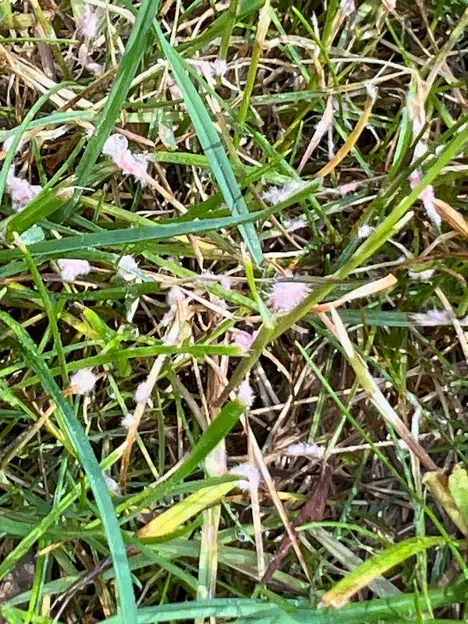
Nutsedge deserves its own section because it plays by different rules than everything else in the yard. It is not a grass and it is not a typical broadleaf weed. It is a sedge, a separate kind of plant, and that single fact explains why it is so maddening. Roll a nutsedge stem between your fingers and it feels triangular rather than round. The blades are stiff, waxy, and a distinctly lighter, yellow-green than the lawn around them, and because it grows faster than turf in the heat, it shoots up above a freshly mowed lawn within a day or two, which is usually when people notice it.
Because it is a sedge, the ordinary weed-and-feed products and broadleaf weed killers most homeowners reach for simply pass over it. You can treat the lawn, watch the clover and dandelions disappear, and the spiky yellow-green stuff stands there thriving. That is not a product failure either. Those products were never designed to touch a sedge.
Nutsedge also tells you something about the ground it is in. It favors areas that stay too wet, so a patch that returns to the same spot every year is usually pointing at poor drainage, a low spot that holds water, or an irrigation zone running long. And it spreads mostly through underground tubers, small nutlets on the roots, which is why pulling it backfires: the stem breaks off, the tubers stay behind, and disturbing them often triggers several new plants where there was one. Controlling established nutsedge takes a treatment made specifically for sedges, applied while it is actively growing, usually more than once, paired with fixing whatever keeps the area wet.
The Other Late-Summer Breakthroughs
Nutsedge gets the attention, but it usually arrives with company. The other weeds we pull out of Southeastern Pennsylvania lawns this time of year are the classic summer opportunists. Crabgrass is the big one, a coarse, low, spreading grass that mats out from the thin edges by the pavement where reflected heat cooks the turf. Spotted spurge forms flat, ground-hugging mats with a milky sap and thrives in the hottest, most compacted bare spots. Yellow woodsorrel, or oxalis, with its little clover-like leaves and yellow flowers, seeds itself aggressively into any opening. Prostrate knotweed colonizes the packed soil along walkways and play areas.
What all of them share with nutsedge is that they exploit weakness. They are colonizing the space that heat, drought, and compaction opened up in the lawn. That is the thread that ties the whole late-summer weed picture together, and it is also the key to the fix.
Why This Is Not a Sign Your Program Failed
It is worth saying plainly, because homeowners often assume the worst. Seeing weeds in August does not mean the spring treatment was wasted. The pre-emergent did its job for the months it was designed to cover, blocking the enormous first flush of spring and early-summer germination you never had to see. Late-season breakthrough is the tail end of that coverage, not evidence it never worked. Judging a weed program by how the lawn looks in late August is like judging an umbrella by whether you are dry an hour after you have put it away. The right question is not why are there weeds now, it is how do we close the openings so there are fewer next year.
What Actually Works Now, and What Waits for Fall
There are two timelines here, and separating them keeps you from wasting money. Right now, targeted post-emergent spot treatment can knock back what has already come up, and for nutsedge specifically, a sedge-labeled treatment applied while it is actively growing is the tool that actually works. Chasing every weed across the whole lawn with a blanket application in the heat, though, risks stressing already-struggling turf for little lasting gain.
The real fix waits a few weeks for fall, and it is the same fix for nearly every weed on the list: a thicker lawn. Late summer into fall is the prime window in Southeastern Pennsylvania to aerate and overseed, filling in the thin and bare areas, especially the hot edges and compacted paths, where the weeds got their foothold. A dense stand of turf is the best weed control there is, because it leaves the opportunists no open ground to colonize. Aeration also relieves the compaction that both stresses the grass and favors weeds like knotweed and spurge, and where nutsedge keeps returning, correcting the drainage or overwatering that feeds it matters as much as any treatment.
How This Sets Up Next Year
The weeds you are seeing now are also planting next year’s crop, dropping seed and, in nutsedge’s case, building tubers in the soil. That is why the goal is never just to clean up August, it is to break the cycle. A lawn that goes into winter thick, then gets a properly timed pre-emergent next spring before the soil warms and the first flush germinates, starts the following year with far fewer openings and far less pressure. Thicken the turf this fall, correct the wet spots and compaction that invite trouble, and get the program timing right, and next August looks very different from this one.
What to Do Next
If nutsedge or a wave of late-summer weeds has broken through your lawn, the productive move is not to panic-spray in the heat, it is to identify what you are dealing with and build the fall plan that actually closes the door. Call us at 610-750-9768 or request a free quote at lawnsquad.com. We serve Doylestown, Lansdale, Newtown, Warrington, Warminster, Horsham, Ambler, Blue Bell, Chalfont, Buckingham, New Hope, Norristown, Conshohocken, Hatboro, Glenside, Willow Grove, Fort Washington, Plymouth Meeting, King of Prussia, Wayne, and the surrounding communities.
On a first visit we walk the property, identify the specific weeds and whether nutsedge is present, check compaction, drainage, and how much living turf is actually left in the thin areas, and tell you honestly whether the answer is spot treatment now, a fall renovation, or simply a denser lawn. Most homeowners do best when weed control sits inside a season-long plan rather than standing alone. Our VitaminLawn program builds fertilization, pre-emergent, and weed control around the grass types, the soil, and the Southeastern Pennsylvania weather pattern we actually have here, so the timing works for your lawn instead of against it. Free quotes and our satisfaction guarantee come standard.