Short Answer: Coastal Myrtle Beach lawns face three forces that inland yards do not: salt spray and salt-laden well water that stress turf, sandy soils that drain water and nutrients quickly, and intense reflected sun off bright sandy surfaces. The June routine adjusts to all three. Water deeply but more often than inland (one and a half inches per week split across two or three cycles), use slow-release fertilizer instead of fast-release products (the sand leaches nutrients fast), pick salt-tolerant grass varieties when overseeding (Centipede, St. Augustine Floratam, or improved Bermuda), and rinse salt residue off the lawn after storms or salt-water irrigation.
If you live anywhere from Little River down through North Myrtle, Surfside, Garden City, or Pawleys Island, your lawn does not behave the way a Columbia or Charlotte lawn behaves. The Grand Strand combines three factors that make coastal turf its own discipline: ocean salt that drifts in on storm winds and sometimes shows up in irrigation water from older wells, sandy soils that drain like a sieve and refuse to hold nutrients for long, and an intense reflected sun off bright sandy surfaces and pale concrete that pushes blade temperatures higher than the air temperature would suggest.
The good news: warm-season grasses in this area are well adapted to all three. Centipede, St. Augustine, and Bermuda all thrive in Grand Strand conditions when the routine matches the environment. The trouble starts when homeowners follow inland advice on coastal lawns. Here is the June routine that actually fits where you live.
Watering: Sand Drains Fast, So the Schedule Shifts
The standard one inch of water per week, delivered in one or two deep soakings, is the right number for most inland properties. On Grand Strand sand, that math needs an adjustment. Sandy soils hold less water in the root zone than clay does. Water that should last seven days drains through in three or four.
The coastal adjustment: one and a quarter to one and a half inches of water per week, split into two or three cycles, in the early morning between 4 and 8 a.m. Two cycles works for many Conway and Carolina Forest properties; three lighter cycles work better on the loosest, sandiest soils along the immediate coast.
The screwdriver test still applies. Push a long screwdriver into the lawn the morning after watering. If it slides in four to six inches, the root zone is moist. If it stops at two inches, run the cycle longer or add a third weekly application. If it slides in nine inches with no resistance, you are watering too much and pushing nutrients past the roots.
One coastal-specific note. If your irrigation uses well water and you taste salt in it, or if your shower fixtures show calcium-and-salt buildup, you are watering with mildly saline water. That is common in older wells closer to the beach. The fix is to occasionally flush the soil with fresh municipal water (a deep one-inch cycle) or let a heavy rain do the rinsing. Long-term, consider switching to municipal water for irrigation in the highest-salt months.
Fertility: Slow-Release Is Not Optional
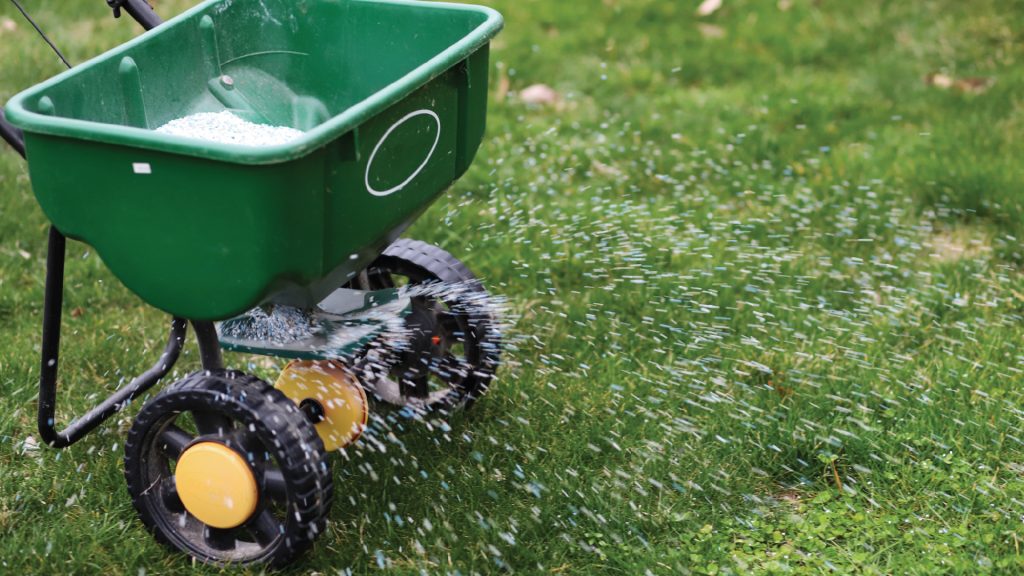
Sand cannot hold nutrients. Fast-release fertilizer applied to sandy soil delivers a flash of nitrogen to the grass and then leaches through the soil into the groundwater within days. You get two weeks of green-up and then nothing, while half the nitrogen ends up in the next storm runoff heading toward the salt marsh.
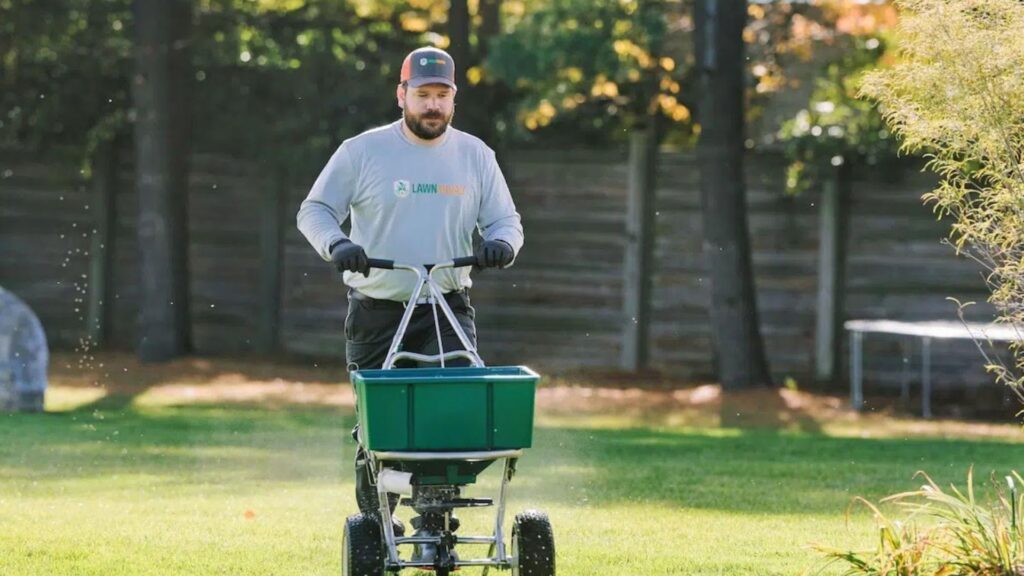
The right approach for Grand Strand lawns is slow-release or coated fertilizer, applied at moderate rates more frequently. A reasonable June application is half a pound of nitrogen per thousand square feet from a polymer-coated or sulfur-coated product. That feed lasts four to six weeks. Follow with another half-pound in late July, and another in September.
Skip the high-nitrogen “weed and feed” mixes from the big-box stores. They are typically fast-release products, which is exactly what sand cannot hold. The same money spent on a quality slow-release product gives much better long-term results.
Iron is the other coastal consideration. Sandy soils can run slightly acidic to slightly alkaline depending on the property, and St. Augustine and Centipede lawns are both prone to iron chlorosis (yellow blades despite adequate nitrogen). A light chelated iron application in June greens the lawn quickly without forcing more top growth.
Get a soil test done if you have not in the past three years. Clemson Cooperative Extension runs affordable tests through county offices and the recommendations are coastal-specific. The numbers tell you whether you need lime, sulfur, potassium, or micronutrients, instead of guessing.
Choosing the Right Grass for Coastal Conditions
If you are establishing a new lawn or filling thin areas, the salt-tolerance ranking of the common Grand Strand grasses matters.
St. Augustine, particularly the Floratam and Palmetto varieties, has the highest salt tolerance of the warm-season options. It handles direct salt spray, mild saline irrigation, and the brightest sun. It is the go-to for properties within a half-mile of the beach. Tradeoff: it has chinch bug pressure and the broadest leaf blade, which some homeowners do not prefer aesthetically.
Centipede is the moderate-salt-tolerance choice. It tolerates the slightly acidic sandy soils inland of the coast, handles a fair amount of salt, and asks for less fertilizer than other warm-season options. It greens up later in spring and goes dormant earlier in fall, so the active season is shorter than St. Augustine or Bermuda. Tradeoff: thin-bladed and slower to recover from damage.
Bermuda, especially improved varieties like TifTuf and Latitude 36, has good salt tolerance and the fastest recovery from wear and damage. It is the right choice for high-traffic family yards, especially farther inland in the Conway and Forestbrook areas. Tradeoff: it needs full sun and aggressive mowing; it will not handle the partial shade common under coastal live oaks.
Zoysia, particularly Empire Zoysia, is increasingly popular along the Grand Strand for its dense texture and moderate salt tolerance. It is more shade-tolerant than Bermuda but slower to fill in damaged areas. A good choice for properties under canopy.
Mowing on Coastal Lawns
Mowing height varies by species, and the coastal sun argues for the upper end of the recommended range for each.
- Centipede: 1.5 to 2 inches
- St. Augustine: 3.5 to 4 inches (taller than most homeowners expect; this height is critical)
- Common Bermuda: 1 to 2 inches
- Hybrid Bermuda: 0.75 to 1.5 inches
- Empire Zoysia: 1 to 2 inches
Sharpen the blade. Coastal grasses are tougher on blade edges than inland grasses (sand particles carried by salt spray accelerate dulling). Twice-a-season sharpening is the minimum.
Mow more frequently when the lawn is actively growing in June. The one-third rule applies: never remove more than one-third of the blade height in a cut. On a fast-growing Bermuda in late June, that can mean mowing every four to five days.
Salt Damage: What It Looks Like and What to Do
Acute salt damage shows up as browning along the edge facing the prevailing wind, often within two or three days of a coastal storm. The blades turn brown to bronze, the tips first, then the whole leaf. The roots are typically still alive; the damage is to the foliage.
Chronic salt damage from saline irrigation water shows up as gradual thinning, yellowing, and slow growth in areas where the water sits longest. The lawn looks tired, blades are short, and recovery from damage is slow.
The fix for both is fresh water rinsing. After a storm with salt spray, run the irrigation through one extra deep cycle to wash the salt off the blades and flush it through the root zone. For chronic salt buildup, a deep one-inch fresh-water flush every few weeks during the heaviest-salt months helps. Long-term, consider a soil amendment with gypsum (calcium sulfate), which displaces sodium from soil particles and lets it flush through with normal watering.
Pest Watch: Chinch Bugs and Mole Crickets
Two pests are worth scanning for in June on coastal lawns.
Chinch bugs hit St. Augustine especially hard in the sunniest, hottest parts of the yard. The damage looks like drought stress in irregular patches that do not improve with watering. The float test confirms presence: cut both ends off a coffee can, push it two inches into the lawn at the edge of a brown patch, fill with water, and watch for ten minutes. Five or more chinch bug nymphs floating to the surface is treatment threshold.
Mole crickets tunnel through the root zone, especially in Bermuda and Bahia lawns. The damage shows up as raised, lumpy soil with small tunnel openings, often accompanied by dying grass over the tunnels. The soap-flush test (two ounces of liquid dish soap in two gallons of water poured over a suspect area) brings them to the surface. June is the right month for a curative treatment if you have them, before they reproduce and the population doubles.
What to Do Next
If you would rather have someone else handle the soil tests, fertilizer timing on sand, salt-damage rinses, and pest scouting on coastal warm-season turf, that is exactly what we do. A consistent June through October program is the cleanest way to keep a Grand Strand lawn at its best.
Lawn Squad of Myrtle Beach serves homeowners across the Grand Strand.
Call us at 843-702-6210 or request a free quote at lawnsquad.com. Our VitaminLawn program is built specifically for Grand Strand coastal lawns, the sandy soils that demand a different approach, and the salt-and-sun pressure that defines lawn care between Little River and Pawleys Island. Most Myrtle Beach homeowners notice a real difference within the first two applications, with the full payoff showing up in August.