Short Answer: Preventive grub control on New Hampshire lawns works best when applied between mid-June and mid-July, before eggs hatch and larvae start feeding on grass roots. Wait until you see damage in August or September and you are treating after the fact, when most products are less effective and the lawn already needs reseeding. A single preventive application costs $80 to $150 for a typical southern NH yard. Repairing grub-damaged turf costs $1,500 to $3,500. The math is straightforward, and the timing is the difference between prevention and crisis management.
If you live in Bedford, Nashua, Salem, Derry, Manchester, Concord, or anywhere across southern New Hampshire, you have probably had this experience or watched a neighbor have it. The lawn looks great in June. Through July it stays green if you water. Then one morning in late August or September, you walk outside and there is a brown patch the size of a doormat. You pull on it. The turf rolls up like a wet bathmat, exposing pale soil and small white C-shaped grubs underneath. The roots are gone.
The honest part of this conversation is the part nobody loves: by the time you see the damage, the window to prevent it has already closed. The treatment you wish you had done was in late June. The window to do something useful now is much narrower and the results are mixed at best.
Here is the lifecycle, the timing, the products, and the math for New Hampshire homeowners who would rather get ahead of the problem than chase it.
The Grub Lifecycle in New Hampshire
The grubs that damage NH lawns are larvae of several beetle species. The most common in our climate are Japanese beetles, European chafers, Asiatic garden beetles, and Oriental beetles. All four follow a similar annual lifecycle, with slight variation in timing.
The cycle in southern New Hampshire:
- Late May through June. Adult beetles emerge from the soil where they overwintered. Japanese beetles are the easiest to spot, with their iridescent green bodies and bronze wing covers. You see them on roses, linden trees, grape vines, and crape myrtle.
- June through July. Females mate and lay eggs in lawns, especially well-watered, well-maintained turf. Each female lays 40 to 60 eggs over her short adult life.
- Mid-July through early August. Eggs hatch. Newly emerged grubs are tiny and feed on grass roots in the upper few inches of soil. This is when they are most vulnerable to treatment.
- August through October. Grubs grow rapidly, feeding heavily on roots. This is the period when visible damage appears in lawns.
- Late October. Grubs burrow 6 to 12 inches deep to overwinter below the frost line.
- Spring. Grubs return to the root zone briefly, feed lightly, then pupate into adult beetles, completing the cycle.
The treatment window for preventive products is mid-June through mid-July. The active ingredients need to be present in the soil when eggs hatch so the larvae take in lethal doses during their first vulnerable feeding stage.
Why August Treatment Rarely Works Well
By late August in southern New Hampshire, grubs are larger, deeper in the soil, and feeding intensely on roots. The preventive products that work brilliantly on small first-stage grubs become significantly less effective on grown grubs. You can still apply curative products at this stage (different active ingredients than the preventives), but the results are inconsistent.
What makes August treatment hard:
- Larger grubs require higher doses and more contact time with active ingredient
- Damage is already done to root systems even if you kill the grubs
- The lawn cannot recover until cool fall weather, and even then needs overseeding or sod patches in heavily damaged areas
- Skunks and raccoons digging for grubs add a second layer of damage that does not stop just because you killed the grubs
The honest answer for any homeowner who calls us in late August about visible grub damage: we can treat the active grubs to stop them from causing more damage, but we cannot un-do the root loss. The lawn will need fall renovation. Treating in June would have prevented the whole sequence.
Which Lawns Are Highest Risk in NH
Not every NH lawn is equally vulnerable to grub damage. Some yards get hit every year. Others have never seen significant grub pressure. Knowing which category your yard is in helps you decide whether preventive treatment is essential or optional.
Higher-risk lawns share several characteristics:
- Well-irrigated through summer (female beetles prefer moist soil for egg laying)
- Healthy, dense turf with deep thatch layer (grubs prefer the food and the cover)
- Adjacent to gardens with Japanese beetle food plants (roses, linden, grape, crab apple)
- Open sunny areas with full-day light exposure
- Previous history of grub damage (the beetles return to where they emerged)
Lower-risk lawns include heavily shaded properties, dry unirrigated lawns, and rocky New Hampshire yards with shallow soil that limits beetle egg-laying success. If your lawn fits one of those descriptions and you have never seen grub damage, preventive treatment may not be necessary every year.
Most southern NH suburban properties (Bedford, Hollis, Amherst, Londonderry, the populated Manchester and Nashua corridors) fall in the higher-risk category. The combination of irrigated lawns, mature ornamental plantings, and the regional beetle population creates pressure that justifies preventive treatment for most homeowners.
The Products That Work and What to Know
The two most common preventive grub control active ingredients used by professionals on New Hampshire lawns are chlorantraniliprole and imidacloprid.
Chlorantraniliprole (often sold as Acelepryn in professional formulations) has the longest residual and the widest application window, extending into early July effectively. It targets grubs specifically with minimal impact on beneficial insects, pollinators, or aquatic life. It is our standard choice for properties with pollinator gardens, beekeeping neighbors, or water features.
Imidacloprid is a neonicotinoid with a shorter effective window (best applied mid-June) and lower cost. It works well on grubs but has documented impacts on pollinators when not applied carefully. We use it in situations where chlorantraniliprole is not the best fit, with careful attention to flowering plants near the application zone.
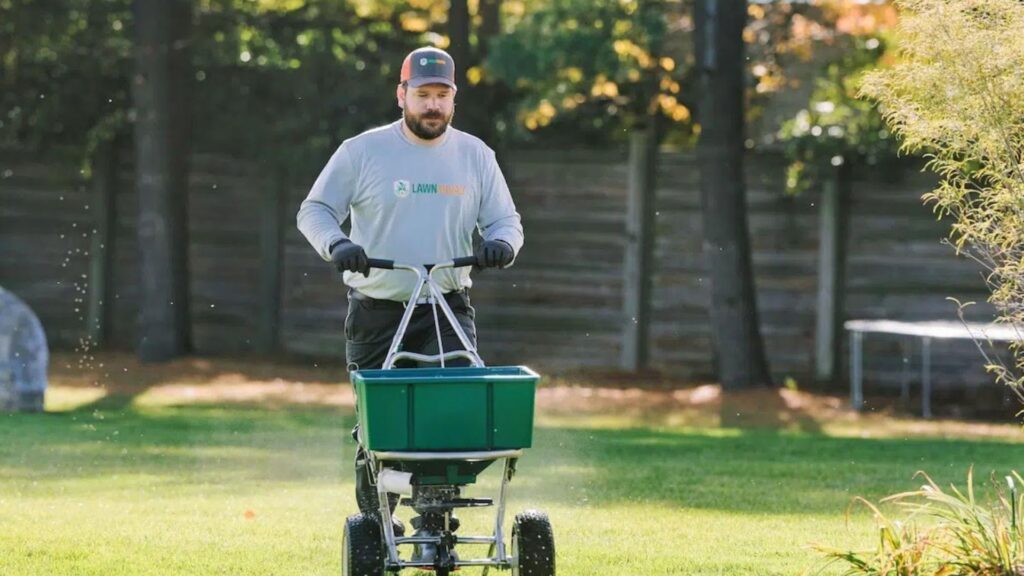
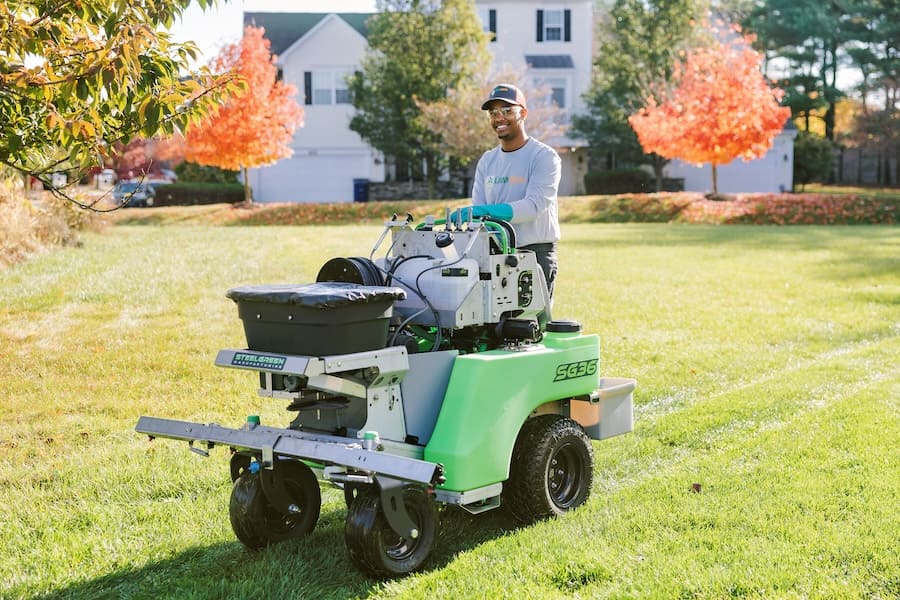
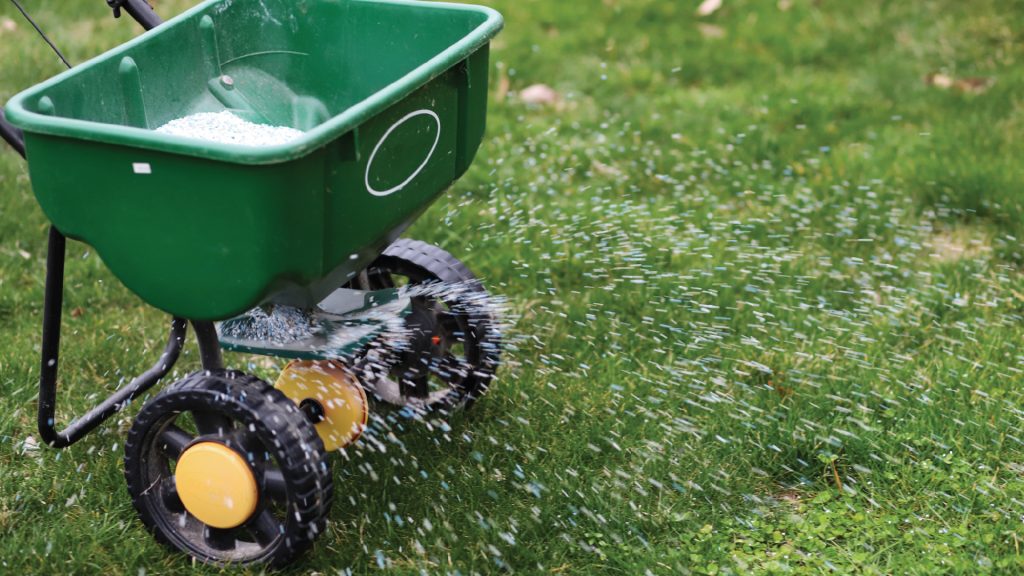
Both products are typically applied as granules, watered in with 0.5 to 1 inch of irrigation immediately after application. The water moves the active ingredient into the soil where grubs will feed once eggs hatch.
Curative products used after damage is visible include trichlorfon (faster acting on larger grubs) and carbaryl. Both have shorter residual and require careful application timing tied to grub stage. They are crisis management tools, not prevention tools.
Cultural Practices That Reduce Grub Pressure
Chemical treatment is not the only lever. Several cultural choices reduce the appeal of your lawn to egg-laying beetles in the first place.
Watering schedule. Beetles prefer moist soil for egg laying. If you can shift to less frequent, deeper irrigation (1 inch per week in 1 or 2 cycles rather than daily), you reduce the appeal of your yard during the egg-laying window. Stop irrigation entirely during peak beetle activity (mid-June through early July) if you can.
Mowing height. Tall grass canopies make it harder for female beetles to access the soil surface. Cool-season grass in NH should be at 3 to 4 inches in June regardless of grub concerns, and the height also helps with this.
Habitat management. Adult Japanese beetles eat ornamental plants. If your yard has heavy beetle food (roses, linden, crape myrtle, grape, hibiscus), you draw more beetles in from the surrounding area. Consider beetle traps (positioned away from the lawn, not near it) and direct removal of beetles from prized plants during morning hours when they are sluggish.
Beneficial nematodes. Heterorhabditis bacteriophora nematodes parasitize grubs and provide a biological control option. They need careful application timing (mid to late August when grubs are present) and moist soil to be effective. Results are real but inconsistent year to year. We sometimes integrate nematodes into programs for customers who specifically want a chemical-free approach.
The Cost Math for NH Homeowners
The economic case for preventive grub treatment in southern New Hampshire is straightforward.
Preventive treatment cost: $80 to $150 for a typical residential lawn, depending on size and location. Most NH suburban yards fall in the $90 to $120 range.
Damage repair cost: $1,500 to $3,500 for a moderately damaged lawn that needs overseeding, fall renovation, and time to recover. Severe damage requiring sod patches runs higher.
Even if you only have grub damage once every 5 years, the preventive treatment pays for itself by avoiding a single damage event. For higher-risk properties, preventive treatment is the obvious financial choice every year.
What to Do Next
If you want preventive grub treatment timed correctly for your specific NH property, we are scheduling June and July applications now. We assess each lawn’s risk profile, choose the right active ingredient for your situation, and time the application to your local microclimate.
Lawn Squad of New Hampshire serves homeowners across Southern New Hampshire.
Call us at 603-716-9498 or request a free quote at lawnsquad.com. Our VitaminLawn program builds preventive grub control into the right window for NH bluegrass and fescue lawns, alongside the tick and disease management that defines a successful southern New Hampshire summer.