Short Answer: Across the Cleveland service area, Japanese beetle and masked chafer adults emerge in late June and lay eggs in moist lawns from late June through early August. A preventive grub product (chlorantraniliprole or imidacloprid) applied between mid June and mid July, then watered in with half an inch of irrigation or rain, sits in the upper soil profile and kills the young grubs as they hatch. Treat too early and the product breaks down before the eggs hatch. Treat in August or later and you are now in curative territory, which is harder, more expensive, and less effective. For most Lakewood, Westlake, Mentor, and Strongsville lawns, the right window is the last two weeks of June and the first two weeks of July.
You stood on the back deck in Westlake or Avon Lake this past weekend and saw a Japanese beetle on the roses. Not a swarm yet, just one or two metallic green visitors trying out the linden tree. Most homeowners do not connect what they are seeing in late June with what happens to the lawn in September, but the two are tied together by a lifecycle that runs underneath your feet for the rest of the summer.
This is the most important pest article we write all year for Cleveland. Grubs in cool-season lawns north of I-90 are not a theoretical risk, they are an expected one. The question is not whether grubs will hatch in your soil this summer. The question is whether they will find anything to eat when they do.
The Lifecycle: Why Late June Is the Hinge
Two beetle species cause the bulk of grub damage across Northeast Ohio. The Japanese beetle is the iridescent green and copper beetle you see on flowers and shrubs in late June and July. The masked chafer is a tan beetle most active at night, less visible to homeowners but equally damaging.
Both species share a similar lifecycle that runs on a 12-month clock. Adults emerge from the soil starting in mid to late June, peak through July, and start declining in August. During those weeks, females mate, then dig back down into moist lawns to lay eggs (usually one to four inches deep). Each female lays 40 to 60 eggs across her life.
The eggs hatch in late July and August. The newly emerged grubs (called first instars) are tiny and white and live near the soil surface. They feed on grass roots through August and September, growing to a more recognizable C-shaped grub about an inch long by October. As soil temperatures drop, they burrow deeper to overwinter, then come back up to finish feeding in spring before pupating and emerging as next year’s adults.
The damage window you see in your lawn is late August through October, when those summer-hatched grubs are large enough to feed visibly. By the time the lawn shows damage, the grubs are mature, less susceptible to chemical control, and have already done most of their work. That is why prevention matters so much more than reaction.
What Preventive Products Actually Do
Two preventive active ingredients dominate the market. Chlorantraniliprole (sold under brand names like GrubEx and others) has a long residual, can be applied as early as mid May, and remains active through the egg-hatch window. Imidacloprid has a shorter residual and works best applied closer to the egg-laying period (typically late June or early July).
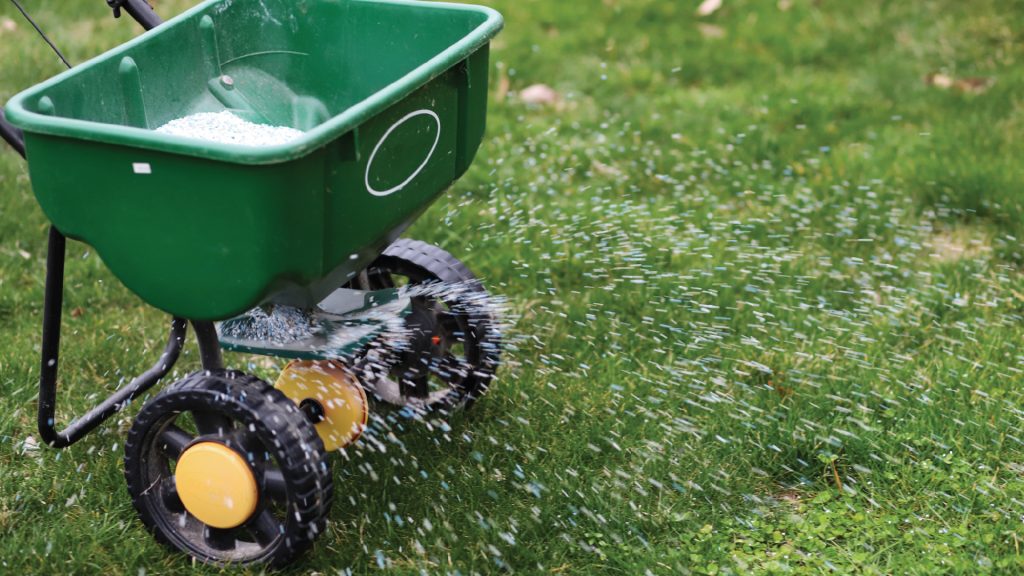
The mechanism is similar for both. The product is applied to the lawn as a granule, watered in with half an inch of irrigation or rain, and binds to the upper inch or two of soil. When the newly hatched first-instar grubs begin feeding, they ingest the product and die before they can cause any meaningful damage to the lawn.
This is fundamentally different from curative grub control. Curative products (such as trichlorfon) are used in August or September when grubs are already present and damaging the lawn. They work, but they require larger application rates, more careful timing, and the lawn is already injured by the time you reach for them.
Why Cleveland Lawns Are Particularly Vulnerable
Three things make our service area a grub hot spot.
One: irrigation patterns. Female beetles prefer to lay eggs in moist soil. The well-watered residential lawns across Bay Village, Rocky River, Westlake, and the eastern suburbs are exactly what they are looking for. The neighbor with the brown unirrigated lawn often has fewer grubs than the homeowner with a lush irrigated turf.
Two: cool-season root systems. Kentucky bluegrass and tall fescue both have root systems that grubs love. The roots are dense enough to be a meaningful food source and shallow enough that grub feeding causes visible top damage quickly.
Three: lake-effect humidity. The same humid air that comes off Lake Erie keeps the upper soil moist through July and August, which lengthens the window in which eggs hatch successfully. Lawns farther from the lake (the southern reaches of the Cleveland metro out toward Brunswick, Medina, and Hinckley) sometimes get a slightly later peak but the same general pattern.
How to Tell If You Need It
The most reliable predictor of grub pressure is your history. If your lawn or a neighbor’s lawn had brown patches in the fall of 2025 that pulled up like loose carpet, you have a population in the soil right now. The 2026 adults are emerging from that population this June.
Other strong indicators include:
- Heavy skunk, raccoon, or crow activity tearing up the lawn last September or October. These animals dig for grubs and leave the lawn in shredded clumps.
- A lawn that goes brown in late summer despite adequate watering, in patches rather than uniformly.
- Visible adults (Japanese beetles on shrubs, masked chafers near porch lights) in early to mid June, which means a strong adult flight is on its way.
- A neighborhood with mature trees and many irrigated lawns. Grub populations build up in stable suburban landscapes.
If you can answer yes to any of those, preventive treatment makes sense. We treat a meaningful share of the lawns we service preventively, because the math is so favorable.
The Cost Math
A preventive grub application on a typical Cleveland-area lot (a quarter to a third of an acre of lawn) runs $85 to $150 depending on size. Larger Westlake, Avon, or Mentor lots run higher.
A lawn renovation after grub damage runs $2,000 to $5,000 depending on the extent of the dead turf, the soil prep required, and whether you go with seed or sod. The renovation also takes a season or more to look right. New seed needs the fall window to establish and another full year to thicken.
Even if there is only a 50 percent chance of damage at your address, the expected cost of skipping prevention is several times higher than the cost of treating. For lawns in known-pressure neighborhoods, the math is not even close.
What Watering and Mowing Have to Do With It
Cultural practices matter both before and after the treatment.
Before treatment: if your lawn has been bone dry through June, female beetles will look for somewhere wetter to lay eggs (often the neighbor’s irrigated yard). Some homeowners on the east side use this to their advantage, intentionally letting the lawn go dormant through July to reduce egg-laying.
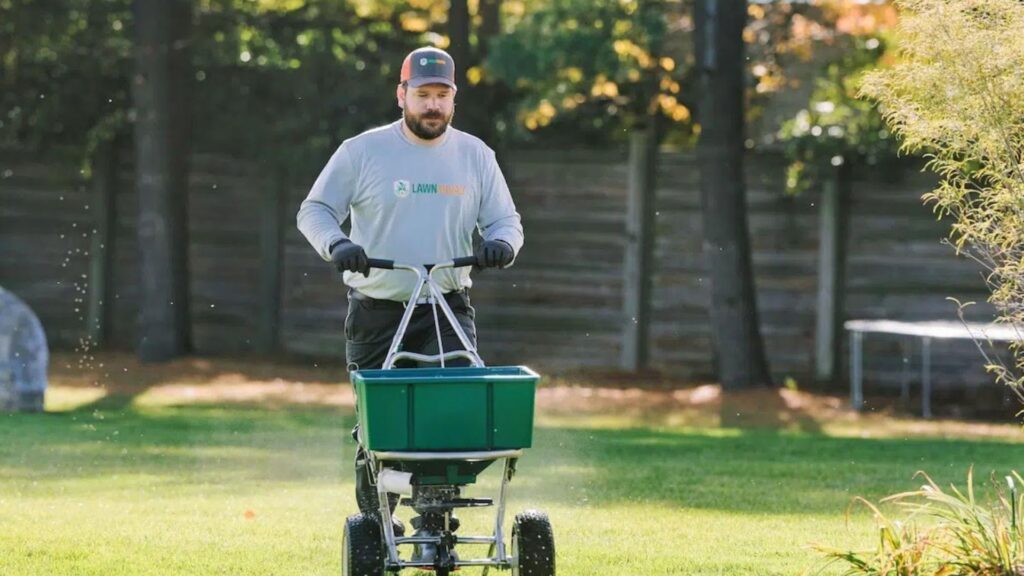
After treatment: you need to water the product in. Half an inch of irrigation or rain within 24 to 48 hours of application moves the active ingredient into the upper soil profile where it needs to be. Skipping this step is the single most common reason a preventive application underperforms.
Then keep the lawn mowed at 3.5 inches through July and August. A taller canopy supports a healthier root system that can shrug off light grub feeding even if your prevention is only partial.
If You Missed the June Window
Late applications still help, but the return drops. A chlorantraniliprole application in early July still works because the long residual catches the egg-hatch peak. An imidacloprid application in mid July still reaches most hatching grubs. By August, you are moving from prevention into curative territory and should switch to a different active ingredient.
If you have already seen visible damage in late summer or fall, we move to a curative product applied at the right rate for the size of the grubs present, and then we plan a fall renovation on the worst-damaged areas.
What to Do Next
If you would rather have us watch the calendar, the soil temperatures, and the beetle flight reports for you, that is exactly the job a good lawn care program does. We apply at the right window with the right product for the conditions, so you get the protection without the timing math.
Lawn Squad of Cleveland serves Amherst, Avon, Avon Lake, Bay Village, Beachwood, Berea, Brecksville, Brook Park, Broadview Heights, Brunswick, Cleveland, Columbia Station, Eastlake, Elyria, Euclid, Gates Mills, Grafton, Hinckley, Independence, Lakewood, Lorain, Maple Heights, Medina, Mentor, North Olmsted, North Ridgeville, North Royalton, Oberlin, Olmsted Falls, Painesville, Perry, Richfield, Rocky River, Sheffield Lake, Strongsville, Valley City, Vermilion, Westlake, Wickliffe, and Willoughby.
Call us at 440-271-3113 or request a free quote at lawnsquad.com. Our VitaminLawn program is built around the cool-season grasses, clay soils, and lake-effect weather patterns that define Cleveland lawns. Preventive grub control is one of the highest-return services we provide all season.