
Short Answer: Connecticut lawns adjacent to driveways, walks, and street edges commonly show salt damage in spring from winter de-icing. The visible signature is brown strips paralleling hardscape, often with sharp boundaries between damaged and healthy turf. The fix involves flushing accumulated salt out of the root zone with deep watering, applying gypsum to severely affected areas, replanting where crowns died, and behavior changes to reduce next winter’s damage. Light damage recovers within 6 to 10 weeks of flushing. Severe damage requires replanting after soil chemistry is corrected. Here is the practical guide for properties across New Haven, Stamford, Norwalk, Fairfield, Westport, and the surrounding area.
If you are walking your Connecticut lawn in early April and seeing brown strips along the edge of your driveway or sidewalk, you are looking at salt damage from winter de-icing. It is one of the most predictable forms of winter lawn damage across our service area, and it has specific fixes that work.
Across New Haven, Stamford, Norwalk, Fairfield, Westport, Greenwich, and our broader service area, here is the practical guide to identifying and recovering from salt damage.
What Salt Damage Looks Like
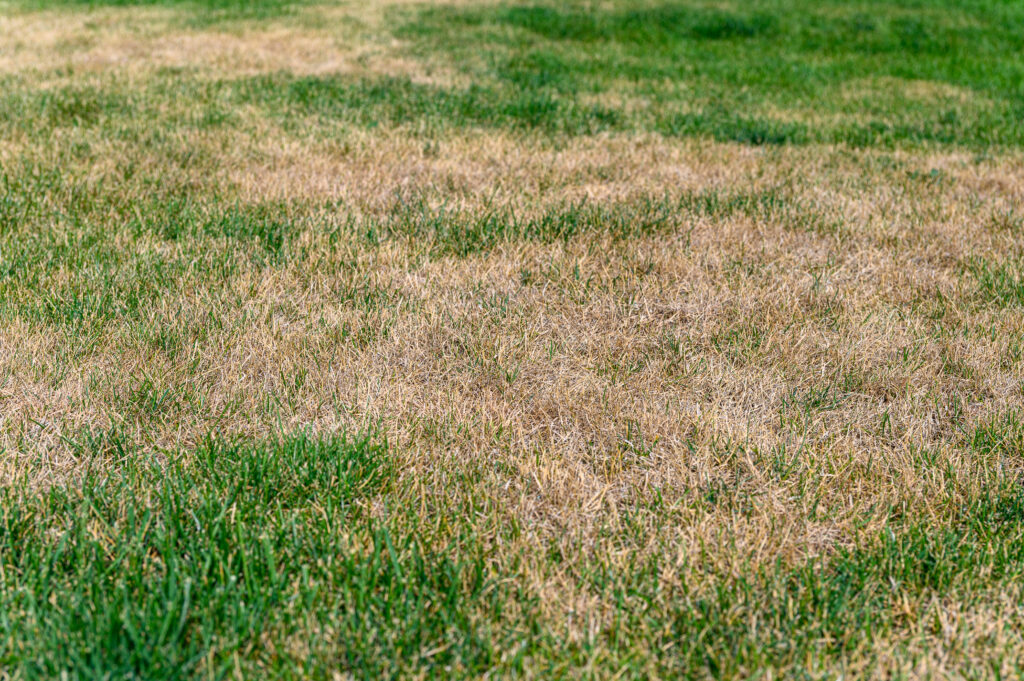
The classic signature is brown strips paralleling driveways, walkways, or street edges. The damage shows clear boundaries where the salt accumulated. Areas 1 to 3 feet from the hardscape edge typically show the worst damage; areas further away may be unaffected.
Salt damage looks different from snow mold or vole damage. Salt produces strips along edges, while snow mold makes circular patches anywhere on the lawn and voles leave snaking trails. If the damage pattern follows the hardscape edge, salt is almost certainly the cause.
Severe salt damage produces fully dead grass with crowns that pull up easily. Lighter damage shows blade burn and discoloration but with surviving crowns underneath.
Why It Happens
Salt-based de-icers (rock salt, calcium chloride, magnesium chloride) accumulate in lawn areas through winter. Snow plowing pushes treated snow onto lawn edges. Foot traffic carries salt residue. Runoff during melt cycles moves salt into adjacent soil.
The salt dehydrates grass cells, damages roots, and disrupts soil chemistry. Sodium specifically displaces other cations in the soil structure, compacting soil and reducing nutrient availability even after the visible salt is gone.
The damage is concentrated in spring because the salt has accumulated over the entire winter and the saturated spring soil reveals the chemistry effects. Through summer the natural rainfall flushes some of the salt, but heavy accumulations need active intervention.
How to Flush Salt From Soil
The standard fix is heavy water application to leach accumulated salt deeper into the soil profile and below the root zone:
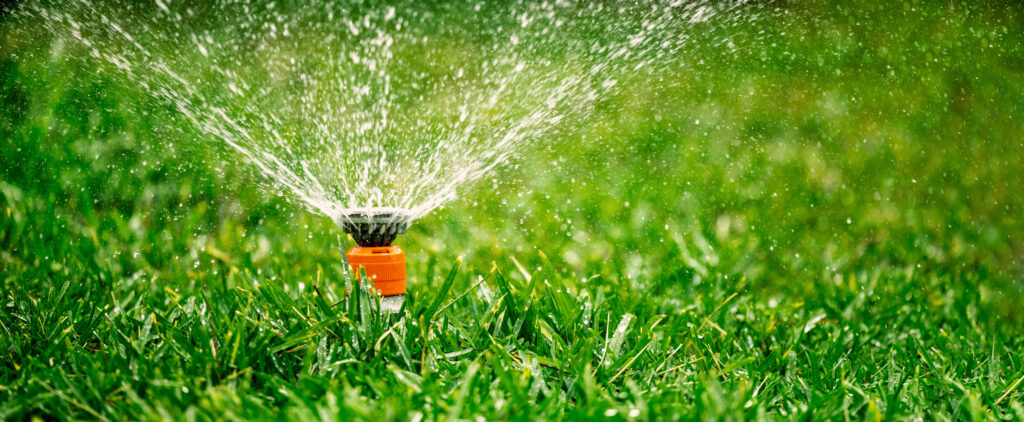
Apply deep watering to affected zones over several days. The goal is enough water to actually move salt down through the soil, not just wet the surface. Most lawns need 1 to 2 inches of total water spread across multiple deep watering events.
Repeat over 1 to 2 weeks. Single heavy waterings produce some benefit but multiple passes work better. Each application moves more salt out of the root zone.
Time it for cool conditions when evaporation is low. Early spring is ideal because temperatures are cool enough that water actually penetrates rather than evaporating.
For severe damage zones, gypsum (calcium sulfate) accelerates the process. Gypsum supplies calcium that displaces sodium in the soil chemistry, freeing the sodium to move with water. Apply at roughly 40 to 50 pounds per 1,000 square feet on heavily damaged zones.
When to Replant
Some salt-damaged areas have dead crowns that will not recover. The crown test determines this: pull on grass in the damaged zone. If it slides out easily with brown mushy crowns, the grass is dead and the area needs replanting.
Wait to replant until after flushing and soil chemistry correction. New seed in soil that still has elevated salt will fail to germinate or will produce weak grass that dies. Several weeks of flushing followed by seeding produces much better results.
For severely damaged areas, adding 1 to 2 inches of fresh topsoil before seeding helps. The existing soil chemistry may be compromised enough that new growth struggles even after flushing. Fresh topsoil provides a clean germination medium.
Cool-season seed appropriate for Connecticut: perennial ryegrass for fast establishment, tall fescue blend for long-term performance, Kentucky bluegrass blend for premium appearance with longer establishment time.
Connecticut-Specific Patterns
Several local factors influence salt damage:
Coastal properties in lower Fairfield County see additional salt pressure from sea air, particularly during storms. The cumulative load on coastal lawns can exceed what inland properties experience.
Steep driveways and walks where salt is applied heavily for safety produce concentrated damage zones at the bottom where runoff collects.
Properties on streets where municipal salt application is heavy face street-edge damage that may extend 5 feet or more into the lawn.
Mature properties with established planting beds adjacent to lawn may have salt damage patterns that include both lawn strip damage and bed soil chemistry issues.
Long-Term Prevention
Several practices reduce future salt damage:
Switch to gentler de-icers. Calcium chloride and magnesium chloride are less damaging to lawns than rock salt. Cost is higher but lawn impact is reduced significantly.
Apply sparingly. Many homeowners over-apply de-icer thinking more works better. Recommended application rates are typically much lower than what gets used in practice.
Direct plow piles away from lawn areas. Where possible, push snow into non-lawn zones. Concentrated plow piles in lawn areas produce the worst salt damage every year.
Install salt-tolerant plantings as buffers in chronic damage zones. Hardy ornamental grasses, certain shrubs, and ground covers handle salt better than turf grass and can absorb some of the chemistry impact.
Pre-emergent flush. A heavy watering in early spring before the lawn breaks dormancy can move accumulated salt before active growth begins.
What Does Not Work
Ignoring it and hoping it recovers on its own. Light damage may, but severe damage worsens over time as compromised soil chemistry compounds the original damage.
Fertilization without flushing. Adding nutrients to soil with elevated salt produces no benefit because the chemistry is the limiting factor, not nutrient availability.
Replanting without correcting soil chemistry. New seed in salt-impacted soil fails or produces weak grass.
Aggressive raking that exposes more soil. Salt damage is concentrated in the upper soil; disturbing the surface can spread the problem rather than address it.
Applying lime to neutralize damage. Lime addresses acidity, not salt damage. The fixes are different.
The Recovery Timeline
For light salt damage with surviving crowns:
Weeks 1 to 3: flushing irrigation moves salt out of root zone.
Weeks 3 to 6: grass begins visible recovery as soil chemistry normalizes.
Weeks 6 to 10: most light damage areas have recovered.
For severe damage requiring replanting:
Weeks 1 to 4: flushing to correct soil chemistry.
Weeks 4 to 6: dead grass removal, topsoil addition if needed, seeding.
Weeks 6 to 12: new grass establishment.
Weeks 12 to 16: lawn looks recovered.
Property-Level Decisions
For some properties, accepting that lawn-adjacent-to-hardscape zones will face annual salt damage is part of the property’s reality. The choices are: manage damage through annual recovery work, install non-lawn buffers in chronic damage areas, redirect snow management to reduce lawn impact, or invest in alternative materials (permeable pavers, rubber edging) that change how salt and water interact with the lawn edge.
Most properties find that some combination of approaches works better than fighting the chemistry every year with reactive recovery.
How Coastal Conditions Affect Recovery
Properties in lower Fairfield County closer to Long Island Sound see different recovery patterns than inland properties. Salt-laden air from coastal storms contributes additional salt pressure beyond what de-icers add. The cumulative load can extend further into lawn areas than purely de-icer damage would.
Recovery on coastal properties may need more flushing passes than inland properties facing only de-icer salt. Pulling soil tests on chronically damaged coastal zones helps quantify the actual salt load and guide recovery effort. Properties more than half a mile inland from the Sound typically face only de-icer salt and follow standard recovery timelines.
For severely affected coastal zones, accepting that some areas may need annual recovery work is part of the property reality. Buffer plantings of salt-tolerant species reduce ongoing damage to lawn areas adjacent to the most exposed zones.
What to Do Next
If you would rather have someone else handle the timing decisions, product selection, and application for your New Haven and Fairfield Counties lawn, we are here for that.
Visit lawnsquad.com to find Lawn Squad of New Haven and Fairfield Counties and request a free quote. Our VitaminLawn program is built specifically for the grass types, soils, and weather patterns in our service area. Most homeowners see noticeable improvement within the first two applications.