Short Answer: For most Westchester County cool-season lawns, the right mowing height is 3.5 to 4 inches for tall fescue and fescue blends, and 3 to 3.5 inches for Kentucky bluegrass dominated lawns. Mowing too short scalps the grass, exposes soil to heat stress, and weakens the lawn dramatically. The one-third rule (never remove more than one-third of blade height in a single mow) and keeping blades sharp matter as much as the cut height itself. Slight seasonal adjustments help. Here is the practical guide for properties across Scarsdale, White Plains, Yonkers, and the surrounding Westchester County area.
Mowing is the most frequent lawn care interaction homeowners have with their lawns, and getting it right matters more than most people realize. Wrong-height mowing weakens lawns gradually over years. Right-height mowing builds density, supports a strong root system, reduces weed pressure, and produces the kind of lawn that handles summer stress with less ongoing input.
Across our Westchester service area covering Scarsdale, White Plains, Yonkers, Mount Vernon, New Rochelle, and surrounding communities, here is the practical guide to mowing the cool-season grasses common in our area.
Tall Fescue and Fescue Blends: 3.5 to 4 Inches
Most Westchester lawns are dominated by tall fescue or fescue blends with some Kentucky bluegrass and ryegrass. The right mowing height for these lawns is 3.5 to 4 inches.
Tall fescue’s key advantage over other cool-season grasses is its deep root system, which gives it heat and drought tolerance. The deep roots only develop when the lawn is mowed at appropriate heights. Mowing fescue short cuts off this advantage and produces a lawn that is no better than Kentucky bluegrass.
Below 3 inches, fescue starts to scalp and weaken. The deep roots cannot maintain themselves. Disease pressure increases. Summer thinning gets worse.
Above 4.5 inches, the lawn becomes shaggy and develops thatch faster than it can decompose. The cut shows clumps and the lawn looks unkempt.
Most homeowners cutting their own fescue mow too short. The default mower setting is often 2.5 to 3 inches, which is wrong for fescue. Adjust the mower up by one or two settings.
Kentucky Bluegrass: 3 to 3.5 Inches
Lawns dominated by Kentucky bluegrass benefit from slightly shorter mowing than tall fescue. The right height is 3 to 3.5 inches.
Bluegrass has a more rhizomatous growth habit (spreading underground) than fescue. The shorter cut helps bluegrass develop the dense fine-textured appearance the species is chosen for.
Below 2.5 inches, bluegrass scalps and thins, particularly during summer heat.
In practice, most Westchester lawns are blends with both species present. The default is to mow at the higher end of the range (3.5 inches) which works for both, even if it sacrifices some bluegrass density to better support the fescue.
The One-Third Rule
Regardless of grass type, follow the one-third rule. Never remove more than one-third of the blade height in a single mowing.
Example: if your target height is 4 inches, mow before the grass reaches 6 inches. Removing more than one-third stresses the grass and triggers a weak growth response that leaves the lawn vulnerable.
This may mean mowing more frequently during peak growing season. In our area, that typically means weekly mowing from May through October, sometimes more frequently during peak growth periods following fertilization or significant rain. Cool-season grass grows fastest in late spring and early fall, slower during summer heat.
Sharp Blades Matter
Dull mower blades tear grass rather than cut it. Torn blade tips look ragged, brown out at the edges, and create entry points for disease.
Sharpen mower blades at least once per season. Heavy-use mowers benefit from twice-per-season sharpening. Dull blades undo a lot of the benefit of correct mowing height.
The visual signal of dull blades is a silver-gray cast across the lawn the day after mowing. Healthy lawn cut with sharp blades looks even and green. Dull-blade-cut lawn shows torn fiber color from a distance.
Seasonal Adjustments
Cool-season grasses benefit from slight seasonal adjustments:
Spring: maintain at the lower end of the recommended range as the lawn comes out of dormancy. Slightly shorter cuts let sunlight reach the soil and stimulate active growth.
Late spring through summer: raise to the higher end of the range. Taller cut shades soil during the hottest months and supports the deepest roots.
Fall: maintain at the higher end. The taller cut helps the lawn build reserves heading into winter.
Final fall mow: cut slightly shorter than summer height (around 2.5 to 3 inches) before the lawn goes dormant. This helps prevent snow mold by reducing grass tissue available to disease over winter and improving air circulation.
Why Mowing Too Short Hurts
Lawns scalped below recommended heights show several problems:
Removed too much green leaf tissue, limiting photosynthesis the plant needs to feed itself.
Exposed soil to direct sun, drying out the root zone faster.
Damaged crowns at the soil surface.
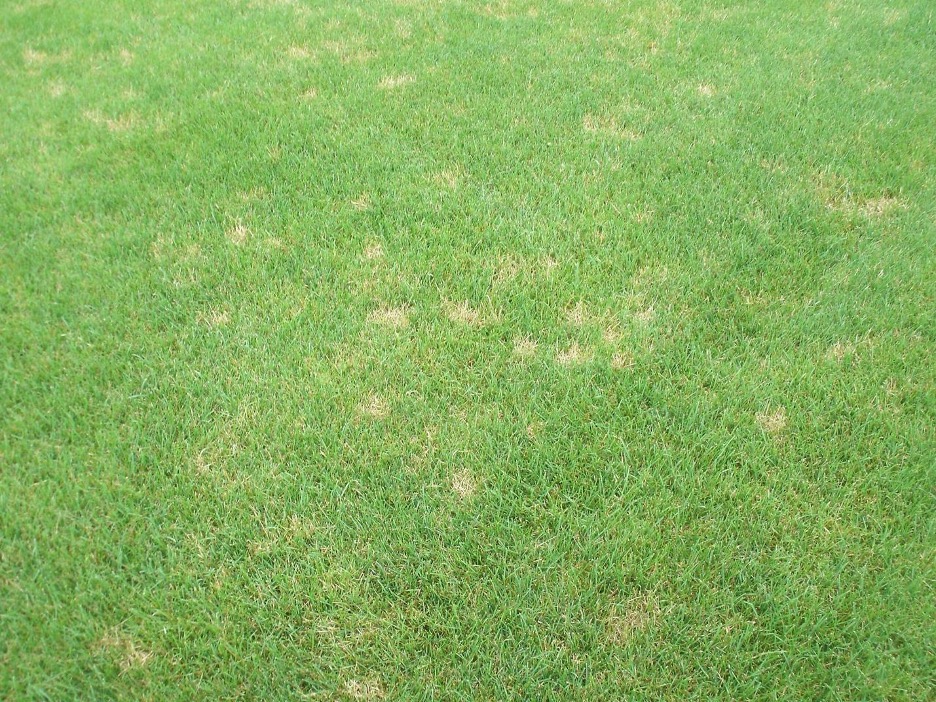
Stressed the grass and produced brown spots that take weeks to recover.
Opened canopy for weed seeds to germinate.
Increased water requirements as the lawn loses moisture faster.
Reduced root depth, making the lawn more vulnerable to summer heat.
Why Mowing Too Tall Also Hurts
Going significantly above recommended heights produces problems too:
Thatch accumulates faster as more grass tissue is left behind.
Canopy layover that produces a less dense, shaggy appearance.
Scalping when the lawn finally gets a normal cut after growing too tall.
Reduced density at the soil surface as taller stems shade out new growth.
Increased disease pressure from poor air circulation in the canopy.
Increased snow mold pressure if heading into winter at full summer height.
Common Mistakes
Mowing too short on fescue. The most common mistake we see. Most homeowners default to 2.5 to 3 inches because it looks cleaner. Raise the cut by an inch.
Mowing at varying heights week to week. Pick a height and stick with it. Inconsistent mowing produces uneven density.
Mowing wet grass. Wet grass produces ragged cuts, clumps that smother turf underneath, and ruts in soft soil.
Bagging when mulching would work better. Mulched clippings return nutrients to the soil and do not contribute to thatch at normal mowing frequencies.
Mowing in the same pattern every time. Repeated wheel tracks compact the soil. Vary the mowing pattern week to week.
Skipping the final fall mow. Lawns that go into winter at full summer height face heavier snow mold pressure.
Equipment Considerations
Quality rotary mowers with sharp blades work fine for cool-season grasses at the recommended heights.
Riding mowers work fine for larger Westchester lawns but tend to produce more compaction than walk-behind units. On smaller lots, walk-behind is easier on the lawn long-term.
Robotic mowers work increasingly well for cool-season grasses when set to the right cut height. They mow more frequently with smaller cuts each time, which produces dense turf.
Reel mowers are not necessary for fescue or bluegrass at residential heights. They produce premium results on golf course turf but offer no advantage for most homeowners.
What to Do Next
If you are not sure about the right mowing height for your Westchester County lawn or want help dialing in a complete care program, we walk properties across Scarsdale, White Plains, Yonkers, and our broader service area to identify your grass type and recommend the right practices for your specific yard. If you would rather have someone else handle the timing decisions, product selection, and application for your Westchester County lawn, we are here for that.
Visit lawnsquad.com to find Lawn Squad of Westchester and request a free quote. Our VitaminLawn program is built specifically for the grass types, soils, and weather patterns in our service area. Most homeowners see noticeable improvement within the first two applications.