
Short Answer: Gray leaf spot is a fungal disease that hits West Houston St. Augustine lawns hard during humid summer stretches, producing oblong gray-tan lesions on individual blades and ragged thinning patches across the lawn. Treatment requires targeted fungicide applications timed to active outbreaks. Prevention focuses on watering practices (morning only, never evening), reduced summer nitrogen, and addressing thatch buildup. With the right combination, most outbreaks clear within 2 to 3 weeks. Here is the practical guide for properties across Katy, Cypress, Memorial, Energy Corridor, and the surrounding West Houston area.
If your West Houston St. Augustine lawn is showing thinning ragged patches with individual blades that look spotted or scorched, you may be looking at gray leaf spot. It is one of the most damaging diseases on St. Augustine across the Houston metro and shows up almost every year once humid summer weather sets in.
Across our West Houston service area covering Katy, Cypress, Memorial, Energy Corridor, and surrounding communities, gray leaf spot is part of the seasonal reality of caring for St. Augustine lawns. Catching it early limits damage substantially. Letting it progress for weeks can result in significant lawn area loss.
Here is what to look for and what actually works.
What Gray Leaf Spot Looks Like
The classic signature is at two scales:
On individual blades: oblong lesions with gray to tan centers and dark brown borders. Lesions can be small or expand to cover most of a blade. Severely affected blades shrivel and die. The lesions sometimes have a velvety or fuzzy texture when active spore production is happening.
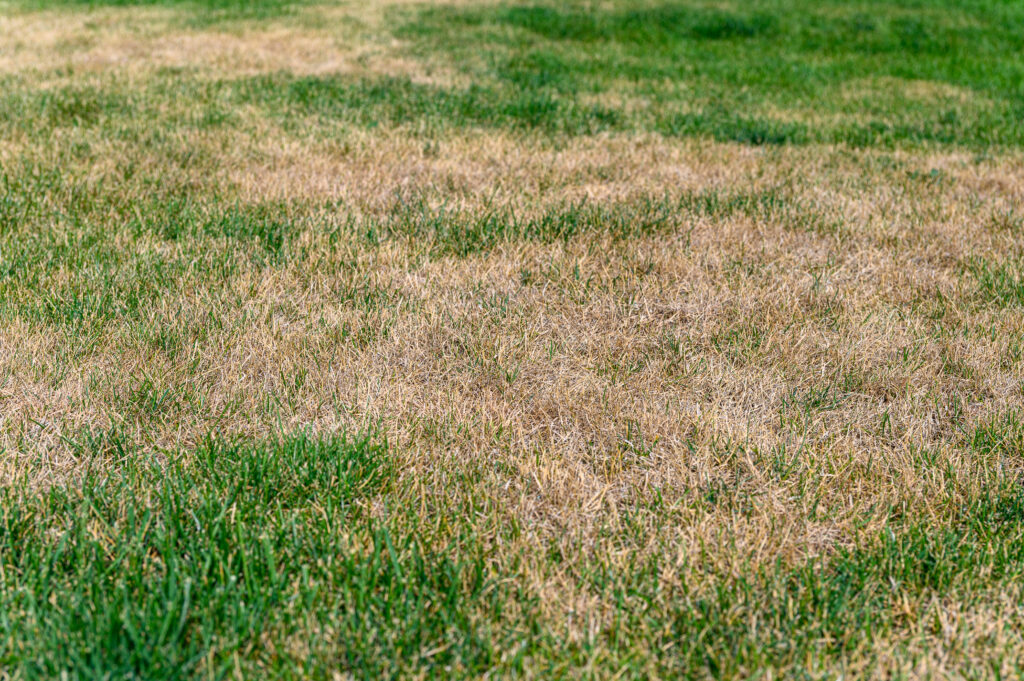
At the lawn scale: ragged irregular thinning patches that may look like the lawn was burned or scorched. The damage spreads outward from initial infection points and can grow rapidly during humid weather.
Walk the lawn at sunrise during humid stretches. Active disease often shows visible mycelium (fine web-like threads) on grass blade tips, especially in dewy conditions.
Why It Thrives in West Houston
Several factors create perfect conditions for gray leaf spot in our area:
Hot humid summers with daytime highs in the 90s and overnight lows that frequently stay above 70 with high humidity.
Long evening dew periods that keep grass blades wet for extended hours.
Heavy summer rainfall and afternoon thunderstorms that maintain moisture in the canopy.
Heat-stressed lawns with reduced disease resistance during peak summer.
Excessive nitrogen fertilization that produces soft growth the disease prefers.
Heavy thatch on St. Augustine lawns that have not been aerated regularly.
Compacted soils that stay wet longer after rainfall or irrigation.
How We Treat It
Active gray leaf spot requires a targeted fungicide. Several products work well, with strobilurin-class fungicides (azoxystrobin, pyraclostrobin) providing strong control on St. Augustine. Triazole fungicides (propiconazole, myclobutanil) are effective alternatives. Timing matters as much as product choice.
Apply at first signs of active disease. Severe outbreaks typically require a follow-up application 14 to 21 days later if pressure remains high.
While the fungicide works, adjust watering practices immediately. Morning watering only, never after 10 AM. Less frequent watering with deeper soak times. Letting the lawn dry between cycles starves the disease of moisture.
Reduce or eliminate nitrogen applications during active disease. Nitrogen pushes soft growth that the disease attacks fastest.
For severe cases, light topdressing or core aeration improves drainage and reduces canopy moisture, addressing conditions that allow the disease to thrive.
What Doesn’t Work
A few common homeowner approaches that do not solve gray leaf spot:
Watering more to help the damaged areas recover. The opposite of what is needed. Wet lawns spread gray leaf spot faster.
Adding nitrogen to revive the lawn. Pushes the soft growth that fuels disease activity.
Generic store-bought lawn fungicides without the right active ingredient. Some work, but many consumer products are too weak or wrong for the disease.
Mowing more to remove infected tissue. Spreads spores across the lawn and stresses already weak grass.
Treating only visibly damaged areas. The disease is typically already active in surrounding apparently healthy grass. Treat the lawn as a whole.
Why Prevention Matters
Most West Houston St. Augustine lawns face annual gray leaf spot pressure. Prevention reduces the severity of outbreaks substantially and may eliminate them in some cases.
The single biggest prevention move is watering practices. Set irrigation to run between 4 AM and 9 AM, never in the evening. Use deep infrequent cycles rather than light daily ones. The lawn should be dry well before nightfall every day.
Aeration in spring helps long-term by improving drainage and reducing thatch. Soil testing and proper nutrient balance keeps the grass healthy without forcing soft growth that invites disease.
Preventative fungicide applications before peak disease pressure can stop outbreaks before they start, particularly on lawns with a history of significant gray leaf spot.
Mowing height matters. Maintain St. Augustine at 3.5 to 4 inches. Taller grass shades soil, reduces moisture in the canopy, and supports stronger roots that resist disease.
Sharp mower blades produce clean cuts. Torn grass tips from dull blades are entry points for disease.
Distinguishing Gray Leaf Spot From Other Problems
Several other issues can produce somewhat similar symptoms:
Brown patch tends to produce more circular patches with smoky gray edges. Gray leaf spot is more irregular.
Take-all root rot causes grass to pull up easily because of root decay. Gray leaf spot does not affect roots significantly.
Drought stress is uniform across exposed areas and responds to watering. Gray leaf spot does not respond to additional water.
Chinch bug damage starts at sunny edges and spreads outward. Gray leaf spot is more scattered.
Examining individual blades for the characteristic oblong gray-bordered lesions is the key diagnostic step. The lesions are unique to gray leaf spot.
What Recovery Looks Like
Once the disease is stopped, the affected grass needs time to recover. St. Augustine typically fills back in within 4 to 8 weeks during active growing season if the crowns survived. Areas where crowns were destroyed will not regrow on their own and need plugging or sodding.
Most properties see active edges stop advancing within 7 to 14 days of treatment. Full visual recovery takes longer, but the disease itself is controlled quickly with the right approach.
Variety Considerations
Some St. Augustine varieties are more susceptible to gray leaf spot than others. Floratam shows more disease pressure than newer cultivars like ProVista, CitraBlue, or Floratine, which have improved disease resistance.
For properties with chronic gray leaf spot, considering a more disease-resistant variety during renovation can substantially reduce future problems.
West Houston Specifics
Several factors make gray leaf spot particularly common in our area:
Year-round growing season that extends disease pressure across more months than in cooler climates.
Long humid summers with night temperatures regularly above 75 from June through August.
Heavy clay soils common across the Houston metro that drain slowly.
Heavy summer rainfall and tropical moisture that maintains canopy wetness.
Many properties on automatic irrigation running schedules that include evening watering.
Mature St. Augustine plantings on established properties with significant thatch buildup.
What to Do Next
If you are seeing thinning ragged patches with spotted blades on your West Houston St. Augustine lawn, the sooner we get to it, the less damage we deal with. We walk properties across Katy, Cypress, Memorial, and our broader service area to confirm the diagnosis, time the treatment correctly, and put together a prevention plan tailored to your property. If you would rather have someone else handle the timing decisions, product selection, and application for your West Houston lawn, we are here for that.
Visit lawnsquad.com to find Lawn Squad of West Houston and request a free quote. Our VitaminLawn program is built specifically for the grass types, soils, and weather patterns in our service area. Most homeowners see noticeable improvement within the first two applications.