Short Answer: Heavy clay soil is the foundation of most lawn struggles across Central Georgia. The treatments that actually work address all three of clay’s main problems: poor drainage, compaction, and locked-up nutrients. The high-value moves are core aeration once or twice a year, soil testing followed by targeted amendments (gypsum for compaction, lime or sulfur for pH, organic matter for structure), proper deep-and-infrequent watering, and consistent professional fertilization that accounts for what clay actually does to fertilizer. Quick fixes do not work on clay. The right approach takes 2 to 3 years to fully transform soil but produces visible results within the first season.
If your lawn in Macon, Warner Robins, or Dublin has been frustrating you for years, there is a strong chance heavy clay soil is part of why. Central Georgia sits on a mix of red clay and clay-loam soils that look beautiful when freshly dug but cause real problems for lawns: water that pools, fertilizer that does not work, roots that cannot penetrate, and turf that thins out faster than the homeowner expects.
The good news is that clay soil is treatable. The bad news is that most homeowners treat it wrong. Across our service area, here are the lawn treatments that actually move the needle on heavy clay properties, plus what to skip.
Why Clay Soil Causes So Many Problems
Clay particles are tiny and sticky. They pack together tightly and leave very little space for water, oxygen, or roots to move through. When dry, clay turns brick-hard. When wet, it turns into a sticky paste that compacts further under any pressure (foot traffic, mower wheels, even heavy rain). Either way, grass roots have a difficult time.
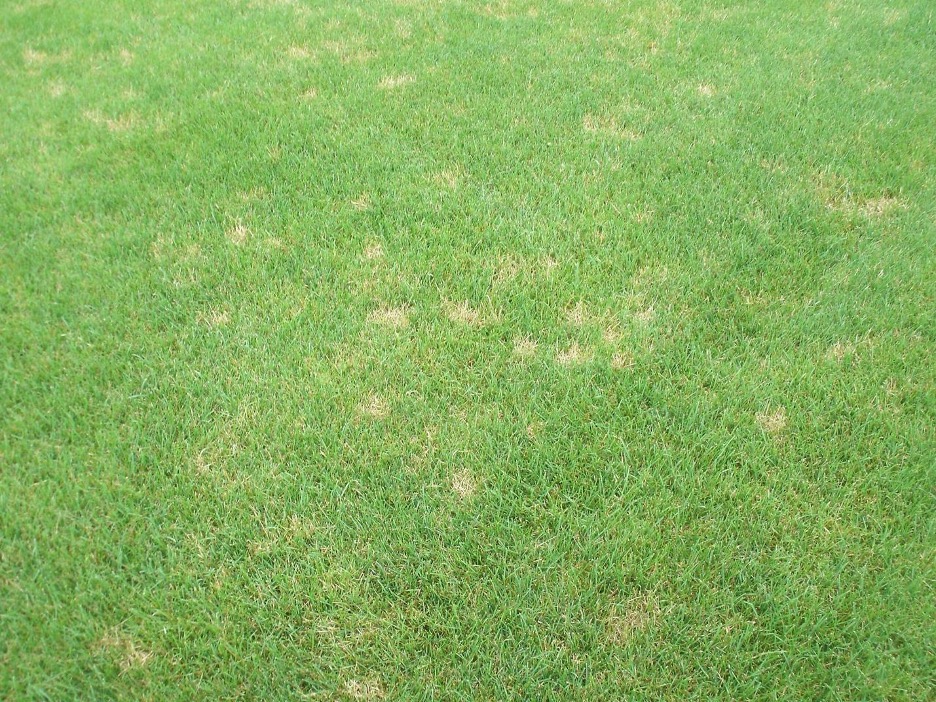
The visible symptoms of clay soil problems include water pooling after rain, brown spots that never seem to recover, fertilizer that produces weaker results than expected, lawns that struggle to fill in damaged areas, and grass that thins despite good care. Most Bermuda and Zoysia lawns in Central Georgia experience some version of this.
Treatment 1: Core Aeration
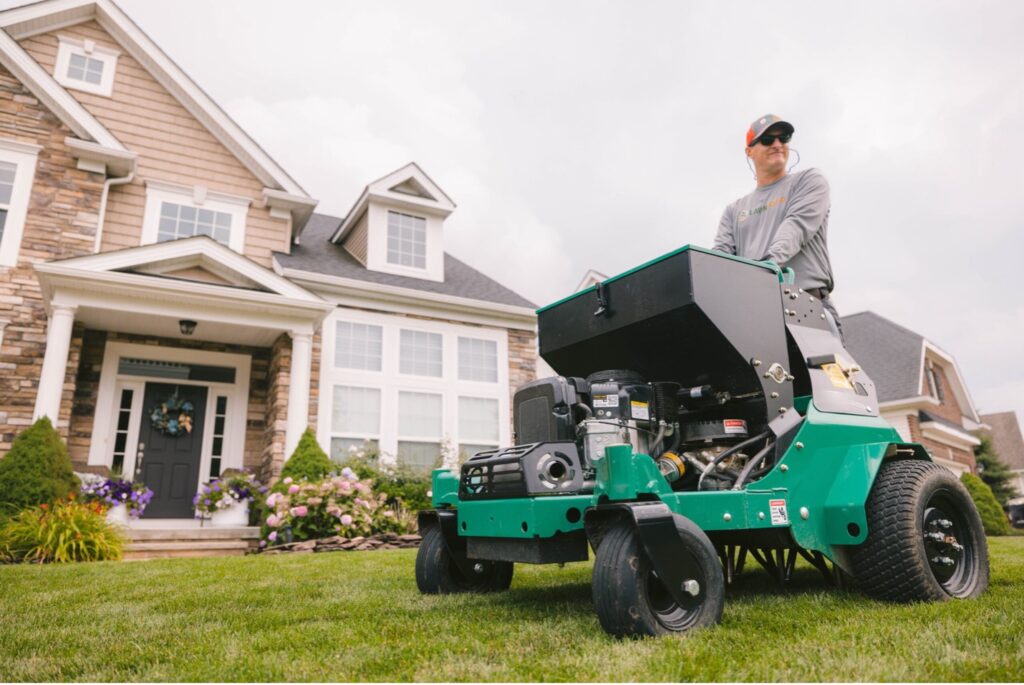
Core aeration is the single most important treatment for clay-soil lawns. The process pulls plugs of soil out of the lawn, leaving thousands of small holes that let air, water, and roots move through the upper soil layer.
For Central Georgia Bermuda lawns, the ideal aeration window is late April through June, when the grass is actively growing and recovers quickly from the disturbance. For Zoysia, similar timing. We typically recommend annual aeration on clay-soil properties, with newer construction or high-traffic lawns benefiting from twice-a-year aeration (spring and early fall).
Skip spike aeration entirely. Spike aerators just push solid tines into the soil, which compacts it further around the spike. Always use core aeration with hollow tines that pull plugs out. The plugs that come out of the lawn break down naturally over a few weeks and reincorporate as healthier surface soil.
Treatment 2: Soil Testing and Targeted Amendments
Without a soil test, you are guessing about what your clay actually needs. With one, you know. UGA Extension soil tests run about $15 and give you pH, organic matter, and major nutrient levels. The report tells you exactly what amendments to apply and at what rate.
Common Central Georgia results we see:
- Acidic pH (5.0 to 5.8 range) needing lime to raise toward 6.0 to 6.5.
- Low organic matter (under 2 percent) needing compost or topdressing to build structure.
- Low calcium and magnesium often correctable with dolomitic lime.
- Sometimes high salt or sodium needing gypsum to displace.
Apply amendments at the rates the test recommends, not at general guidelines. More is not better; rates are calculated for the change you need.
Treatment 3: Gypsum for Specific Compaction Issues
Gypsum (calcium sulfate) is widely advertised as a clay soil cure-all. The honest truth is that gypsum helps in specific situations and does nothing in others. It works best on clay soils that have high sodium content (which is common in some Central Georgia areas where well water has high sodium, or in lawns near roads where road salt accumulates). The calcium displaces sodium, which then leaches out, which improves soil structure.
On clay soils that do not have a sodium problem, gypsum has minimal effect. The soil test tells you whether gypsum is appropriate for your property. Spending money on gypsum without that information often produces no benefit.
Treatment 4: Compost Topdressing for Soil Structure
The long-term fix for clay soil is building organic matter content. Healthy clay-loam soil has 4 to 5 percent organic matter, which gives it structure that pure clay lacks. Most Central Georgia lawns sit at 1 to 3 percent.
Compost topdressing applies a thin layer of high-quality compost (1/4 to 1/2 inch) over the lawn surface. The compost works into the soil through earthworm activity, watering, and natural settling. Done annually for 3 to 5 years, this gradually transforms clay-heavy soil into something closer to good clay-loam.
Compost topdressing works especially well combined with aeration: aerate first, then topdress, and the compost falls into the aeration holes for direct delivery to the root zone. The two together accelerate soil improvement dramatically.
Treatment 5: Adjusted Watering Practices
Clay soils need different watering practices than sandy soils. Three rules:
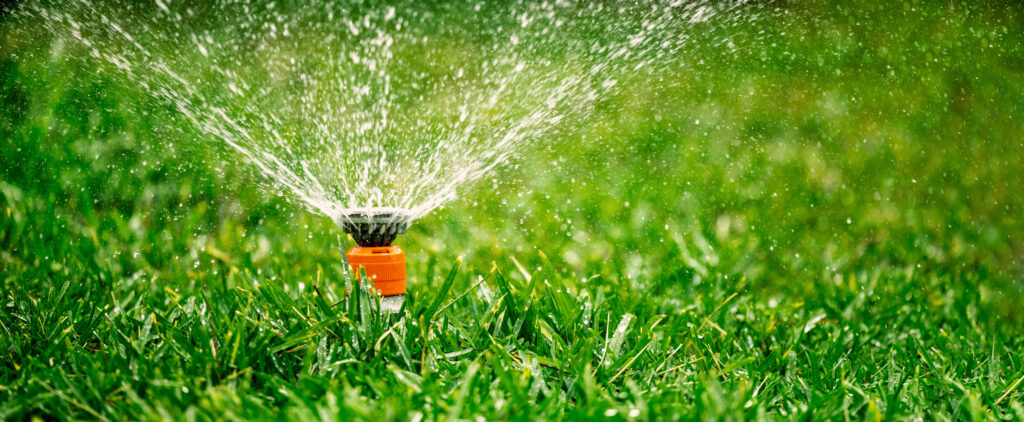
Water deeply and infrequently. Most Central Georgia clay-soil lawns benefit from 1 to 1.5 inches of water per week, applied in 2 cycles rather than daily light watering. Daily light watering on clay produces shallow roots that cannot survive heat. Deep watering pushes roots down toward the moisture.
Allow drying time between cycles. Clay holds water longer than sand. Watering before the lawn has dried out invites disease and creates anaerobic soil conditions. The lawn should look slightly stressed before the next cycle on healthy clay.
Use cycle and soak for slopes. On Central Georgia properties with significant slope, runoff is a big issue on clay. Splitting irrigation into two short runs with 30 minutes of soak time between (cycle and soak) lets water absorb instead of running off.
Treatment 6: Professional Fertilization Calibrated for Clay
Clay soil holds nutrients longer than sand, but locks them up at certain pH levels. Fertilization on clay lawns should account for this:
Slow-release nitrogen sources work better than quick-release on clay. The clay holds the nitrogen, and slow release matches the rate at which roots can absorb it.
Iron applications often outperform additional nitrogen on alkaline clay where iron is locked up. Chelated iron produces visible greening when standard fertilizer does not.
Phosphorus is rarely needed on Central Georgia clay (most soils test high or very high already). Many homeowners apply more phosphorus than necessary because they use generic fertilizer ratios.
What Does Not Work on Clay
Tilling sand into clay. This sounds intuitive but produces concrete-like soil structure rather than the loam most homeowners imagine. Skip it.
One-time miracle products. Whether labeled “clay buster” or “soil conditioner,” single-application products rarely produce meaningful change in clay soil.
Aggressive watering to fix clay drainage. More water on clay creates more drainage problems, not fewer.
Skipping aeration because the lawn looks fine. Clay compacts gradually, and lawns can look adequate for years before suddenly declining when compaction reaches a critical level.
The Realistic Timeline
Treating clay soil is multi-year work. Year 1 brings visible improvement (better water absorption, healthier-looking grass, fewer drainage problems). Year 2 brings significant change (deeper roots, denser turf, less weed pressure). Year 3 brings clay-loam-like behavior (the soil structure has improved enough that maintenance becomes routine).
Quick fixes do not produce these outcomes because the underlying soil structure has to change physically. The good news is that the trajectory is consistent when the right treatments are applied. Properties on a multi-year clay improvement plan see steady gains rather than year-over-year frustration.
What to Do Next
If you have been fighting heavy clay soil on your Central Georgia lawn and want a real treatment plan rather than another product to try, we walk properties across our service area regularly to put together customized soil and turf programs. If you would rather have someone else handle the timing decisions, product selection, and application for your Central Georgia lawn, we are here for that.
Lawn Squad of Central Georgia serves Allentown, Bolingbroke, Bonaire, Byron, Cadwell, Centerville, Chauncey, Chester, Clinchfield, Cochran, Danville, Dexter, and surrounding areas.
Call us at 478-901-2620 or request a free quote at lawnsquad.com. Our VitaminLawn program is built specifically for the grass types, soils, and weather patterns in our service area. Most homeowners see noticeable improvement within the first two applications.