Short Answer: Both liquid and granular fertilizers work well on North Shore Chicago lawns when applied correctly. Liquid fertilizers absorb faster and produce quicker visible results but the effects fade sooner. Granular fertilizers release more slowly and feed the lawn over weeks, providing steadier nutrition with fewer applications. The best programs typically use both: granular as the foundation for steady feeding, plus liquid spot applications when the lawn needs a quick boost or specific nutrient correction. Here is the honest tradeoff and how we decide which to use when across Highland Park, Winnetka, Lake Forest, and our broader service area.
If you have looked into lawn fertilization at all, you have probably run into the liquid versus granular debate. Some companies are 100 percent liquid. Others are 100 percent granular. Both groups will tell you their approach is better. The honest truth is that each has strengths, each has weaknesses, and the right choice depends on what the lawn actually needs at a given moment.
Across our North Shore service area, we apply both. Here is what we have learned about when each is the right tool.
What Liquid Fertilizer Does Well
Liquid fertilizer is dissolved in water and sprayed onto the lawn. It absorbs through the leaf blades within hours and through the root system within a day or two. The grass starts greening up within 3 to 7 days, often dramatically.
Speed is the biggest advantage. When you need a fast response (deep green color before an event, quick recovery from stress, or a precise nutrient correction like iron for a chlorotic lawn), liquid delivers in days rather than weeks.
Coverage is also more uniform. A calibrated liquid spray covers every blade evenly. Granular spreaders can miss spots or double up on others depending on operator skill and equipment condition.
Liquid also lets us combine fertilizer with weed control or other applications in a single visit, reducing the number of separate treatments needed.
What Liquid Fertilizer Struggles With
The downsides of liquid:
The effect fades faster. Most liquid fertilizer is fully used up within 2 to 4 weeks, requiring another application to maintain the response. That means more frequent visits and more product over a season.
Weather sensitivity. Heavy rain within 24 hours of application can wash off some of the product. Hot weather can speed up volatilization, reducing efficacy. Application requires good weather windows.
Less suited to slow-release feeding. Liquid forms typically deliver a quick pulse of nutrients rather than steady feeding over weeks.
What Granular Fertilizer Does Well
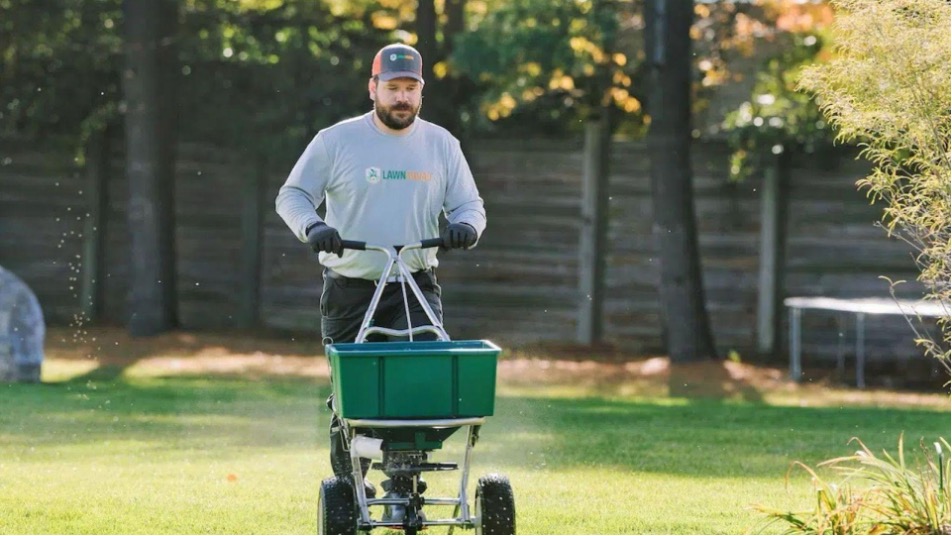
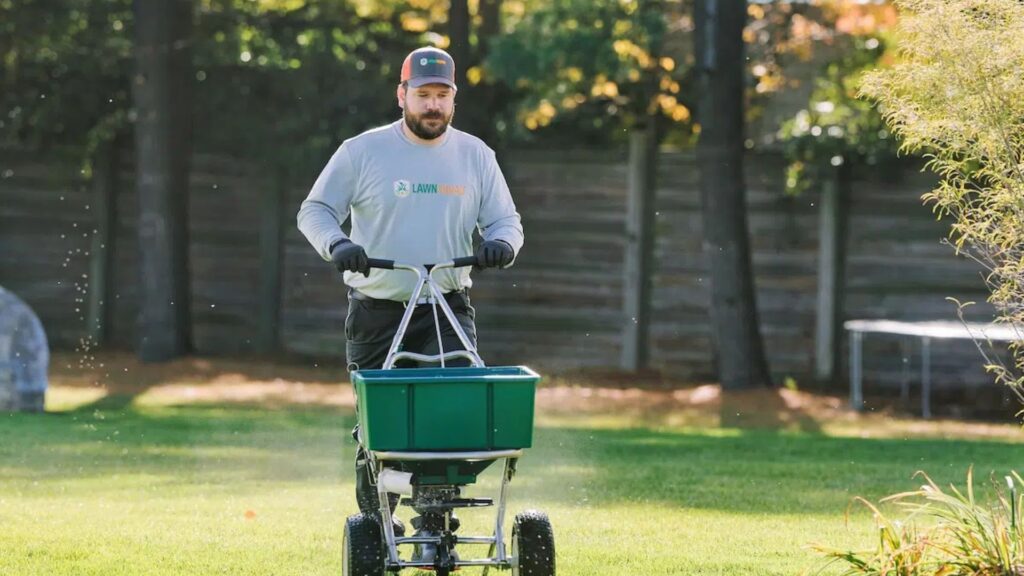
Granular fertilizer comes as small pellets that release nutrients gradually as they dissolve in soil moisture. Most granular formulations have a mix of immediate-release and slow-release nitrogen, providing both an initial green-up and sustained feeding over the following 4 to 8 weeks.
Longevity is the biggest advantage. A single granular application can feed the lawn for 6 to 8 weeks, which is why most lawn programs use granular as the foundation. Fewer applications mean lower cost and less disruption.
Steadier feeding produces steadier growth. The lawn does not have the pulse-and-fade pattern that frequent liquid applications can create. Color and density develop evenly over time.
Granular also works well in heat and humidity where liquid efficacy can suffer. As long as it gets watered in, granular performs reliably.
What Granular Fertilizer Struggles With
The downsides of granular:
Slower visible results. Don’t expect dramatic green-up in 3 days. Most granular applications take 7 to 14 days for noticeable color change.
Watering dependency. Granular needs to be watered in within 24 to 48 hours to dissolve and reach the roots. If it sits dry on hot blades, you can get fertilizer burn from concentrated product on the leaves.
Less precise targeting. Spot applications for specific nutrient deficiencies are harder with granular. You need a different product entirely rather than just adjusting the spray mix.
Storage and handling. Granular is heavier and bulkier, which matters more for the applicator than the homeowner but adds to logistics.
How We Use Both
Most of our customers across the North Shore are on programs that use granular as the base and liquid as supplements. The granular goes down 4 to 6 times a season and provides steady feeding. Liquid spot applications happen when:
The lawn needs faster green-up than granular alone can provide.
A specific nutrient correction is needed (chelated iron for chlorosis, micronutrient packages for deficient soils).
Weed control or fungicide is being applied and we can include a fertility component in the same spray.
Recovery from stress is needed (after disease, after drought, after damage repair).
This combined approach gives the steady feeding of granular plus the targeted speed of liquid. We think it produces better results than either approach alone.
What About Organic vs Synthetic?
Both liquid and granular come in organic and synthetic forms. Organic versions release more slowly and feed soil microbes alongside the grass, but they cost more and produce less dramatic visible results. Synthetic forms are faster, cheaper, and more efficient on a per-pound basis.
For Chicago North Shore lawns, we typically recommend a hybrid approach: synthetic for the bulk of fertility, organic amendments for soil building when soil tests indicate deficiencies in organic matter. Pure organic programs are an option for homeowners who prioritize that approach but require more applications and more cost.
Common Mistakes With Both
Applying granular without watering it in. The lawn looks burned within days because concentrated product sat on dry blades.
Applying liquid in heat. The product evaporates before it can absorb. Apply early morning when temperatures are below 80.
Applying too much. Both forms can damage the lawn at high rates. Follow the label.
Not cleaning equipment. Spreaders and sprayers that have residual herbicide or other product can damage the lawn during the next application.
Mixing products that should not be combined. Some liquid fertilizers and herbicides are incompatible. Read the labels.
Climate-Specific Notes for the North Shore
Our cool-season grasses respond best to slow-release nitrogen sources, which is what most quality granular products provide. Quick-release liquid nitrogen produces faster green-up but also produces faster dropoff, which can create boom-and-bust growth patterns that stress the lawn.
Spring fertilization timing is critical because the window between dormancy break and active growth is narrow. Granular applied too early sits unused. Liquid applied at the right moment produces faster spring response.
Fall is the most important fertilization window for cool-season lawns. Granular delivers the sustained feeding that builds density through fall recovery and supports root development heading into winter.
What to Do Next
If you are evaluating fertilizer approaches for your Highland Park, Winnetka, Lake Forest, or other North Shore lawn, we walk properties across our service area to recommend what fits your specific situation. We use both liquid and granular professionally and match the right tool to your lawn rather than pushing one product type. If you would rather have someone else handle the timing decisions, product selection, and application for your Chicago’s North Shore lawn, we are here for that.
Lawn Squad of Chicago’s North Shore serves Buffalo Grove, Deerfield, Fort Sheridan, Glencoe, Glenview, Highland Park, Highwood, Kenilworth, Lake Bluff, Lake Forest, Lake Zurich, Libertyville, and surrounding areas.
Call us at 847-305-2765 or request a free quote at lawnsquad.com. Our VitaminLawn program is built specifically for the grass types, soils, and weather patterns in our service area. Most homeowners see noticeable improvement within the first two applications.