Short Answer: In Cleveland, spring is when cool-season grasses emerge from winter dormancy while still vulnerable to snow mold damage, compaction, and disease pressure. Our short, intense growing season means every April decision matters more here than in warmer climates. Get snow mold cleanup, pre-emergent timing, early feeding, and soil recovery right, and your lawn has a strong base for our humid summer. Miss it, and you spend July and August chasing problems. Below is what makes Cleveland spring uniquely high-stakes.
You look out one April morning at your Lakewood, Westlake, or Mentor lawn. The snow finally relented. Patches of gray snow mold near the fence. Compacted strips along the plow line. Thin spots where road salt built up. The grass is barely waking up, and you know from last year that the clock is ticking.
Cleveland gives us a short window. Roughly April through early November is our full growing season, and April is when we either set up a great year or set ourselves back by weeks.
The Lake Effect Problem
Our weather is shaped by Lake Erie in ways that make lawn care harder than in inland Ohio:
- Snow cover stays longer, especially in Mentor, Painesville, and the eastern lakeshore communities
- Spring warm-up is slower than inland areas because of cool lake air
- Humidity is consistently high, which fuels disease pressure
- Soil temperatures in Cleveland can lag 1 to 2 weeks behind Columbus or Cincinnati
This means our pre-emergent window opens later (often mid-to-late April rather than early April), our green-up is slower, and our disease pressure arrives earlier than most of the Midwest.
Snow Mold Recovery Cannot Wait
Cleveland lawns almost universally have some snow mold coming out of winter. The question is whether you clean it up in the first week of spring or let it set back your lawn by a month.
Action: gently rake matted patches so air can reach the crowns. Severe pink snow mold areas may need overseeding once soil temperatures climb. Waiting compounds the damage because the smothered crowns struggle to photosynthesize.
The Pre-Emergent Window Is Later Than You Think
Crabgrass germinates at 55-degree soil temperatures. In Cleveland, that typically happens between April 15 and May 5 depending on the year and proximity to the lake.
Signals we watch:
- Forsythia bloom finishing
- Magnolia opening
- OSU Extension soil temperature data for Cuyahoga and Lorain counties
- Consistent daytime highs in the 60s
Applying too early (March) means the pre-emergent barrier breaks down before crabgrass actually germinates. Applying too late means crabgrass is already in. Our window is narrow.
Early Feeding Must Be Light
The instinct in Cleveland is to feed heavy in April because the lawn looks so tired after winter. Do not.
Heavy spring nitrogen pushes top growth that our compacted, recovering roots cannot support. By July humidity, disease pressure hits and those top-heavy plants fail first. Cleveland cool-season lawns build root reserves in fall, not spring.
Light slow-release fertilizer in April, strong feeding in September and October, is the pattern that actually works for our area.
Soil Recovery Takes Time
Cleveland clay soils compact dramatically over winter, especially with snow weight, plow traffic, and freeze-thaw cycles. Fall aeration is the standard fix, but spring is when compacted lawns show they need it. Walking across a Cleveland lawn in April should not feel like walking on a parking lot. If it does, aeration goes on the schedule for September.
What Happens If You Skip Spring
A Cleveland lawn that does not get spring attention typically shows by July:
- Crabgrass filling thin spots
- Red thread and dollar spot patches scattered across the lawn
- Snow mold damage still visible as dead rings
- Chronic thinness in salt-damaged areas by the street
- Lawns yellowing in the heat because roots are too shallow from compaction
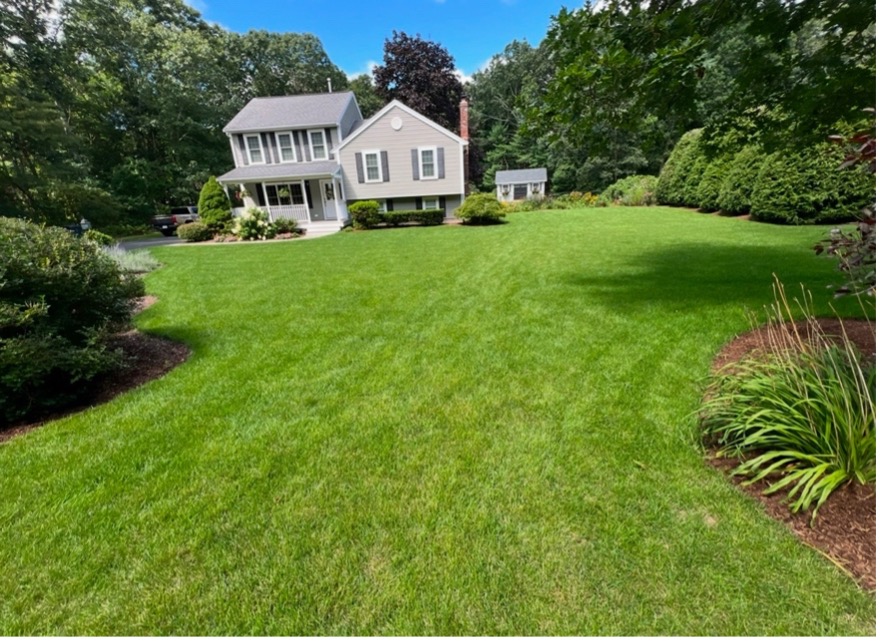
Compare to a lawn that got the spring window right: clean green recovery by mid-May, no crabgrass emergence, disease pressure managed, and root systems actually rebuilt for summer stress.
What to Do Next
If you want someone watching the soil temperature and timing every application correctly, we are here.
Lawn Squad of Cleveland serves Amherst, Avon, Avon Lake, Bay Village, Beachwood, Berea, Brecksville, Brook Park, Broadview Heights, Brunswick, Cleveland, Columbia Station, Eastlake, Elyria, Euclid, Gates Mills, Grafton, Hinckley, Independence, Lakewood, Lorain, Maple Heights, Medina, Mentor, North Olmsted, North Ridgeville, North Royalton, Oberlin, Olmsted Falls, Painesville, Perry, Richfield, Rocky River, Sheffield Lake, Strongsville, Valley City, Vermilion, Westlake, Wickliffe, and Willoughby.
Call 440-271-3113 or visit lawnsquad.com. Our VitaminLawn program is built for Cleveland’s lake-effect climate, short growing season, and clay soils.