
Short Answer: In April, Cincinnati lawns are emerging from winter and the pre-emergent window is about to open. The four biggest priorities this month are: clean up winter damage and overwintering clover, apply crabgrass pre-emergent when soil temperatures hit 55 degrees (usually early to mid-April in the Ohio River Valley), start mowing at 3 to 3.5 inches, and hold off on heavy spring fertilizer. Below is the week-by-week plan we walk every customer through across Mason, West Chester, Loveland, Indian Hill, Hyde Park, and the rest of our service area.
You walk out one morning in early April on your Anderson Township or Blue Ash lawn. The grass is pushing green in patches. Dandelions are popping near the driveway. Last year’s clover has already started spreading. The Reds are playing by the end of the month and you want to have your weekends back. So what do you actually do right now?
Spring in Cincinnati is a timing game. The Ohio River Valley warms earlier than much of the Midwest, which means our pre-emergent window opens earlier than Chicago or Minneapolis, and mistakes in April cost more than they do in northern climates. Here is the plan.
Week 1 of April: Walk, Clean, Observe
Before touching fertilizer or pre-emergent, walk the lawn and look for:
- Snow mold circles (gray or pink matted patches) in shaded areas
- Vole trails, especially near foundation plantings and landscape beds
- Clover patches that overwintered (Cincinnati has persistent white clover)
- Salt damage along sidewalks and driveways
- Standing water on our clay soils, especially east and north of the city in Indian Hill and Madeira
Gently rake matted snow mold so air can reach the crowns. Clear branches, road grit, and leaves. Do not power-rake or dethatch aggressively. Our clay is still wet and heavy action now tears up recovering turf.
Also: do not mow yet. Mowing saturated clay starts compaction that lasts for months.
Week 2 of April: The Pre-Emergent Window Opens
In the Ohio River Valley, soil temperatures often reach the 55-degree crabgrass germination threshold between April 5 and April 20. In a warm spring, we have seen the window open in late March in Hyde Park and Oakley lawns with southern exposure.
Signals we watch in Cincinnati:
- Forsythia bloom finishing
- Magnolia and redbud opening
- OSU Extension or Hamilton County Extension soil temperature data showing 50 to 55 degrees
- Daytime highs consistently in the 60s
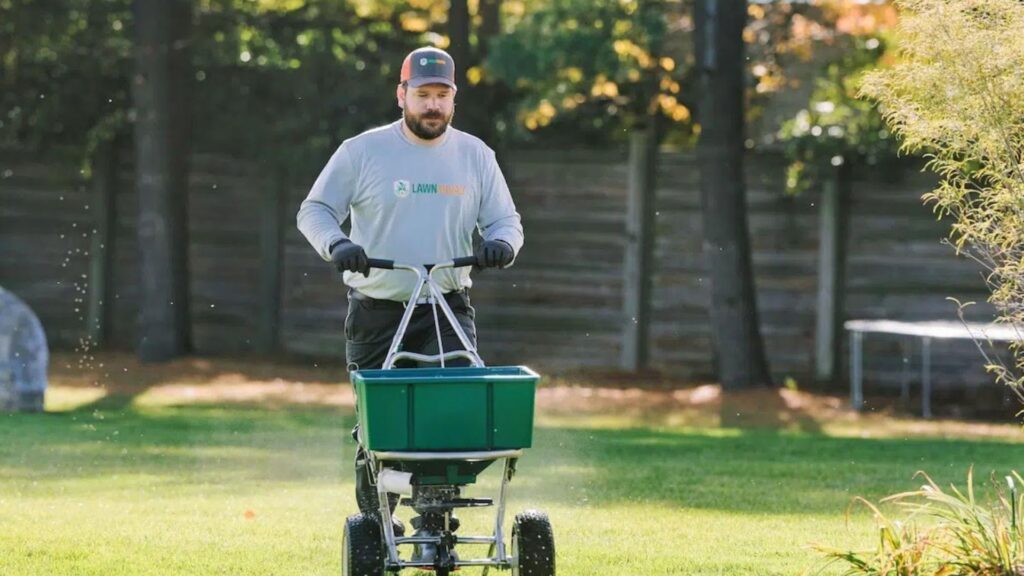
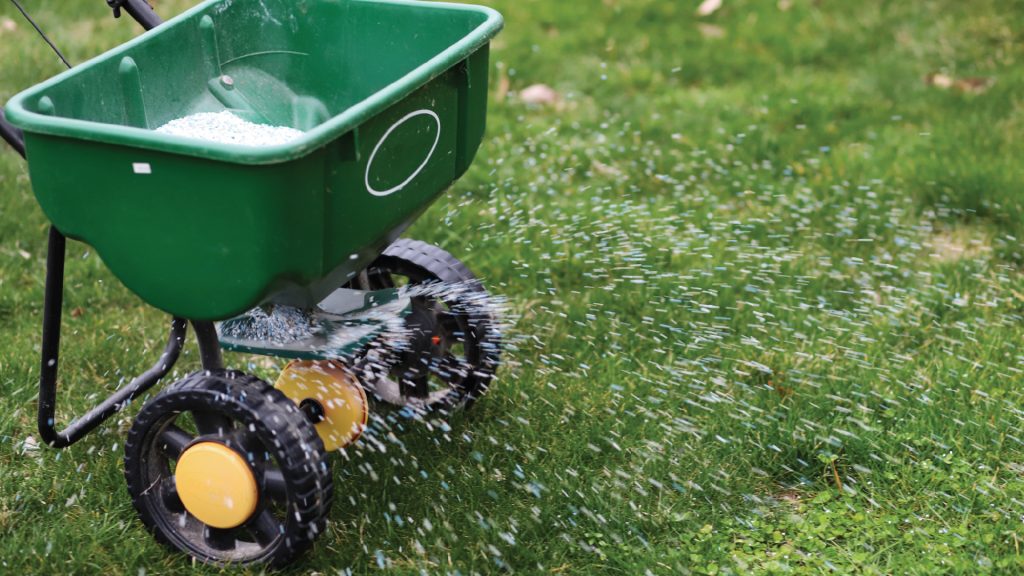
When two or three align, the pre-emergent goes down. DIY homeowners commonly use prodiamine, dithiopyr, or pendimethalin. Read the label, calibrate your spreader, and do not try to overseed the same week. Pre-emergent blocks new grass seed too.
Week 3 of April: The First Real Mow
When your bluegrass or fescue reaches 3.5 to 4 inches, mow for the first time of the year. The rules for Cincinnati:
- Set mower to 3 to 3.5 inches. Not lower.
- Never remove more than one-third of the blade in a single cut.
- Sharp blade. Dull blades leave that silver-gray tip look within a day.
- Mow when dry. Wet clay plus mower tires equals compaction.
This is also a good week to pull a soil sample for OSU Extension testing. Cincinnati soils vary from heavy clay in the valleys to rocky clay on slopes in Indian Hill and Terrace Park. Without a test, you are guessing on lime, phosphorus, and potassium.
End of April: Light First Feeding and Spot Weed Control
Once the grass is visibly growing (mowed once or twice), apply a light slow-release fertilizer. Heavy nitrogen now sets up disease pressure when the July humidity rolls in off the Ohio River.
For broadleaf weeds (dandelion, clover, wild violet, ground ivy, which are everywhere in Cincinnati), spot-treat rather than blanket-spray. Most lawns in April do not have enough weed pressure to justify a full blanket application, and blanket sprays on actively greening cool-season grass can stress it.
What Not to Do in April in Cincinnati
- Do not apply pre-emergent and overseed at the same time.
- Do not dethatch aggressively. Save it for fall aeration.
- Do not fertilize heavy. Fall is when Cincinnati cool-season lawns really benefit.
- Do not scalp the lawn.
- Do not delay pre-emergent waiting for dry weather. Rain is good for activation.
What This Month Sets Up
If you follow this plan, by early June your lawn should have: crabgrass and summer annuals locked out, broadleaf weeds under spot-control, steady green color, and soil beginning to loosen as temperatures rise. From there, summer in Cincinnati is mostly water management and disease watch. Get April right and the rest is straightforward.
What to Do Next
Lawn Squad of Cincinnati serves Blue Ash, Camp Dennison, Cincinnati, Deer Park, Fairfield, Hamilton, Hyde Park, Indian Hill, Loveland, Madeira, Maineville, Mason, Miamiville, Milford, Mt. Healthy, Reading, Ross, Sharonville, Terrace Park, and West Chester.
Call us at 513-817-4887 or visit lawnsquad.com. Our VitaminLawn program is built for Cincinnati’s cool-season grasses, Ohio River Valley humidity, and clay soils.