Short Answer: April is the most important month of the year for an Aurora lawn. The single highest-leverage thing you can do is get pre-emergent down before soil temperatures cross 55 degrees in mid to late April. After that, the priorities are a light spring feed once your lawn is at least 50 percent green, raising your mowing height to 3 to 3.5 inches from the first cut, gently raking out snow mold and salt-damaged areas along sidewalks and driveways, and holding off on watering and aeration. Skip aeration this spring (it disturbs the pre-emergent barrier you just paid for) and plan for fall instead. Here is the full month-by-month walkthrough specific to Aurora, North Aurora, Naperville, Oswego, Plainfield, and the rest of the Fox Valley.
If you are looking out at your Aurora lawn right now, you probably see a mix of tan winter dormancy, some early green coming through, a few pale patches where the snow plow piled up against the curb, and the first dandelion rosettes setting up shop near the garden bed. That is exactly what every cool-season lawn across the Fox Valley looks like in early April.
What happens in this lawn over the next four weeks largely determines what it looks like in July. Get April right, and the rest of the season is mostly maintenance. Miss the windows in April, and you spend the whole summer trying to catch up to weeds and thin spots that did not have to be there.
So here is the honest, ordered checklist we use for our own customers across Aurora, Naperville, Oswego, Plainfield, and the surrounding communities. None of it is hard. The tricky part is timing.
1. Get Pre-Emergent Down Before Soil Hits 55 Degrees
This is the most time-sensitive thing on the entire list, so it goes first.
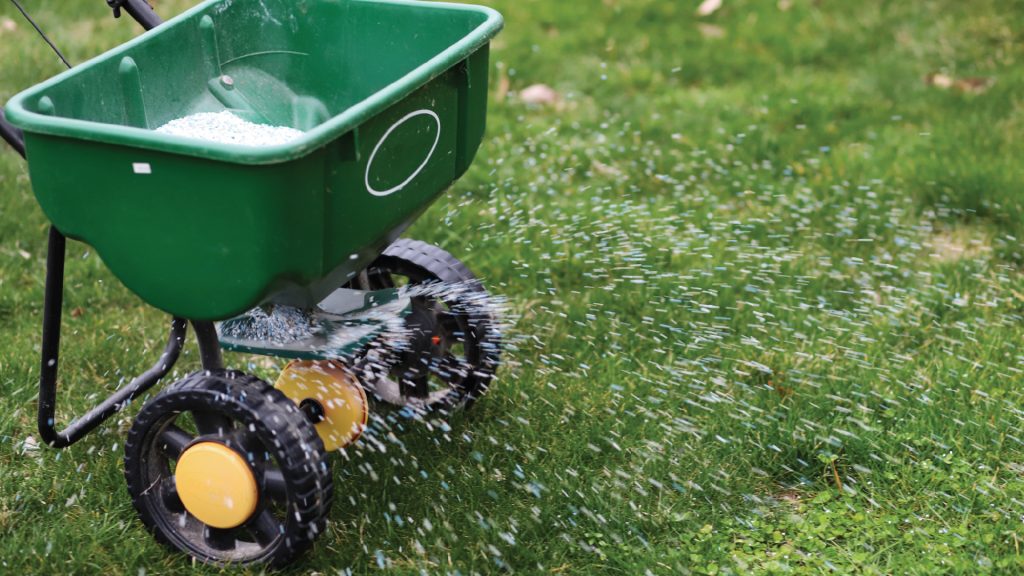
Pre-emergent herbicide creates a barrier in the top layer of soil that prevents crabgrass, goosegrass, and other summer annual weeds from establishing roots when their seeds germinate. The catch is that it has to be in place before germination. In Aurora, soil temperatures typically cross the 55 degree germination threshold in mid to late April, sometimes earlier in a warm spring.
If pre-emergent goes down two weeks late, the seeds that have already germinated push right through the barrier. You spend the rest of the summer fighting crabgrass with post-emergent products that cost more and work less reliably. We have seen this play out across thousands of Fox Valley lawns over the years, and the per-week drop-off in effectiveness is real.
Forsythia bloom is the classic visual cue, but a soil thermometer pushed two inches down in the morning is more reliable. When morning readings are consistently in the low 50s, it is time.
2. Apply the First Fertilizer Round (But Wait Until Green-Up)
Cool-season grasses, mostly Kentucky bluegrass and tall fescue blends across Aurora, came out of winter with depleted energy. A balanced, slow-release fertilizer feeds the recovery and the new growth that powers spring color.
The most common spring mistake we see is fertilizing too early. Those warm late-March days make it tempting, but applying nitrogen before your grass is at least 50 percent green wastes the product, feeds the weeds that are already up, and pushes excessive top growth at the expense of root development.
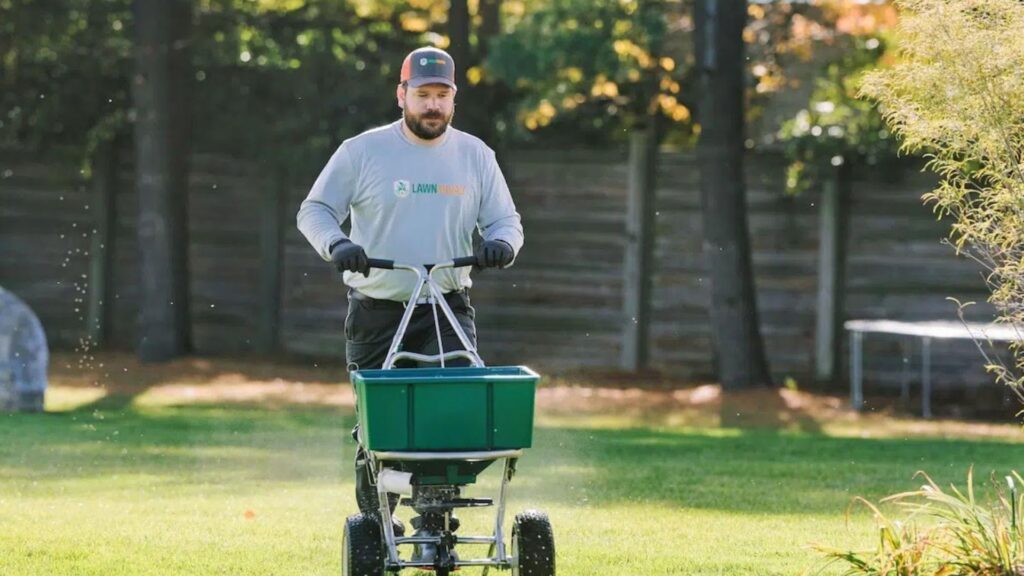
For most Aurora properties, the first feeding window is mid to late April. Pair it with a broadleaf weed control to knock down the dandelions, henbit, and clover that are already actively growing. This is exactly what the first round of our VitaminLawn program is built to do.
3. Set Your Mowing Height to 3 to 3.5 Inches From the First Cut
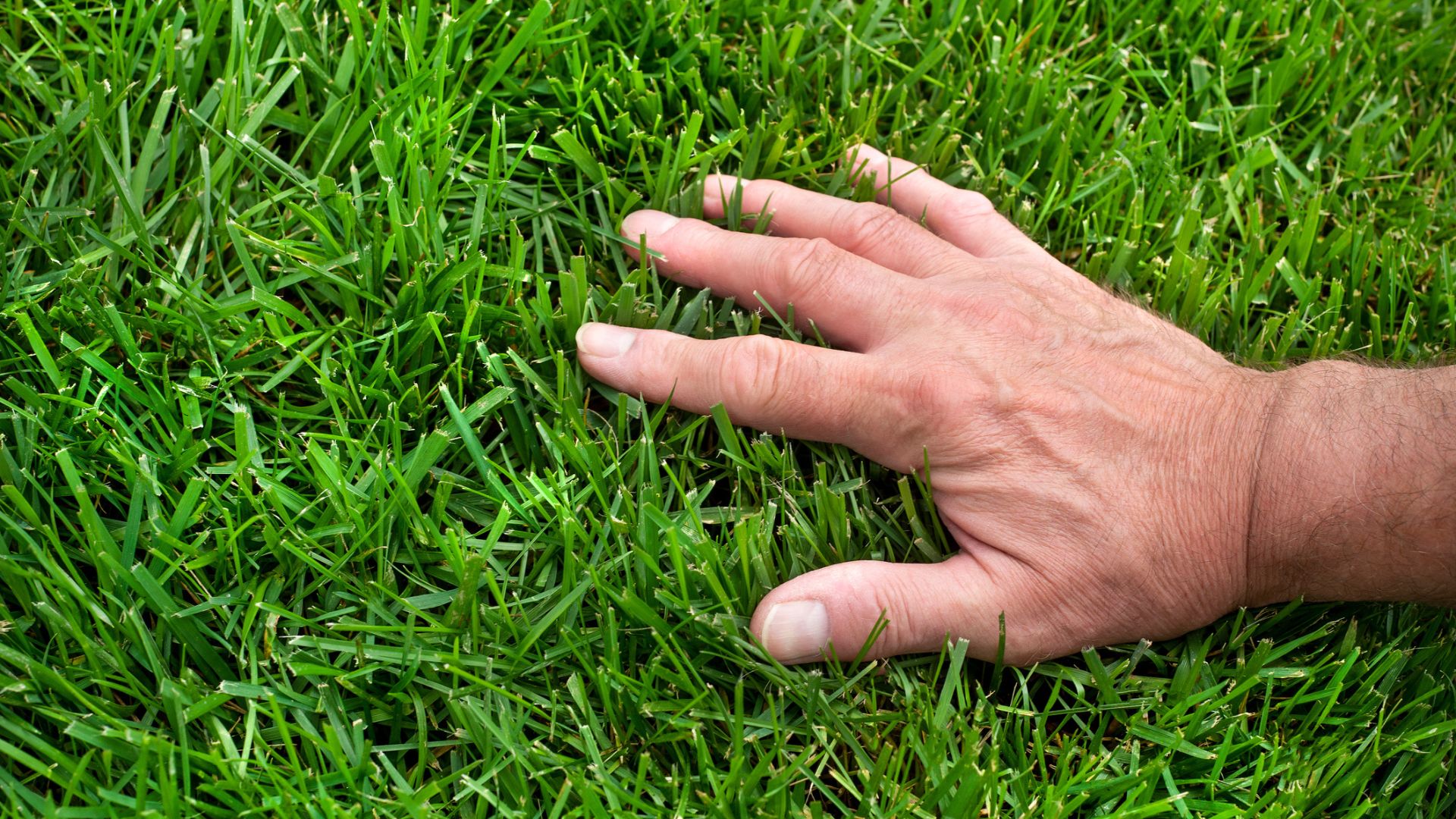
For Kentucky bluegrass and fescue lawns in Aurora, 3 to 3.5 inches is the sweet spot. Taller grass shades the soil, suppresses weed germination naturally, supports deeper root growth, and conserves moisture during the dry stretches we get in July and August.
Resist the urge to scalp the lawn on the first mow of the season. Cutting to 1.5 or 2 inches removes the stored energy in the blades, exposes bare soil to direct sun, and stresses the crowns when they are already trying to recover from winter. We see scalped lawns thin out and turn yellow within a few weeks. They almost never look better than the lawns whose owners just left the height alone.
One more thing: a sharp mower blade matters more than people realize. A dull blade tears the grass tip rather than slicing it, leaving frayed edges that brown out and give the whole lawn a hazy, washed-out look. Sharpen at the start of the season and again midsummer.
4. Assess Snow Mold and Salt Damage
Walk the lawn slowly, especially the areas where snow piled up the longest and where the snowplow pushed melt and salt off the street.
Snow mold shows up as circular patches of matted, grayish-pink or grayish-white grass. It looks worse than it usually is. Most cool-season lawns recover on their own once they get sun and air, so all you need to do is gently rake the matted areas to break the mat and let new growth come through. Avoid heavy raking that pulls up live crowns.
Salt damage is more common in Aurora than people realize, especially along sidewalks, driveways, and any area downwind of where the city plowed all winter. The grass turns straw colored in distinct strips and does not green up with the rest of the lawn. The fix is mechanical and slow: flush the area with deep watering for several days to leach the salt out of the soil profile, then plan to overseed those strips in fall when conditions favor establishment. Spring overseeding into salt-damaged areas typically does not take.
5. Hold Off on Watering
Most Aurora lawns get plenty of water from April rainfall to support spring growth without supplemental irrigation. Running sprinklers in April actually works against you. Frequent, shallow watering trains the roots to stay near the surface, which makes the whole lawn more vulnerable to summer heat stress.
Wait to start regular irrigation until late May or early June, when temperatures climb and rainfall typically drops off. When you do start, the rule is one inch of water per week, delivered in one or two deep sessions rather than daily light watering. Imagine the water needing to soak six inches deep where the roots actually are, not just dampening the top half inch.
6. Skip Spring Aeration. Plan for Fall
This one is counterintuitive, and we get pushback on it. Yard owners who notice the heavy clay common east of the Fox River often want to aerate as soon as the ground thaws.
Here is the issue. Core aeration punches thousands of holes through the top layer of soil. If you aerate after pre-emergent is down, you have just compromised the barrier you paid for. If you aerate before pre-emergent goes down, you have to delay pre-emergent (which means you miss the window) or apply over disturbed soil (which reduces effectiveness).
Either way, spring aeration creates a real conflict with the most important treatment of the year for cool-season grass. The much better approach is to wait until late August or September, after the summer stress and before fall green-up. Pair fall aeration with overseeding and the results are dramatically better than anything spring aeration produces.
Exceptions exist. If you have severe compaction issues that cannot wait, talk to a professional about whether to skip pre-emergent entirely this year and aerate now. But for most Aurora lawns, fall is the right call.
7. Plan Tree Pest Treatment for Early May
If you have ash trees on your property, the Emerald Ash Borer treatment window opens this month and runs into early May. EAB is well established across the Fox Valley, and trunk injection treatments are 95 percent or more effective when applied to healthy trees before active infestation. The cost of treatment is a fraction of the cost of removing a mature dead ash, which can run into the thousands.
Japanese beetle pressure is rising across our service area as well. Preventive grub control applied in late spring (typically June) protects against the late-summer larvae feeding that produces the carpet-pulling brown patches you do not want to discover in August. We build this into the higher VitaminLawn tiers automatically.
What Not to Do in April
The list of things to skip this month is almost as important as the list of things to do.
- Do not overseed in spring. Spring seedlings compete with germinating crabgrass for everything they need, then face summer heat with maybe 90 days of root growth. The vast majority do not survive. Overseed in fall.
- Do not aerate in spring (with rare exceptions, see above).
- Do not push heavy nitrogen. A balanced, slow-release fertilizer is correct. A heavy bag of high-nitrogen “weed and feed” pushed onto a still-recovering lawn forces top growth at the expense of roots and increases disease risk later in the season.
- Do not mow too short. Worth saying twice.
- Do not water daily. Worth saying twice.
What to Do Next
If you would like Lawn Squad of Aurora to handle this for you, our VitaminLawn program is built around exactly this April timing. The first round goes down before soil temperatures cross 55 degrees and pairs pre-emergent with the season’s first balanced fertilizer and broadleaf weed control. From there, we time every subsequent round to the cool-season grass cycles that define the Fox Valley.
Call Lawn Squad of Aurora at 630-389-4996 or request a free quote at lawnsquad.com. We serve Aurora, Batavia, Bristol, Fox Valley, Montgomery, Mooseheart, Naperville, North Aurora, Oswego, Plainfield, Plano, and Yorkville. We will measure your turf, look at grass type and current condition, and put together a plan that fits where your lawn is right now in the season.
Whatever you decide, the timing principle holds. April is the month that matters most for a cool-season lawn in Illinois. Do not let it slip past.