Short Answer: When a North Dallas lawn browns in July despite regular watering, drought is rarely the only cause. The six most common culprits we diagnose across Prosper, Frisco, McKinney, Celina, and Plano are runoff on alkaline clay (water is leaving before it soaks in), shallow rooting from chronic light watering, chinch bug or grub feeding that mimics drought, take-all root rot active beneath visible damage, iron chlorosis from high soil pH locking out nutrients, and mowing or blade damage that has weakened the canopy. Each one looks similar from the porch but each needs a different fix. Diagnose before you irrigate harder, because in most cases more water makes the wrong problem worse.
It is the call we field every week in July. A homeowner in Prosper or Frisco is running their irrigation on the scheduled day, the system is hitting all the heads, the controller log shows the cycles ran, and a section of the lawn is browning out anyway. The natural assumption is more water. So they push a midweek hand-watering run, the brown spreads, and now they are sure the system is broken.
In most of these cases the system is fine and the watering schedule is fine. What is failing is somewhere between the sprinkler head and the root tip, and water is not the lever that fixes it. Below are the six causes we work through with North Dallas customers when a lawn browns out under regular irrigation. We walk them in order from most common to least, because once you understand the pattern you can usually narrow your own lawn to one or two suspects in a single afternoon.
1. Runoff on Alkaline Clay Soil
Collin and Denton County soils across Prosper, Celina, McKinney, and large parts of Frisco are heavy alkaline clay sitting on top of limestone bedrock. The clay is compacted in most yards (especially in any subdivision built in the last fifteen years where construction equipment ran the lot flat), and it has very small pore spaces. When you put down a half inch of water in a single run, the top quarter inch saturates fast, water pools on the surface, and the rest runs down the gutter into the storm drain.
The runoff problem is invisible. The controller fired for fifty minutes, the head ran, the water came out, and you assume the zone got an inch. In reality the soil six inches down (where the roots live) is bone dry. The lawn behaves like it never got watered because functionally, it did not.
The fix is cycle and soak. Split each zone into shorter cycles separated by thirty minute rests so the water has time to move down rather than across. A fifty minute zone becomes three sixteen minute runs with rests in between. Total time the same. Total water delivered the same. Water in the root zone roughly triple what it was before. Most modern controllers (Rachio, Hunter Hydrawise, Rain Bird ESP-Me) have this built in. If yours does not, schedule three separate start times an hour apart.
2. Shallow Roots From Years of Light Watering
The second most common cause is older than the brown spots themselves. A lawn that has been watered lightly and frequently for several years has trained its roots to live in the top two inches of soil. The grass is dependent on surface moisture and cannot reach the deeper water reserves a properly rooted lawn pulls on through summer.
When July heat arrives and that top two inches dries between irrigation days, the lawn browns. You can water harder and longer now, but the deep root system that would take advantage of the water is not there. It has to be rebuilt over a season of deeper, less frequent irrigation paired with proper mowing height.
You can test this in five minutes with a long screwdriver. Push it into the soil at the edge of a green section of the lawn. If it stops at two or three inches, your soil is dry below that depth and your roots probably are too. A healthy North Dallas Bermuda or St. Augustine lawn in July should let a screwdriver slide six inches in without much resistance.
3. Chinch Bugs and Grubs Mimicking Drought
This is the one that fools the most homeowners. Chinch bug damage on St. Augustine and grub damage on Bermuda both produce browning patterns that look exactly like drought stress. The grass yellows, then browns, often in irregular patches that expand over a couple of weeks. Adding water does nothing because the problem is not moisture.
The clue is the location. Chinch bugs work the hottest sunniest spots: south facing slopes, the strip along the sidewalk, anywhere against a west facing brick wall. If your brown patch is in one of those zones and the rest of the yard is fine, run the float test. Cut both ends off a coffee can, push it two inches into the lawn at the active edge of damage, fill with water, and watch for tiny black or red insects floating up within five minutes.
Grubs work differently. Grub damage shows as patches where the turf pulls up easily like a loose rug because the roots have been chewed off underneath. If you can lift a section of brown grass with your hand and see white C-shaped larvae in the top two inches of soil, you have grubs. Both pests need targeted treatment, not more water.
4. Take-All Root Rot Working Underground
Take-all root rot is the silent destroyer of North Dallas St. Augustine. It is a soil-borne fungus that attacks roots and stolons, and it loves the conditions we have most of the summer: warm soil, high pH (often above 7.5 on Collin County alkaline clay), and any moisture stress. Above ground, the damage looks like thinning yellow patches that turn brown. The lawn responds poorly to water and fertilizer.
The diagnostic test is to grab a handful of stolons at the edge of a damaged area and pull. If they come up easily with rotted or blackened roots, take-all is the prime suspect. Healthy St. Augustine stolons are firmly anchored with white root hairs visible when you lift them.
Take-all treatment is different from everything else on this list. It involves soil pH adjustment with elemental sulfur or sphagnum peat topdressing, careful nitrogen management (do not push growth), and in confirmed cases a fungicide rotation with azoxystrobin or propiconazole. Adding water and nitrogen to take-all damage usually accelerates it.
5. Iron Chlorosis From High Soil pH
Alkaline North Dallas soils run pH 7.5 to 8.2 in most neighborhoods. At that pH, iron is chemically tied up in forms the grass cannot pull from the soil even when iron is technically present. The result is iron chlorosis: yellowing of the grass blades with veins that stay slightly greener than the tissue between them. As the season progresses the yellow drifts toward tan and brown.
This often gets mistaken for nitrogen deficiency, which leads homeowners to apply more nitrogen, which pushes growth the roots cannot support, which makes everything worse. The fix is iron, not nitrogen. A liquid foliar iron spray (chelated iron or iron sulfate) greens the lawn within a week. A longer term fix is lowering soil pH with elemental sulfur applications over a couple of seasons.
If your browning is more of a yellow-pale-tan cast across a broad area rather than discrete patches, and the grass still looks structurally intact, iron is probably the issue. Discrete brown spots are usually pests, disease, or runoff.
6. Mowing Damage You Did Not Realize You Caused
The last cause is the one homeowners hate hearing. A dull mower blade tears the grass tip instead of cutting it. The torn tissue loses moisture three to four times faster than a clean cut, and on a hot dry July day the result is a frayed brown cast across the entire lawn that looks like heat damage. Run your hand across the top of the canopy. If the blade tips are ragged white or tan, your blade is dull.
Sharpen the mower blade every four to six weeks during peak growth. A blade that started the year sharp is dull by July if you mow weekly.
Scalping is the other mowing problem. St. Augustine cut below three inches in July is going to brown out across the whole canopy as the soil heats up. Bermuda cut below an inch with a dull rotary mower will do the same. Raise the deck to the upper end of the recommended range (St. Augustine at 3.5 to 4 inches, Bermuda at 2 to 2.5 inches with a rotary, Zoysia at 2 to 2.5 inches) and let the grass shade its own roots through the heat.
How to Diagnose Your Lawn in Thirty Minutes
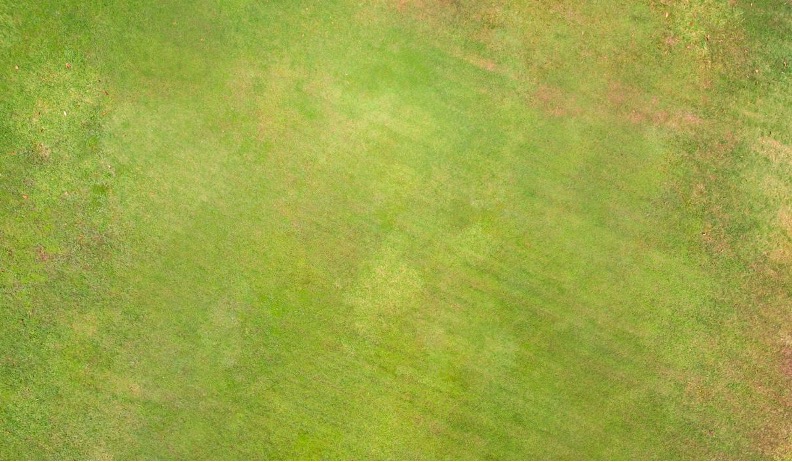
Walk the yard with a screwdriver, a coffee can, and your phone camera. Push the screwdriver in at six spots across the lawn and note where it goes deep and where it stops short. Run the float test at the edge of any brown patch in a sun-baked area. Pull a few stolons or tug at the brown grass to test root anchoring. Photograph the patches from above so you can compare progression over the next week.
Cross-reference those observations with the six causes above. In most cases two of the six clearly do not apply, three are unlikely, and one or two are obvious suspects. That is the point where a targeted fix beats a guess.
What to Do Next
If your North Dallas lawn is browning in July despite regular watering and the diagnosis above feels like more than you want to work through on a Saturday, that is what we do every day across Collin and Denton Counties. We walk the yard, run the diagnostics, and build a recovery plan that addresses the actual cause rather than throwing more water at the symptom.
Lawn Squad of North Dallas and Prosper serves homeowners across the North Dallas and Prosper Area, including Prosper, Frisco, McKinney, Celina, Plano, and Allen.
Call us at 469-629-1599 or request a free quote at lawnsquad.com. Our VitaminLawn program is built around North Dallas alkaline clay, the warm-season grasses that grow on it, and the soil chemistry and pest pressures that take down lawns in July when watering alone is not enough. The customers who hold the best summer color through the rest of the season are usually the ones who diagnosed early in July rather than late.