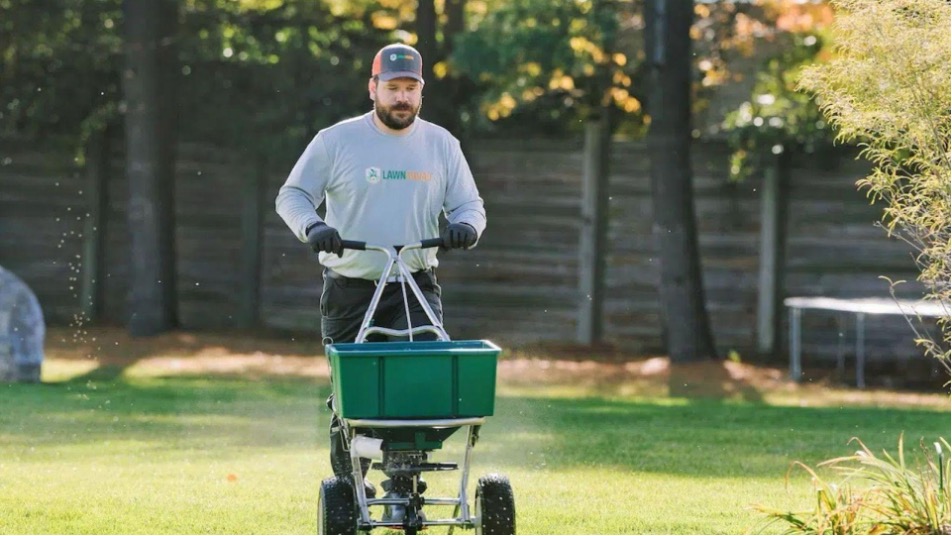
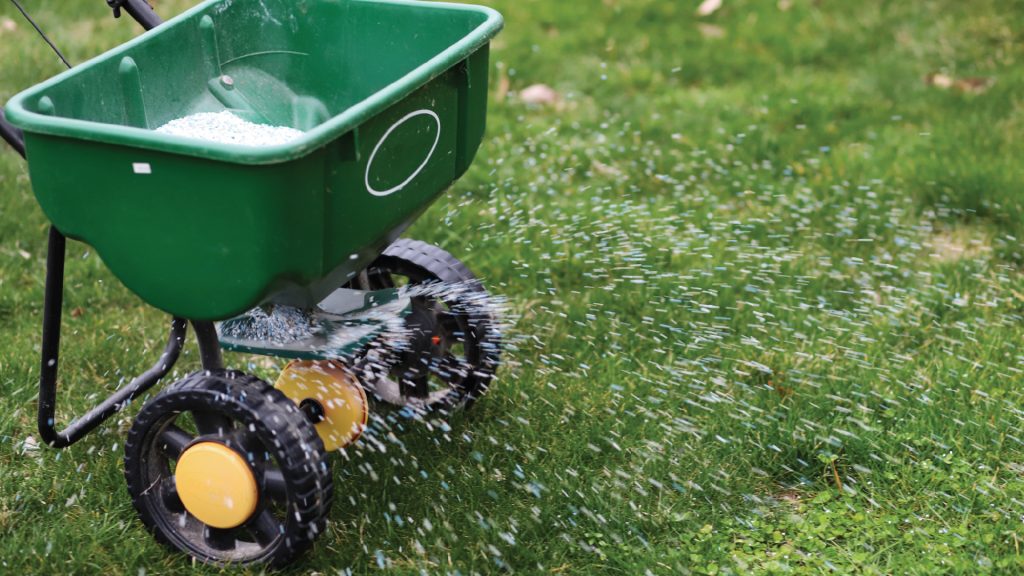
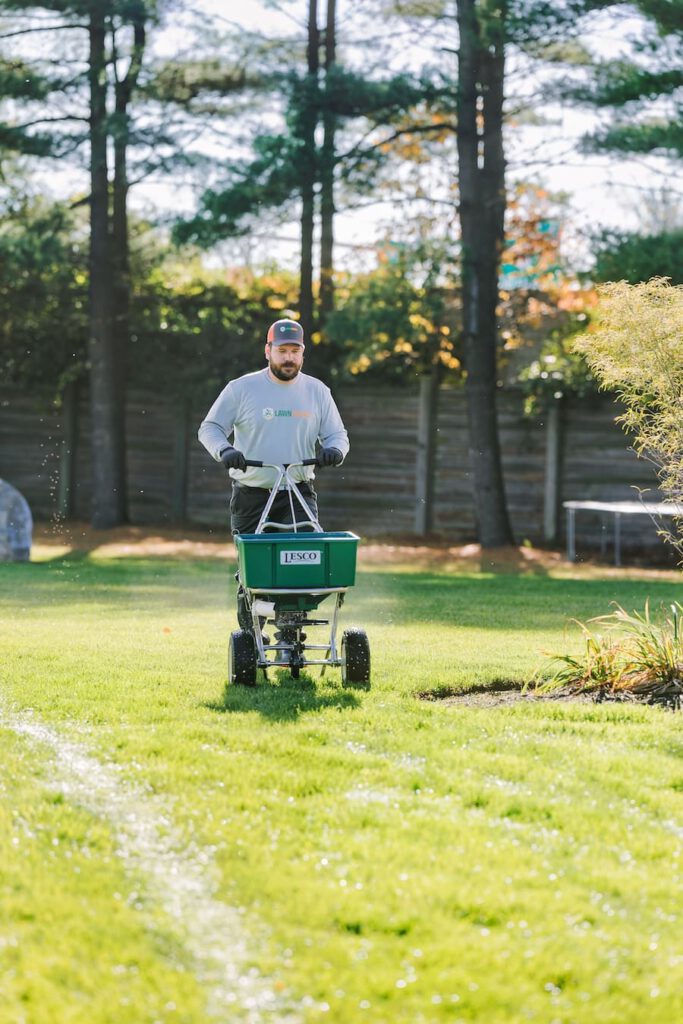
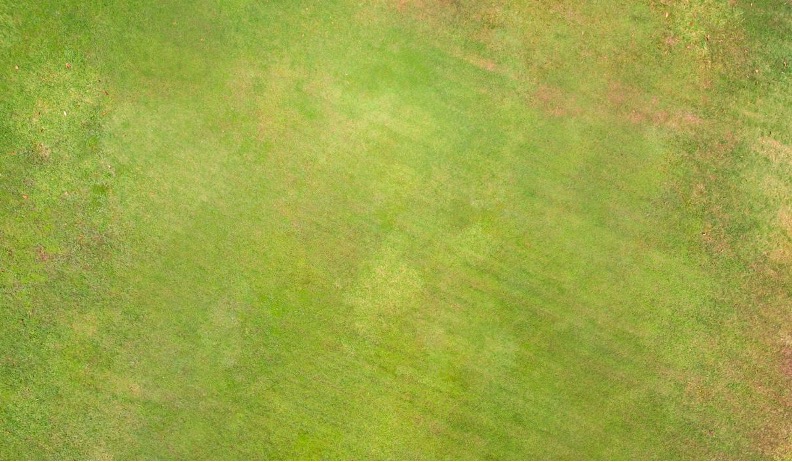
Short Answer: When a southern New Hampshire cool-season lawn is already stressed in early July, the goal is preservation, not perfection. Stop pushing nitrogen, raise the mower to 3.5 to 4 inches, switch to two deep early-morning watering cycles per week, manage the red thread and dollar spot pressure that humid July nights drive, and confirm grub prevention is in place before mid-July. Save overseeding, broadleaf herbicide blankets, and aeration for the early September window when conditions cooperate. The plan below walks Bedford, Nashua, Manchester, Salem, Derry, and Concord customers through the realistic moves we make on stressed NH lawns every July.
It is the first week of July in southern New Hampshire. The Fourth of July is behind us and the lawn that looked so good through June has taken on a different cast. A patch near the front walk in Bedford has started to thin. A strip along the driveway in Nashua is turning that dull yellow-green that says the grass is working too hard. A spot near the maples in Derry crunches when you walk on it barefoot. You stand in the front yard with your coffee, half-tempted to drag out the sprinkler and let it run all day, half-tempted to ignore it and hope for cool weather.
We hear some version of this story every July from homeowners across Bedford, Hollis, Amherst, Nashua, Manchester, Concord, Salem, Derry, Londonderry, Hudson, Pelham, Windham, Merrimack, and the rest of southern New Hampshire. The honest answer is that some color loss on a Kentucky bluegrass and fescue lawn through a NH July is unavoidable. The grass is a cool-season plant, the July weather is not cool. But there is a meaningful difference between a lawn that looks tired in July and bounces back cleanly in September, and a lawn that looks tired in July and quietly dies through August. The goal of this article is to keep your yard in the first category.
What Cool-Season Grass Is Actually Doing in July in NH
Almost every lawn we treat across southern New Hampshire is a blend of Kentucky bluegrass, perennial ryegrass, and turf-type tall fescue. The three species are different in detail but they share a fundamental biology: they evolved for 60-to-75 degree weather and they slow down hard above 80. Soil temperatures at four inches deep across Hillsborough, Rockingham, and Merrimack County properties run 76 to 84 degrees through most of July. Air temperatures push into the upper 80s and occasionally the low 90s during heat waves, and the dew points climb into the swampy range.
In those conditions your lawn is in maintenance mode. It pulls energy back from top growth, holds reserves in the crown and root system, and reduces water loss by closing stomata through the heat of the day. The visual result is slower, slightly paler turf. The functional reality is a plant trying to survive until mid-September brings the cooler weather it actually wants.
One specific consideration for our climate: the New Hampshire growing season is shorter than the climate to our south. We lose ground from late November through early April when the grass is dormant under snow and ice. The active growing months are tighter, which means every week of summer stress matters more proportionally than it does in a longer-season climate. A New Hampshire lawn that loses three weeks of growth to mismanaged July stress is losing a larger share of its annual recovery time than a lawn in Pennsylvania would.
The mental shift that matters most: in July your goal is preservation. You are not going to push the lawn to look better than it did in May. You are trying to keep crown tissue alive across the lawn so the September aeration and overseeding work has something to build on.
Stop Pushing Nitrogen Right Now
The most common July mistake we see on NH lawns is the well-meaning homeowner who reaches for a fast-release fertilizer at the big-box store to feed the yellowing back to color. It does the opposite of what they want.
Quick-release nitrogen forces top-growth response from a plant already running low on stored carbohydrates. The lawn produces tender new blade tissue it cannot support through afternoon heat. The roots lose ground trying to feed top growth they should not be making. And the tender new growth is the preferred target for the red thread, dollar spot, and brown patch pressure that builds when humid New Hampshire July nights stay in the mid-60s. A bag of urea applied to a stressed July lawn typically shows up as a worse-looking lawn within ten days.
If you applied a slow-release product in early to mid June, the lawn has the nitrogen it needs. The next meaningful feeding for southern NH cool-season turf is the early September application, which is the most important fertilization of the year on our short-season properties. Save your nitrogen budget for that one.
Raise the Mower to 3.5 to 4 Inches and Sharpen the Blade
Move the deck up to its highest realistic setting for the rest of the summer. For most homeowner rotary mowers that puts the cutting height around 3.5 to 4 inches. Cool-season grass in NH benefits from every quarter inch of additional height through July and August.
Taller blades shade the soil surface, which keeps soil temperatures lower and reduces evaporation. Taller grass also supports a deeper root system, because root depth roughly mirrors blade height. Deeper roots reach moisture that the surface inch of soil cannot hold past mid-morning on a humid 88-degree day in Salem or Manchester. A lawn cut at 4 inches in early July is significantly better positioned to ride out a 10-day dry stretch than the same lawn cut at 2.5 inches.
The blade itself matters as much as the height. A dull mower blade tears the tip of each grass blade instead of cutting cleanly, and torn tips are entry points for the disease pressure that humid New Hampshire nights create. Pull the blade and sharpen it, or pay your local hardware store in Nashua or Bedford to do it, and keep a spare in rotation so the lawn does not get ahead of you. Aim to sharpen every 15 to 20 hours of mowing.
One more rule: never remove more than one third of the blade in a single cut. If the lawn got ahead of you during a rainy stretch, raise the deck even higher, take the top off, and come back two days later for a second pass. Scalping a stressed lawn in July is one of the fastest ways to turn tired into dead.
Water Deep, Water Early, Water Less Often
New Hampshire soils across our service area vary more than people often appreciate. The rocky, acidic, sometimes shallow soils common across much of southern NH can hold water differently than the heavier soils in lower-elevation Massachusetts to our south. Some properties in Concord and the Merrimack River valley have heavier loam. Properties on hilltops in Bedford, Hollis, and Amherst often have shallower, rockier profiles with bedrock or ledge a foot or two down. Your specific watering schedule needs to fit your specific soil rather than a generic formula.
That said, the target across most NH residential lawns in July is roughly one inch of water per week, total, including rainfall. Put an empty tuna can or a cheap rain gauge in the yard and track what is actually arriving. Two long irrigation cycles per week, each putting down a half inch, run between 4 a.m. and 8 a.m., is the recipe that fits most southern NH soils.
Daily shallow watering is the most common mistake we correct in July. A homeowner sets the irrigation system for 10 minutes every morning. It looked fine in May because rainfall covered the real water need. In July, that schedule actually hurts the lawn by training roots into the top inch of soil where they cannot survive afternoon heat. Two deep cycles per week beats seven shallow ones every time.
One NH-specific note for properties with very rocky or ledge-impacted soils: the effective root zone is shallower than on deeper soils, so the same one-inch-per-week target may need to be split into three shorter cycles rather than two longer ones to avoid runoff. Watch what the water does on your specific property and adjust.
Identify and Spot-Treat Disease Patches
Southern New Hampshire humidity through July creates the conditions for the cool-season turf diseases most common in our climate. The three we see most often are red thread, dollar spot, and brown patch.
Red thread shows as 4-to-8-inch patches with a pinkish coral cast and tiny red threads visible on the tips of grass blades. It tends to hit nitrogen-deficient lawns first, which is why a balanced June feeding helps prevent it. Dollar spot creates small bleached circles roughly the size of a silver dollar with an hourglass-shaped lesion on individual blades. Brown patch produces larger irregular brown circles, often with a smoky gray ring along the leading edge in early morning, and hits ryegrass and tall fescue hardest during the heaviest humidity stretches.
For most residential cases, cultural fixes resolve the situation within two to three weeks. Water deeply in early morning only, raise the cutting height, improve airflow by pruning low branches on shade trees, and pick up clippings from severely affected zones to reduce pathogen spread. A modest balanced fertilizer can help red thread specifically because the pathogen exploits low-nitrogen turf. Fungicide applications are appropriate for properties with severe pressure but they are not the first response for a typical homeowner.
If a patch is expanding more than 6 inches a week despite cultural changes, call us. If it holds stable while you adjust inputs, give the cultural changes two to three weeks before adding anything else.
Confirm Grub Prevention Before Mid-July
The grub prevention window in southern New Hampshire is mid-June through mid-July. Japanese beetle, European chafer, Asiatic garden beetle, and Oriental beetle adults are flying right now across our service area. The eggs they lay through July hatch into grubs that begin feeding on grass roots in late July and through August. The damage shows up as irregular brown patches that pull up like loose carpet, often near gardens and ornamental plantings where the adult beetles fed.
If a preventive grub treatment using chlorantraniliprole or imidacloprid was applied in late June, the lawn is protected and the active ingredient is sitting in the soil waiting for hatch. If a preventive was not applied yet, the window to do so realistically closes in the first two weeks of July. After that you shift to curative products applied if and when you see damage, with more variable results.
Walk the lawn and do the tug test in any thinning area. Grab a handful of grass and pull. If it lifts easily with no root resistance, you have active grub feeding and you need a curative product this week. If the grass resists, you have time for preventive treatment or you can confirm the preventive applied earlier is in the soil.
Properties on the VitaminLawn program have the grub timing handled inside the program. For customers managing the lawn themselves, this is the call that decides whether August looks normal or like a disaster zone.
What to Wait On Until September
The hardest part of a July rescue plan is recognizing what cannot be fixed in July. Several moves that feel urgent in summer heat are actively destructive and need to wait for the September window.
Seeding bare patches. Cool-season seed germinates poorly in July soil temperatures and competes badly with the summer weeds that will move in alongside it. Mark the bare spots, water them lightly to suppress weed germination, and overseed during the last week of August through the first three weeks of September. In southern New Hampshire, the overseeding window is shorter than in markets to our south, which makes early September timing especially important.
Core aeration. Aerating a stressed lawn in July creates entry points for disease and pulls cores in heat the lawn cannot recover from. The right window for aeration on NH cool-season lawns is the last week of August through mid-September, often paired with overseeding for maximum density.
Broadleaf herbicide blankets. Selective herbicides applied above 85 degrees create burn and stress on cool-season turf. Spot-treat the worst offenders with a small handheld sprayer if needed. Save blanket weed work for the cooler stretches in late September and early October.
Heavy soil amendments. Lime applications are most effective at fall aeration time when the cores create entry points for the lime to integrate into the root zone. Test the soil now, and apply amendments at September aeration.
What to Do Next
If your southern New Hampshire lawn is showing the kind of July stress that has you worried, we can come walk the property, identify what is heat stress versus what is disease, insect, or watering pattern, and put a realistic preservation plan in place for the rest of the summer. The walkthrough takes about 20 minutes and you leave with a clear plan rather than another month of guessing.
Lawn Squad of New Hampshire serves homeowners across Southern New Hampshire.
Call us at 603-716-9498 or request a free quote at lawnsquad.com. Our VitaminLawn program is built specifically for NH bluegrass, ryegrass, and fescue blends growing on the acidic, often rocky soils common across our service area, with the July preservation moves built into the schedule so the lawn arrives at September ready for the aeration and overseeding work that decides next year’s appearance.