
Short Answer: Six causes account for most July browning across Jacksonville and St. Augustine lawns even with irrigation running: chinch bug feeding in hot sunny zones, take-all root rot damaging the root system, hydrophobic sandy soil that sheds water instead of absorbing it, irrigation system gaps and clogged heads, fungal disease pressure from afternoon thunderstorms, and root burn from a recent heavy fertilizer application. Each looks like drought from the curb but needs a different fix. Watering more makes most of them worse.
You did everything you were supposed to do. The irrigation runs three days a week. The lawn looked great in May. The sprinklers came on this morning at sunrise and you watched them cycle, head by head, for the full run time. And here you are in the second week of July, walking the front yard from Mandarin to Ponte Vedra, San Marco to St. Augustine Shores, and the grass is going yellow in patches. Some sections feel crunchy underfoot. The neighbor’s lawn looks fine.
The reflex is to water more. That is almost always the wrong move. Across Northeast Florida summer, drought is rarely the actual culprit when a regularly watered lawn starts to brown. There are six causes we see again and again on St. Augustine lawns in July, and each one looks like drought from ten feet away. Let us walk through them so you can match the symptom to the right fix.
1. Chinch Bugs Are Working the Hot Edges
Southern chinch bugs are the number one cause of midsummer browning on Jacksonville St. Augustine lawns. By July, the population has compounded through several generations since spring, and the damage they cause is hitting peak visibility. The classic pattern is yellowing patches in the sunniest, driest part of the yard. Look first at the strip between the driveway and sidewalk, the south-facing front lawn, around mailboxes and light poles where soil heats faster, and along curbs where reflected heat creates a hot strip.
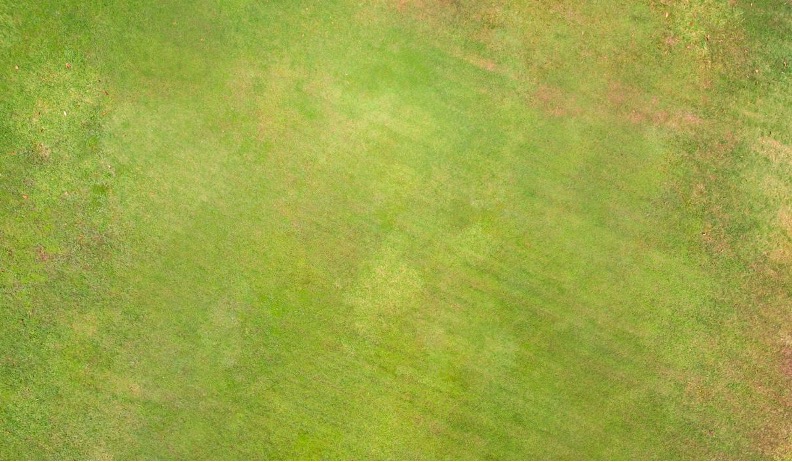
What separates chinch bug damage from real drought stress is the pattern. Drought browns uniformly across exposed zones. Chinch bugs leave irregular, expanding patches with a definable edge. The lawn looks “watered but wilting” in the affected zone because the bugs inject a toxin while feeding that blocks water uptake. The grass cannot take in moisture no matter how much you apply.
The five-minute float test confirms it. Cut both ends off a coffee can, push it two inches into the soil at the edge of a yellow patch, fill with water, and wait five minutes. If 20 or more black-and-white adults or red-and-white nymphs float to the surface, you are looking at active chinch bug damage and treatment is needed in the next week.
2. Take-All Root Rot Is Eating the Roots
Take-all root rot (Gaeumannomyces graminis) is a fungal disease that attacks St. Augustine roots from the bottom up. The visible damage looks like irregular yellow to light green patches that thin out over weeks. The diagnostic move is to pull up a handful of yellowing grass. If the runners pull up easily because the roots are short, brown, or rotted off, take-all is likely.
This disease is sneaky because the damage starts underground in spring and only shows above ground when summer heat stress overwhelms the weakened plants. Watering more accelerates it because the pathogen prefers moist conditions in the root zone. The grass looks thirsty, you water, the disease spreads, the grass declines further.
Take-all is best managed with fungicide programs starting in spring (azoxystrobin or fenarimol), proper potassium nutrition, and soil pH adjustment downward toward 6.0 to 6.5. By July, the curative window has narrowed. Stabilizing what is left and planning a recovery program for fall is the more honest path forward.
3. Your Sandy Soil Has Gone Hydrophobic
The sandy soils that define Jacksonville and St. Augustine lawns have a peculiar failure mode in July. After weeks of high heat with intermittent rain, the surface layer of soil can develop a waxy coating from organic matter breakdown that actually repels water. This is called hydrophobic soil. The sprinklers run, water hits the lawn, and instead of soaking in, it beads up and runs off into the street or pools at the low spots.
The test is simple. Take a screwdriver and try to push it six inches into a brown zone after a full irrigation cycle. If you cannot get past two or three inches, the moisture never made it down to the root zone. The grass is thirsty even though your water bill says otherwise.
The fix is a soil wetting agent (also called a soil surfactant) applied as a granular or liquid product. These break down the waxy coating and let water penetrate again. One application usually restores normal absorption within a week. Aeration and topdressing in fall add longer-term improvement, but the wetting agent is the July rescue move.
4. Your Irrigation System Has a Coverage Gap You Cannot See
Just because the sprinklers are running does not mean every square foot of grass is getting watered. The most common reasons for hidden coverage gaps on Jacksonville lawns include heads that have shifted or settled over time, heads partially blocked by grass overgrowth or mulch creep, clogged nozzles from sand and minerals in the well or city water, broken or worn nozzles spraying in the wrong direction, and pressure dropping at the end of a zone so heads do not throw their full pattern.
The audit is worth an hour of your time. Run each zone manually during daylight when you can watch the heads. Stand back and look at the throw pattern. Walk the lawn after a cycle and feel for dry strips. Many of the worst-looking patches in our service area are not pest, disease, or hydrophobic soil at all. They are the spot where head 4 in zone 2 has been pointed at the driveway for a year and a half.
Set out six straight-sided cans (tuna cans work) in a grid across one zone, run the zone for 15 minutes, and measure the water depth in each can. If some are at half an inch and others at a quarter, you have a coverage problem that watering longer cannot solve.
5. Fungal Disease Is Riding the Afternoon Storms
July afternoon thunderstorms drop intense rain followed by long humid nights. That combination is exactly what fungal pathogens want. The big ones on Northeast Florida St. Augustine include gray leaf spot (small gray-brown lesions on the blades, often in shaded or low-airflow zones), large patch (large circular yellow to brown areas, often along the edges of fertilized zones), and dollar spot (small silver-dollar-sized patches that look bleached).
Disease damage looks similar to drought from the curb but has distinct close-up signatures. Walk the patch and look at individual blades. Drought-stressed blades fold lengthwise and feel dry. Fungus-damaged blades have visible spots, lesions, or web-like growth in the morning dew. If you see a darker ring at the edge of a yellow patch, that is the actively expanding fungal front.
The interventions here are timing-sensitive. A fungicide rotation (azoxystrobin, propiconazole, chlorothalonil) applied at the first sign of disease will hold the line. Mowing height bumped to four inches, watering only at sunrise so blades dry quickly, and pulling back nitrogen until the pressure passes all help. Skipping the fungicide and just watering more is the pattern that loses lawns in our area.
6. A Heavy Fertilizer Application Burned the Roots
If your lawn was green a month ago and started browning two to three weeks after a fertilizer application, the timing points toward fertilizer burn or salt accumulation at the root level. High nitrogen rates applied during heat stress, granular fertilizer that did not get watered in fully, or fertilizer landing on already moisture-stressed turf can all push the lawn into a salt-burn pattern. The damage looks like irregular yellowing that progresses to a uniform straw color across the application footprint.
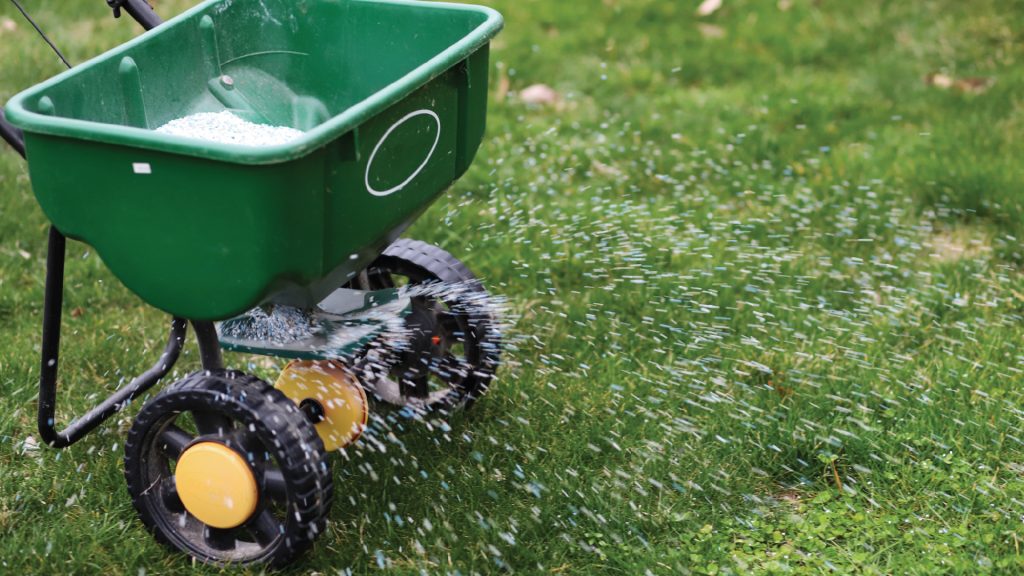
The fix is leaching. Run the irrigation longer and deeper for one week to flush excess salts past the root zone. Cut back on any additional fertilizer until the lawn recovers. Going forward, target slow-release nitrogen sources, avoid mid-summer applications during heat waves, and water in granular products immediately and thoroughly.
This is why we run our VitaminLawn schedule the way we do across Jacksonville and St. Augustine. Nitrogen rates pull back during peak summer heat, potassium goes up to support root function, and applications are timed around expected rainfall to avoid the burn pattern.
Common Questions
Should I just water more if the lawn is browning? Almost never. Of the six causes above, only a true coverage gap is solved by more water. Chinch bugs, take-all, hydrophobic soil, disease, and fertilizer burn all get worse with more irrigation. Diagnose first.
Can I do the float test and screwdriver test myself? Yes, both take five minutes and tell you a lot. The float test confirms or rules out chinch bugs. The screwdriver test confirms or rules out hydrophobic soil and coverage gaps. Together they narrow the diagnosis quickly.
How fast does St. Augustine recover from these issues? If you catch the cause early and the runners are still alive, four to six weeks of supportive care brings most lawns back. If the runners have died and the soil is bare, you are looking at sod replacement in those zones.
What if my lawn shows more than one of these problems at once? It is common. Chinch bugs and hydrophobic soil often appear together. Disease often shows up after fertilizer burn weakens the lawn. Address the most urgent driver first (insects, then disease, then water mechanics, then fertility).
What to Do Next
If your lawn is browning despite a working irrigation schedule, the next step is a real diagnosis. Walk the patches, run the float test, check the screwdriver, and audit the sprinklers. Most homeowners who do this find one or two clear causes that point to a specific fix.
Lawn Squad of Jacksonville and St. Augustine serves homeowners across Northeast Florida, including Jacksonville, Mandarin, San Marco, Ponte Vedra, Nocatee, St. Augustine, and the surrounding communities.
Call us at 904-594-7380 or request a free quote at lawnsquad.com. Our VitaminLawn program is built specifically for St. Augustine grass on Northeast Florida’s sandy soils, with chinch bug protection, fungal disease monitoring, soil amendments for hydrophobic conditions, and summer-adjusted fertility built into the schedule. The lawns that look best in our service area in late July are the ones that got the right intervention early.