Short Answer: Tall fescue lawns in North Raleigh and Greenville thin out every summer because we sit at the southern edge of where cool-season grass survives. Heat stress, brown patch disease, shallow watering, mowing too short, and inadequate fall recovery work all combine to thin the lawn every July and August. The fix is a year-round program: spring pre-emergent and balanced feeding, deep watering practices, mowing at 3.5 to 4 inches, brown patch fungicide before peak humidity, and aggressive fall overseeding to rebuild density. Here is the practical guide for properties across North Raleigh, Wake Forest, Cary, and Greenville.
If you have lived in North Raleigh or Greenville for more than a few summers, you know the pattern. Your tall fescue lawn looks fantastic in April and May. Then July arrives, and by mid-August the lawn is thinner, browner, and showing bare areas that were not there in spring. Every fall feels like starting over.
This is not bad luck or poor management on your part. It is the climate. North Raleigh and Greenville sit in the transition zone, where neither cool-season nor warm-season grasses are perfectly adapted. Tall fescue is the most popular cool-season choice for our area, and it can look beautiful for nine months of the year. But our summers are simply harder on fescue than the climates where the grass evolved.
Here is what actually causes the summer thinning across our service area, and what we have found works to keep the lawn as dense as possible through the hardest months.
The Climate Reality
Tall fescue thrives in soil temperatures between 60 and 75 degrees. It struggles above 85. Across North Raleigh, Wake Forest, Cary, and Greenville, soil temperatures regularly hit 90 or higher from late June through August. Combine that with overnight lows that frequently stay above 70 and humidity that rarely drops below 60 percent, and you have conditions that push fescue past its tolerance.
The grass is not dying because something is wrong. It is reacting to a climate that is hotter than what cool-season grasses are built for.
Cause 1: Brown Patch Disease
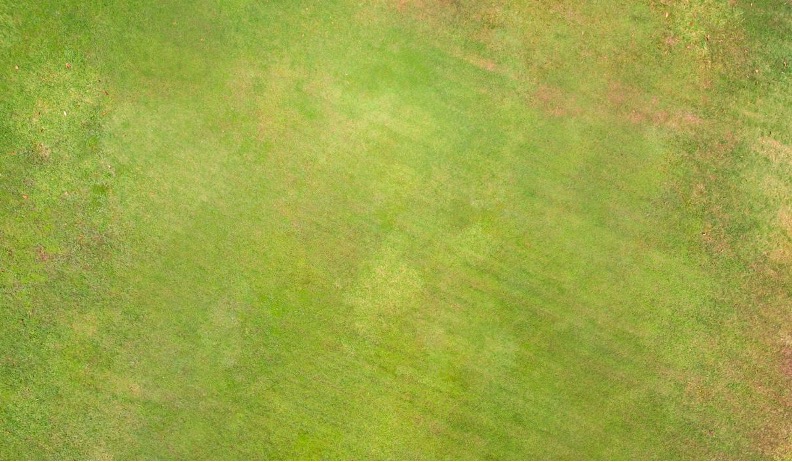
Brown patch is the single biggest summer killer of tall fescue in our area. The fungus thrives in exactly the conditions our July and August deliver: warm nights, humid air, prolonged leaf wetness. It produces circular patches with smoky gray edges that can blow out areas of lawn within days during peak pressure.
Most fescue lawns in North Raleigh and Greenville will face brown patch pressure every year. Properties on irrigation systems running evening cycles see it worst. Heavy thatch and nitrogen-pushed lawns are also more vulnerable.
Prevention requires a properly timed fungicide application before peak disease pressure begins, typically in June. A reactive application after symptoms appear can stop active spread but does not undo the damage already done.
Cause 2: Shallow Roots From Shallow Watering
Tall fescue’s main advantage over Kentucky bluegrass is root depth. Properly managed fescue can reach 8 inches deep, pulling moisture from soil layers other grasses cannot access. This is what allows fescue to survive North Carolina summers at all.
But that depth only develops with the right watering practices. Light frequent watering trains roots to stay shallow, where soil dries fastest in heat. By July, those shallow-rooted lawns cannot find water and thin rapidly.
The right approach is fewer watering cycles, deeper soak times, in early morning. Aim for 1 to 1.5 inches per week applied in two cycles rather than light daily watering. The goal is to encourage roots to chase water downward through summer.
Cause 3: Mowing Too Short
Tall fescue should be mowed at 3.5 to 4 inches in our climate, especially through summer. The taller cut shades the soil, reduces moisture loss, supports the deep root system, and helps the lawn outcompete summer weeds.
Most homeowners mow too short, often at 2.5 to 3 inches because that looks cleaner. Short mowing in our heat is one of the fastest ways to thin a fescue lawn.
Raising the cut by an inch in late spring is one of the simplest changes that makes a meaningful difference.
Cause 4: Heat Stress That Recovery Cannot Catch Up With
Even with perfect management, our summer heat causes some thinning. Tall fescue does not spread the way Bermuda or Kentucky bluegrass do. It is a bunch-type grass: each plant grows in place. When summer heat kills individual plants, surrounding plants do not fill in the gaps.
This is why every fescue lawn needs aggressive fall overseeding. The damage from summer is permanent unless you actively reseed each year. Lawns that get overseeded every fall stay dense and recover quickly. Lawns that skip a year of overseeding compound the thinning year after year.
Cause 5: Wrong Fertilizer Timing
Heavy nitrogen applied in late spring or early summer produces lush soft growth right when disease pressure is rising. The result is faster thinning, not better lawns.
The right fertilizer schedule for fescue in our climate front-loads feeding in fall and early spring. Summer applications should be light and balanced, not heavy nitrogen. We typically reduce or eliminate nitrogen in June and July, then resume feeding in late August and September as recovery begins.
What Actually Works to Keep Fescue Dense
Across our North Raleigh and Greenville service area, the fescue lawns that hold up through summer share a common program:
Strong fall overseeding every September or early October. The single most important practice. We typically recommend 4 to 6 pounds of seed per 1,000 square feet for overseeding existing lawns, more for renovations.
Deep, infrequent morning watering through summer. Aim for two cycles per week applying 0.6 to 0.75 inches each.
Mowing height raised to 3.5 to 4 inches by mid-May.
Preventative brown patch fungicide application in June, with follow-up in July if conditions warrant.
Balanced spring and fall fertilization, with reduced nitrogen during the heat of summer.
Spring pre-emergent to keep summer weeds from invading thinning areas.
Annual fall aeration to relieve compaction and improve water infiltration.
Realistic Expectations
Even with everything done right, expect some summer thinning on fescue lawns in our climate. Properties that look exceptional through August are usually in shadier locations or have been on a multi-year quality program with proven results. The first year of intensive care typically improves things noticeably. Year three is when most properties hit their full potential.
If you cannot accept any summer thinning, the alternative is converting to Bermuda or Zoysia, which thrive in our heat but go dormant brown for 4 to 5 months in winter. Most North Raleigh and Greenville homeowners decide the seven months of beautiful fescue is worth the summer struggle.
What Recovery Looks Like
Fall overseeding combined with cooler weather rebuilds fescue density quickly. Properties that overseed in mid-September typically see new grass emerging by early October and have visibly thicker lawns by Thanksgiving. By spring, the lawn is back to its peak.
Skipping fall overseeding for one year compounds problems. Skipping for two or three years often requires a full renovation rather than continued overseeding.
What Most Homeowners Do Wrong
Watering more in summer to fight thinning. Almost always backfires by feeding disease.
Adding nitrogen to make the lawn green up faster in summer. Pushes soft growth and brown patch.
Cutting shorter to make the lawn look cleaner. Removes the canopy that protects the root zone.
Skipping fall overseeding because the lawn looks okay in October. The thinning is already happening underneath.
Treating each summer in isolation rather than running a year-round program.
What to Do Next
If your North Raleigh or Greenville fescue lawn is thinning every summer and you want help building a year-round program that holds density through August, we walk properties across Wake Forest, Cary, North Raleigh, and Greenville to identify what is driving the thinning on your specific yard and recommend a plan that fits. If you would rather have someone else handle the timing decisions, product selection, and application for your North Raleigh and Greenville lawn, we are here for that.
Visit lawnsquad.com to find Lawn Squad of North Raleigh-Greenville and request a free quote. Our VitaminLawn program is built specifically for the grass types, soils, and weather patterns in our service area. Most homeowners see noticeable improvement within the first two applications.