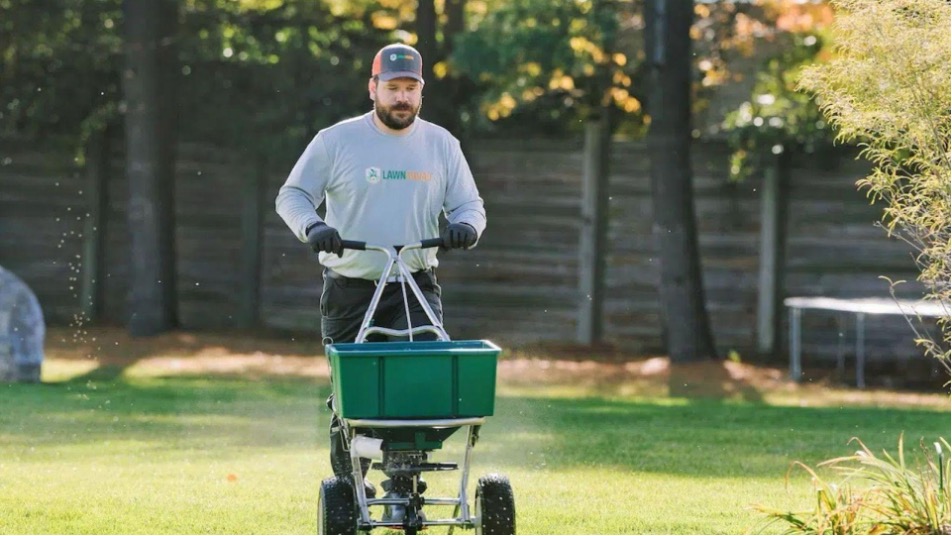
Short Answer: Utah County has a short, intense growing season. Spring (late March through May) is when your Kentucky bluegrass, fescue, or perennial ryegrass rebuilds root depth before the brutal July heat and summer water restrictions arrive. Getting pre-emergent timing, iron correction, and early feeding right in April determines whether your lawn thrives or burns out through August. Below is why Utah County spring is uniquely important and what to prioritize.
You step out one April morning onto your Provo, Lehi, or American Fork lawn. The Kentucky bluegrass is greening up but looking pale. There are yellow patches near the sprinkler heads where last year’s salt buildup settled. A few dandelions are already pushing up along the driveway. And you know from last summer that by July, the lawn will either hold its color or start to burn out.
What you do in April, not July, determines which one happens. Here is why spring is uniquely critical for Utah County lawns and what the highest-leverage actions actually are.
Our Growing Season Is Short and Intense
Utah County’s growing season is significantly shorter than most of the country. Cool-season grasses grow actively from late March through early June, struggle through July and August heat, recover in September and October, and go dormant from late November through early March. That is about 6 months of real growth, compressed into specific windows.
This matters because everything you do in spring compounds through the year. A lawn with deep roots built in April handles July drought stress. A lawn with shallow roots because spring feeding was missed cannot.
The Pre-Emergent Window Opens Late March to Mid-April
Crabgrass germinates when soil temperatures at a 2 to 4 inch depth reach 55 degrees for several consecutive days. In Utah County, that threshold is typically hit between late March and mid-April, later than most of the country because of our elevation and cooler spring nights.
Miss this window by 10 days and crabgrass will be through your defense by late June. In Utah County our germination window also includes goosegrass (slightly later), which means a split-rate second pre-emergent application in May often pays off on high-traffic lawns.
Signals we watch:
- Soil temperatures reported by USU Extension weather stations
- Forsythia bloom finishing
- Apricot and pear blossoms opening (Utah County’s orchard areas are a good early indicator)
- Daytime highs consistently above 60 degrees
Iron Chlorosis Correction Starts in Spring
Utah County’s alkaline soils lock up iron and manganese. The result is chlorosis: the yellowing you see on new blades of grass while the older blades stay green. It is almost universal on Utah County lawns.
Spring is the critical time to address chlorosis because new growth is happening fast. Chelated iron or iron sulfate applications in April and May green up the lawn dramatically, often within 3 to 7 days. This is not a one-time fix. It is a seasonal maintenance action. Lawns that skip spring iron applications spend the entire growing season looking washed out.
Early Fertilization at Green-Up
Once your lawn is consistently growing (you have mowed at least once, typically late April in Utah County), apply the first balanced fertilizer of the year. For Utah County cool-season lawns, we recommend a slow-release product at a modest rate, with emphasis on iron and potassium for stress tolerance.
Avoid heavy nitrogen in spring. The instinct is to push green color, but heavy nitrogen produces top growth that the root system cannot support when July heat arrives. Fall is the heavy-feeding season for cool-season grasses, not spring.
Water Efficiency Training Starts Now
Utah County regularly faces summer water restrictions. The difference between lawns that survive restrictions and lawns that go dormant or die is usually root depth, and root depth is built in spring.
Training the lawn to deep roots: water deeply (put down half an inch of water at a time) but infrequently (once or twice a week in spring, not daily). Early morning only, before 8 a.m. if possible. This forces roots to chase water downward, developing the deep network that summer survival depends on.
Homeowners who water for 15 minutes every morning in April and May develop shallow-rooted lawns that cannot survive July water restrictions. Homeowners who water deeply twice a week build drought-tolerant lawns that hold up.
Broadleaf Weed Control in Late Spring
Dandelion, clover, creeping Charlie, and purslane all flush in Utah County in May and early June. A spot-treatment or modest blanket broadleaf application during active weed growth but before seed set dramatically reduces summer weed pressure.
What Happens If You Skip Spring
Here is what a neglected Utah County lawn looks like by midsummer:
- By June: widespread iron chlorosis, yellow and pale green throughout
- By July: drought stress severe because roots are shallow from improper spring watering
- By August: dandelions and clover filling thin spots, crabgrass established along driveway edges
- By September: lawn looks tired, weed-infested, and sparse heading into fall recovery
Compare that to a lawn that got spring right: pre-emergent holding, deep roots from proper watering, iron chlorosis under control, balanced fertility supporting steady growth. That lawn holds color through July and comes out of summer ready for fall aeration and overseeding.
What to Do Next
If you would rather have someone else time the pre-emergent, apply the right iron products, and build the irrigation training plan for your specific lawn, we are here for that.
Lawn Squad of Utah County serves Alpine, American Fork, Draper, Eagle Mountain, Lehi, Lindon, Midway, Orem, Pleasant Grove, Provo, Saratoga Springs, Vineyard, and Wallsburg.
Call us at 385-336-6785 or request a free quote at lawnsquad.com. Our VitaminLawn program is built for Utah County’s alkaline soils, cool-season grasses, short intense growing season, and summer water challenges. Here is what to expect once you reach out: we measure the lawn, walk the property, identify any active issues, and send back a customized plan. Most homeowners see noticeable improvement within the first two applications.