Why November Is the Most Important Lawn Feeding of the Year in Northern Kentucky
Why November Is the Most Important Lawn Feeding of the Year in Northern Kentucky
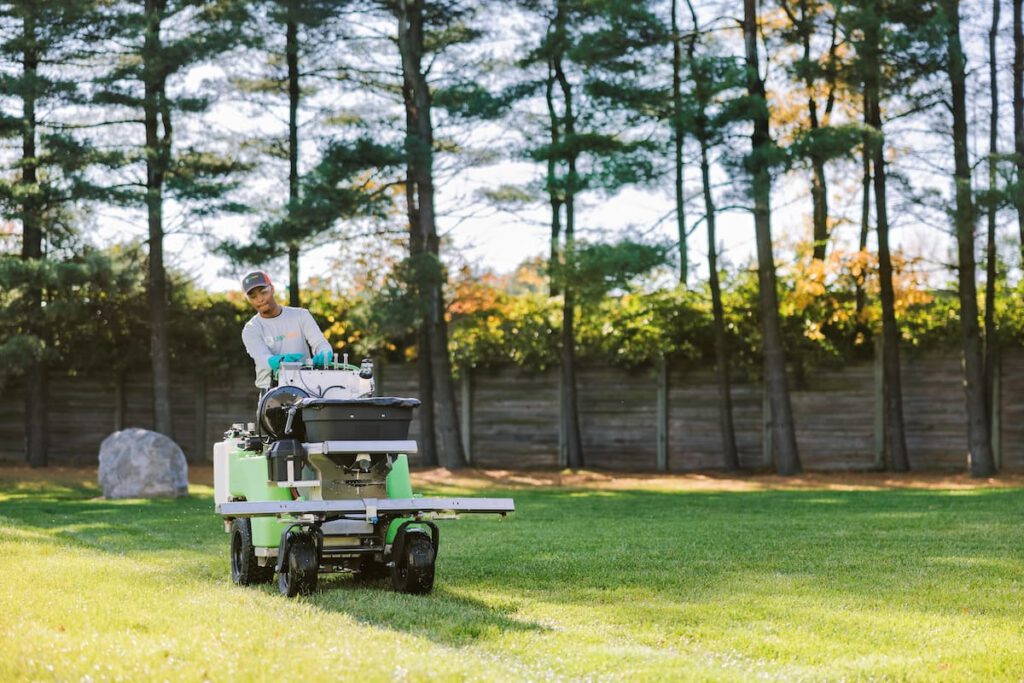
Short Answer: For most Northern Kentucky lawns, the November feeding is the most valuable application of the year. Tall fescue and Kentucky bluegrass keep growing roots and storing energy well after top growth slows. A late-season winterizer, applied once mowing has nearly stopped but while the grass is still green, gets stored in the roots and crowns instead of turning into leaf growth. That stored energy is what drives an earlier, more even green-up next spring, with fewer weeds and less need for heavy spring feeding. Here is what we have found works best: apply in early to mid November, before the ground freezes.
If you are reading this, you are probably looking at a lawn that has slowed way down. The mower is getting less use, the leaves are mostly down from the oaks and maples, and it feels like the season is over. Putting fertilizer on the lawn now can seem like a strange idea.
That is one of the most common things we hear from homeowners across Boone, Kenton, and Campbell counties this time of year. Most people were raised on spring feeding. Garden centers fill their aisles in April, and the neighbors start spreading at the first warm weekend. The honest answer is that for the cool-season lawns we care for here, the November feeding does more for next year than any spring application can.
What Your Lawn Is Doing Right Now
Most lawns in Northern Kentucky are tall fescue, often mixed with some Kentucky bluegrass or perennial ryegrass. We sit right in the transition zone, where summers can be hard on cool-season grass and winters are cold enough to push warm-season grasses into a long dormancy. Fescue and bluegrass handle that balance better than most, which is why they dominate the region.
As November arrives, these grasses slow down on top. You may only be mowing every couple of weeks, or not at all. But underneath, the plant is still active. Roots keep growing as long as the soil stays above freezing, and the grass is busy moving carbohydrates down into its crowns and roots for the winter.
Imagine the grass packing a lunch before a long trip. Everything it stores this month is what it will live on through January and February, and what it will spend when it wakes up in March.
Why a Late-Season Feeding Works So Well
When fertilizer goes down in spring, the grass uses most of it to push out leaf blades. You get a quick burst of green, along with more mowing and a root system that has not kept pace with all that top growth.
A late-season feeding works differently. Because the grass is no longer putting much energy into leaves, the nitrogen it takes up in November mostly gets stored rather than spent. Research from university extension programs across the region, including the University of Kentucky, has long pointed to fall as the most important time to fertilize cool-season lawns, with late fall applications helping turf green up earlier the following spring.
The payoff shows up in March and April. A lawn fed in November tends to wake up evenly and early, often a couple of weeks ahead of unfed lawns on the same street. It also fills in thin spots faster, which leaves less room for spring weeds like dandelions and henbit to take hold.
Timing It Right in Northern Kentucky
Timing is the part that trips most people up. Apply too early, while the grass is still growing hard, and the feeding acts like a regular fall application. Apply too late, after the ground freezes, and the roots cannot take up much of anything.
Here is what we have found works best for our area. Watch for the point when mowing has nearly stopped but the lawn still holds good green color. In most years around Florence, Covington, and Fort Thomas, that window falls from early to mid November, though a warm fall can stretch it a bit later.
Northern Kentucky weather does not always cooperate. We can see a hard freeze one week and a sunny 60-degree afternoon the next. A few frosty mornings do not close the window. A frozen ground surface does.
Our Clay Soils Matter
Much of Northern Kentucky sits on heavy clay soil, especially on the hillsides and in newer subdivisions where topsoil was stripped during construction. Clay holds nutrients well, which is good news for a late-season feeding, because the fertilizer tends to stay in the root zone rather than washing straight through.
Clay also has a downside. On slopes and compacted lawns, heavy rain can run off quickly, carrying anything sitting on the surface with it. With so many of our lawns draining toward the Licking and Ohio rivers, that matters. A late-season feeding works best when it goes down ahead of a light rain rather than a downpour, and granules that land on driveways and sidewalks should be swept back onto the lawn.
What Should Be in a Late-Season Fertilizer
Nitrogen is the main nutrient in a late-season application for cool-season grass. That surprises some homeowners who have heard that winterizers should be high in potassium. Potassium does help grass handle stress, but for fescue and bluegrass, research points to nitrogen as the nutrient that drives the late-season benefit. Whether your lawn needs extra potassium is best answered by a soil test.
Phosphorus is rarely needed on established lawns unless a soil test shows a shortage. The form of nitrogen matters too. A quicker-release source is usually preferred this late in the season, because the grass needs to take it up before the ground freezes.
A Note on Zoysia Lawns
Not every lawn in Northern Kentucky is a cool-season grass. Some homeowners have zoysia, a warm-season grass that goes tan after the first hard frost and stays dormant until late spring. Zoysia should not get a late-season nitrogen feeding. It is already shutting down, and nitrogen this late can do more harm than good. If you are not sure which grass you have, that is worth figuring out before anything goes down.
Common Mistakes We See With a November Feeding
A few patterns come up every year when we walk properties in late fall. The first is stopping after the September feeding, which leaves the most valuable application of the year on the table. The second is waiting for every leaf to fall before applying anything. By then, the ground may already be freezing, and fertilizer spread over a heavy leaf layer never reaches the soil anyway.
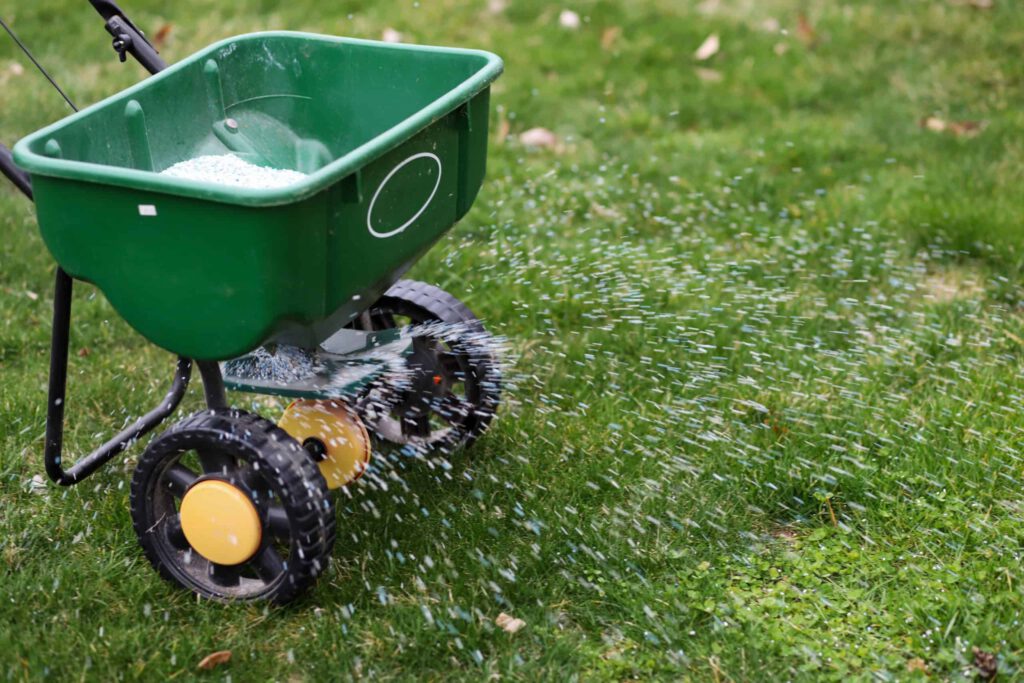
The third is spreading over frozen ground in December because the bag is still in the garage. Fertilizer on frozen soil mostly sits there until the next thaw or heavy rain moves it into the street. The fourth is uneven application, which shows up next April as dark green stripes next to pale ones. Setting the spreader at half rate and making two passes at right angles goes a long way toward avoiding that.
What Spring Looks Like After a Good November
Imagine this. It is late March. The snow is gone, the soil is starting to warm, and lawns across your neighborhood are still mostly tan and patchy. Yours is turning green from edge to edge. The thin area near the driveway has filled in, and there are fewer weeds waiting to pop up. That head start was built in November.
What to Do Next
If you are handling it yourself, aim for early to mid November, once mowing has nearly stopped but the grass is still green. Choose a nitrogen-focused product with little or no phosphorus, apply ahead of a light rain rather than a heavy one, and sweep any granules off hard surfaces. Skip the feeding entirely on zoysia.
If you would rather have someone else handle the timing decisions, product selection, and application for your Northern Kentucky lawn, we are here for that. Lawn Squad of Northern Kentucky serves homeowners across the region. Visit lawnsquad.com to request a free quote. Our VitaminLawn program is built for the grass types, soils, and weather patterns we deal with here.
Here is what to expect. We will look at your grass type, the condition of the turf after this year, and any trouble spots, then explain what we would apply this month and why. If your lawn does not need a late-season application, we will tell you that honestly.