Short Answer: Wild violets thrive in Northern Kentucky lawns because our shaded, moist clay soils are exactly what the plant needs to spread. Standard broadleaf herbicides do little against violets. Effective control requires triclopyr-based products applied at the right time of year (typically fall) plus repeat applications across multiple seasons. Cultural practices that reduce shade, improve drainage, and build dense turf help prevent re-establishment. Single applications rarely solve the problem. Here is the practical guide for properties across Florence, Independence, Erlanger, and the surrounding Northern Kentucky area.
If you have noticed small heart-shaped leaves and purple or white flowers spreading through your Northern Kentucky lawn this spring, you have wild violets. Most homeowners in our service area first notice them in April or May, then watch them slowly take over more lawn each year despite what they apply.
Wild violets are one of the most stubborn lawn weeds we see across Florence, Independence, Erlanger, Burlington, and our broader Northern Kentucky service area. The frustration comes from how resistant they are to standard herbicides. Most weed-and-feed products do almost nothing against established violets.
Here is what actually works.
What Wild Violets Look Like
Wild violets produce heart-shaped or kidney-shaped leaves that grow in clumps from short underground stems called rhizomes. The flowers are typically purple but can also be white, yellow, or variegated depending on species. The flowers are small (about half an inch) and bloom in early spring.
What makes violets distinctive is the growth habit. Each plant produces multiple leaves from a central crown, and the underground rhizomes spread to produce new plants. A single violet can become a dense colony covering several square feet within a few seasons.
Violets often colonize shaded portions of the lawn first, but established colonies spread into sunnier areas over time.
Why They Thrive in Northern Kentucky
Several factors make our area particularly hospitable to wild violets:
Heavy clay soils that hold moisture. Violets prefer consistently moist soil and clay soils provide it.
Shade. Violets grow much better in partial to full shade than most lawn grasses do. Properties with mature trees often have violets thriving in shaded areas where the grass struggles.
Cool spring weather. Violets get a head start before lawn grass really wakes up.
Bare or thin areas. Anywhere the lawn is thin, violets fill in.
Spreading neighbors. Once a property has violets, neighbors often get them too as seeds spread.
Why Standard Herbicides Fail
Most broadleaf weed killers are based on combinations of 2,4-D, MCPP, and dicamba. These products work well on dandelions, clover, plantain, and many other common lawn weeds. They do almost nothing on wild violets.
The reason is the waxy cuticle on violet leaves. The standard active ingredients do not penetrate well. The product runs off the leaf surface without absorption.
Homeowners who keep applying weed-and-feed expecting to control violets get frustrated when the lawn looks worse over time. The product killed competing weeds, freed up space for the violets to fill, and the violets keep growing while everything else dies back.
What Actually Works
Triclopyr is the active ingredient that kills wild violets. Several professional and consumer products contain triclopyr alone or in combination with other herbicides. Look specifically for products labeled for violet or hard-to-control weed control.
Application timing matters. Fall is the best window. As violets prepare for winter, they pull energy and any absorbed herbicide back into the rhizomes, killing the underground portion. Spring applications kill some top growth but rarely affect the rhizomes, allowing the plant to resprout.
Multiple applications across multiple seasons are typically required to fully eliminate violets. Even with the right product and timing, expect 2 to 3 years of consistent treatment before colonies are gone.
The Treatment Approach
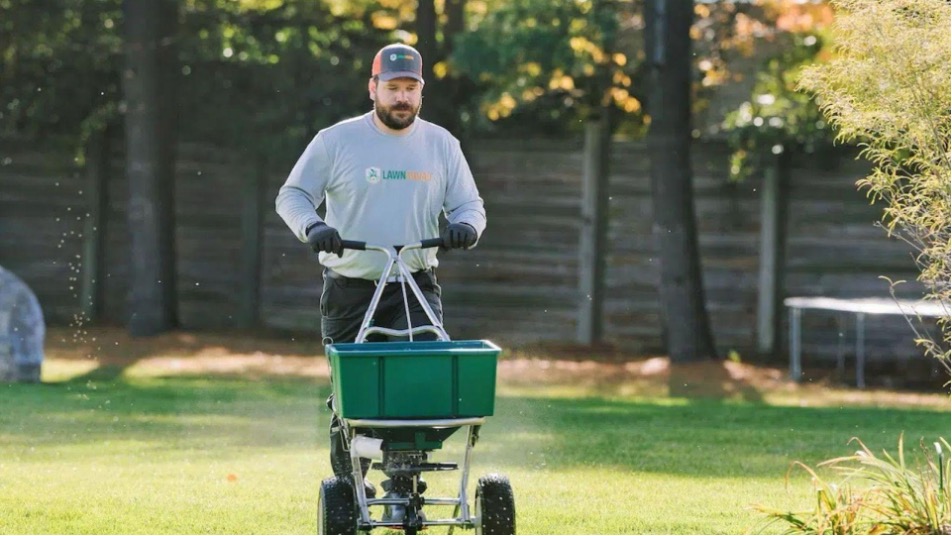
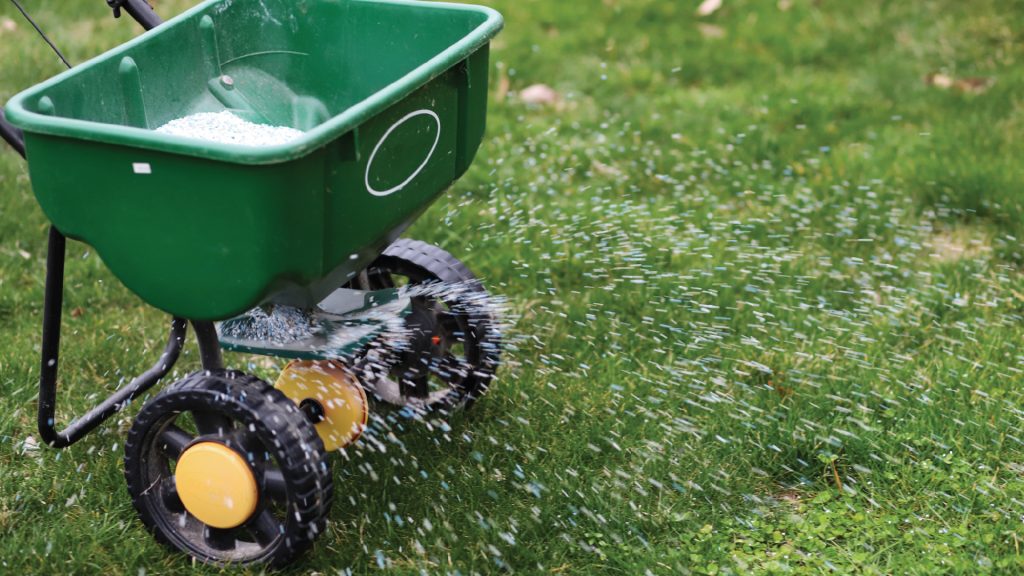
Year 1, fall: triclopyr application targeting all visible violet patches. Spot treatment is fine if violets are isolated; broadcast treatment is appropriate if they are widespread. Surfactant added to the spray helps the product stick to and penetrate the waxy leaf surface.
Year 2, spring: small spring application to weakened plants that survived fall.
Year 2, fall: second major triclopyr application.
Year 3, spring: spot treat any remaining patches.
Year 3, fall: typically the year colonies disappear if applications have been consistent.
Cultural Practices That Help
Herbicide alone rarely solves the problem long-term. Cultural practices that make the lawn less hospitable to violets matter:
Reduce shade where possible. Limbing up trees, removing problem trees, or replacing grass with shade-tolerant ground cover in deeply shaded areas eliminates the conditions violets prefer.
Improve drainage. Violets thrive in soggy soil. Aeration, drainage corrections, and watering schedule changes that let the lawn dry between cycles all reduce violet pressure.
Build dense turf. Thick healthy grass crowds out new violet seedlings. Annual fall overseeding combined with proper fertility builds the kind of dense lawn that resists weed invasion.
Mow at proper height. Mowing too short opens the canopy for violets. Cool-season grasses should be mowed at 3.5 to 4 inches in summer.
Why DIY Often Falls Short
Homeowners attempting DIY violet control face several challenges:
Wrong product. Most retail weed killers do not work. The right products are sometimes harder to find at consumer outlets.
Wrong timing. Spring is the natural time most people want to attack weeds, but spring applications on violets are largely ineffective.
Insufficient persistence. Quitting after one or two applications when the violets seem to recover. Multi-year campaigns are required.
Mixing or rate errors. Triclopyr products require precise mixing and application. Errors make treatments less effective and can damage the lawn.
Underlying conditions unaddressed. Killing the visible violets while leaving the conditions that produced them means new violets fill in.
What Doesn’t Work
Hand pulling. The rhizomes break and each fragment can produce a new plant. Pulling typically multiplies violets rather than reducing them.
Vinegar or boiling water. Burns top growth without affecting rhizomes. Plants regrow quickly.
Standard weed-and-feed. As discussed above, most have no effect on violets.
Mowing them off. Violets adapt to mowing by growing shorter. Mowing does not eliminate them.
Smothering with mulch or plastic. Works in beds but not practical in lawn areas without killing surrounding grass.
Realistic Expectations
Even with optimal treatment, expect the violets to return in some areas year after year for several seasons. The seed bank in the soil produces new plants. Wind, animals, and water carry seeds in from neighbor properties. The goal is not eradication in year one. It is steady reduction over multiple years until violets are no longer a significant lawn problem.
Most properties we treat see 60 to 80 percent reduction after the first full year of treatment. Year two typically gets to 90 percent control. Year three is usually when violets become a minor occasional issue rather than a dominant lawn problem.
Northern Kentucky Specifics
Several factors make violets particularly common in our area:
Established neighborhoods with mature tree canopies that provide the shade violets prefer.
Heavy clay soils common across the region.
Older homes with original landscaping where violet colonies have decades to establish.
Wooded property edges that serve as seed sources.
Variable spring weather that gives violets the cool moist conditions they thrive in.
What to Do Next
If wild violets are taking over your Northern Kentucky lawn and you want help building a multi-year plan to bring them under control, we walk properties across Florence, Independence, Erlanger, and our broader service area to evaluate the situation, identify any other lawn issues, and put together a treatment program that actually works for violets. If you would rather have someone else handle the timing decisions, product selection, and application for your Northern Kentucky lawn, we are here for that.
Visit lawnsquad.com to find Lawn Squad of Northern KY and request a free quote. Our VitaminLawn program is built specifically for the grass types, soils, and weather patterns in our service area. Most homeowners see noticeable improvement within the first two applications.