Why Is Japanese Stiltgrass Invading My Frederick Lawn in Late Summer, and How Do I Stop It?
Short Answer: Japanese stiltgrass is a pale, sprawling annual grass with a silvery stripe running slightly off center down each short leaf. It thrives in the shaded, moist ground along wooded edges and creek corridors, which is why it surfaces every August on Frederick County properties that back to trees. Because it is an annual that drops thousands of seeds each fall and those seeds stay viable in the soil for years, pulling it in August feels productive but changes little. The control that works is stopping germination with a spring pre emergent, repeated across several seasons, while thickening the turf that shades the ground.
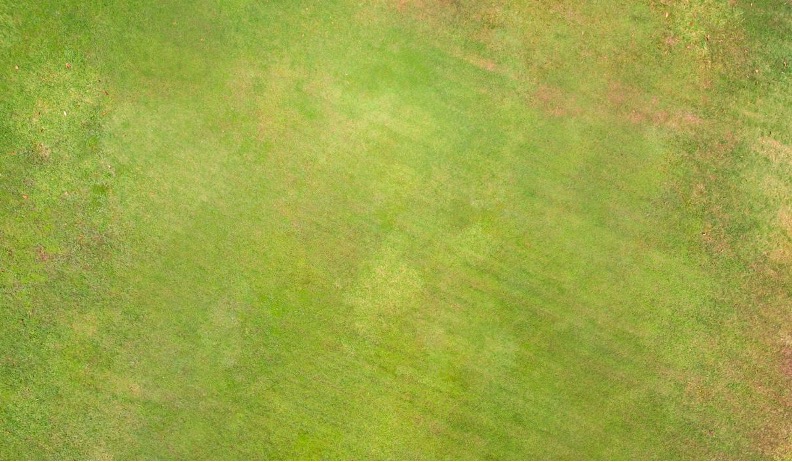
You noticed it in the last week or two. Along the back fence where the yard meets the tree line, there is a soft, pale green mat that was not there in June, sprawling out over the mulch bed and reaching two or three feet into the lawn. It looks almost pretty at first, delicate and bamboo like, leaning rather than standing. Then you crouch down and see that the real grass underneath has vanished, and the mat is quietly moving toward the patio. Properties along the Monocacy floodplain, out toward Point of Rocks, and on the shaded lots climbing toward Braddock Heights and Thurmont know this plant well.
There is a particular frustration in a weed that shows up after you have already spent a season taking care of the lawn. It reads as a personal failure. It is not one. Stiltgrass is winning on ground the lawn was never going to hold on its own.
How to Know It Is Actually Stiltgrass
The tell is the leaf. Stiltgrass leaves are short, only an inch or two, lance shaped and noticeably wider than most lawn grass, and each one carries a pale silvery line of fine hairs running down the blade slightly off from the true center. Tilt the leaf toward the afternoon sun and that stripe flashes. Nothing else in a Frederick lawn does that.
The habit is the second tell. Instead of growing upright in a clump, stiltgrass sprawls along the ground on thin, wiry stems that root wherever a node touches soil, which is how a few plants become a continuous mat. The whole thing pulls up with almost no resistance because the root system is shallow and stringy. People often mistake it for crabgrass, but crabgrass is coarse, dark, and sun loving, thickest in the hot strip along the driveway. Stiltgrass is fine, pale, and it wants the shade.
Why It Explodes Along Wooded Edges in August
This plant evolved for exactly the habitat our county has in abundance: moist, partly shaded, disturbed ground. Stream corridors, floodplain flats, the ragged transition between mowed lawn and woods. It handles low light better than tall fescue does, so in the band where tree canopy thins the turf, it moves into a vacancy rather than a fight.
It also grows on a schedule that hides it. Stiltgrass germinates early in spring, ahead of crabgrass, then spends May and June low and unremarkable in the shadows. The surge comes with late summer, when it stretches, mats, and starts producing seed heads through the end of the season. That is why it seems to appear overnight in August. It was there in April. You just could not see it.
Two local factors make it worse. Deer generally leave stiltgrass alone while browsing everything around it, which is a real advantage on wooded properties from Ijamsville to Myersville. And seed travels easily on boots, tires, mower decks, and moving water, so a creek that crosses the back of a property in Buckeystown or Walkersville can seed the whole lower yard in a single wet spring.
The Seed Bank Is the Whole Problem
Here is the part that changes how you should think about the fight. Stiltgrass is an annual. Every plant you see now will be dead after the first hard frost, collapsing into a flat tan mat that looks like straw across the ground all winter. Killing the plant is therefore not the goal, because frost does that for free. What matters is whether it sets seed first, and a single healthy plant can produce a startling quantity of it.
Those seeds go into the soil and stay viable for several years. That is why the honest answer to “how long will this take” is not one season. It is three or four seasons of not letting new seed reach the ground, while the older seed in the bank gradually runs out. We would rather tell you that up front than sell you a single treatment and let you feel cheated next August.
What Actually Works, and When
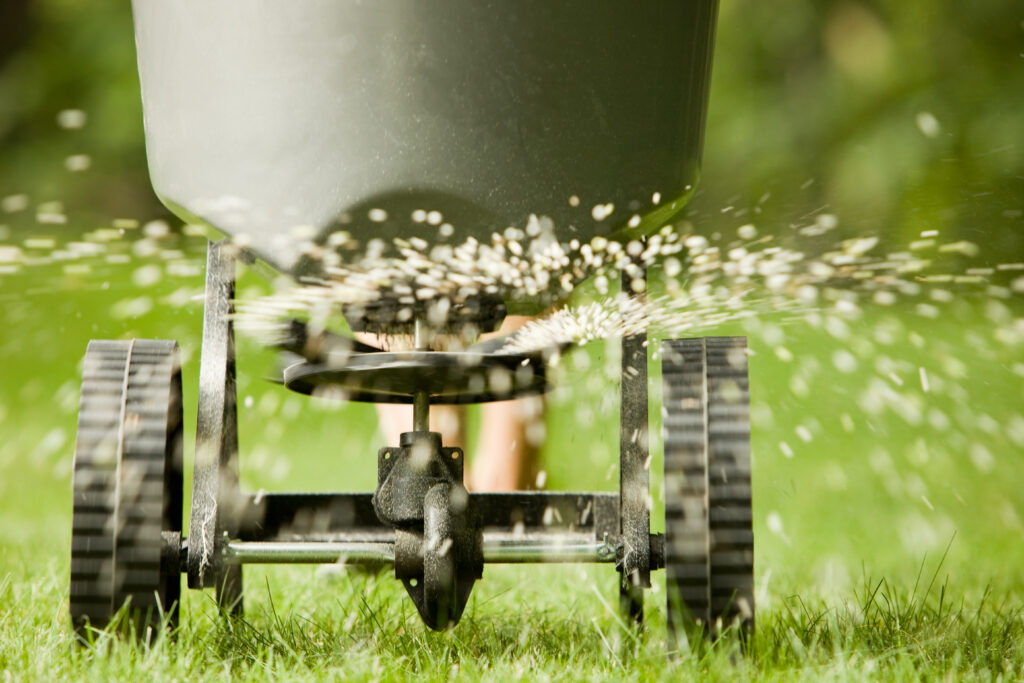
The highest leverage moment is early spring, months before you can see any stiltgrass. A pre emergent barrier applied before soil warms into the mid fifties keeps the seed from establishing. In our area that generally means going out earlier than the standard crabgrass timing, because stiltgrass does not wait. Getting that application down at the right moment, then keeping the barrier intact through late spring, does more than everything else combined.
Once plants are up and sprawling, options narrow. There are selective products that can suppress a young grassy weed in cool season turf, and they work best on small plants in June, not on a thick August mat. Along mulch beds and the woods edge where there is no lawn to protect, a non selective treatment is straightforward, and the timing that matters is before seed set. In turf, the risk of injuring stressed fescue in late summer is real, so we would rather protect the lawn and win in spring.
What to Do Between Now and Frost
The one genuinely useful August task is preventing seed. Mowing the infested band low in late summer, before seed heads mature, cuts down on what reaches the ground, though plants can flower again below the blade, so it is a reduction rather than a cure. Hand pulling works on small patches and is oddly satisfying because it comes up so easily. Pull before seed heads form, get the whole stringy root, and bag it rather than composting it.
Do not till or scrape the infested strip. Disturbed bare soil is the ideal stiltgrass nursery, and every scraping invites the seed bank to germinate. And do not spread mulch or fill dirt sourced from an unknown site into a clean area, because that is one of the common ways a property with no stiltgrass acquires it.
Thicker Turf Is the Long Term Answer
Every stiltgrass patch we walk is telling the same story: the lawn gave up on that ground first. Shade, tree root competition, foot traffic on a path to the shed, or a drainage low that stays damp after every storm. Fixing the vacancy is what makes the pre emergent hold, because dense turf shades the soil surface and stiltgrass seed that never sees light never becomes a problem.
On wooded edge properties around New Market, Libertytown, and Middletown, that usually means a late summer seeding with shade tolerant fescue, mowing on the high side to shade the soil, limbing up low tree branches to buy the turf more light, and correcting the wet spot rather than mowing around it. Where the shade is genuinely too deep for grass, the more honest solution is a mulched bed or ground cover, maintained on purpose, instead of an annual argument you will keep losing.
What to Do Next
If you are seeing that pale mat now, the useful move is to get eyes on it before frost hides the evidence, because a walked property in August tells us exactly where the barrier needs to go in March. A first visit is a conversation: we confirm the identification, map the infested edges, look at what thinned the turf there in the first place, and lay out a multi year plan with a free quote. If what you have is actually crabgrass or nimblewill, we will tell you, because the treatment is different.
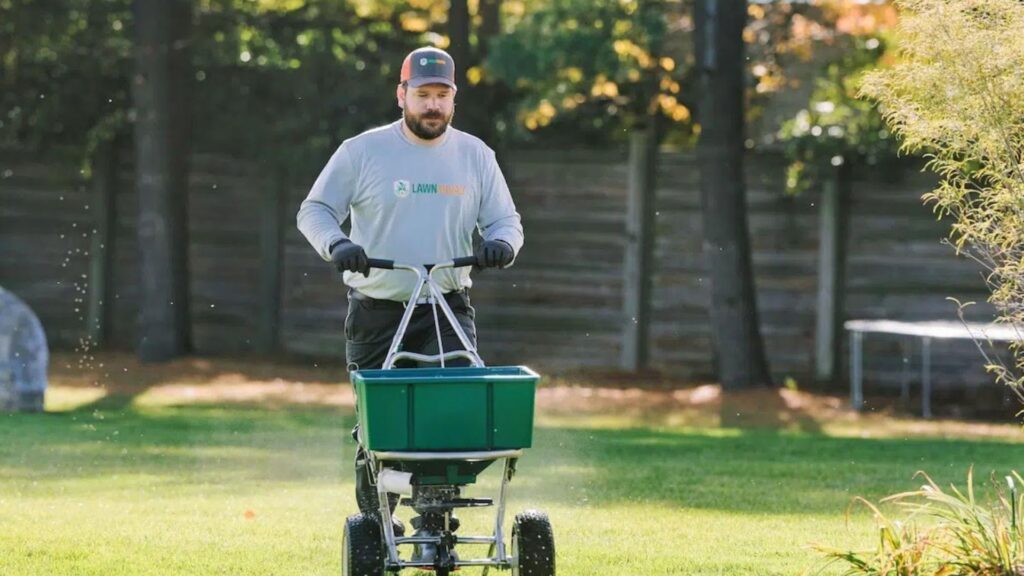
Expect gradual, visible progress rather than a switch flipping. In the first spring after a properly timed pre emergent, most properties see the mat come back noticeably thinner and slower. By 90 days into that season the wooded edge looks like lawn again in most spots, with survivors along the true woods line. By the third season the seed bank is meaningfully drawn down and maintenance gets easy. Our VitaminLawn program handles the timing and the follow up applications so the spring window never gets missed, which is the single most common reason homeowners lose this fight.
Call Lawn Squad of Frederick at 301-637-4412 or visit lawnsquad.com for a free quote. We serve Frederick, Urbana, Walkersville, Woodsboro, New Market, Libertytown, Union Bridge, Ijamsville, Buckeystown, Adamstown, Point of Rocks, Brunswick, Middletown, Braddock Heights, Myersville, Boonsboro, Keedysville, Sharpsburg, Smithsburg, Thurmont, Clarksburg, and Hagerstown, and every visit carries our satisfaction guarantee.