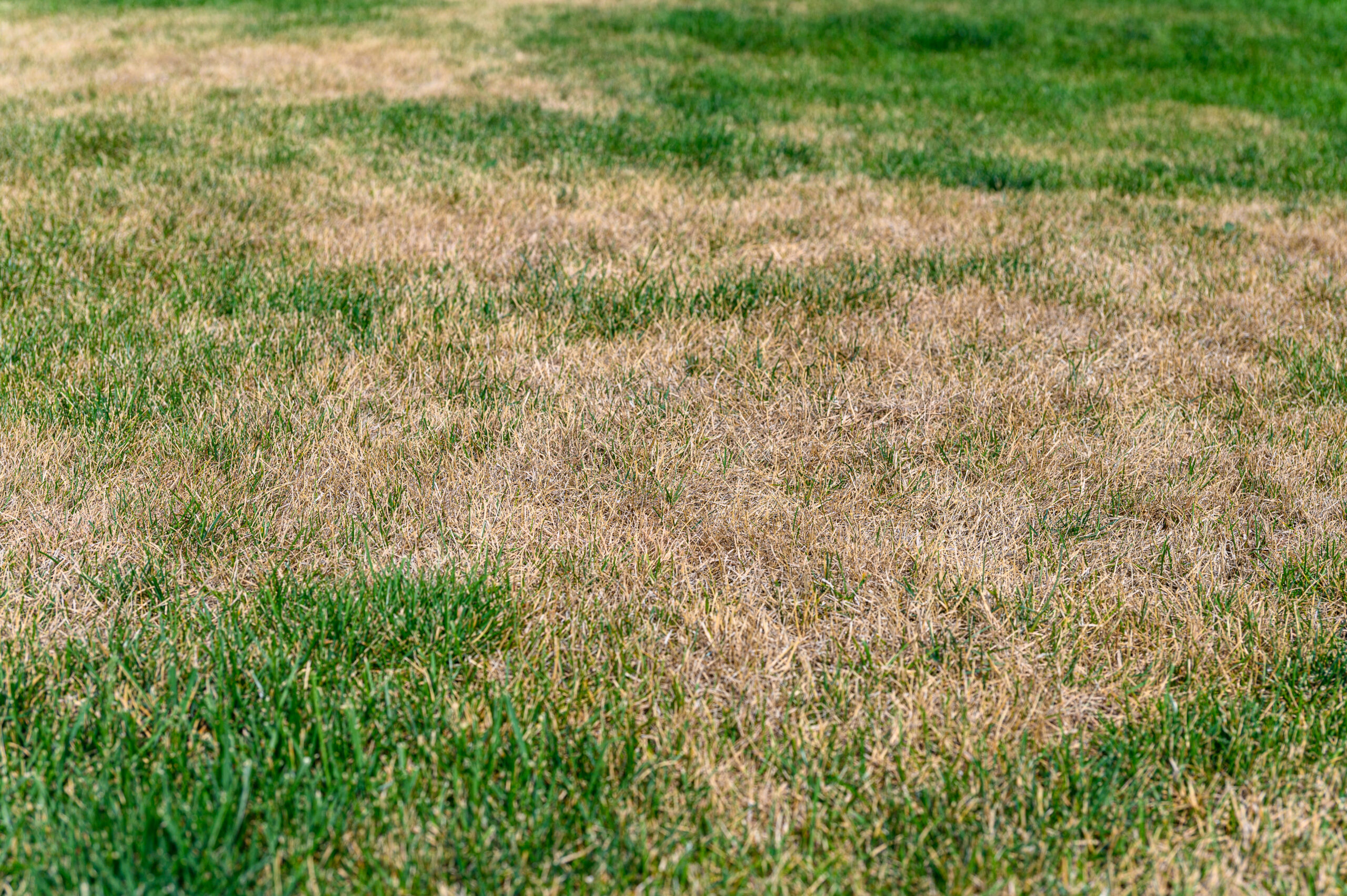
Short Answer: Bare spots in Frederick area lawns each spring almost always trace to one of six causes: snow plow and de-icer damage along driveways, vole tunneling visible after snow melt, winter desiccation from cold dry winds, pre-existing thin spots from last summer that did not survive winter, pet damage that accumulated through the cold months, and snow mold patches that did not recover. Each looks slightly different and the right fix depends on the cause. Most of these are very recoverable when caught early in the spring. Here is how to identify which causes are happening on your specific lawn.
You walk out one Saturday in April and see them: bare spots scattered across your Frederick or Mount Airy lawn. Some are small. Some are larger. They were not there last fall. The lawn that went into winter looking fine has come out of winter looking like it has been through something rough.
This is one of the most common spring lawn calls we get across our Frederick service area. Maryland winters do real damage to cool-season turf, and the damage often is not visible until snow has fully melted and the lawn dries enough to walk on. The good news is that most of what you are seeing is fixable. Here are the six causes we see most often.
Cause 1: Snow Plow and De-Icer Damage
Look first at areas along driveways and walkways. Brown or dead grass running parallel to hard surfaces, typically extending 2 to 4 feet from the edge, is salt damage. Snow plowed onto lawn that sat for weeks before melting created additional damage by physically smothering grass and concentrating salt as it slowly thawed.
Maryland uses heavy salt and brine on county roads and state highways through the winter. Combined with sidewalk de-icer, the cumulative salt load on lawn-adjacent areas can be significant. Properties along main roads in Frederick or near intersections in Mount Airy often see worse salt damage than properties on quiet side streets.
The fix is flushing salt from the soil. Several inches of water applied over a week or two leaches salt out of the root zone. Gypsum applications can help displace sodium from clay soils. Once salt levels are back in range, overseeding the dead areas finishes the recovery.
Cause 2: Vole Tunneling
If you see winding shallow trails of dead grass running through the lawn (a network of small paths that look like someone dragged a stick through), you are looking at vole damage. Voles tunnel under snow cover during winter, eating grass crowns as they go.
The damage looks alarming but is almost always cosmetic. Most surrounding turf fills back in once warm weather arrives. Light raking lifts the dead material and lets surrounding grass spread. For severe damage, overseeding the affected paths produces faster recovery.
Long-term, reducing dense ground cover near foundations and along stone walls (where voles like to shelter) discourages future activity. Vole populations vary year to year, so some winters will be worse than others.
Cause 3: Winter Desiccation
Winter desiccation happens when grass dehydrates from cold dry winds without the protective layer of snow that insulates against moisture loss. Maryland winters with limited snow cover and high winds (a pattern that has been more common in recent years) produce more desiccation damage than heavy-snow winters.
The pattern is typically widespread thinning across exposed areas rather than discrete patches. Grass blades look bleached and dry, and the lawn feels thin underfoot. Most common on the windward side of houses and on properties with limited windbreak.
Recovery is usually straightforward. Spring fertilization at appropriate rates and consistent watering through May and June rebuilds density. Severely thin areas benefit from overseeding to accelerate recovery.
Cause 4: Pre-Existing Thin Spots
Some “spring damage” is actually fall damage that was not addressed before winter. Thin spots that existed in October typically come out of winter even thinner than they entered it. The visible problem looks new but the underlying cause has been there.
The diagnostic clue is whether the same spots had problems last fall. If yes, the issue is a property condition (compaction, shade, soil chemistry, drainage) rather than just winter damage. Ask yourself: were these spots green and dense last September, or already struggling?
Long-term recovery requires addressing the underlying cause: aeration for compaction, selective tree thinning for shade, soil amendment for chemistry, drainage work for wet areas. Then overseeding fills in the thin areas with new growth that has a chance to thrive.
Cause 5: Pet Damage Through Winter
If you have a dog and you see dead spots concentrated in specific yard areas the dog uses, particularly near doors or in corners along the fence line, you are likely seeing accumulated pet urine damage from the winter months.
Cold weather doesn’t reduce dog urine damage; it just makes it harder to see while it’s happening. The high nitrogen and salt content burns grass crowns over weeks of repeated exposure. By spring, the affected areas are visibly dead.
The fix is the same as summer pet damage: flush the soil with water to dilute salts, designate a potty area going forward, and reseed or sod the dead spots once soil chemistry has recovered.
Cause 6: Snow Mold That Did Not Recover
Snow mold (gray or pink matted patches) develops under prolonged snow cover. Most snow mold patches recover on their own once exposed to sunlight. But severe snow mold (especially gray snow mold patches in concentrated areas) can kill grass crowns entirely. Those areas show as bare spots after the matted material has been raked away.
If your bare spots have a gray or pinkish tint to surrounding grass and felt matted when first exposed, snow mold killed those crowns. They will not grow back from existing roots and need overseeding for recovery.
How to Tell Which You Have
Look at the pattern. Salt damage runs parallel to hard surfaces. Vole damage is winding paths. Desiccation is widespread thinning. Pre-existing thin spots match where last fall’s issues were. Pet damage is concentrated near doors or fence corners. Snow mold has matted gray or pink residue.
Most properties have two or three of these in different areas. The right response is targeted to each.
The Spring Recovery Plan
For Frederick area lawns with multiple spring issues, the typical recovery sequence we recommend:
Wait until snow has fully melted and soil has dried.
Walk and assess. Document the patterns of damage so each cause can be addressed.
Light raking to lift snow mold residue and vole-trail material.
Soil testing if it has not been done in 3+ years (especially important in salt-damaged areas).
Salt flushing where damage is concentrated near driveways.
Spring fertilization at moderate rates to support recovery.
Spot overseeding for severely damaged areas now (small patches), full overseeding plus aeration in fall for the rest.
Realistic Recovery Timeline
Most damage recovers within 4 to 8 weeks of proper response. Severe areas may need fall renovation work for full recovery.
For homeowners worried about appearance through the recovery period, spot sodding (small patches of installed sod) provides faster visual recovery than seeding. The cost is higher but the visible result is immediate.
What to Do Next
If your Frederick area lawn has bare spots this spring and you want help diagnosing the causes and putting together a recovery plan, we walk properties regularly to identify each cause separately and recommend targeted fixes. If you would rather have someone else handle the timing decisions, product selection, and application for your Frederick lawn, we are here for that.
Visit lawnsquad.com to find Lawn Squad of Frederick and request a free quote. Our VitaminLawn program is built specifically for the grass types, soils, and weather patterns in our service area. Most homeowners see noticeable improvement within the first two applications.