Why Does Moss Keep Coming Back in My Shaded North Shore Lawn?
Short Answer: Moss is not crowding out your grass. It moves into ground where grass has already given up, so killing or raking it out leaves the same bare conditions behind and the moss returns within a season. On North Shore properties the usual culprits are heavy shade, acidic soil, compaction, and water that cannot drain because there is ledge or hardpan a few inches down. The fall correction is to fix those conditions in order, then seed a shade tolerant fine fescue blend in late summer so grass, not moss, occupies the space next spring.
It is the strip along the north side of the house, and you have been fighting it for four years. Every April it comes back as a spongy green-gold carpet, thick as felt where the gutter drips, thinning to a haze of it out toward the hemlocks. You raked it out one spring. You put down the iron product from the hardware store another year and watched it go black in three days, which felt like winning. And by the following May it was exactly where it started. Step on it in August after a wet week and your sneaker leaves a print that stays.
There is a particular frustration in losing the same battle repeatedly, especially when everything else on the property looks good. The reason is not effort. It is that the treatment was aimed at the wrong thing.
Moss Is a Symptom, Not a Competitor
This is the piece that changes how homeowners think about the problem. Mosses do not have true roots and they are terrible competitors. They cannot invade healthy, dense turf and push it out. What they can do is colonize ground where turf has already thinned, because they need almost nothing: no meaningful root zone, very little fertility, and no direct sun.
So when moss appears, it is reporting on conditions rather than causing them. Remove it and you have an open, damp, acidic, shaded patch of soil that is still open, damp, acidic, and shaded. Something will fill that space. Left to itself, moss will, because it is the best adapted organism available. The whole strategy has to shift from removing moss to making the site hospitable to grass again.
The Four Conditions That Invite It Here
They usually arrive together on our properties. The first is shade, and not just tree shade. North-facing foundations, garage walls, and the seaward side of a stone wall all cut the light budget. The second is soil acidity. Coastal and inland Essex County soils run acidic on their own, and decades of oak, pine, and hemlock litter push them lower still. Grass slows down well before moss even notices.
The third is compaction, which is often the surprise. Foot traffic, a mower turning in the same spot, and years of settling squeeze the pore space out of soil, and roots cannot get air. A screwdriver is a good enough test: if you cannot push a six inch blade in with steady hand pressure when the soil is moist, roots are having the same trouble. The fourth is drainage, and it is where our geology matters. On the ledge-heavy ground through Manchester, Prides Crossing, and parts of Essex, you may have six or eight inches of soil sitting on solid rock. Water arrives, sinks, hits stone, and perches there. Combine that with dense shade and low pH and you have written the specification for moss.
Do the Shade Math Honestly
Before spending money, spend a Saturday. Go out at nine, noon, and four and note where actual sun reaches. Most cool-season grasses want a real four hours minimum, and fine fescues, our most shade tolerant option, need something close to that as filtered or dappled light through a canopy. Under a mature Norway maple or a tight stand of hemlock in Wenham or Hamilton, honest measurement often shows two hours or less.
That number decides your options. Pruning lower limbs and thinning the interior canopy of a tree can raise a site from unworkable to workable, and it is the highest-value change available on most shaded lawns. Hiring an arborist to limb up a big oak costs real money, but it is money spent once, and it addresses the constraint rather than the symptom. If pruning cannot get the site over that threshold, no seed and no fertilizer program will hold it.
Killing Moss Is the Easy Part
We want to be transparent about this, because it is easy to sell moss removal as though it were the fix. Iron-based products blacken moss within a few days, and a stiff rake pulls the dead mat out. It looks dramatic and satisfying. Both are legitimate first steps in the sequence, because you cannot seed into a mat of living moss and expect seed to reach soil.
But the removal is the least important step, and doing it alone is what produces the four-year cycle you have been living. We would rather do nothing than do only that. If the underlying conditions are not going to be corrected this fall, save the money and let the moss stay. It is holding soil in place and is not hurting anything.
The Fall Correction, In Order
Start with a soil test in early August, because the lime question is answered by a number and not a guess. If the report calls for lime, get it down. Raising pH toward the range grasses prefer is slow work, so plan on it as a multi-season project rather than a single application, and expect a heavily acidic site to need splitting across two or three seasons.
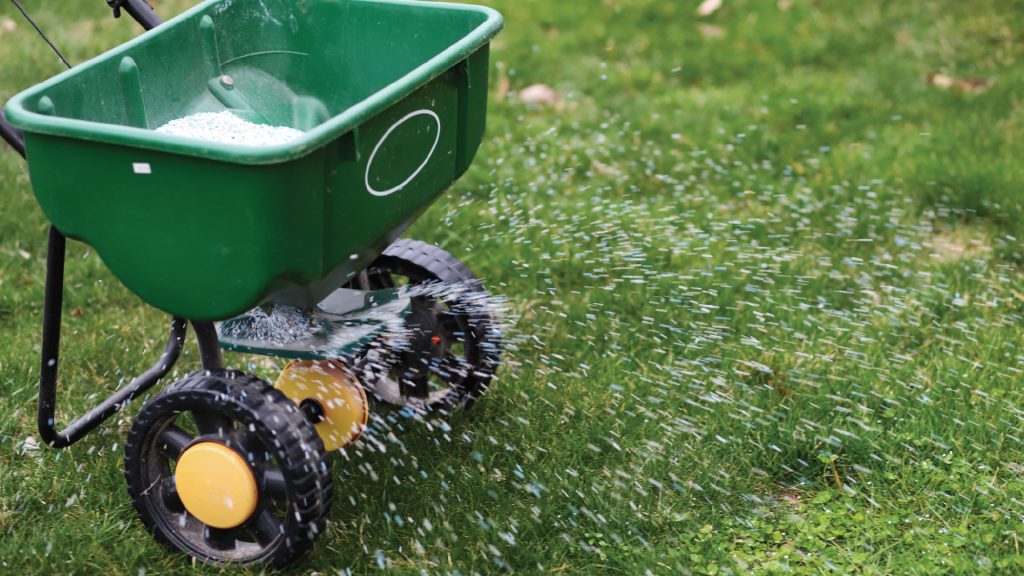
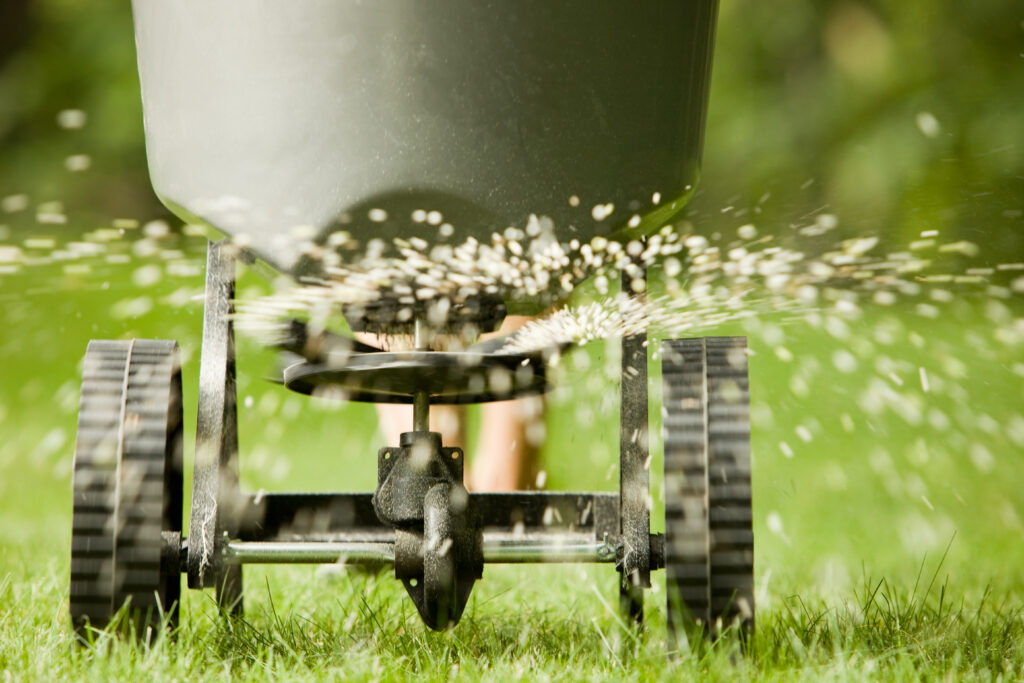
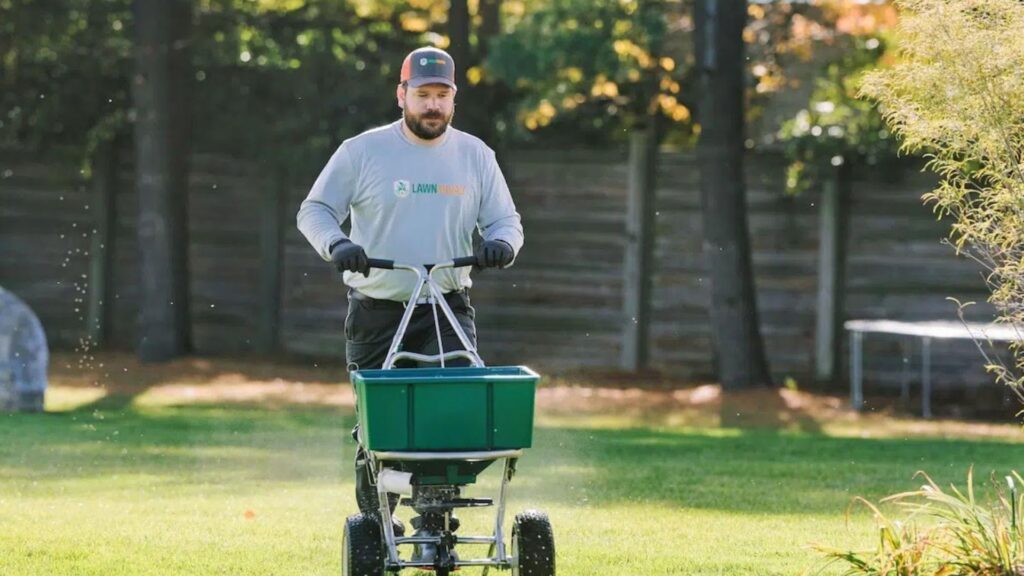
Next, prune. Then remove the moss and any thatch mat. Then core aerate to open the compacted layer, which on shallow soil over ledge should be done thoughtfully rather than aggressively. If water is perching in a low spot, solve that with grading or a drain before you seed, because seed sown into standing water rots. Finally, seed in late August or the first days of September with a blend heavy on hard and chewings fescue, and feed lightly. Shaded turf is grown with less nitrogen than sunny turf, not more, since pushing soft top growth in low light produces thin, disease-prone grass.
Two habits carry the result through the following year. Mow the shaded areas taller than the rest of the lawn, around three and a half inches, because more leaf surface is how a grass plant compensates for less light. And rake leaves off those areas promptly in the fall. A wet mat of oak leaves sitting on thin shade turf through November smothers exactly the grass you just paid to establish, and hands the space right back to the moss.
When the Honest Answer Is Not Grass
Sometimes the right recommendation is to stop. If a site genuinely gets under two hours of light, sits over ledge, and stays damp, grass there will always be a subscription rather than a lawn: reseeded every fall, thin by July, moss again by spring. Across the properties we walk from Georgetown to Manchester, some of the best looking yards are the ones where the owner accepted that the deep shade under the oaks was never going to be turf.
A bed of pachysandra, a fern and hosta planting, a wide mulch ring, a stone or bark path through the shade: any of those beat a permanently struggling lawn, cost less over ten years, and look intentional rather than neglected. We will tell you when we think that is the better call. We would rather do good work on the four thousand square feet that can succeed than take your money on the eight hundred that cannot.
What to Do Next
This week, do the light audit and push a screwdriver into the soil in a few spots to gauge compaction. Get a soil sample in the mail. Then call us at 617-468-4557 or visit lawnsquad.com for a free quote. We serve Boxford, Byfield, Essex, Georgetown, Groveland, Hamilton, Haverhill, Ipswich, Manchester, Merrimac, Newbury, Newburyport, Prides Crossing, Rowley, Salisbury, South Hamilton, Topsfield, Wenham, West Boxford, and West Newbury.
A first visit is a walk of the property. We look at light, probe for soil depth and ledge, check where water sits after rain, and read your soil report with you. Then we tell you which areas are worth seeding this fall, which need pruning or drainage work first, and which are better converted to beds. Where we do seed, expect germination in one to three weeks depending on the mix, real cover by mid October, and the true test next spring, when the moss should have far less open ground to move into.
Ongoing, our VitaminLawn program handles feeding and weed control tuned to shaded, acidic North Shore soils rather than a generic schedule. Quotes are free, and our work is backed by a satisfaction guarantee.