
Why Does Mid-August Prep Beat Late-September Panic for Cincinnati Fall Seeding?
Short Answer: The Cincinnati seeding window opens as soil temperature falls back through the low seventies, which usually lands in the last week of August and runs into mid-to-late September. The homeowners who get thick results are the ones who prep in mid-August, testing soil, planning seed, scheduling aeration, so that when the window opens they act immediately. The ones who wait until they notice thin turf in late September are seeding into cooling soil with only a few good weeks left before a Cincinnati winter. Same seed, same effort, very different results, and the difference is almost entirely timing.
By the middle of August a Cincinnati lawn has told you everything you need to know about your fall. The strip along the south side of the driveway is thin and pale. The slope in the back that always struggles has opened up again. Under the maple the grass has surrendered to shade. None of that is a surprise, and none of it requires waiting to see how things shake out. The lawn has already shown its hand, and the smart move is to prep now rather than to panic in six weeks.
The homeowners who call us in the third week of September, alarmed that the lawn looks worse than ever and desperate to fix it before winter, are almost always people who could have had a far better result by starting the same work a month earlier. The work is not different. The timing is.
Why Timing Is the Whole Game for Cool-Season Grass
Cincinnati lawns are cool-season grasses, the Kentucky bluegrass, turf-type tall fescue, and perennial ryegrass that dominate lawns from Hyde Park to West Chester. These grasses establish best from seed when two conditions overlap: soil that is still holding summer warmth, which drives fast germination, and air that has cooled enough to stop stressing a young seedling. In our climate those conditions line up for a genuinely limited stretch.
That window opens as soil temperature falls back through roughly the low seventies on a downward trend, which around Cincinnati typically means the last week of August into mid-September, holding usefully into the third week of the month. The trigger is soil temperature, not the date on the calendar, which is why a warm early September does not extend the season the way a warm week feels like it should. Every week past the window costs the young grass root development it needs before the ground freezes, and shallow-rooted fall grass is exactly what fails first the next July.
It is also why spring seeding, which feels intuitive, disappoints so reliably here. Grass seeded in April or May gets a few good weeks and then a Cincinnati summer it has not had time to prepare for, while fall-seeded grass gets the entire cool season to establish before facing any heat at all. Fall is simply the better window, and it is not close.
What Mid-August Prep Actually Involves
Prep is not seeding early. It is getting everything lined up so that the moment the window opens, you act without scrambling. The first piece is a soil test. Cincinnati sits on heavy clay, and clay chemistry drifts over the years, so knowing your pH and nutrient levels in mid-August means you can correct them and choose the right starter fertilizer rather than guessing at the store on a Saturday in October. Results generally come back in a week or two, which is exactly why August is the time to pull the sample.
The second piece is planning the seed. Buying by the tag rather than the front of the bag, matching the blend to your sun and shade, and having it on hand before the rush means you are not settling for whatever the store has left when everyone panics at once. The third piece is scheduling the aeration and overseeding itself into the window rather than hoping to fit it in afterward. Good crews book up as the season turns, and the properties that get the prime early-window dates are the ones that called in August.
A fourth piece is simply not working against yourself. If you plan to seed, skip any late-summer crabgrass preventer on those areas, because the same barrier that stops crabgrass also stops the grass seed you are paying for. Knowing your plan in August keeps you from making that common and expensive mistake in the same season.
Why Cincinnati Clay Makes Aeration Non-Negotiable
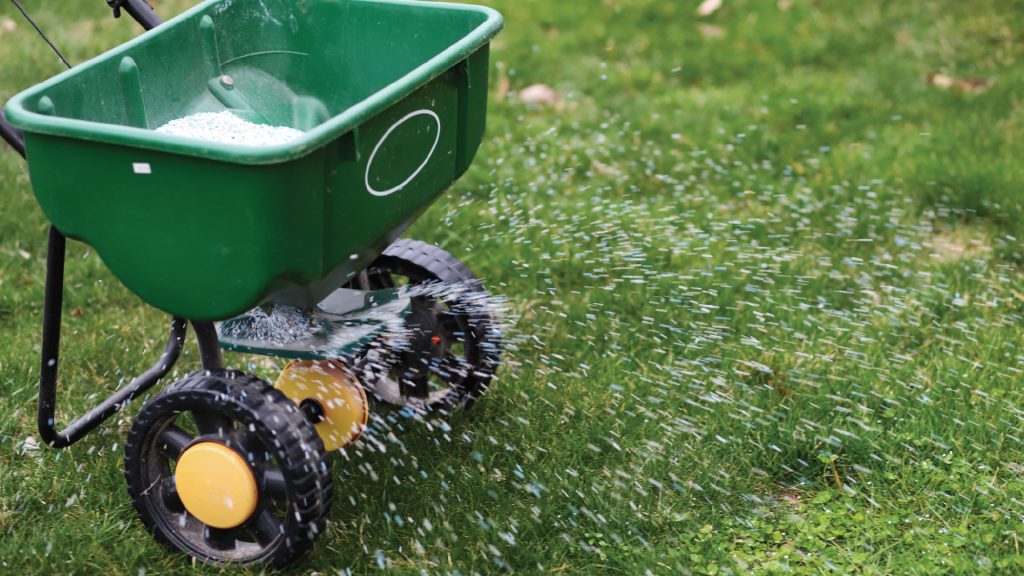
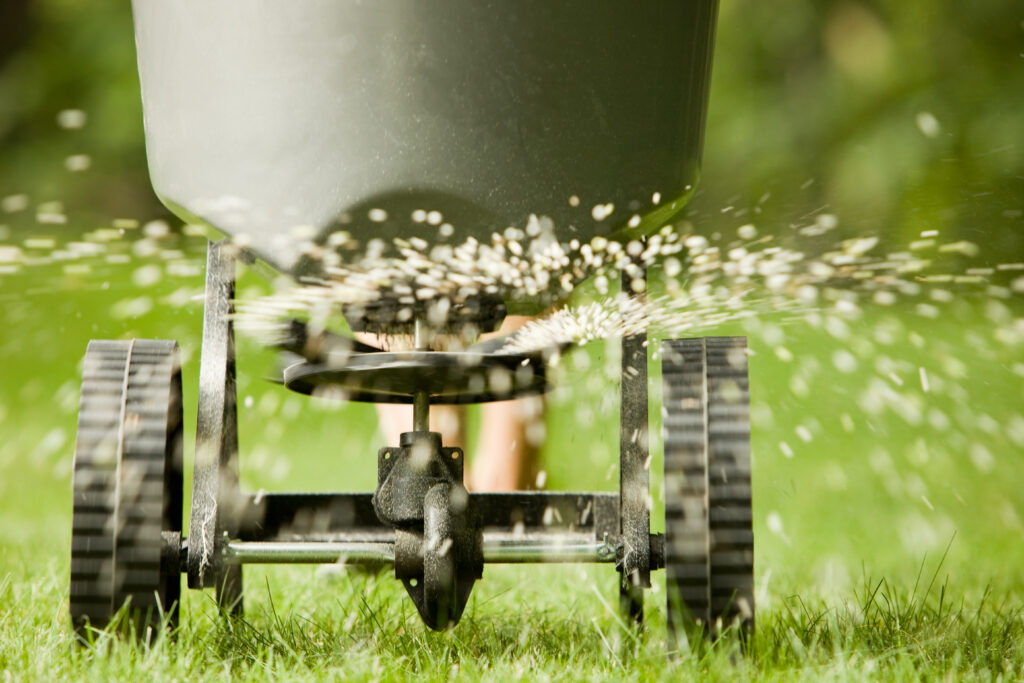
The soil under most of the metro is dense clay, and it changes what seeding requires. Seed broadcast over hard, compacted clay largely sits on the surface, dries out, and washes into the street with the first storm. Core aeration pulls thousands of small plugs out of that clay and opens the soil, and those open holes are the best seedbed there is, giving seed direct contact with soil and a protected pocket to germinate in. On our ground, aeration is not an optional upgrade to overseeding. It is most of what makes the overseeding work.
Aeration also relieves the compaction that builds up under mower wheels and foot traffic over the year, which is a real contributor to why the same tired spots thin out every summer. Doing the aeration and the overseeding in the same visit is by a wide margin the highest-value thing you can do for a Cincinnati lawn in the fall.
The Cost of Waiting Until Late September
Picture two identical lawns. One homeowner tested soil, bought good seed, and scheduled aeration in mid-August, then seeded the last week of the month when the soil hit the mark. The other noticed the thin lawn in late September, ran to the store, bought whatever blend was on the shelf, and raked it into unaerated clay hoping for the best.
By spring the difference is stark. The first lawn came up quickly in still-warm soil, built roots through October and into November, and greens up thick and early. The second germinated slowly into cooling soil, never developed the roots to survive winter, and comes back thin and patchy, ready to lose the same battle again next July. The seed cost the same. The timing did not.
Watering Is Different Once the Seed Is Down
When the seed goes down, the watering rules invert. Established turf wants deep, infrequent soaking. Germinating seed wants the top half inch of soil constantly moist, which means short, light cycles two or three times a day for roughly the first two weeks. Letting that surface dry out at midday kills seedlings that had just started, and it is the most common reason a Cincinnati seeding underperforms even when the timing was right. Once the new grass is up and mowed once, you begin backing off frequency and lengthening each session until you are back to deep watering by mid-autumn.
What to Do Next
If it is mid-August as you read this, you are exactly on time. Walk the property and mark what is genuinely thin, pull or arrange a soil test, and get aeration and overseeding scheduled into the window rather than after it. Call us at 201-681-7143 or request a free quote at lawnsquad.com. We serve Cincinnati, SERVICE_AREA_PLACEHOLDER, and the surrounding communities.
A first visit is a walk of the property with you. We check compaction and thatch, look at how much living turf is actually left in the thin areas, assess sun and shade, pull a soil sample where it makes sense, and give you a straight plan with the timing laid out. Expect ryegrass to germinate in seven to ten days, tall fescue next, and bluegrass last. At thirty days the lawn looks patchy and uneven, which is normal at that stage. At ninety days, heading into late fall, the new grass should be established and rooted well enough to hold through winter, with the real payoff visible next spring when the seeded areas green up thick and early alongside everything else.
Longer term, the lawns that shrug off a hard Cincinnati summer are the ones with deep roots and balanced soil nutrition going in, which is the whole idea behind our VitaminLawn program. It builds fertilization and weed control around the grass types, the heavy clay, and the specific swing of our seasons rather than a generic national schedule. Every location is independently owned and operated, quotes are free, and the work is backed by a satisfaction guarantee. Get the date on the calendar now, and spend the rest of August prepping instead of panicking.