When Should I Stop Fertilizing My Lawn at the End of Summer?
Short Answer: It depends entirely on which grass you grow, and the two answers run in opposite directions. Warm-season lawns like bermuda, zoysia, St. Augustine and centipede should have nitrogen stopped roughly four to six weeks before your average first frost so the grass can harden off and store carbohydrates for winter. Cool-season lawns like tall fescue, bluegrass and perennial rye are just entering their most important feeding period of the year, and the applications made from late summer into fall do more for the lawn than anything applied in spring.
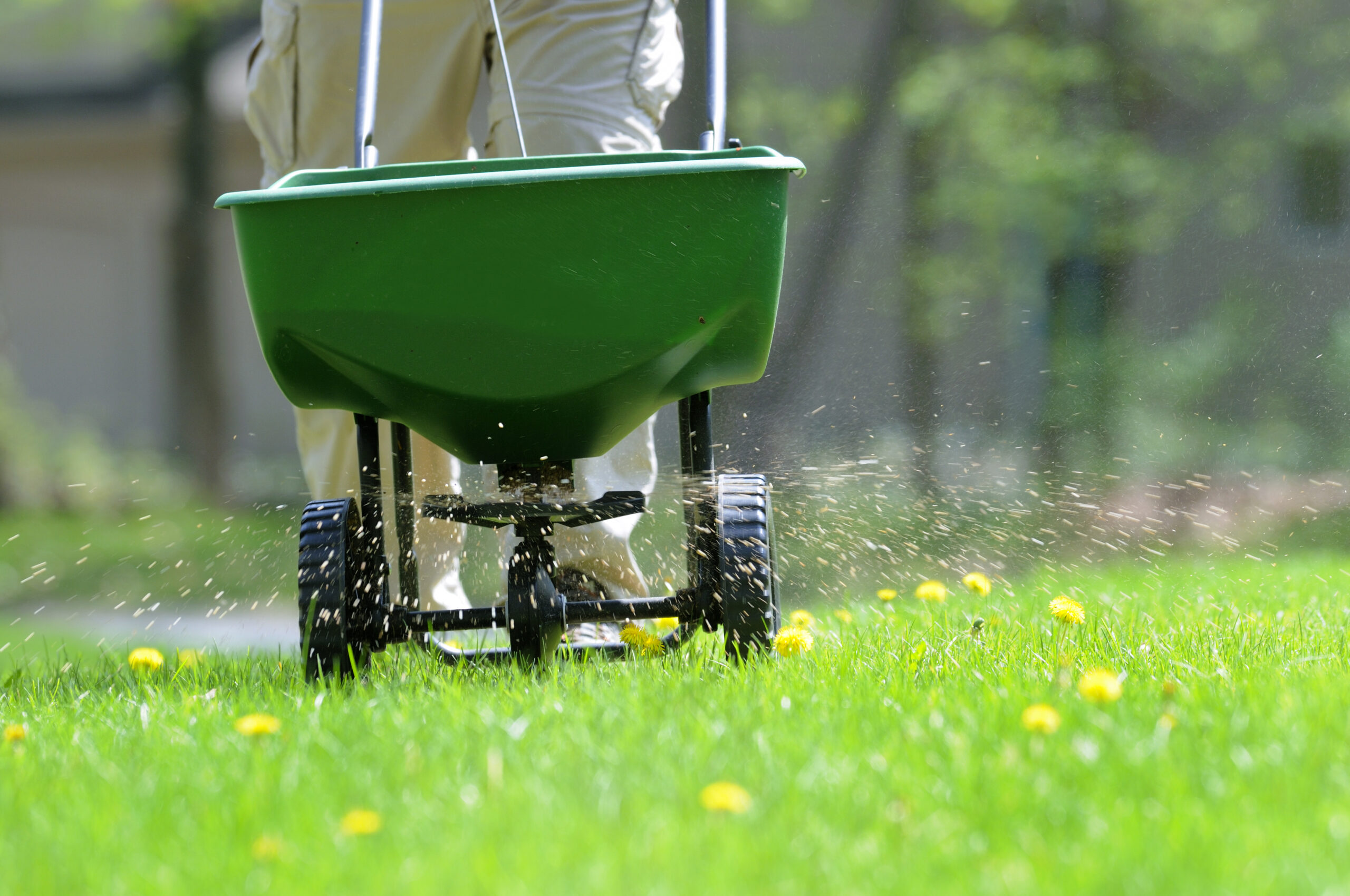
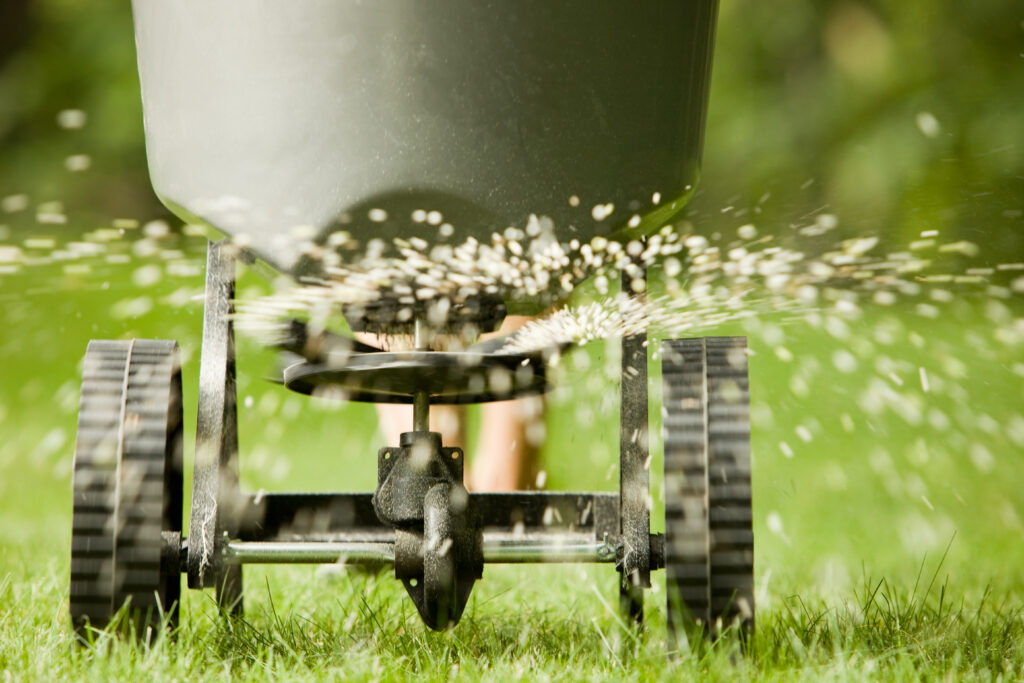
Somewhere this month, two neighbors are standing in their driveways holding the same bag of fertilizer, and only one of them should open it. On one side of the street the bermuda is still growing hard enough to need mowing twice a week and the color is deep. On the other, a tall fescue lawn is thin at the edges, pale, and just starting to look alive again in the cooler mornings. Same weather, same week, opposite instructions.
Most homeowners we talk to in August assume fertilizer is fertilizer and later is safer than never. On a cool-season lawn that instinct is correct. On a warm-season lawn it is the single most expensive mistake of the year, and you do not find out until March.
Two Calendars Running in Opposite Directions
The reason has nothing to do with brand or product. It is plant biology. Warm-season grasses grow from late spring through summer, then shut down and go dormant after the first hard cold. Their entire winter survival depends on what they stored before dormancy. Cool-season grasses do the opposite. They suffer through summer heat, then wake up as nights cool and do most of their real growing in fall.
So in late August, a bermuda lawn is approaching the end of its productive season and a fescue lawn is approaching the beginning of its best one. Fertilizer timing has to follow the plant, not the calendar on the bag.
Warm-Season Lawns: Why the Goal Now Is to Slow Down
Nitrogen tells a plant to grow leaves. Late in the season, that instruction competes directly with what the grass needs to be doing, which is moving sugars down into rhizomes, stolons and crowns where they sit as reserves through winter.
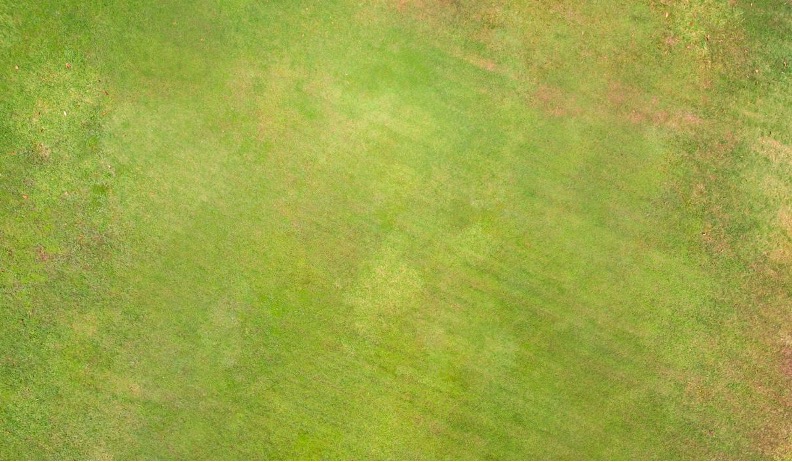
Push nitrogen too late and you get succulent new top growth going into the first cold snap. That tissue has not hardened off, it is easily damaged by frost, and producing it drains the very reserves that would have carried the lawn to spring green-up. The damage shows up months later as bermuda that greens up in slow patches, or zoysia with dead areas that were fine in October. Homeowners almost never connect March winterkill to a September fertilizer application, but the connection is well documented.
Late nitrogen also feeds disease. Large patch, the fall and spring disease of zoysia and St. Augustine, becomes noticeably more aggressive on lawns pushed with nitrogen as soil temperatures fall through the seventies. Feeding a warm-season lawn in early fall is close to writing the disease an invitation.
Where the Warm-Season Cutoff Actually Falls
The working rule is to stop nitrogen roughly four to six weeks before your average first frost. Work backward from your own frost date rather than borrowing a neighboring state’s schedule.
In the transition zone, where bermuda and zoysia are grown near the northern edge of their range, that usually means the last nitrogen goes down in August. Those lawns carry the highest winterkill risk in the country, because the grass is already living at its cold limit, so late feeding there is genuinely dangerous. Across the warm-season South, the window commonly runs a few weeks later, into late August or early September depending on how far south you sit. In tropical Florida and along the Gulf, hard dormancy may never arrive, so the limiting factors become disease pressure and local fertilizer ordinances. Many Florida counties and municipalities restrict nitrogen and phosphorus during the summer rainy season, and those rules, not frost, set the calendar.
In the arid West, both situations exist within an hour’s drive. Low desert bermuda follows warm-season rules and is often overseeded with ryegrass in October, which changes the plan again. Bluegrass lawns at elevation follow cool-season rules entirely.
Cool-Season Lawns: The Most Important Feeding of the Year
If you grow tall fescue, Kentucky bluegrass, perennial rye or fine fescue, everything above reverses. Your lawn has spent July and early August surviving, not growing. As nights cool and soil temperatures ease back, the plant restarts root production and tillering, which is the process that actually thickens turf.
Fall nitrogen fuels that. The application made as the heat breaks drives recovery, density and color, and it does more visible good than any spring feeding. A second, later application near the end of the mowing season supports root carbohydrate storage and earlier spring green-up without forcing a flush of top growth.
The mistake in the cool-season North and transition zone is not feeding too late, it is feeding too early. Heavy nitrogen applied while daytime highs are still in the nineties pushes soft growth into peak brown patch and pythium conditions. We would rather wait ten days for nights to break than fertilize into a disease window, and across the properties we walk each August, lawns fed too early in the month are noticeably the ones with the most disease scarring.
A practical trigger helps more than a date. In the cool-season North and the upper transition zone, we watch for nighttime lows settling consistently into the sixties and soil temperature at two inches easing back under about seventy degrees. That combination usually arrives in the second half of August in New England and the upper Midwest, and a week or two later farther south in the Ohio Valley and the Mid-Atlantic. It is the same signal that opens the seeding window, which is not a coincidence.
What Changes If You Are Seeding
Renovation shifts the plan. If you are aerating and overseeding a cool-season lawn, the feeding at seeding time should support germination and root development rather than blade growth, which is why starter fertilizers exist and why a soil test showing low phosphorus matters more this month than any other.
New seedlings also need follow-up. A light feeding four to six weeks after germination does more for long term density than a heavy application on day one, which mostly grows the established grass and shades out the seedlings you paid for.
One conflict worth flagging: if you are seeding, you cannot also apply a fall pre-emergent to the same area, because the product that stops winter weeds from germinating stops grass seed just as effectively. That tradeoff has to be planned deliberately rather than discovered in October.
Potassium, Iron, and What to Apply Instead
Being told to stop nitrogen is unsatisfying when your warm-season lawn still has two good months in it, so here is the useful alternative. Potassium supports cell wall strength, drought tolerance and cold hardiness, and it is not the growth trigger nitrogen is. Late-season potassium is widely used on warm-season turf for exactly that reason, though we will be honest that the research is most convincing when a soil test shows an actual potassium deficiency rather than as a blanket practice. On sandy Southern and Gulf soils, where potassium leaches constantly, deficiency is common enough that testing usually justifies it.
Iron is the other tool. Chelated iron gives color without pushing growth, which makes it useful on warm-season lawns after the nitrogen cutoff and on high pH soils in the arid West and South Florida where yellowing is a micronutrient problem rather than a nitrogen one.
What to Do Next
Start by naming your grass, then find your average first frost date. Those two facts settle the question. Warm-season lawns: count back four to six weeks from frost and treat that as a hard stop for nitrogen, then shift to potassium and iron. Cool-season lawns: wait for nights to break, then feed, and plan a second application near the end of the mowing season.
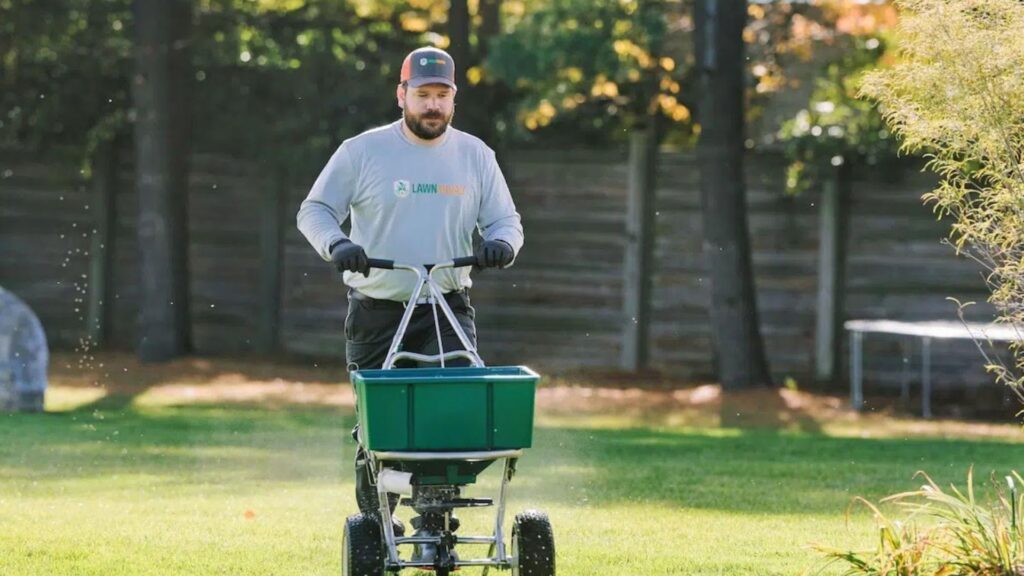
If you want the timing handled rather than guessed, find your local Lawn Squad at lawnsquad.com or call 833-816-7508 for a free quote. Every Lawn Squad location is independently owned and operated, and each builds its VitaminLawn fertilization and weed control program around the grass type, soil and climate where you actually live, which is why the schedule in Birmingham looks nothing like the schedule in Boston.
A first visit is a walk of the property, a grass identification, a look at color and density, and a straight conversation about what your lawn should and should not receive between now and dormancy. At 30 days, a correctly timed cool-season feeding shows as deeper color and visibly tighter turf. On a warm-season lawn, the payoff is invisible until spring, when your lawn greens up evenly while the aggressively fertilized one down the street comes back in patches. That is the whole argument for getting this month right.